File:Wuyi_Mountains_Sea_of_clouds_4.jpg · Wikimedia Commons · See Wikimedia Commons
Wuyi Mountains
Sign in to saveAlso known as Bohea Hills, Wuyishan, Wuyi Shan, Mount Wuyi
mountain range in China
The Wuyi Mountains are a mountain range located in China. They are significant for their unique natural landscape and biodiversity.
AI-generated from the Wikipedia summary — may contain errors.
Wikidata facts
- Instance of
- Chinese AAAAA-rated tourist attraction
- Country
- China
- Located in
- Fujian
- Area
- 40170
- Elevation
- 2158
- Highest point
- Mount Huanggang
- Image
- Wuyi Mountains Sea of clouds 4.jpg
Show 2 more facts
- Commons category
- Wuyi Mountains
- heritage designation
- World Heritage Site
Sources (2)
via Wikidata · CC0
~11 min read
Encyclopedic overview
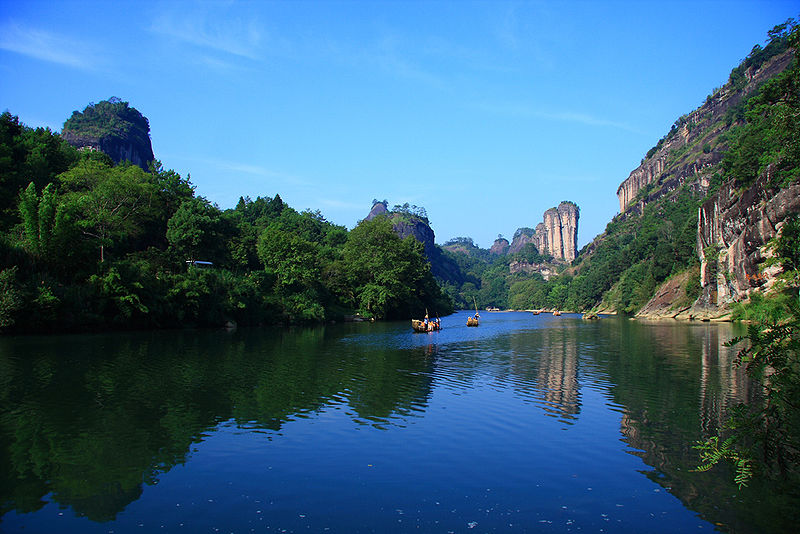
Jade Girl Peak (right) on the Jiuqu Xi (Nine-bend River), Wuyi Mountains, 1871 The Wuyi Mountains or Wuyishan (Chinese: 武夷山; pinyin: Wǔyí Shān; formerly known as Bohea Hills in early Western documents, derived from Hokkien Bú-î-soaⁿ) are a mountain range located in the prefecture of Nanping, in northern Fujian province near the border with Jiangxi province, China. The highest peak in the area is Mount Huanggang at 2,158 metres (7,080 ft) on the border of Fujian and Jiangxi, making it the highest point of both provinces; the lowest altitudes are around 200 metres (660 ft). Many oolong and black teas are produced in the Wuyi Mountains, including Da Hong Pao ('big red robe') and lapsang souchong, and are sold as Wuyi tea. The mountain range is known worldwide for its status as a refugium for several rare and endemic plant species, its dramatic river valleys, and the abundance of important temples and archeological sites in the region, and is a UNESCO World Heritage Site.
The Wuyi Mountains are located between Wuyishan City of the Nanping prefecture in northwest Fujian province, and the city of Wuyishan within Shangrao city in northeast Jiangxi province.
Excerpted from Wikipedia’s “Wuyi Mountains” article, available under the CC BY-SA 4.0 licence.