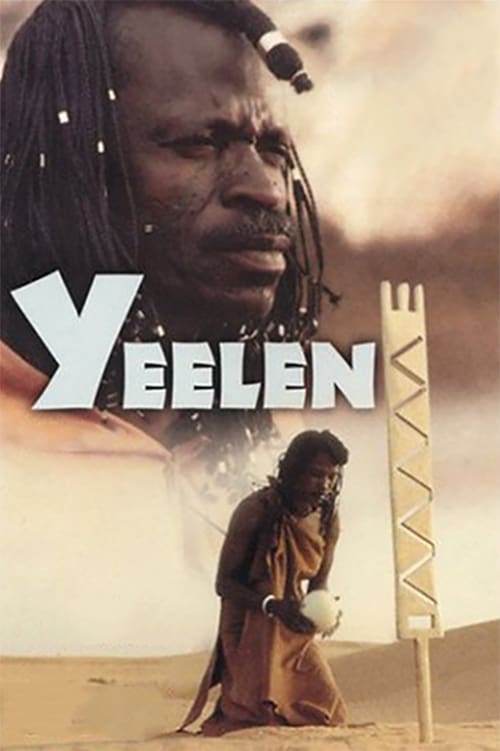
Poster from TMDB
Yeelen
Sign in to saveAlso known as Brightness
Yeelen (Bambara for "brightness"/"light") is a 1987 Malian film written, directed and produced by Souleymane Cissé. It is filmed in the Bambara and Fula languages, and is based on a legend told by the Bambara people. Though the era is undefined, it is presumably set in the 13th century in the Mali Empire and is a heroic quest narrative featuring magic and precognition.
Film · TMDB
6.6A young man with magical powers journeys to his uncle to request help in fighting his sorcerer father.
Cast
- Issiaka Kane as Niankoro, the Son
- Balla Moussa Keita as Rouma Boll, the Fulani King
- Aoua Sangare as Attou, the Young Fulani Woman
- Ismaila Sarr as Bofing, the Uncle
- Niamanto Sanogo as Soma / Djigui
- Soumba Traore as Mah, the Mother
Themes
- magic
- africa
- sorcerer
- based on myths, legends or folklore
- tribal customs
- tribal people
This product uses the TMDB API but is not endorsed or certified by TMDB.
Key facts
- Film.name
- Yeelen
- Film.image
- yeelen.jpg
- Film.caption
- VHS cover
- Film.director
- Souleymane Cissé
- Film.producer
- Souleymane Cissé
- Film.writer
- Souleymane Cissé
- Film.runtime
- 105 minutes
- Film.country
- MaliBurkina FasoFranceWest Germany
- Film.language
- Bambara, Fula
via Wikipedia infobox
Wikidata facts
- Instance of
- film
- Genre
- fantasy film
- Country of origin
- Germany
- Original language
- French
- Director
- Souleymane Cissé
- Screenwriter
- Souleymane Cissé
- Cast member
- Balla Moussa Keïta
- Composer
- Salif Keita
- Producer
- Souleymane Cissé
- Narrative location
- Mali
- Duration
- 105
- FilmAffinity ID
- 774908
- Distribution format
- video on demand
Show 4 more facts
- publication date
- 1988-04-29
- title
- Yeelen
- distributed by
- Netflix
- review score
- 7.6/10
via Wikidata · CC0
~6 min read
Encyclopedic overview
8 sectionsContents
- Plot
- Cast
- Accolades
- Reception
- See also
- References
- Bibliography
- External links
Yeelen (Bambara for "brightness"/"light") is a 1987 Malian film written, directed and produced by Souleymane Cissé. It is filmed in the Bambara and Fula languages, and is based on a legend told by the Bambara people. Though the era is undefined, it is presumably set in the 13th century in the Mali Empire and is a heroic quest narrative featuring magic and precognition.
Cissé has stated in an interview for Cahiers du Cinéma that it was "in part made in opposition to European ethnographic films” and that he “wanted to make a response to an external perception, a perception by white technicians and academics, an alien perception."
Excerpted from Wikipedia’s “Yeelen” article, available under the CC BY-SA 4.0 licence.