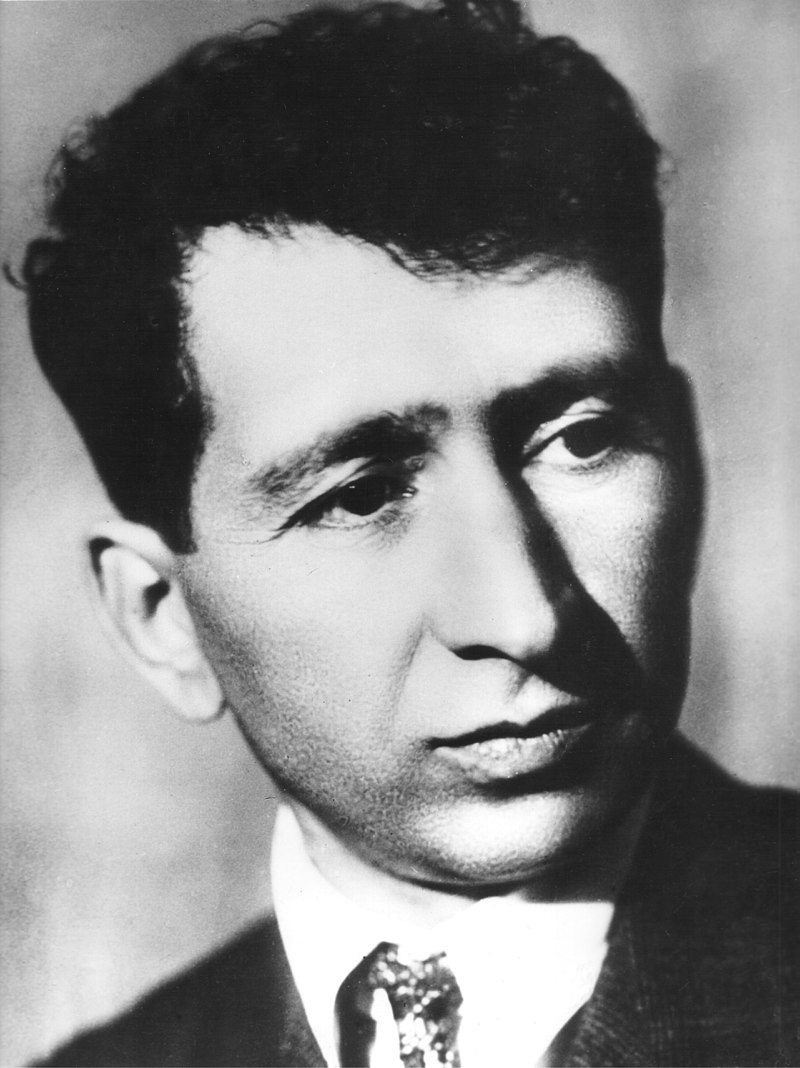
File:Yeghishe_Charents_Armenian_poet.jpg · Wikimedia Commons · See Wikimedia Commons
Yeghishe Charents
Sign in to saveAlso known as Yeghishe Abgari Soghomonyan, Eghishe Charentsʻ
Armenian poet (1897–1937)
Yeghishe Charents was an influential Armenian poet who lived during a transformative period in Armenian history, from 1897 until his death in 1937. He is remembered as an important literary figure in Armenian culture, though his life ended during the Soviet era's political repression.
AI-generated from the Wikipedia summary — may contain errors.
Wikidata facts
- Instance of
- human
- Family name
- Soghomonyan
- Gender
- male
- Citizenship
- First Republic of Armenia
- Place of birth
- Kars
- Place of death
- Yerevan
- Child
- Anahit
- Occupation
- writer
- Political party
- Communist Party of the Soviet Union
- Languages spoken
- Armenian
- Genre
- narrative poetry
- Image
- Yeghishe Charents Armenian poet.jpg
Show 8 more facts
- Commons category
- Yeghishe Charents
- date of birth
- 1897-03-13
- date of death
- 1937-11-27
- manner of death
- capital punishment
- name in native language
- Եղիշե Չարենց
- Commons Creator page
- Yeghishe Charents
- birth name
- Եղիշե Աբգարի Սողոմոնյան
- writing language
- Armenian
via Wikidata · CC0
~16 min read
Encyclopedic overview
Yeghishe Charents (Armenian: Եղիշե Չարենց, romanized: Yeghishe Ch’arents’; 25 March [O.S. 13 March], 1897 – November 27, 1937) was an Armenian poet, writer, and public activist. Charents's literary subject matter ranged from his experiences in the First World War, the Russian Revolution, and frequently Armenia and Armenians. He is recognized as "the main poet of the 20th century" in Armenia.
An early proponent of communism and the USSR, the futurist Charents joined the Bolshevik Party and became an active supporter of Soviet Armenia, especially during the period of Lenin's New Economic Policy (NEP). However, he became disillusioned with direction of the Soviet Union under Joseph Stalin. He was arrested by the NKVD during the 1930s Great Purge, and died in 1937 due to severe health complications, including Morphinism. However, after Stalin's death, he was exonerated in a 1954 speech by Anastas Mikoyan and was officially rehabilitated by the Soviet state in 1955 during the Khrushchev Thaw.
Excerpted from Wikipedia’s “Yeghishe Charents” article, available under the CC BY-SA 4.0 licence.