
File:Historic_Town_of_Zabid-111647.jpg · Wikimedia Commons · See Wikimedia Commons
Zabid
Sign in to saveAlso known as Zebid, Zabeed, Zabīd
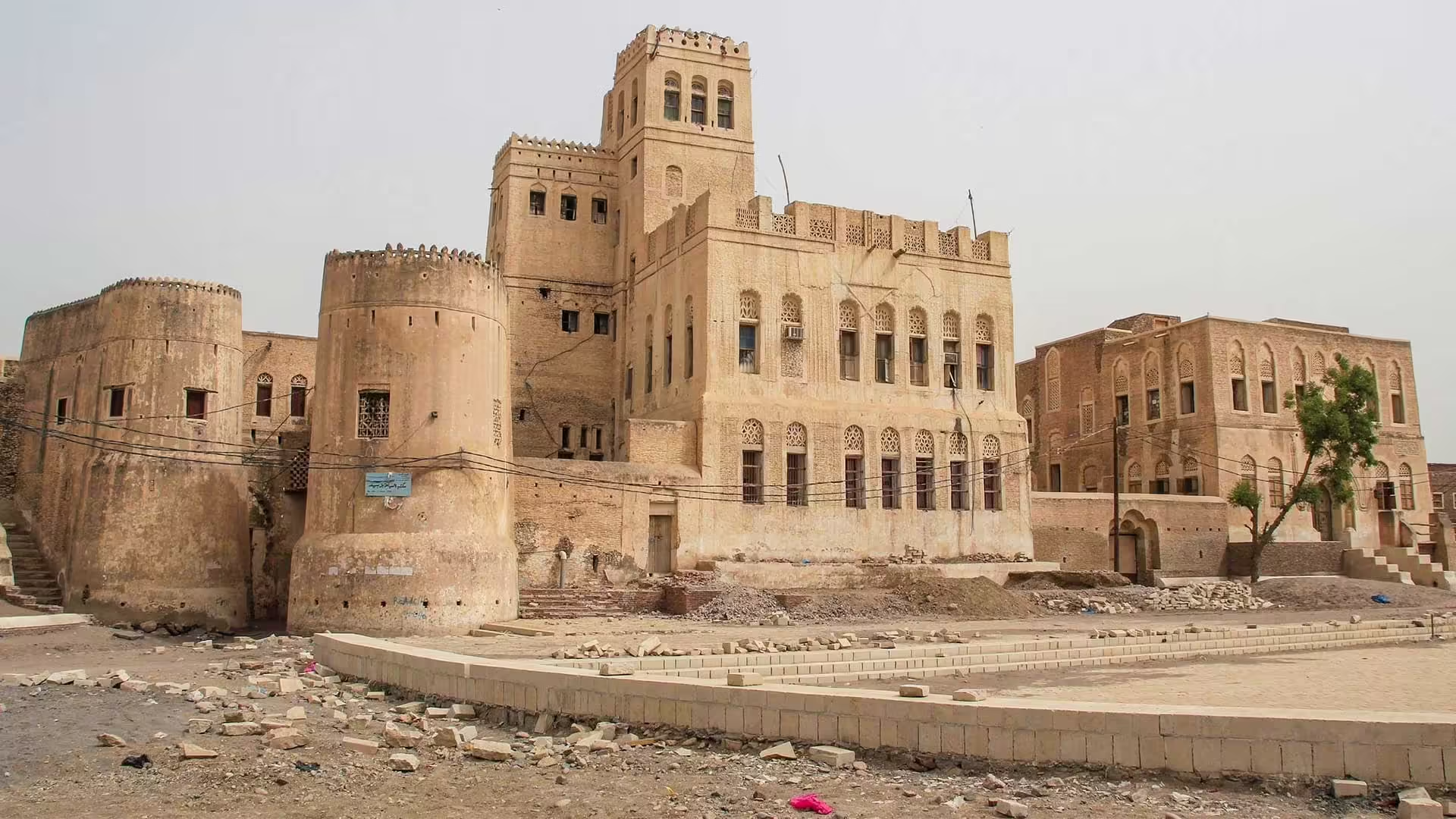
Zabid () (also spelled Zabīd, Zabeed and Zebid) is a town with an urban population of around 52,590 people, located on Yemen's western coastal plain. It is one of the oldest towns in Yemen, and has been a UNESCO World Heritage Site since 1993. However, in 2000, the site was placed on the List of World Heritage in Danger. The town was the capital of several ruling dynasties in Yemen over many centuries.
Zabid is an ancient Yemeni coastal town of about 52,590 people that served as the capital for several ruling dynasties throughout history. The town has been a UNESCO World Heritage Site since 1993, though it was placed on the endangered list in 2000 due to preservation concerns.
AI-generated from the Wikipedia summary — may contain errors.
Weather now
7-day forecast
via Open-Meteo
Place details
- Locality
- زبيد
- Region
- محافظة الحديدة
- Country
- اليمن
- Population
- 52,590
- Timezone
- Asia/Aden
via OpenStreetMap · GeoNames
Key facts
- Settlement.name
- Zabid
- Settlement.settlement_type
- Town
- Settlement.image_caption
- Clockwise from top: Citadel Zabid skyline, Al-Iskanderiya or Citadel Mosque, Administration building within the citadel, architecture pattern, historic town
- Settlement.pushpin_map
- Yemen
- Settlement.pushpin_label_position
- bottom
- Settlement.pushpin_map_caption
- Location in Yemen
- Settlement.subdivision_type
- Country
- Settlement.subdivision_type1
- Governorate
- Settlement.subdivision_name1
- Al Hudaydah Governorate
- Settlement.subdivision_type2
- District
- Settlement.subdivision_name2
- Zabid
- Settlement.unit_pref
- Imperial
- Settlement.population_as_of
- 2004
- Settlement.population_blank1_title
- Ethnicities
- Settlement.timezone
- Yemen Standard Time
- Settlement.utc_offset
- +3
- UNESCO World Heritage Site.child
- yes
- UNESCO World Heritage Site.official_name
- Historic Town of Zabid
via Wikipedia infobox
Described at
Tehlové budovy v Zabíd - Jemen - PlaceMania
Zanikajúcu tradičnú architektúru mesta zdobia prepracované vzory.
placemania.sk →Podobne ako mnohé iné jemenské mestá, aj Zabíd je staré, zaujímavé mesto bohaté na kultúrne a náboženské artefakty. Mesto pretína spletitý súbor labyrintov uličiek, za ktorými stoja stáročné hlinené tehlové domy. Ich fasády majú nádherne prepracované štukové vzory, ktoré čerpajú z arabských, afrických a indických tradícií. Dávajte pozor na zložité abstraktné vzory, kvetinové vzory, zvieratá a kaligrafiu. Tieto vzory sa rozširujú aj do interiéru niektorých domov. Na niektorých budovách je dokonca Dávidova hviezda, ktorá svedčí o jemenskej židovskej tradícii a minulosti Zabídu ako centra kultúry a náboženstva. Bohužiaľ, novšie budovy ohrozujú niektoré z jeho najvynikajúcejších tradičných tehlových architektúr. Znepokojujúci počet týchto historických domov nahradili betónové budovy vo vnútri mestských hradieb. Malý populačný boom po vojne v Perzskom zálive podnietil ľudí, aby buď renovovali staré budovy, alebo ich nahradili novšími stavbami. Niektoré z tradičných domov, ktorým sa podarilo prežiť, majú tendenciu zostať zanedbané kvôli chudobe. Zakladateľ projektu PlaceMania.sk a zodpovedá za jeho obsah, technické fungovanie a dlhodobý rozvoj. Cestovné zápisky na webe vychádzajú z vlastnej skúsenosti z ciest; faktografické záznamy o miestach vznikajú kombináciou verejných zdrojov, automatizovaného spracovania dát a redakčného overovania. Zameriava sa na netradičné lokality, ich historický a geografický kontext a menej známe súvislosti. Things to do near Tehlové budovy v Zabíd, Zabíd, زبيد, Забид, Zabīd, Zebid, Lokalita, Politická oblasť, Zabid, Al Hudaydah Governorate, Yemen, اليمن, Jemen, YE, YEM, Zabíd, Jemen. Find tours, guided tours, local activities, attractions, tickets, excursions, sightseeing, day trips and travel experiences nearby. Coordinates: 14.201759, 43.3182764. Pozrite si ďalšie zaujímave miesta vo svete, ktoré stoja za naplánovanie ďalšej cesty. Každý rok sa ľudia stretávajú, aby túto mešitu z hlinených tehál pokryli čerstvou vrstvou zeminy. Chcete vidieť ďalšie úchvatné miesta ako Tehlové budovy v Zabíd? Nájdeš ich u nás na mape. Objav s nami ďalšie úžasné miesta na zemi.
Excerpt from a page describing this subject · 15,772 chars · not written by Vinony
Wikidata facts
- Instance of
- urban area
- Country
- Yemen
- Located in
- Al Hudaydah Governorate
- Population
- 50781
- Area
- 1.35
- Elevation
- 114
- Time zone
- UTC+03:00
- Image
- Zabid, Yemen.jpg
- Significant event
- list of World Heritage in Danger
Show 5 more facts
- Commons category
- Zabid
- heritage designation
- World Heritage Site
- native label
- زبيد
- P12749
- satellite galaxy
- described at URL
- www.placemania.sk/svetova-zaujimavost/tehlove-budovy-v-zabid
via Wikidata · CC0
Travel guide
Understand
thumb|Back streets
Once the capital of the country, between 13th and 15th centuries, and a centre of Islamic education, the old town of Zabid has been declared a UNESCO World Heritage Site.
Zabid was known as a center of the Arab and Muslim world, especially for Islamic education, due in large part to its famed University of Zabid.
See
thumbnail|Zabid mosque Zabid's Great Mosque occupies a prominent place in the town.
The vestiges of its university can also be visited.
Travel guide from Wikivoyage (CC BY-SA 4.0)
~6 min read
Encyclopedic overview
7 sectionsContents
- History
- Geography
- World Heritage Site
- Economy
- Gallery
- References
- External links
Zabid () (also spelled Zabīd, Zabeed and Zebid) is a town with an urban population of around 52,590 people, located on Yemen's western coastal plain. It is one of the oldest towns in Yemen, and has been a UNESCO World Heritage Site since 1993. However, in 2000, the site was placed on the List of World Heritage in Danger. The town was the capital of several ruling dynasties in Yemen over many centuries.
==History== The town is one of the oldest in Yemen. It was originally a village known as al-Husayb that was inhabited by the Asha'ir tribe. It later took on the name of the Wadi Zabid, the valley to its south. According to tradition, the town's early history is associated with Abu Musa al-Ash'ari, one of the companions of the Islamic prophet Muhammad, who is said to have built the al-Asha'ir Mosque as the fifth mosque in the history of Islam.
Excerpted from Wikipedia’s “Zabid” article, available under the CC BY-SA 4.0 licence.
Gallery (13)
On the map
5 mapped locations