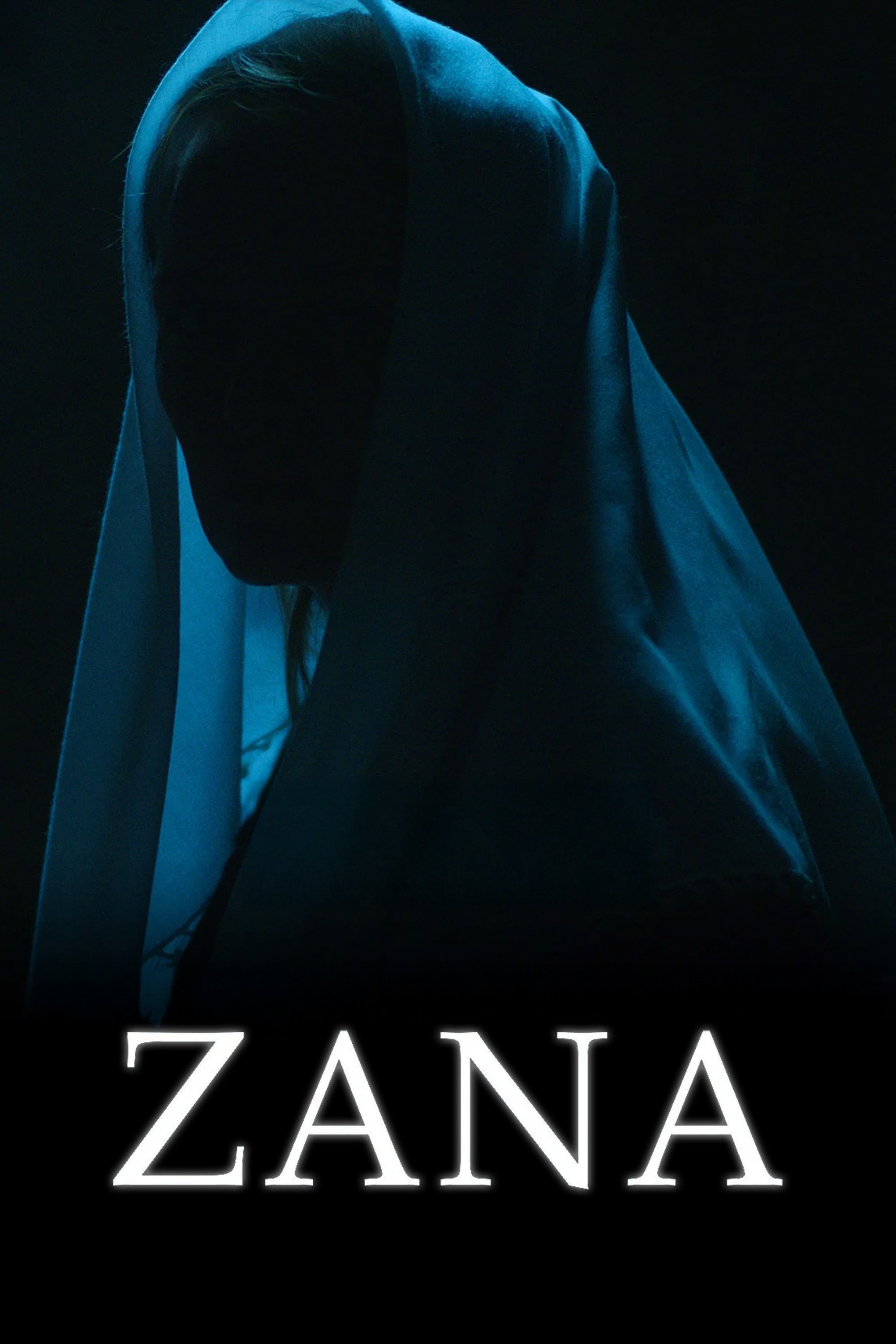
Poster from TMDB
Film · TMDB
6.8Haunted by her long-suppressed past and pressured by family to seek treatment from mystical healers for her infertility, a Kosovar woman struggles to reconcile the expectations of motherhood with a legacy of wartime brutality.
Cast
- Adriana Matoshi as Lume
- Astrit Kabashi as Ilir
- Mensur Safqiu as Dr. Murati
- Çun Lajçi as Lume's Father
- Bislim Muçaj as Bajram
- Fatmire Sahiti as Remzije
Themes
- daughter
- post-traumatic stress disorder (ptsd)
- nightmare
- pregnancy
- possession
- kosovo
- djinn
- dead child
- folk medicine
This product uses the TMDB API but is not endorsed or certified by TMDB.
Described at

Zana review: Kosovan town’s obsession with fertility | Sight and Sound
It takes a village to conceive a child in Antoneta Kastrati’s portrait of Lume, a woman yearning for pregnancy amidst oppresive patriarchal pressures.
bfi.org.uk →News, reviews and archive features every Friday, and information about our latest magazine once a month. A woman leads a placid cow through a drowsy summer meadow; the air thrums with clean life as they pick their way down to a stream. But when they get there, the water is foul: a bovine corpse is rotting in the mud. The woman recoils, turning back towards the living cow she has been leading. But she’s gone – there’s only lush summer air where the cow used to be. Most chillingly of all, the woman doesn’t seem particularly surprised. The opening scene of Antoneta Kastrati’s meditation on motherhood, death and the aftermath of war perfectly encapsulates the sense of deep unease which will permeate this profoundly moving film. It tells the story of a woman, Lume (played with riveting intensity by Adriana Matoshi) and her long struggle both with her own fertility and with the rigid expectations that encroach on her childbearing body in the traditional culture of a rural Kosovan village. Usually, when a film turns its gaze on the female body, the muscle memory of cinematic myth-making kicks in – whether the woman in question is a victim, a harpy or a sexualised stooge. Female fertility seems to trigger a certain moralising tendency, which insists that a mousy wife will sleepwalk with surprising ease into impregnation by the devil (Roman Polanski’s Rosemary’s Baby, 1968), or that a pregnant teen can be satisfyingly slotted into the standard model of motherhood by the application of enough hormones and awakened instincts (Jason Reitman’s Juno, 2007). Even when tropes are subverted, they endure: Kornél Mundruczó’s Pieces of a Woman (2020) strained every sinew (or, more literally, the sinews of Vanessa Kirby) to present childbirth as a devastating physical ordeal, only to fall back on the well-oiled psychological machinery of maternal bereavement as an opportunity for enhanced self-actualisation. When female directors get their hands on the key to the plotline stockroom, though, things get more interesting: Alice Lowe’s dark comedy Prevenge (2016) featured a foetus on a killing spree, while debbie tucker green’s unforgettable 2014 debut Second Coming presented us with an inexplicable and apparently supernatural pregnancy, and then dared us to make some kind of sense out of it. Like Pieces of a Woman, Kastrati’s film is about birth and grief, but it has more in common with tucker green’s enigmatic provocation than with Mundruczó’s overwrought Oscar-bait. The authenticity of its shocking emotional freight is palpable: both Kastrati and her cinematographer and sister, Sevdije, lived through the Kosovo War of 1998-99 as teenagers, and lost close family members. This explains the film’s rapid switches between the harmony and safety of the countryside and the ugly stain and stench of civil war. Repeatedly, the audience is jolted into and out of nightmare, as the lines are blurred between the reality of Lume’s apparently quiet and well-ordered life and the haunting traces of her trauma. In nightmares she confronts, over and over again, the death of her four-year-old daughter Zana, who was caught in the crossfire of a gun battle in 1999. Yet the fatal moment is withheld from view almost until the end of the film, and instead we find ourselves tethered claustrophobically to Lume’s point of view as she moves between and within the dark spaces of the farmhouse and the land around it, following the unbearably laboured breathing of lungs filled with blood. These dreams descend without warning, and it is not the death itself that is most disturbing, but the nearness of death, its ineluctable and unfinished imminence. For Lume’s husband Ilir (Astrit Kabashi), closure can only come with a rebirth, and he has been waiting for years for a new pregnancy to heal the family. But while his agitation simmers, it’s up to his mother Remzije (Fatmire Sahiti), who lives with the couple, to take decisive action. This emphasis on Remzije’s matriarchal age
Excerpt from a page describing this subject · 12,006 chars · not written by Vinony
Wikidata facts
- Instance of
- film
- Genre
- drama film
- Country of origin
- Albania
- Original language
- Albanian
- Director
- Antoneta Kastrati
- Screenwriter
- Antoneta Kastrati
- Duration
- 97
- FilmAffinity ID
- 853221
- Distribution format
- video on demand
- Official website
- www.zanamovie.com
Show 4 more facts
- publication date
- 2019-09-21
- title
- Zana
- film editor
- Antoneta Kastrati
via Wikidata · CC0