Zhangjiakou
Sign in to saveAlso known as Kalgan, Khaalgan, Chuulalt Khaalga, Imiyangga Jase, Chang-chia-k'ou, Qaghalgha, Cang-tia-kchou, Chang-chia K'ou
Zhangjiakou (), also known as Kalgan and by several other names, is a prefecture-level city in northwestern Hebei province in Northern China, bordering Beijing to the southeast, Inner Mongolia to the north and west, and Shanxi to the southwest. In 2020, its population was 4,118,908 inhabitants, with an area of , divided into 17 counties and districts. The built-up (or metro) area, made of Qiaoxi, Qiaodong, Chongli, Xuanhua, Xiahuayuan Districts, is largely conurbated, with 1,413,861 inhabitants in 2020 in an area of . In 2024, the registered population of the whole region is 208.896 million.
OverviewAI-generated
Zhangjiakou is a prefecture-level city in China, situated within the Hebei province. It has at various times been part of Chahar, Mengjiang, and the South Chahar Autonomous Government, and served as the capital of Mengjiang. The city contains four administrative districts: Qiaodong, Qiaoxi, Xuanhua, and Xiahuayuan. Its official name is 张家口市, and it is twinned with Skövde Municipality.
The city covers an area of 36,796.53 square kilometers and has a population of 4,345,485. It is located at an elevation of 716 meters above sea level. Zhangjiakou uses the postal code 075000, the local dialing code 313, and the license plate code 冀G. The time zone is UTC+08:00.
Synthesized by Vinony from 51 facts across 7 sources: Wikidata, Open Meteo, Openweathermap, OpenStreetMap, GeoNames, Vinony graph, Geo. Generated from structured data (not the Wikipedia text) and checked against those facts — may still contain errors.
Weather now
7-day forecast
via Open-Meteo
Wikipedia views (30d)
4,233 totalvia Wikimedia Pageviews API
Key facts
- Settlement.name
- Zhangjiakou
- Settlement.other_name
- Changchiakow, Kalgan
- Settlement.native_name
- 张家口市
- Settlement.native_name_lang
- zh-Hans
- Settlement.nicknames
- Pearl of the Great Wall (), Northern Gate of Beijing
- Settlement.settlement_type
- Prefecture-level city
- Settlement.image_caption
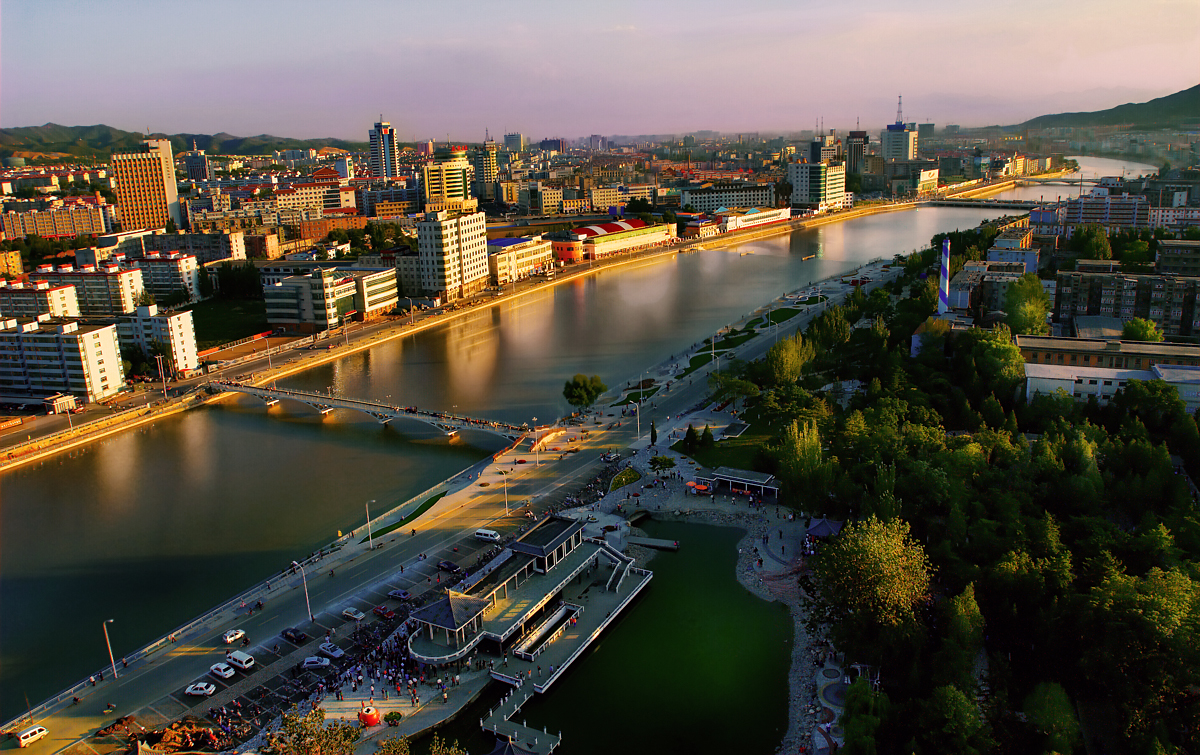
- Clockwise from the top: Qingshui riverfront, Zhangjiakou Civic Center, Tong Bridge, Qingyuan Building, Dajingmen
- Settlement.image_map1
- Location of Zhangjiakou Prefecture within Hebei (China).png
- Settlement.mapsize1
- 250px
- Settlement.map_caption1
- Location of Zhangjiakou City jurisdiction in Hebei
- Settlement.pushpin_map
- China Hebei#China Northern Plain#China
- Settlement.pushpin_label_position
- left
- Settlement.pushpin_map_caption
- Location of the city centre in Hebei
- Settlement.subdivision_type
- Country
- Settlement.subdivision_name
- People's Republic of China
- Settlement.subdivision_type1
- Province
- Settlement.subdivision_name1
- Hebei
- Settlement.seat_type
- Municipal seat
via Wikipedia infobox
Wikidata facts
- Instance of
- big city
- Official name
- ᠬᠠᠭᠠᠯᠭᠠᠨ
- Country
- Mengjiang
- Population
- 4118908
- Area
- 36796.53
- Elevation
- 716
- Time zone
- UTC+08:00
- Capital of
- Mengjiang
- Shares border with
- Inner Mongolia
- Official website
- www.zjk.gov.cn
- Image
- Mount Dongtaiping, Zhangjiakou, June 10, 2010.jpg
- Dialing code
- 313
- Licence plate code
- 冀G
Show 9 more facts
- Commons category
- Zhangjiakou
- topic's main category
- Category:Zhangjiakou
- twinned administrative body
- Skövde Municipality
- postal code
- 075000
- category of associated people
- Category:People from Zhangjiakou
- native label
- ᠴᠢᠭᠣᠯᠠᠯᠲᠣ ᠬᠠᠭᠠᠯᠭᠠ
- category for people born here
- Category:People from Zhangjiakou
- described by source
- Encyclopædia Britannica 11th edition
- P12749
- Sheila Cove
Sources (7)
via Wikidata · CC0
Travel guide
Understand
thumb|North Road Zhangjiakou is about 180 km from Beijing. It has long been an important gateway between northern China and Inner Mongolia, earning the nickname “The Northern Gate of the Capital.” The city’s strategic location made it a vital military and trading center along the Great Wall for centuries.
Zhangjiakou gained international fame as one of the host cities of the 2022 Beijing Winter Olympics. The Chongli District, in particular, was the venue for many skiing and snowboarding events. Visitors can enjoy both the natural beauty of the mountains and the cultural heritage of northern China in one trip.
Get around
The urban area of Zhangjiakou is relatively large, and the main attractions are located in Chongli District and the city center.
Traveling within the city mainly relies on buses and taxis. The starting price of a taxi is ¥5 (for the first 2 kilometers), and you can also use ride-hailing apps such as Didi.
If you go to Chongli Ski Area, you can take a long-distance bus or ski resort shuttle bus from Zhangjiakou Station or Zhangjiakou South Station to major ski resorts such as Yunding, Taiwu, and Wanlong.
In winter, mountain roads tend to freeze easily, so you need to reserve more time if you drive by yourself; in summer, it is very suitable for self-driving tours along the "Grassland Sky Road".
Travel guide from Wikivoyage (CC BY-SA 4.0)
~28 min read
Encyclopedic overview
22 sectionsContents
- Names
- History
- Pre-Qin era
- Qin–Han era
- Jin–Sui era
- Tang–Song era
- Yuan–Ming–Qing era
- Modern history
- Tourism
- Geography
- Climate
- Administrative divisions
- Economy
- Transportation
- Military
- Education
- Sports
- See also
- References
- Citations
- Bibliography
- External links
Zhangjiakou (), also known as Kalgan and by several other names, is a prefecture-level city in northwestern Hebei province in Northern China, bordering Beijing to the southeast, Inner Mongolia to the north and west, and Shanxi to the southwest. In 2020, its population was 4,118,908 inhabitants, with an area of , divided into 17 counties and districts. The built-up (or metro) area, made of Qiaoxi, Qiaodong, Chongli, Xuanhua, Xiahuayuan Districts, is largely conurbated, with 1,413,861 inhabitants in 2020 in an area of . In 2024, the registered population of the whole region is 208.896 million.
Since ancient times, Zhangjiakou has been a stronghold of military significance and vied for by multiple sides, hence it is nicknamed the Northern Gate of Beijing. Due to its strategic position on several important transport arteries, it is a critical node for travel between Hebei and Inner Mongolia and connecting northwest China, Mongolia, and Beijing. Dajingmen, an important gate and junction of the Great Wall of China, is located here.
Excerpted from Wikipedia’s “Zhangjiakou” article, available under the CC BY-SA 4.0 licence.
Gallery (34)
On the map
3 mapped locations