Category
page 112th-century books

Nibelungenlied
250px|thumb|First page from Manuscript C ( 1230)
The ' (, or ; or ), translated as The Song of the Nibelungs''', is an epic poem written around 1200 in Middle High German. Its anonymous poet was likely from the region of Passau. The is based on an oral tradition of Germanic heroic legend that has some of its origin in historic events and individuals of the 5th and 6th centuries and that spread throughout almost all of Germanic-speaking Europe. Scandinavian parallels to the German poem are found especially in the heroic lays of the Poetic Edda and in the Völsunga saga''.

The Tale of Igor's Campaign
Old East Slavic heroic poem

Gesta Hungarorum
first extant Hungarian book about history
Mishneh Torah
code of Jewish religious law authored by Maimonides
Madrid Skylitzes
illustrated illuminated manuscript of the Synopsis of Histories by John Skylitzes
Chronica Boemorum
chronicle of the Czech lands

The Alchemy of Happiness
book by Al-Ghazali
Culhwch ac Olwen
Welsh tale

Lilāvati
Līlāvatī is a treatise by Indian mathematician Bhāskara II on mathematics, written in 1150 AD. It is the first volume of his main work, the Siddhānta Shiromani, alongside the Bijaganita, the Grahaganita and the Golādhyāya.
thumb|A problem from the Lilavati by Bhaskaracharya. Written in the 12th century. This appeared on page 18 of The Mathematical Mystery Tour by UNESCO in 1989.
Yngvars saga víðförla
book by Oddr Snorrason

Lais of Marie de France
series of twelve short narrative Breton lais by the poet Marie de France

Västgötalagen
thumb|right|A page of the late 13th century law .
' ( or ) or the Västgöta (Westrogothic) law' is the oldest Swedish text written in Latin script and the oldest of all Swedish provincial laws. It was compiled in the early 13th century, probably at least partly at the instigation of Eskil Magnusson and was the code of law used in the provinces of Västergötland and Dalsland and in Mo härad during the latter half of that century. The earliest complete text is dated 1281. Small fragments of an older text have been dated 1250.
First Grammatical Treatise
Treatise on Old Norse phonology

Aucassin and Nicolette
Old French poem from the 12th/13th century
The Four Sons of Aymon
medieval tale
Chanson de Guillaume
literary work
Roman d'Enéas
12th-century French romance

Der arme Heinrich
literary work by Hartmann von Aue
Datastanagirk
book by Mkhitar Gosh

Historia Compostelana
12th century chronicle
Bisclavret
thumb|Marie de France from an illuminated manuscript
"Bisclavret" ("The Werewolf") is one of the twelve Lais of Marie de France written in the 12th century. Originally written in French, it tells the story of a knight who is trapped in wolf form by the treachery of his wife. The tale shares a common ancestry with the comparable Lay of Melion, and is probably referenced in Sir Thomas Malory's ''Le Morte d'Arthur'' with the tale of Sir Marrok, who has a similar story.
Wiesbaden Codex
12th-century codex
Charroi de Nîmes
Old French chanson de geste
Asad al-ghābah fī maʻrifat al-ṣaḥābah
book by Ibn al-Athīr al-Jazarī
Ryōjin Hishō
collection of Japanese folk songs
Bijaganita
Bijaganita (IAST: '') was treatise on algebra by the Indian mathematician Bhāskara II. It is the second volume of his main work Siddhānta Shiromani ("Crown of treatises") alongside Lilāvati, Grahaganita and Golādhyāya''.
Aspremont
12th-century Old French chanson de geste
Girart de Vienne
late twelfth-century Old French chanson de geste
Gospels of Henry the Lion
manuscript
Roman d'Alexandre
literary work by Alexandre de Paris
Treatise On the Response of the Tao
Taoist book by Li Ying-Chang

Gregorius
thumb|Gregorius
Timarion
The Timarion () is a Byzantine pseudo-Lucianic satirical dialogue probably composed in the twelfth century (there are references to the eleventh-century Michael Psellus), though possibly later.

Gormond et Isembart
French epic poem (before 1150)
Acallam na Senórach
Middle Irish narrative cycle
Amiran-Darejaniani
Amiran-Darejaniani (), translated into English as "The story of Amiran, son of Darejan", is a medieval Georgian romance, dating probably from the early or middle decades of the twelfth century. It is one of those literary works which heralded the emergence of native secular literature after several centuries of domination by patristic tradition. It is a prose tale of battling knights in twelve episodes attributed to Moses of Khoni (Mose Khoneli; მოსე ხონელი). This attribution is found in the epilogue of Vep’khis-tqaosani, an epic poem by Shota Rustaveli, the greatest classic of medieval Georgi
Visramiani
thumb|A Persianate miniature from the 1729 manuscript of Visramiani. National Center of Manuscripts MSS S3702.
thumb|The first-ever printed edition of Visramiani. Tbilisi, 1884.
Visramiani () is a medieval Georgian version of the old Iranian love story Vīs and Rāmīn, traditionally taken to have been rendered in prose by Sargis of Tmogvi, a 12th/13th-century statesman and writer active during the reign of Queen Tamar (r. 1184–1213).

The Aims of the Philosophers
book by Al-Ghazali
The Moderation in Belief
Book by Al-Ghazali
Romance of Horn
12th-century Anglo-Norman romance

Dendermonde Codex
12th century manuscript of songs
Jāmiʻ al-uṣūl fī aḥādīth al-Rasūl
book by Ali ibn al-Athir
Leiðarvísir og borgarskipan
Prise d'Orange
12th-century chanson de geste
The Jewel Ornament of Liberation
key text in the Kagyu tradition of Tibetan Buddhism
al-Nihāyah fī Gharīb al-ḥadīth wa-al-athar
book by Ibn al-Athīr Abū al-Saʻādāt
Annales ianuenses
official history of the Kingdom of Genoa
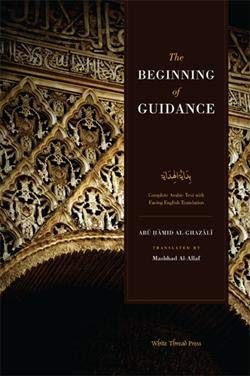
The Beginning of Guidance
book by Al-Ghazali