Category
page 11990s in music

punk rock
genre of rock music

country music
genre of American popular music

thrash metal
subgenre of heavy metal

black metal
subgenre of heavy metal music

J-pop
The term J-pop (often stylized in all caps; an abbreviated form of "Japanese popular music"), refers to a form of popular music that entered the musical mainstream of Japan in the 1990s. In Japan it is known simply as . Modern J-pop has its roots in traditional music of Japan, and global 1960s pop and rock music. J-pop replaced kayōkyoku ("Lyric Singing Music"), a term for Japanese popular music from the 1920s to the 1980s in the Japanese music scene.

alternative rock
subgenre of rock music

house music
electronic dance music genre, that originated in Chicago, United States, in the early 1980s
nu metal
musical subgenre of alternative metal
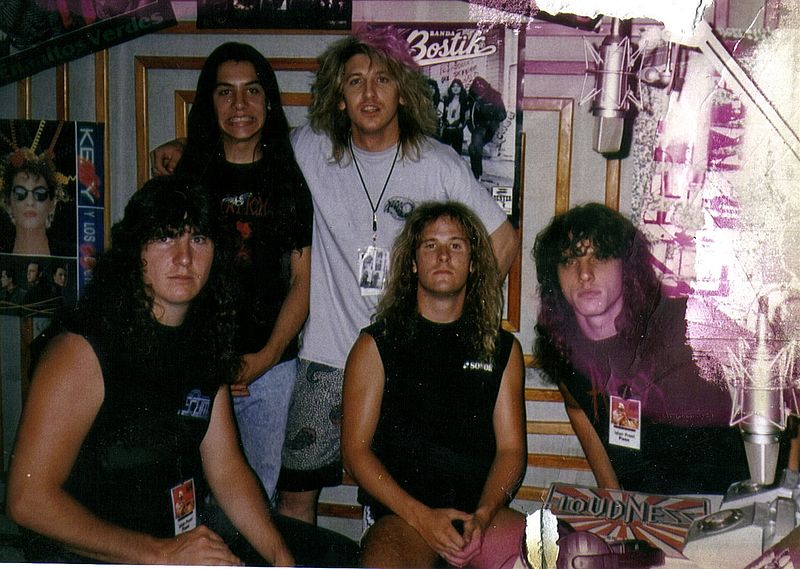
death metal
extreme subgenre of heavy metal music

emo
Emo ( ) is a genre of rock music that combines musical characteristics of hardcore punk with emotional, often confessional lyrics. It emerged as a style of hardcore punk and from the Washington, D.C., hardcore scene, where it was known as emotional hardcore or emocore. The bands Rites of Spring and Embrace, among others, pioneered the genre. In the late 1980s, Maryland bands Moss Icon and the Hated adopted and reinvented this sound, putting less influence on its punk roots. In the early-to-mid 1990s, their influence led emo to be adopted by alternative rock, indie rock, and pop-punk bands, inc
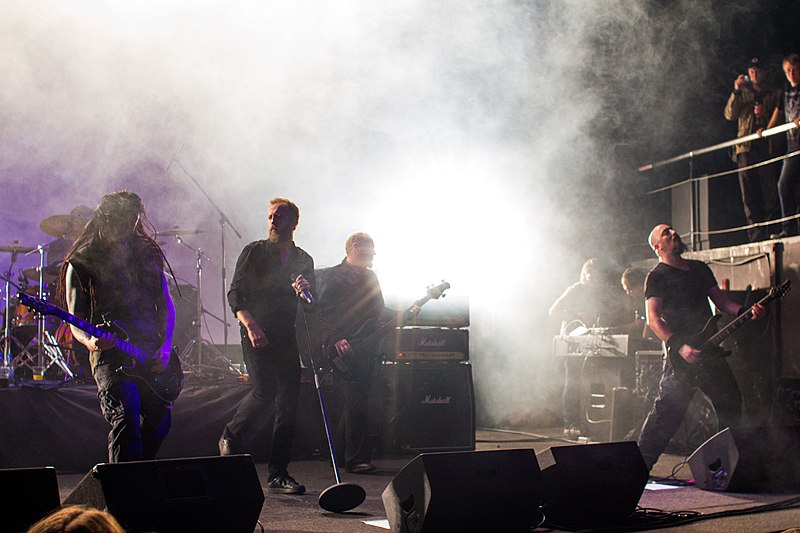
gothic metal
genre of heavy metal music
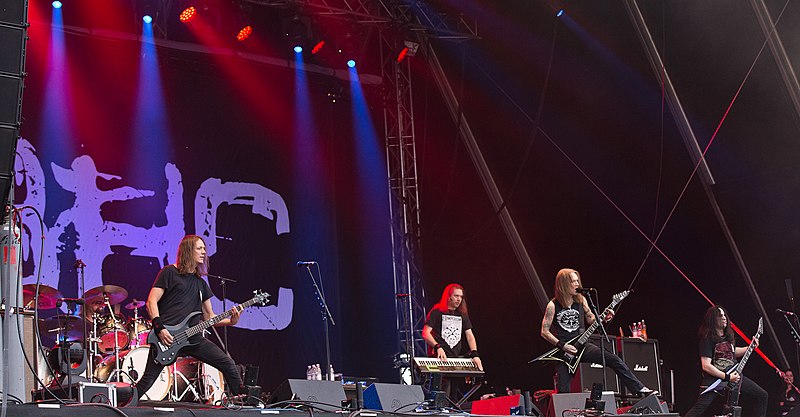
melodic death metal
subgenre of death metal

synth-pop

alternative metal
music subgenre of heavy metal and alternative rock

gothic rock
musical subgenre of post-punk and alternative rock

electronic dance music
broad genre of electronic music

metalcore
Metalcore is a broadly defined fusion genre combining elements of heavy metal and hardcore punk, originating in the 1990s United States and becoming popular in the 2000s. Metalcore typically has aggressive verses and melodic choruses, combined with slow, intense passages called breakdowns. Other defining traits are low-tuned, percussive guitar riffs, double bass drumming, and highly polished production. Vocalists typically switch between clean vocals (melodic, emotional singing) and harsh vocals (including shouting and screaming). Lyrics are often personal, introspective and emotive. It is deb
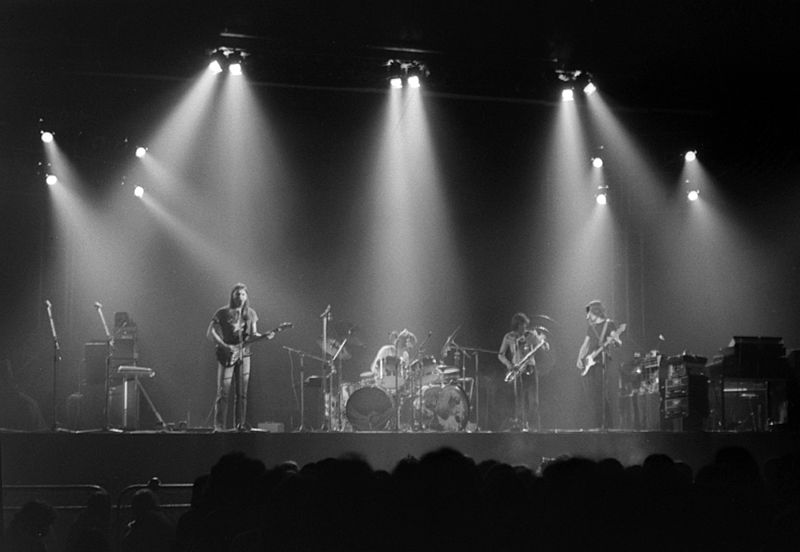
art rock
subgenre of rock music

glam metal
genre of heavy metal music
%20(2).jpg)
post-rock
Post-rock is a subgenre of experimental rock that emphasizes texture, atmosphere, and non-traditional song structures over conventional rock techniques. Post-rock artists often combine rock instrumentation and rock stylings with electronics and digital production as a means of enabling the exploration of textures, timbres and different styles. Vocals, when present, are often used as an instrumental layer, with many bands opting for entirely instrumental compositions. The genre began in indie and underground music scenes, but deviated.

drum and bass
electronic music genre

Britpop
Britpop was a British music and cultural movement that emerged in the 1990s. Musically, it produced bright, catchy alternative rock that drew heavily on the traditions of 1960s guitar-based British pop, with lyrics that emphasised national identity and offered commentary on British culture and society. The movement was seen as a reaction against the darker lyrical themes and soundscapes of the American-led grunge and the more introspective shoegaze scene in Britain. It helped bring British alternative rock into the mainstream and became a key part of the broader Cool Britannia phenomenon, whic
.JPG)
Eurodance
Eurodance (sometimes referred to as Euro-NRG) is a genre of electronic dance music that originated in the late 1980s in Europe. It combines many elements of rap, techno and Eurodisco. This genre of music is heavily influenced by the use of rich vocals, sometimes with rapped verses. This, combined with cutting-edge synthesizers, strong bass rhythm and melodic hooks, establishes the core foundation of Eurodance music.

groove metal
subgenre of heavy metal

pop-punk
Pop-punk (also punk pop, alternatively spelled without the hyphen) is a rock music genre that combines elements of punk rock and pop. It is defined by its fast-paced, energetic tempos, and emphasis on classic pop songcraft, as well as adolescent and anti-suburbia themes. It is distinguished from other punk-variant genres by drawing more heavily from 1960s bands such as the Beatles, the Kinks, and the Beach Boys. The genre has evolved throughout its history, absorbing elements from new wave, college rock, ska, hip hop, emo, boy band pop and even hardcore punk and metalcore. It is sometimes cons
contemporary R&B
popular music genre that combines rhythm and blues with elements of pop, soul, funk, hip-hop, and electronic music

Korean Wave
increase in global popularity of South Korean culture since the 1990s

dance-pop
Dance-pop (also known as club-pop and EDM-pop) is a genre of electronic dance music that originated in the late 1970s to early 1980s. It is generally uptempo music intended for nightclubs with the intention of being danceable but also suitable for contemporary hit radio. Developing from a combination of dance and pop with influences of disco, post-disco and synth-pop, it is generally characterised by strong beats with easy, uncomplicated song structures which are generally more similar to pop music than the more free-form dance genre, with an emphasis on melody as well as catchy tunes. The gen

post-hardcore
Post-hardcore is a punk rock music genre that maintains the aggression and intensity of hardcore punk but emphasizes a greater degree of creative expression. Like the term "post-punk", the term "post-hardcore" has been applied to a broad constellation of groups. Initially taking inspiration from post-punk and noise rock, post-hardcore began in the 1980s with bands like Hüsker Dü and Minutemen. The genre expanded in the 1980s and 1990s with releases by bands from cities which had established hardcore scenes, such as Fugazi from Washington, D.C. as well as groups such as Big Black, Jawbox, Quick

rap rock
cross-genre fusing vocal and instrumental elements of hip-hop with various forms of rock

soft rock
music genre derived from popular and rock music
funk metal
subgenre of funk rock and alternative metal

post-grunge
Post-grunge is a musical offshoot of grunge that has a less abrasive or intense tone than traditional grunge. Originally, the term was used derisively and indicated mid-1990s alternative rock bands such as Bush, Candlebox, Collective Soul, Live, Foo Fighters, and Silverchair, that emulated the original sound of grunge.
riot grrrl
underground feminist punk rock movement; music genre
stoner rock
music sub genre of metal
gangsta rap
genre of rap music
.jpg)
electropop
Electropop is a popular music fusion genre combining elements of the electronic and pop styles.
dark wave
music genre

Auto-Tune
Auto-Tune is audio processor software released on September 19, 1997, by the American company Antares Audio Technologies. It uses a proprietary device to measure and correct pitch in music. It operates on different principles from the vocoder or talk box and produces different results. Auto-Tune can be used in both post-production music mixing and in real-time live performances.
rap metal
cross-genre fusing vocal and instrumental elements of hip-hop with various forms of metal
dream pop
music genre
power pop
music genre
ska punk
fusion music genre
.jpg)
screamo
Screamo (also referred to as skramz) is a subgenre of emo that emerged in the early 1990s and emphasizes "willfully experimental dissonance and dynamics". San Diego–based bands Heroin and Antioch Arrow pioneered the genre in the early 1990s, and it was developed in the late 1990s mainly by bands from the East Coast of the United States such as Pg. 99, Orchid, Saetia, and I Hate Myself. Screamo is strongly influenced by hardcore punk and characterized by the use of screamed vocals. Lyrical themes usually include emotional pain, death, romance, and human rights. The term "screamo" has frequently
teen pop
subgenre of pop music
jungle
electronic music genre; subgenre of drum and bass
alternative hip-hop
subgenre of hip-hop music that encompasses a wide range of styles that are not typically identified as mainstream
West Coast hip-hop
regional genre of hip-hop music that encompasses any artists or music that originated in the West Coast of the United States

chiptune
Chiptune, also called 8-bit music (although not all chiptune is 8-bit), is a style of electronic music, and its associated subculture, made using the programmable sound generator (PSG) sound chips or synthesizers in vintage arcade machines, computers and video game consoles. The term is commonly used to refer to tracker format music using extremely basic and small samples that an old computer or console could produce (this is the original meaning of the term), as well as music that combines PSG sounds with modern musical styles.
djent
Djent () is a subgenre of progressive metal, termed for the guitar sound that characterizes it. While sources such as The Guardian and Guitar World describe djent as a genre, some notable musicians including Randy Blythe (Lamb of God) and Stephen Carpenter (Deftones) say it is not.
electro house
subgenre of house music
UK garage
genre of electronic music originating from England in the early 1990s
G-funk
thumb|262x262px|Example of a G-funk instrumental
G-funk, short for gangsta funk, (or funk rap) is a sub-genre of gangsta rap that emerged from the West Coast scene in the early 1990s. The genre is heavily influenced by the synthesizer-heavy 1970s funk sound of Parliament-Funkadelic (aka P-Funk), often incorporated through samples or re-recordings. It is represented by commercially successful albums such as Dr. Dre's The Chronic (1992), Snoop Dogg's Doggystyle (1993), and 2Pac's All Eyez on Me (1996).
Madchester
Madchester was a musical and cultural scene that emerged in the English city of Manchester during the late 1980s, closely associated with the indie dance movement. Indie dance (also referred to as indie rave) blended indie rock with elements of acid house, psychedelia, and 1960s pop.
mashup
song or composition created by blending two or more pre-recorded songs
smooth jazz
music genre
Europop
Europop (also spelled Euro pop) is a style of pop music characterized by polished production, simple and highly catchy melodies, repetitive choruses, and light lyrical themes. The style consolidated itself mainly in continental Europe from the mid to late 1960s, although it exerted significant influence on British and American artists, and topped the charts throughout the 1980s and 1990s, with revivals and moderate degrees of appreciation in the 2000s. The Swedish group ABBA is widely considered the leading representative of classic Europop.
==History==
During the 1970s and early 1980s, such

Eurobeat
Eurobeat refers to two styles of dance music that originated in Europe: one is a British variant of Italian Eurodisco-influenced dance-pop, and the other is a hi-NRG-driven form of Italo disco. The former was developed in the 1980s, while the latter was developed starting from the early 1990s and continuing in the following decades, distancing itself from its Italo disco origins as time went on.
.jpg)
boombox
A boombox is a transistorized portable music player featuring one or two cassette tape players/recorders and AM/FM radio, generally with a carrying handle. Beginning in the mid-1990s, a CD player was often included. Sound is delivered through an amplifier and two or more integrated loudspeakers. The device is typically capable of receiving radio stations and playing recorded music on cassette tapes or compact discs. Many models are also capable of recording onto cassette. In the 1990s, some boomboxes were available with MiniDisc recorders and players. Designed for portability, boomboxes can be
progressive house
subgenre of house music