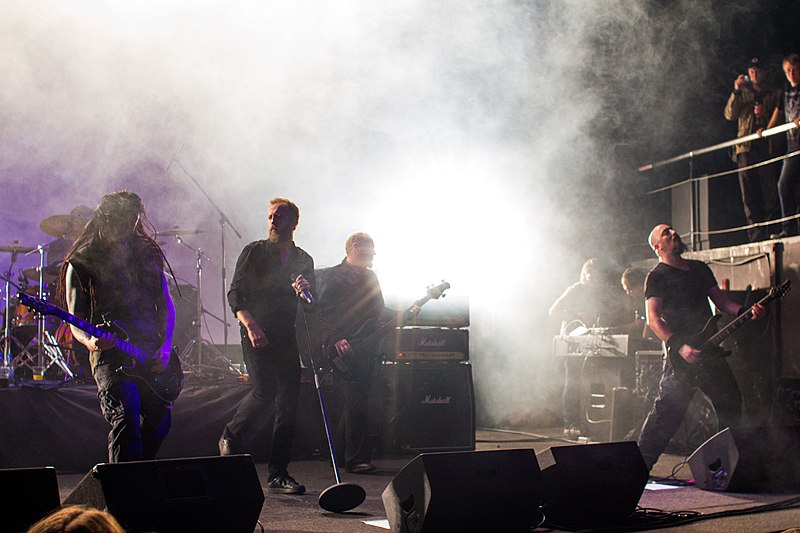
File:Paradise_Lost_in_Saint_Petersburg_2013-8.jpg · Wikimedia Commons · See Wikimedia Commons
Gothic metal is a subgenre of heavy metal that combines the aggression and intensity of metal with darker, more melancholic atmospheric elements inspired by gothic aesthetics and themes. The genre matters because it represents one of metal's most influential developments in creating emotionally complex music that appeals to listeners interested in both heavy instrumentation and introspective, atmospheric soundscapes.
AI-generated from the Wikipedia summary — may contain errors.
Wikidata facts
- Instance of
- music genre
- Country of origin
- United Kingdom
- Image
- Tiamat Rockharz Open Air 2014 17.JPG
Show 3 more facts
- topic's main category
- Category:Gothic metal
- Commons category
- Gothic metal
- inception
- 1990-01-01
via Wikidata · CC0
~38 min read
Encyclopedic overview
Gothic metal (or goth metal) is a fusion genre combining the aggression of heavy metal with the dark atmospheres of gothic rock. The music of gothic metal is diverse with bands known to adopt the gothic approach to different styles of heavy metal music. The genre originated during the early 1990s in the United Kingdom originally as an outgrowth of death-doom, a fusion of death metal and doom metal. Lyrics are generally dark and introspective with inspiration from gothic fiction as well as personal experiences.
Pioneers of gothic metal include Paradise Lost, My Dying Bride and Anathema, all from the north of England. Other pioneers from the first half of the 1990s include Type O Negative from the United States, Lake of Tears, Tiamat and Katatonia from Sweden, and the Gathering from the Netherlands. Norwegian band Theatre of Tragedy developed the "beauty and the beast" aesthetic of combining aggressive male vocals with clean female vocals, a contrast that had been adopted by groups before them, but not as a regular trademark; several bands have employed the technique since. During the mid-1990s, Moonspell, Theatres des Vampires, Rotting Christ and Cradle of Filth brought the gothic approach to black metal. By the end of the decade, a symphonic metal variant of gothic metal had been developed by Tristania and Within Temptation. Nightwish also integrated elements of gothic metal into their well-known mix of symphonic metal and power metal.
Excerpted from Wikipedia’s “gothic metal” article, available under the CC BY-SA 4.0 licence.
Gallery (12)
Available in 55 languages
- Español
- Français
- Deutsch
- 中文
- 日本語
- Русский
- Português
- Italiano
- العربية
- Aragonese
- Azerbaijani
- Bahasa Indonesia
- Belarusian
- Bosnian
- Bulgarian
- Burmese
- Central Kurdish
- Croatian
Show 36 more
via Wikidata sitelinks · CC0