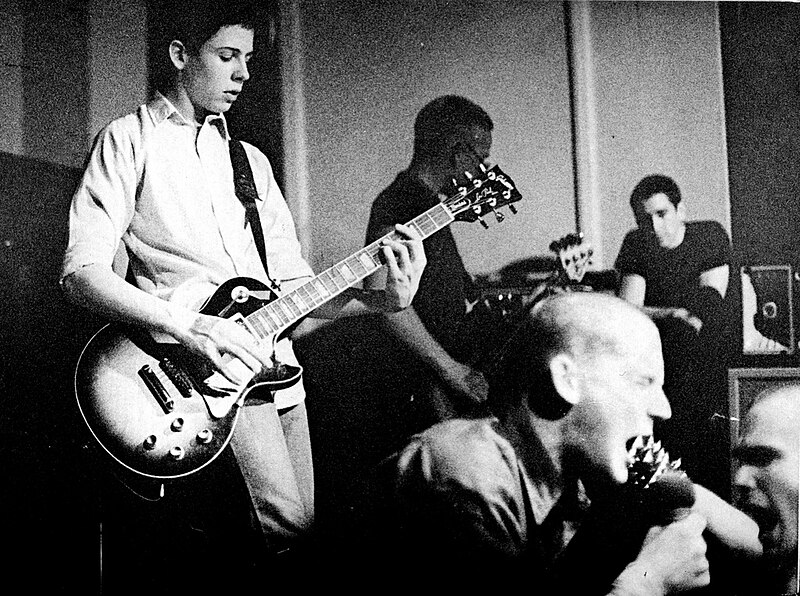
File:Minor-threat-malcolm-riviera.jpg · Wikimedia Commons · See Wikimedia Commons
Also known as emo rock
Emo ( ) is a genre of rock music that combines musical characteristics of hardcore punk with emotional, often confessional lyrics. It emerged as a style of hardcore punk and from the Washington, D.C., hardcore scene, where it was known as emotional hardcore or emocore. The bands Rites of Spring and Embrace, among others, pioneered the genre. In the late 1980s, Maryland bands Moss Icon and the Hated adopted and reinvented this sound, putting less influence on its punk roots. In the early-to-mid 1990s, their influence led emo to be adopted by alternative rock, indie rock, and pop-punk bands, inc
Emo is a genre of rock music that blends the intensity of hardcore punk with deeply personal and emotional lyrics, originating from the Washington, D.C. hardcore scene in the 1980s. It matters because it evolved from a niche punk subgenre into a major influence on alternative rock, indie rock, and pop-punk throughout the 1990s and beyond.
AI-generated from the Wikipedia summary — may contain errors.
Key facts
- Music genre.caption
- Emo bands Samiam and Texas Is the Reason
- Music genre.derivatives
- Soft grunge (grungegaze)
- Music genre.subgenres
- Screamo Midwest emo pop screamo
- Music genre.fusiongenres
- Emo pop emo rap
- Music genre.regional_scenes
- Midwestern U.S. New Jersey
- Music genre.local_scenes
- Chicago Philadelphia San Diego Washington, D.C.
- Music genre.other_topics
- Scene alternative rock pop-punk melodic hardcore emo revival
via Wikipedia infobox
Wikidata facts
- Instance of
- music genre
- Subclass of
- alternative rock
- Country of origin
- United States
- Image
- John Nolan.jpg
Show 7 more facts
- different from
- Emo subculture
- topic has template
- Template:Emo
- Commons category
- Emo
- topic's main category
- Category:Emo
- inception
- 1984-00-00
- social media followers
- 139242
- native label
- Emo
via Wikidata · CC0
~61 min read
Encyclopedic overview
26 sectionsContents
- Characteristics
- Etymology
- History
- Predecessors
- 1984–1991: Origins
- 1991–1994: Reinvention
- 1994–1997: Underground popularity
- 1997–2002: Independent success
- 2002–2010: Mainstream success
- 2010–present: Mainstream decline, underground revivals
- Late 2000s–late 2010s: fourth-wave emo
- Late 2010s–present: fifth-wave emo
- Subgenres and fusion genres
- Subgenres
- Screamo
- Sass
- Fusion genres
- Emo pop
- Emo rap
- Subculture and stereotypes
- Reception and impact
- See also
- References
- Citations
- Bibliography
- External links
Emo ( ) is a genre of rock music that combines musical characteristics of hardcore punk with emotional, often confessional lyrics. It emerged as a style of hardcore punk and from the Washington, D.C., hardcore scene, where it was known as emotional hardcore or emocore. The bands Rites of Spring and Embrace, among others, pioneered the genre. In the late 1980s, Maryland bands Moss Icon and the Hated adopted and reinvented this sound, putting less influence on its punk roots. In the early-to-mid 1990s, their influence led emo to be adopted by alternative rock, indie rock, and pop-punk bands, including Sunny Day Real Estate, Jawbreaker, Cap'n Jazz, Mineral, and Jimmy Eat World. By the Braid, the Promise Ring, American Football, and the Get Up Kids emerged from Midwest emo, and several independent record labels began to specialize in the genre. Meanwhile, screamo, a more aggressive style of emo using screamed vocals, also emerged, pioneered by the San Diego bands Heroin and Antioch Arrow. Its dervative form pop screamo achieved mainstream success in the 2000s with bands like Hawthorne Heights, Silverstein, Story of the Year, Thursday, the Used, and Underoath.
The emo subculture signifies a specific relationship between fans and artists and certain aspects of fashion, culture, and behavior. Emo fashion includes skinny jeans, black eyeliner, tight s with band names, studded belts, and flat, straight, jet-black hair with long bangs. Since the early-to-mid 2000s, fans of emo music who dress like this are referred to as "emo kids" or "emos". The emo subculture was stereotypically associated with social alienation, sensitivity, misanthropy, introversion, and angst. Purported links to depression, , and suicide, combined with its rise in popularity in the early 2000s, inspired a backlash against emo, with some bands, including My Chemical Romance and Panic! at the Disco, rejecting the emo label because of the social stigma and controversy surrounding it. There has long been controversy over which bands are labeled "emo", especially for bands that started outside traditional emo scenes; a viral website, Is This Band Emo?, was created to address one fan's opinion on this question.
Excerpted from Wikipedia’s “emo” article, available under the CC BY-SA 4.0 licence.
Gallery (50)
Available in 59 languages
- Español
- Français
- Deutsch
- 中文
- 日本語
- Русский
- Português
- Italiano
- العربية
- Afrikaans
- Armenian
- Asturian
- Azerbaijani
- Bahasa Indonesia
- Basque
- be_x_old
- Belarusian
- Buginese
Show 40 more
- Bulgarian
- Burmese
- Catalan
- Croatian
- Czech
- Danish
- Esperanto
- Estonian
- Filipino
- Finnish
- Galician
- Georgian
- Greek
- Hebrew
- Hungarian
- Icelandic
- Interlingua
- Latvian
- Lithuanian
- Luxembourgish
- Malay
- Nederlands
- Newari
- Norwegian
- Norwegian Nynorsk
- Polski
- Romanian
- Serbian
- simple
- Slovak
- Slovenian
- Svenska
- Tiếng Việt
- Türkçe
- Ukrainian
- Uzbek
- Wu Chinese
- فارسی
- ไทย
- 한국어
via Wikidata sitelinks · CC0