Category
page 13rd-century Romans

Plotinus
Plotinus (; , Plōtînos; – 270 CE) was a Hellenistic Greek philosopher, born and raised in Roman Egypt. Plotinus is regarded by modern scholarship as the founder of Neoplatonism.
Tertullian
Tertullian (; ; 155 – 220 AD) was a prolific early Christian author from Carthage in the Roman province of Africa. He was the first Christian author to produce an extensive corpus of Latin Christian literature and was an early Christian apologist and a polemicist against heresy, including Gnosticism.

Saint George
Christian saint and martyr (died 303)

Urban I
pope

Sixtus II
Bishop of Rome from 257 to 258

Dionysius
Pope and bishop of Rome from 259 to 268

Lucius I
Pope and bishop of Rome from 253 to 254

Pontian
pope

Zephyrinus
Pope and Bishop of Rome from 199 to 217

Callixtus I
Bishop of Rome from c. 218 to c. 223

Fabian
pope and bishop of Rome from 236 to 250

Stephen I
Pope and Bishop of Rome from 254 to 257

Cornelius
pope Saint (251 to 253)

Anthony the Great
Egyptian Christian monk, hermit, and saint (died 356)

Anterus
Pope and Bishop of Rome from 235 to 236

Arius
Arius (; ; 250 or 256 – 336) was a Cyrenaic presbyter and ascetic. He has been regarded as the founder of Arianism, which holds that Jesus Christ was not coeternal with God the Father, but was rather created directly by God the Father before anything else, as the true Firstborn. Arian theology and its doctrine regarding the nature of the Godhead showed a belief in radical subordinationism, a view notably disputed by 4th century figures such as Athanasius of Alexandria.

Eusebius of Caesarea
Eusebius of Caesarea (30 May AD 339), also known as Eusebius Pamphilius, was a historian of Christianity, exegete, and Christian polemicist from the Roman province of Syria Palaestina. In about AD 314 he became the bishop of Caesarea Maritima.

Eutychian
Pope and Bishop of Rome from 275 to 283
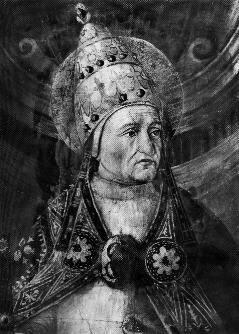
Felix I
Pope and bishop of Rome from 269 to 274

Marcellinus
Pope and bishop of Rome (tenure 296-304)

Cassius Dio
Greco-Roman statesman and historian (c. 155–c. 235)
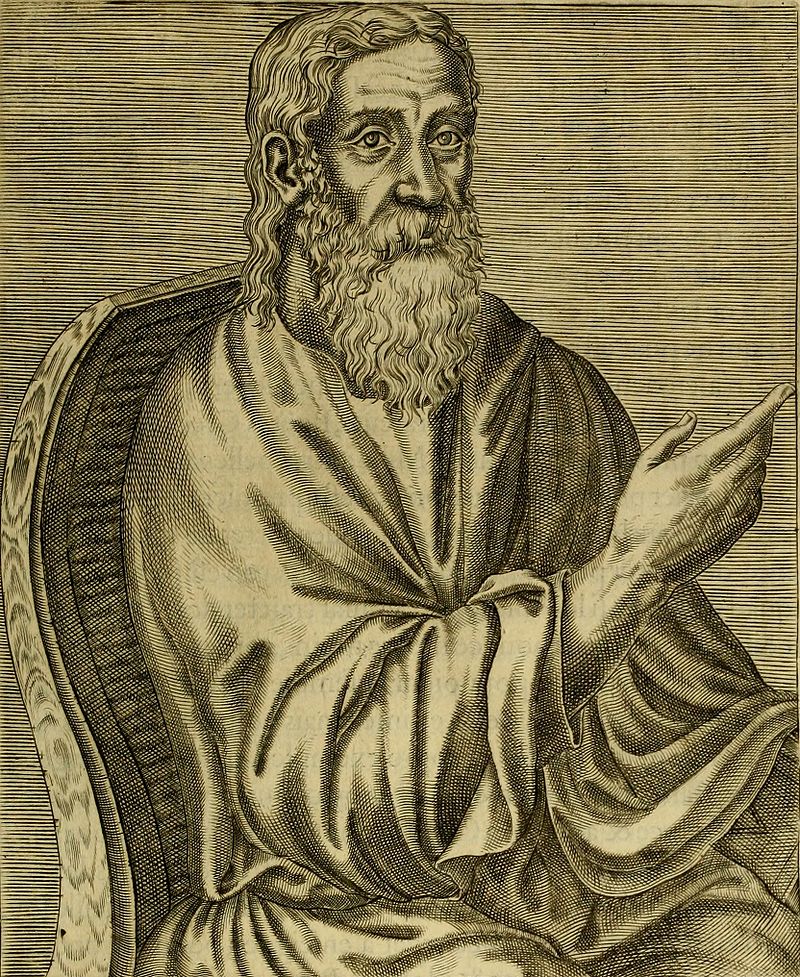
Clement of Alexandria
Christian theologian (c.150 – c.215)

Caius
pope of the Catholic Church from 283 to 296

Irenaeus
Irenaeus ( or ; ; ) was a Greek bishop noted for his role in guiding and expanding Christian communities in the southern regions of present-day France and, more widely, for the development of Christian theology by opposing Gnostic interpretations of Christian Scripture and defending orthodoxy. Originating from Smyrna, he had seen and heard the preaching of Polycarp, who in turn was said to have heard John the Evangelist.

Marcellus I
pope

Saint Valentine
Saint Valentine was a 3rd-century Roman saint, commemorated in Western Christianity on February 14 and in Eastern Orthodoxy on July 6. From the High Middle Ages, his feast day has been associated with a tradition of courtly love. He is also a patron saint of Terni, epilepsy, and beekeepers. Saint Valentine was a clergyman – either a priest or a bishop – in the Roman Empire who ministered to persecuted Christians. He was martyred and his body buried on the Via Flaminia on February 14, which has been observed as the Feast of Saint Valentine since at least the eighth century.

Saint Sebastian
Christian saint and martyr (256–288)

Porphyry
3rd-century Greek Neoplatonist philosopher

Diogenes Laërtius
3rd-century Roman biographer of Greek philosophers

Lawrence of Rome
Christian saint, martyr and a deacon of Rome (225-258)

Cyprian
Cyprian (; ; to 14 September 258 AD) was a bishop of Carthage and an early Christian writer of Berber descent, many of whose Latin works are extant. He is recognized as a saint in the Western and Eastern churches.

Hippolytus
Christian theologian and saint (c. 170 – c. 235)

Saint Cecilia
Roman Catholic saint, martyr and patron saint of music
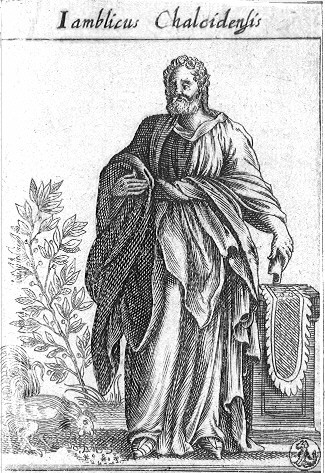
Iamblichus
Iamblichus ( ; ; ; ) was a Syrian Arab Neoplatonist philosopher who determined a direction later taken by Neoplatonism. Iamblichus was also the biographer of the Greek mystic, philosopher, and mathematician Pythagoras. In addition to his philosophical contributions, his is important for the study of the sophists because it preserved about ten pages of an otherwise unknown sophist known as the Anonymus Iamblichi.

Lactantius
Lucius Caecilius Firmianus Lactantius () was an early Christian author who became an advisor to Roman emperor Constantine I, guiding his Christian religious policy in its initial stages of emergence, and a tutor to his son Crispus. His most important work is the Institutiones Divinae ("The Divine Institutes"), an apologetic treatise intended to establish the reasonableness and truth of Christianity to pagan critics.

Ulpian
Ulpian (; ; 223 or 228) was a Roman jurist born in Tyre in Roman Syria (modern Lebanon). He moved to Rome and rose to become considered one of the great legal authorities of his time. He was one of the five jurists upon whom decisions were to be based according to the Law of Citations of Valentinian III, and supplied the Justinian Digest about a third of its contents.

Aelian
Roman author and teacher (c.175–c.235)
Ammonius Saccas
Hellenistic Platonist philosopher (175-242)
Novatian
Novatian (Greek: , , ) was a scholar, priest, and theologian. He is considered by the Catholic Church to have been an antipope between 251 and 258. Some Greek authors give his name as Novatus, who was an African presbyter.

Herodian
Herodian or Herodianus (), sometimes referred to as Herodian of Antioch (c. 170 – c. 240), was a minor Roman civil servant who wrote a colourful history in Greek titled History of the Empire from Marcus onwards (τῆς μετὰ Μάρκον βασιλείας ἱστορία) in eight books covering the years 180 to 238. His work is not considered entirely reliable, although his less biased account of Elagabalus may be more useful than that of Cassius Dio. The origin of Herodian is contested in scholarship, popular hypotheses being Syria, Alexandria in Egypt and Asia Minor. However, he appears to have lived for a considera

Januarius
Januarius ( ; ; Neapolitan and ), also known as , was Bishop of Benevento and is a martyr and saint of the Catholic Church. While no contemporary sources on his life are preserved, later sources and legends say he died during the Great Persecution, which ended with Diocletian's retirement in 305.

Papinian
Aemilius Papinianus (; ; 142 CE–212 CE), simply rendered as Papinian () in English, was a celebrated Roman jurist, magister libellorum, attorney general (advocatus fisci) and, after the death of Gaius Fulvius Plautianus in 205 CE, praetorian prefect.

Marcus Minucius Felix
Latin-language writer

Sextus Julius Africanus
Greco-Roman Christian traveller and historian (c.160–c.240)

Demetrius of Thessaloniki
Christian martyr (died 306)
%2C_inv._2210%2C_Roman_-_Braccio_Nuovo%2C_Museo_Chiaramonti_-_Vatican_Museums_-_DSC00897.jpg)
Philostratus
Philostratus or Lucius Flavius Philostratus (; ; 170s – 240s AD), called "the Athenian", was a Greek sophist of the Roman imperial period. His father was a minor sophist of the same name. He flourished during the reign of Septimius Severus (193–211) and died during that of Philip the Arab (244–249), probably in Tyre.

Paul of Samosata
Patriarch of Antioch

Julius Paulus
late 2nd/early 3rd century Roman jurist and possibly father of empress Julia Cornelia Paula
Gaius Julius Solinus
3rd or 4th century Roman geographer and grammarian
Aureolus
Aureolus was a Roman military commander during the reign of Emperor Gallienus before he attempted to usurp the Roman Empire. After turning against Gallienus, Aureolus was killed during the political turmoil that surrounded the Emperor's assassination in a conspiracy orchestrated by his senior officers. Aureolus is known as one of the Thirty Tyrants and is referenced in ancient sources including the Historia Augusta, Zonaras' epitome and Zosimus' Historia Nova.

Pancras of Rome
Roman Catholic saint

Christina of Bolsena
Christian martyr
Cassius Longinus
Syrian/Egyptian Neoplatonist philosopher (c.213–273)
.jpg)
Dexippus
thumb|Fragmentary statue base erected for Dexippus at Eleusis (I.Eleusis 656 = IG II² 3671)
Publius Herennius Dexippus (; c. 210–273 AD), Greek historian, statesman and general, was an hereditary priest of the Eleusinian family of the Kerykes, and held the offices of archon basileus and eponymous in Athens.
Peter of Alexandria
Coptic pope of Alexandria

Hilarion
Hilarion (291–371), also known by the bynames of Thavata, of Gaza, and in the Orthodox Church as the Great was a Christian anchorite who spent most of his life in the desert according to the example of Anthony the Great (c. 251–356). While Anthony is considered to have established Christian monasticism in the Egyptian Desert, Hilarion, who lived in the coastal area near Gaza, is considered by his biographer Jerome (c. 342/347 – 420), to be the founder of Palestinian monasticism - regarding this claim see also Hilarion's contemporary, Chariton (mid-3rd century – c. 350), founder of monasticism
Victorinus of Pettau
3rd century Christian ecclesiastical writer
Nemesianus
Marcus Aurelius Nemesianus was a Roman poet thought to have been a native of Carthage and flourished about AD 283. He was a popular poet at the court of the Roman emperor Carus (Historia Augusta, Carus, 11).
Menas of Egypt
Egyptian saint, martyr and wonder-worker, said to have lived 285-ca. 309
Lucian of Antioch
Christian martyr, presbyter and theologian (died 312)