Category
page 14th-century Romans

Augustine of Hippo
Christian theologian, philosopher, and saint (354–430)

Jerome
Jerome (; ; ; – 30 September 420), also known as Jerome of Stridon, was an early Christian priest, confessor, theologian, translator, and historian; he is commonly known as Saint Jerome.

Saint George
Christian saint and martyr (died 303)

Sylvester I
33rd pope and saint (reigned 314-335)

Gregory of Nazianzus
Christian saint and theologian (c. 329 – 390)

Damasus I
pope

Julius I
Head of the Catholic Church from 337 to 352

Liberius
Head of the Catholic Church from 352 to 366

Mark
4th-century pope

Anthony the Great
Egyptian Christian monk, hermit, and saint (died 356)

Arius
Arius (; ; 250 or 256 – 336) was a Cyrenaic presbyter and ascetic. He has been regarded as the founder of Arianism, which holds that Jesus Christ was not coeternal with God the Father, but was rather created directly by God the Father before anything else, as the true Firstborn. Arian theology and its doctrine regarding the nature of the Godhead showed a belief in radical subordinationism, a view notably disputed by 4th century figures such as Athanasius of Alexandria.

Eusebius of Caesarea
Eusebius of Caesarea (30 May AD 339), also known as Eusebius Pamphilius, was a historian of Christianity, exegete, and Christian polemicist from the Roman province of Syria Palaestina. In about AD 314 he became the bishop of Caesarea Maritima.

Siricius
pope

Marcellinus
Pope and bishop of Rome (tenure 296-304)

Ammianus Marcellinus
4th-century Roman historian and soldier

Eusebius
Catholic pope and saint

Marcellus I
pope

Miltiades
pope

Helena Augusta
saint, first wife of Roman emperor Constantius Chlorus, and mother of Emperor Constantine the Great (250-330)

Saint Lucy
saint from Italy

Porphyry
3rd-century Greek Neoplatonist philosopher
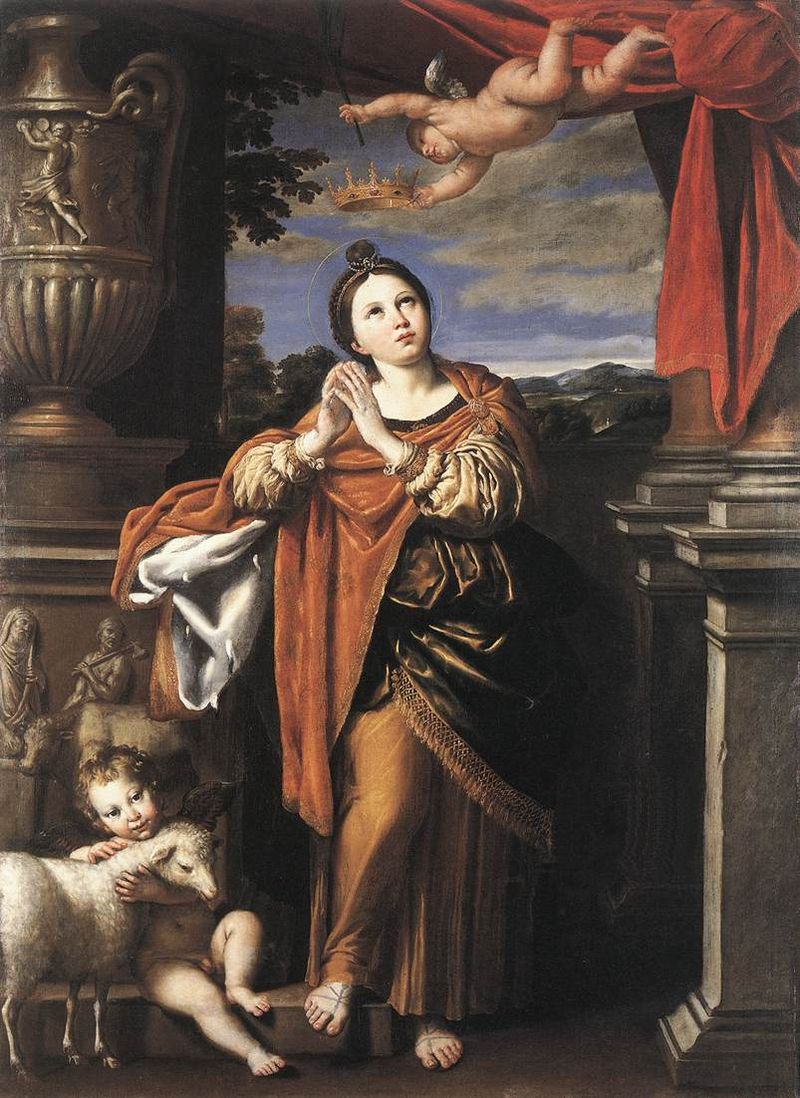
Agnes of Rome
Christian martyr

Aëtius
Roman general and statesman ( c. 390 – 454)

Ephrem the Syrian
Syriac saint, theologian and writer (c. 306 – 373)
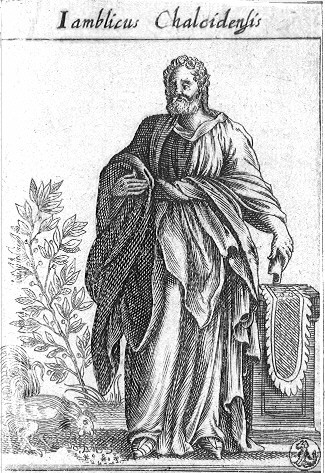
Iamblichus
Iamblichus ( ; ; ; ) was a Syrian Arab Neoplatonist philosopher who determined a direction later taken by Neoplatonism. Iamblichus was also the biographer of the Greek mystic, philosopher, and mathematician Pythagoras. In addition to his philosophical contributions, his is important for the study of the sophists because it preserved about ten pages of an otherwise unknown sophist known as the Anonymus Iamblichi.

Lactantius
Lucius Caecilius Firmianus Lactantius () was an early Christian author who became an advisor to Roman emperor Constantine I, guiding his Christian religious policy in its initial stages of emergence, and a tutor to his son Crispus. His most important work is the Institutiones Divinae ("The Divine Institutes"), an apologetic treatise intended to establish the reasonableness and truth of Christianity to pagan critics.

Claudian
Claudius Claudianus, known in English as Claudian (Greek: Κλαυδιανός; ), was a Latin poet associated with the court of the Roman emperor Honorius at Mediolanum (Milan), and particularly with the general Stilicho. His work, written almost entirely in hexameters or elegiac couplets, falls into three main categories: poems for Honorius, poems for Stilicho, and mythological epic.

Petronius Maximus
5th century western Roman emperor (396-455)

Vegetius
thumb|300px|Mulomedicina (1250-1375 ca., Biblioteca Medicea Laurenziana, pluteo 45.19)
Publius (or Flavius) Vegetius Renatus, known as Vegetius (), was a writer of the Later Roman Empire (late 4th century). Nothing is known of his life or station beyond what is contained in his two surviving works: Epitoma rei militaris (also referred to as De re militari), and the lesser-known Digesta Artis Mulomedicinae, a guide to veterinary medicine. He identifies himself in the opening of his work Epitoma rei militaris as a Christian.

Cyril of Jerusalem
Christian theologian, bishop, and saint (c. 313 – 386)

Margaret the Virgin
saint (275–304) usually shown with a dragon (292–307)

Orosius
Paulus Orosius (; born 375/385 – 420 AD), less often Paul Orosius in English, was a Roman priest, historian and theologian, and a student of Augustine of Hippo. It is possible that he was born in Bracara Augusta (now Braga, Portugal), then capital of the Roman province of Gallaecia, which would have been the capital of the Kingdom of the Suebi by his death. Although there are some questions regarding his biography, such as his exact date of birth, it is known that he was a person of some prestige from a cultural point of view, as he had contact with the greatest figures of his time such as Aug

Aurelius Victor
4th century Roman historian and politician

Monica of Hippo
Christian saint; mother of St. Augustine

Macrobius
Macrobius Ambrosius Theodosius, usually referred to as Macrobius (fl. AD 400), was a Roman provincial who lived during the early fifth century, during late antiquity, the period of time corresponding to the Later Roman Empire, and when Latin was as widespread as Greek among the elite. He is primarily known for his writings, which include the widely copied and read Commentarii in Somnium Scipionis ("Commentary on the Dream of Scipio") about Somnium Scipionis, which was one of the most important sources for Neoplatonism in the Latin West during the Middle Ages; the Saturnalia, a compendium of an

Pachomius the Great
Egyptian saint

Prudentius
thumb|
Aurelius Prudentius Clemens ( ) was a Roman Christian poet, born in the Roman province of Tarraconensis (now Northern Spain) in 348. He probably died in the Iberian Peninsula some time after 405, possibly around 413. The place of his birth is uncertain, but it may have been Caesaraugusta (Zaragoza), Tarraco (Tarragona), or Calagurris (Calahorra).
Libanius
Libanius (; ) was a teacher of rhetoric of the Sophist school in the Eastern Roman Empire. His prolific writings make him one of the best documented teachers of higher education in the ancient world and a critical source of history of the Greek East during the 4th century AD. During the rise of Christian hegemony in the later Roman Empire, he remained unconverted and in religious matters was a pagan Hellene.

Pantaleon
saint

Synesius of Cyrene
Synesius of Cyrene (; ; c. 373 – c. 414) was a Greek bishop of Ptolemais in ancient Libya, a part of the Western Pentapolis of Cyrenaica after 410. He was born of wealthy parents at Balagrae (now Bayda, Libya) near Cyrene between 370 and 375.
Felix II
archdeacon of Rome, antipope or pope in 355 (died 365)

Marinus
Sammarinese saint

Vincent of Saragossa
saint and martyr
Saint Nino
Early Christian saint
Saint Ursula
Frankish saint
Eusebius of Nicomedia
Arian bishop who baptized Constantine

Vitus
3rd or 4th-century Sicilian saint

Macarius of Egypt
Egyptian Christian monk and hermit

Theon of Alexandria
ancient Greek scholar

Demetrius of Thessaloniki
Christian martyr (died 306)

Saint Alban
British protomartyr
Tyrannius Rufinus
monk, historian, and theologian
Themistius
Themistius ( ; 317 – c. 388 AD), nicknamed Euphrades (, "eloquent"), was a statesman, rhetorician and philosopher. He flourished in the reigns of Constantius II, Julian, Jovian, Valens, Gratian and Theodosius I, and he enjoyed the favour of all those emperors, notwithstanding their many differences and the fact that he himself was not a Christian. He was admitted to the senate by Constantius in 355, and he was prefect of Constantinople in 384 on the nomination of Theodosius. Of his many works, thirty-three orations of his have come down to us, as well as various commentaries and epitomes of th
Erasmus of Formiae
Christian saint and martyr
Ursicinus
priest, elected pope in 366/367
Forty Martyrs of Sebaste
Roman soldiers and martyrs

Didymus the Blind
4th century Alexandrian Christian theologian
Aelius Donatus
Roman grammarian

Philomena
thumb|Saint Philomena with attributes: palm branch, whip, anchor and arrows. Plaster cast by Johann Dominik Mahlknecht in the Museum Gherdëina in [[Urtijëi, Italy]]
Philomena ( ), also known as Saint Philomena (; ) or Philomena of Rome ( 10 January 291 10 August 304) was a Greek virgin martyr whose remains were discovered on 24–25 May 1802, in the Catacomb of Priscilla. Three tiles enclosing the tomb bore an inscription, (i.e. "Peace be unto you, Philomena"), that was taken to indicate that her name (in the Latin of the inscription) was Filumena (), the English form of which is Philomena. Phil
Julius Firmicus Maternus
4th century Latin writer and astrologer