Category
page 15-HT3 antagonists

xenon
Xenon is a chemical element; it has symbol Xe and atomic number 54. It is a dense, colorless, odorless noble gas found in Earth's atmosphere in trace amounts. Although generally unreactive, it can undergo a few chemical reactions such as the formation of xenon hexafluoroplatinate, the first noble gas compound to be synthesized.
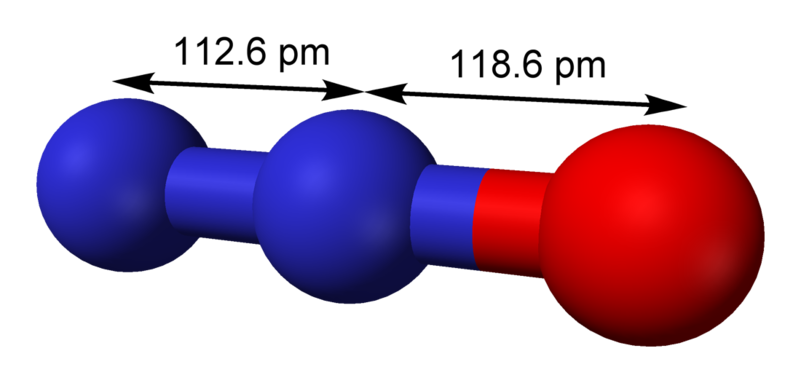
nitrous oxide
chemical compound

fluoxetine
Fluoxetine, sold under the brand name Prozac, among others, is an antidepressant medication of the selective serotonin reuptake inhibitor (SSRI) class used for the treatment of major depressive disorder, anxiety, obsessive–compulsive disorder (OCD), panic disorder, premenstrual dysphoric disorder, and bulimia nervosa. It is also approved for treatment of major depressive disorder in adolescents and children 8 years of age and over. It has also been used to treat premature ejaculation. Fluoxetine is taken by mouth.

metoclopramide
Metoclopramide is a medication used to treat nausea, vomiting, gastroparesis, and gastroesophageal reflux disease. It is also used to treat migraine headaches.
.JPG)
ondansetron
Ondansetron, sold under the brand name Zofran among others, is a medication used to prevent nausea and vomiting caused by chemotherapy, radiation therapy, migraines, or surgery. It is also effective for treating gastroenteritis. It can be given orally (by mouth), intramuscularly (injection into a muscle), or intravenously (injection into a vein).
memantine
Memantine, sold under the brand name Namenda among others, is a medication used to slow the progression of moderate-to-severe Alzheimer's disease. It is taken by mouth.

thujone
Thujone () is a ketone and a monoterpene that occurs predominantly in two diastereomeric (epimeric) forms: (−)-α-thujone and (+)-β-thujone.
sevoflurane
Sevoflurane, sold under the brand name Sevorane, among others, and informally known as sevo, is a sweet-smelling, nonflammable, highly fluorinated methyl isopropyl ether used as an inhalational anaesthetic for induction and maintenance of general anesthesia. After desflurane, it is the volatile anesthetic with the fastest onset. While its offset may be faster than agents other than desflurane in a few circumstances, its offset is more often similar to that of the much older agent isoflurane. While sevoflurane is only half as soluble as isoflurane in blood, the tissue blood partition coefficien

mefloquine
Mefloquine, sold under the brand name Lariam among others, is a medication used to prevent or treat malaria. When used for prevention it is typically started before potential exposure and continued for several weeks after potential exposure. It can be used to treat mild or moderate malaria but is not recommended for severe malaria. It is taken by mouth.

vortioxetine
Vortioxetine, sold under the brand names Trintellix (in the US) and Brintellix (in Europe) among others, is an antidepressant medication of the serotonin modulator and stimulator (SMS) class used in the treatment of major depressive disorder. Its effectiveness is viewed as similar to that of other antidepressants. It is taken orally.
tropisetron
Tropisetron is a serotonin 5-HT3 receptor antagonist used mainly as an antiemetic to treat nausea and vomiting following chemotherapy, although it has been used experimentally as an analgesic in cases of fibromyalgia.

gingerol
Gingerol ([6]-gingerol) is a phenolic phytochemical compound found in fresh ginger that activates heat receptors on the tongue. It is normally found as a pungent yellow oil in the ginger rhizome, but can also form a low-melting crystalline solid. This chemical compound is found in all members of the Zingiberaceae family and is high in concentrations in the grains of paradise as well as an African Ginger species.
granisetron
Granisetron is a serotonin 5-HT3 receptor antagonist used as an antiemetic to treat nausea and vomiting following chemotherapy and radiotherapy. Its main effect is to reduce the activity of the vagus nerve, which is a nerve that activates the vomiting center in the medulla oblongata. It does not have much effect on vomiting due to motion sickness. This drug does not have any effect on dopamine receptors or muscarinic receptors.

(3aS)-palonosetron
Palonosetron, sold under the brand name Aloxi, is a medication used for the prevention and treatment of chemotherapy-induced nausea and vomiting (CINV). It is a 5-HT3 antagonist.
alosetron
Alosetron, sold under the brand name Lotronex among others, is a 5-HT3 antagonist used for the management of severe diarrhea-predominant irritable bowel syndrome (IBS) in females only.
dolasetron
Dolasetron (trade name Anzemet) is a serotonin 5-HT3 receptor antagonist used to treat nausea and vomiting following chemotherapy. Its main effect is to reduce the activity of the vagus nerve, which is a nerve that activates the vomiting center in the medulla oblongata. It does not have much antiemetic effect when symptoms are due to motion sickness. This drug does not have any effect on dopamine receptors or muscarinic receptors.
ramosetron
Ramosetron (INN) is a serotonin 5-HT3 receptor antagonist for the treatment of nausea and vomiting. Ramosetron is also indicated for a treatment of "diarrhea-predominant irritable bowel syndrome in male and women". In India it is marketed under the brand name of Ibset.
5-HT3 antagonist
class of drugs
dazopride
Dazopride (AHR-5531) is an antiemetic and gastroprokinetic agent of the benzamide class which was never marketed. It acts as a 5-HT3 receptor antagonist and 5-HT4 receptor agonist. In addition to its gastrointestinal effects, dazopride facilitates learning and memory in mice.
azasetron
Azasetron is an antiemetic which acts as a 5-HT3 receptor antagonist, pKi = 9.27 It is used in the management of nausea and vomiting induced by cancer chemotherapy (such as cisplatin chemotherapy). Azasetron hydrochloride is given in a usual dose of 10 mg once daily by mouth or intravenously. It is approved for marketing in Japan, and marketed exclusively by Torii Pharmaceutical Co., Ltd. under the trade names "Serotone I.V. Injection 10 mg" and "Serotone Tablets 10 mg". Pharmacokinetics data from S. Tsukagoshi.
cilansetron
Cilansetron is an experimental drug that is a 5-HT3 antagonist under development by Solvay Pharmaceuticals.
lerisetron
Lerisetron (code name F-0930-RS) is a drug which acts as an antagonist at the 5-HT3 receptor. It is a potent antiemetic and was in clinical trials for the treatment of nausea associated with cancer chemotherapy.
litoxetine
Litoxetine (developmental code names SL 81-0385, IXA-001) is an antidepressant which was under clinical development for the treatment of depression in the early 1990s but was never marketed. It acts as a potent serotonin reuptake inhibitor (Ki for = 7 nM) and modest 5-HT3 receptor antagonist (Ki = 315 nM). It has antiemetic activity, and unlike the selective serotonin reuptake inhibitors (SSRIs), appears to have a negligible incidence of nausea and vomiting. The drug is structurally related to indalpine. Development of litoxetine for depression was apparently ceased in the late 1990s
AS-8112
AS-8112 is a synthetic compound that acts as a selective antagonist at the dopamine receptor subtypes D2 and D3, and the serotonin receptor 5-HT3. It has potent antiemetic effects in animal studies and has been investigated for potential medical use.
Zatosetron
Zatosetron (LY-277,359) is a drug which acts as an antagonist at the 5HT3 receptor It is orally active and has a long duration of action, producing antinauseant effects but without stimulating the rate of gastrointestinal transport. It is also an effective anxiolytic in both animal studies and human trials, although with some side effects at higher doses.
Bemesetron
Bemesetron (MDL-72222) is a drug which acts as an antagonist at the 5HT3 receptor. It has antiemetic effects comparable to metoclopramide, however it is not used clinically, instead its main application is in scientific research studying the involvement of the 5HT3 receptor in the actions of drugs of abuse.
zacopride
Zacopride is a potent antagonist at the 5-HT3 receptor and an agonist at the 5-HT4 receptor. It has anxiolytic and nootropic effects in animal models, with the (R)-(+)-enantiomer being the more active form. It also has antiemetic and pro-respiratory effects, both reducing sleep apnea and reversing opioid-induced respiratory depression in animal studies. Early animal trials have also revealed that administration of zacopride can reduce preference for and consumption of ethanol.
Ricasetron
Ricasetron (BRL-46470) is a drug which acts as a selective antagonist at the serotonin 5-HT3 receptor. It has antiemetic effects as with other 5-HT3 antagonists, and also has anxiolytic effects significantly stronger than other related drugs, and with less side effects than benzodiazepine anxiolytics. However, it has never been developed for medical use.
renzapride
Renzapride is a prokinetic agent and antiemetic which acts as a full 5-HT4 agonist and partial 5-HT3 antagonist. It also functions as a 5-HT2B antagonist and has some affinity for the 5-HT2A and 5-HT2C receptors.