Category
page 1Acute pain

myocardial infarction
interruption of blood supply to a part of the heart
pain
Pain is a distressing sensation often caused by intense or damaging stimuli. The International Association for the Study of Pain defines pain as "an unpleasant sensory and emotional experience associated with, or resembling that associated with, actual or potential tissue damage."

rape
thumb|They do not want to (plate 9 of The Disasters of War) by [[Francisco Goya, 1863]]
Rape is a type of sexual assault involving sexual intercourse, or other forms of sexual penetration, carried out against a person without their consent. The act may be carried out by physical force, coercion, abuse of authority, or against a person who is incapable of giving valid consent, such as one who is unconscious, incapacitated, has an intellectual disability, or is below the legal age of consent (statutory rape). The wrongness of the rape is not merely or, on many occasions even primarily, the viole

hemorrhoid

meningitis
Meningitis () is acute or chronic inflammation of the protective membranes covering the brain and spinal cord, collectively called the meninges. The most common symptoms are fever, intense headache, vomiting, neck stiffness, and occasionally photophobia. Other symptoms include confusion or altered consciousness, nausea, and an inability to tolerate loud noises. Young children often exhibit only nonspecific symptoms, such as irritability, drowsiness, or poor feeding. A non-blanching rash (a rash that does not fade when a glass is rolled over it) may also be present.

wound
A wound is any disruption of or damage to living tissue, such as skin, mucous membranes, or organs. Wounds can either be the sudden result of direct trauma (mechanical, thermal, chemical), or can develop slowly over time due to underlying disease processes such as diabetes mellitus, venous/arterial insufficiency, or immunologic disease. Wounds can vary greatly in their appearance depending on wound location, injury mechanism, depth of injury, timing of onset (acute vs chronic), and wound sterility, among other factors. Treatment strategies for wounds will vary based on the classification of th

dental caries
deformation of teeth made by acids from bacteria
appendicitis
Appendicitis is inflammation of the appendix. Symptoms commonly include right lower abdominal pain, nausea, vomiting, fever and decreased appetite. However, approximately 40% of people do not have these typical symptoms. Severe complications of a ruptured appendix include widespread, painful inflammation of the inner lining of the abdominal wall and sepsis.

hernia
A hernia (: hernias or herniae, from Latin, meaning 'rupture') is the abnormal exit of tissue or an organ, such as the bowel, through the wall of the cavity in which it normally resides. The term is also used for the normal development of the intestinal tract, referring to the retraction of the intestine from the extra-embryonal navel coelom into the abdomen in the healthy embryo at about 7 weeks.

bone fracture
medical condition in which there is physical damage to the continuity of the bones

kidney stone disease
formation of one or more mineral calculi (stones) in the urinary tract

burn
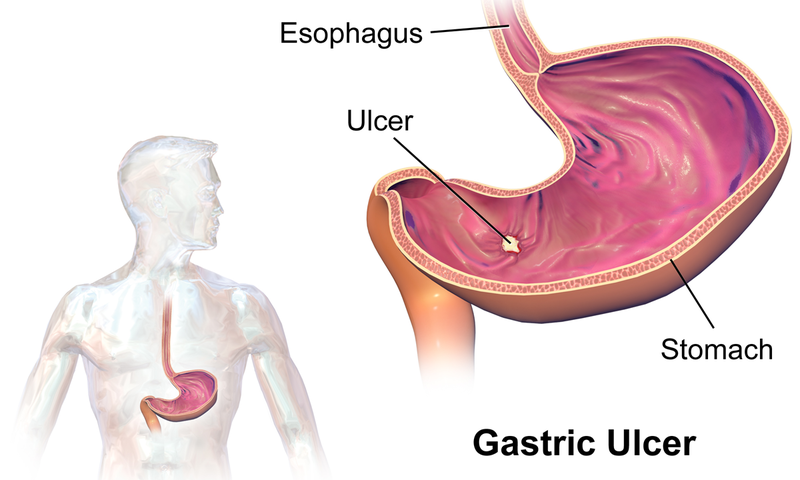
peptic ulcer disease
ulcer of an area of the gastrointestinal tract

encephalitis
Encephalitis (, ) is inflammation of the brain. The severity can be variable with symptoms including reduction or alteration in consciousness, aphasia, headache, fever, confusion, a stiff neck, and vomiting. Complications may include seizures, hallucinations, trouble speaking, memory problems, and problems with hearing.

angina pectoris
Angina, in full angina pectoris, is chest pain or pressure, usually caused by insufficient blood flow to the heart muscle (myocardium). It is most commonly a symptom of coronary artery disease.

amputation
Amputation is the removal of a limb or other body part by trauma, medical illness, or surgery. As a surgical measure, it is used to control pain or a disease process in the affected limb, such as malignancy or gangrene. In some cases, it is carried out on individuals as a preventive surgery for such problems. A special case is that of congenital amputation, a congenital disorder, where fetal limbs have been cut off by constrictive bands. In some countries, judicial amputation is currently used to punish people who commit crimes. Amputation has also been used as a tactic in war and acts of terr

injury
physiological wound caused by an external source

wisdom tooth
rearmost teeth of the mouth that erupt during adulthood

ectopic pregnancy
female reproductive system disease characterized by the implantation of the embryo outside the uterine cavity

abdominal pain
pain in the abdomen

colic
Colic or cholic () is a form of pain that starts and stops abruptly. Colic pain is usually caused by the obstruction of a smooth muscle passageway in the body (e.g. the small or large intestine, bile duct, or ureter). The obstruction triggers muscular contractions (peristalsis) to force the blockage out of the organ, resulting in episodic pain that fluctuates with the contractions. Although the term primarily refers to pain caused by this mechanism, any pain which occurs in episodes or fluctuates in intensity may be termed colic or colicky pain.
urinary retention
medical condition
major trauma
injury that could cause prolonged disability or death
penile fracture
rupture of one or both of the tunica albuginea, the fibrous coverings that envelop the penis's corpora cavernosa
uterine rupture
disruption of uterine wall, beyond 28 weeks of pregnancy
pain management
branch of medicine employing an interdisciplinary approach for easing the suffering and improving the quality of life of those living with chronic pain

esophagitis
Esophagitis, also spelled oesophagitis, is a disease characterized by inflammation of the esophagus. The esophagus is a tube composed of a mucosal lining, and longitudinal and circular smooth muscle fibers. It connects the pharynx to the stomach; swallowed food and liquids normally pass through it.
gastrointestinal perforation
perforation in the wall of part of the gastrointestinal tract.
physical violence
form of abuse characterized by a person intentionally inflicting bodily harm or injury on another

sensory perception of pain
In physiology, nociception , also nocioception (), is the sensory nervous system's process of encoding noxious stimuli. It deals with a series of events and processes required for an organism to receive a painful stimulus, convert it to a molecular signal, and recognize and characterize the signal to trigger an appropriate defensive response.
testicular pain
urological symptom
pain during childbirth
obstetric pain
Fecal impaction
medical condition

vaginal trauma
medical condition
open fracture
type of bone fracture
biliary dyskinesia
gallbladder disease characterized by altered tonus of the sphincter of Oddi, disturbance in the coordination of contraction of the biliary ducts, and/or reduction in the speed of emptying of the biliary tree
uterine perforation
medical condition
Analgesic adjuvant
Medication used for other purposes that additionally has analgesic effects