Category
page 6Agaricales genera
Crassisporium
Crassisporium is a burn-inhabiting agaric fungal genus that colonizes forest fire and campfire sites on ground and charred woody debris in Europe, north Africa and western North America. The small brownish fruitbodies have broadly attached lamellae bordered by cheilocystidia and there is an absence of pleurocystidia and chrysocystidia. Spores are thick-walled, brown, smooth, and have a germ pore. The cap surface (pileipellis) is neither gelatinized nor cellular. Clamp connections are present in the hyphae. The genus is most closely related to the genus Romagnesiella and together both are neare
Phaeomycena
Phaeomycena is a genus of fungi in the family Tricholomataceae. The genus contains five species found in Asia and Africa.
Neohygrocybe
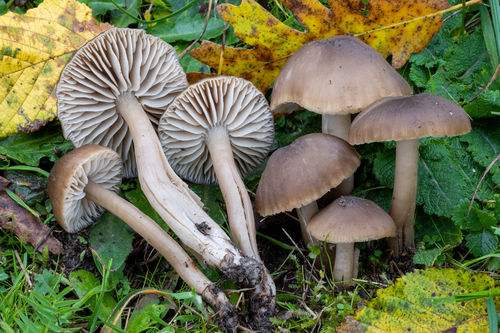
Neohygrocybe is a genus of agaric fungi in the family Hygrophoraceae. Neohygrocybe species belong to a group known as waxcaps in English, sometimes also waxy caps in North America or waxgills in New Zealand. In Europe, Neohygrocybe species are typical of waxcap grasslands, a declining habitat due to changing agricultural practices. As a result, three species, Neohygrocybe ingrata, Neohygrocybe nitrata, and Neohygrocybe ovina, are of global conservation concern and are listed as "vulnerable" on the IUCN Red List of Threatened Species.
Setigeroclavula
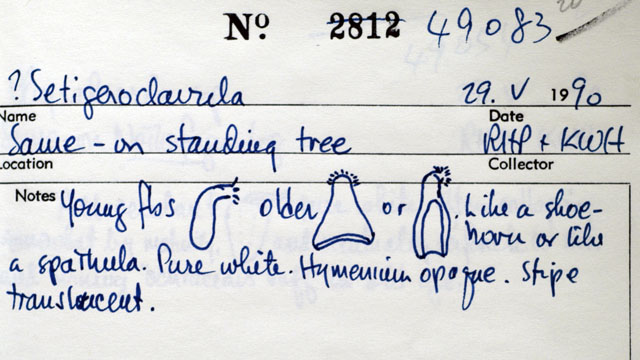
Setigeroclavula is a genus of fungi in the family Cyphellaceae. A monotypic genus, it consists of the single clavarioid species Setigeroclavula ascendens, found on the dead rachis of mother spleenwort (Asplenium bulbiferum) in New Zealand. Both the genus and species were described in 1988 by American mycologist Ron Petersen. The small, club-shaped fruitbodies are densely studded with erect hairs. The hyphal system is monomitic; the spores are smooth and hyaline (translucent).
Britzelmayria
Britzelmayria is a genus of fungi in the family Psathyrellaceae.
Pseudotricholoma
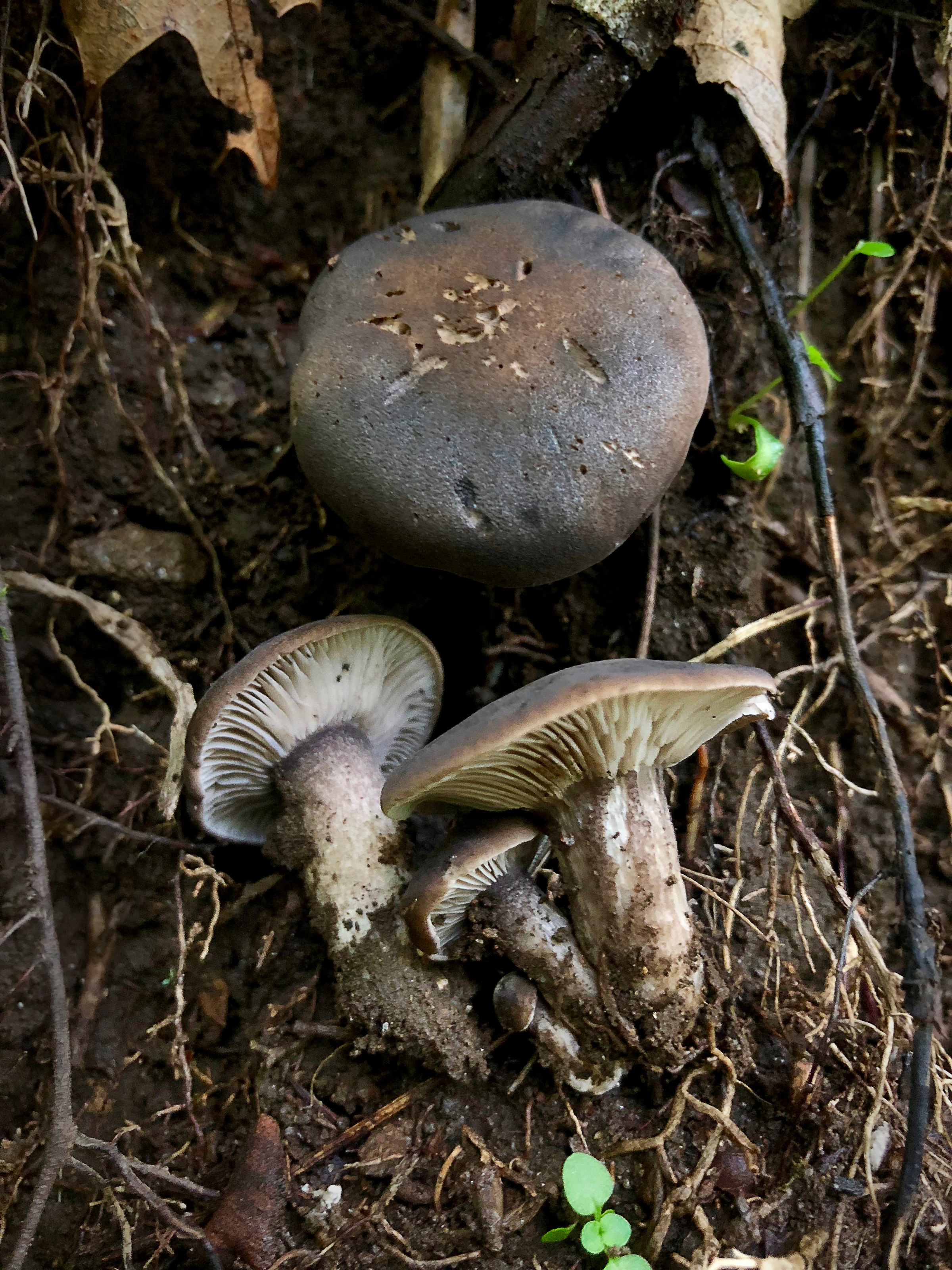
Pseudotricholoma is a genus of fungi in the family Tricholomataceae. The genus contains three species known from North America. Europe, and the Azores. Basidiocarps (fruit bodies) resemble those of the genus Tricholoma, with a dry fibrillose pileus and white to brown lamellae that have adnate to emarginate attachment and stain reddish when damaged, eventually turning black. Microscopically, the basidiospores are smooth, ellipsoid to ellipsoid-oblong, thin-walled and amyloid. Cheilocystidia are rare to absent and pleurocystidia are absent. The pileipellis is a cutis and clamp connections are pr
Stephanopus
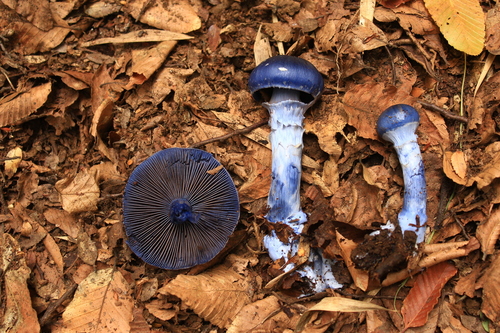
Stephanopus is a genus of fungi in the family Cortinariaceae. The genus, circumscribed by mycologists Meinhard Moser and Egon Horak in 1975, contains five species found in South America.
Leucopholiota
Leucopholiota is a genus of fungi in the family Squamanitaceae. Basidiocarps (fruit bodies) are agarics (gilled mushrooms}. Two species are currently known, both from north temperate areas: Leucopholiota decorosa and Leucopholiota lignicola.
Auriculariopsis
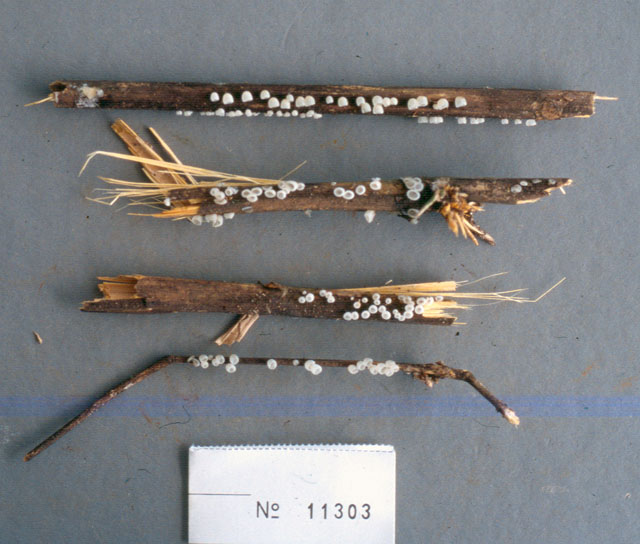
Auriculariopsis is a fungal genus in the family Schizophyllaceae. The genus was described by mycologist René Maire in 1902. Auriculariopsis species have cup-shaped fruit bodies.
Candolleomyces
Candolleomyces is a genus of fungi in the family Psathyrellaceae.
== Taxonomy ==
The Candolleomyces genus was created in 2020 by the German mycologists Dieter Wächter & Andreas Melzer when the Psathyrellaceae family was subdivided based on phylogenetic analysis. Many members of the Psathyrella genus were reclassified as Candolleomyces.
Cleistocybe
Cleistocybe is a genus of fungi in the family Biannulariaceae. Basidiocarps (fruit bodies) are agaricoid, similar to those of Clitocybe, but with ephemeral traces of a partial veil and decurrent lamellae that are often greyish. The genus is separated on DNA characteristics as well as morphology. Species are known from North America, Europe, North Africa, and Tibet.
Auritella
Auritella is a genus of fungi in the family Inocybaceae. The genus contains seven species found in temperate Australia and tropical Africa. The genus was circumscribed in a 2006 publication by Brandon Matheny and Neil Bougher. The original publication, however, was later discovered to be invalid because they were unintentionally described as provisional names (nom. prov.) instead of new names (sp. nov.). The authors properly published the genus later that year.

Cora
a genus of lichenized fungi
Bonomyces
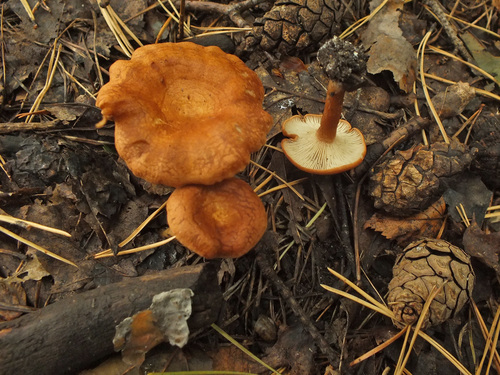
Bonomyces is a genus of fungi in the family Biannulariaceae. Basidiocarps (fruit bodies) are agaricoid, similar to those of Clitocybe, but with a distinctly hard stipe (stem). The genus is separated on DNA characteristics as well as morphology. Species are known from Europe, North Africa, and northern China.
Anamika
genus of fungi
Porpolomopsis
Porpolomopsis is a genus of fungi in the family Hygrophoraceae. It was circumscribed in 2008 by Andreas Bresinsky to contain P. calyptriformis. Bresinsky separated it from the genus Hygrocybe based on its color and the absence of DOPA pigments. P. lewelliniae was transferred to the genus based on DNA and morphology. Three undescribed species also belong in the genus. Species of Porpolomopsis have also formerly been placed in the genus Humidicutis, to which they are closely related but differ in having narrowly attached or free gills and the shape of the hyphae in their cap. Species o
Pseudohiatula
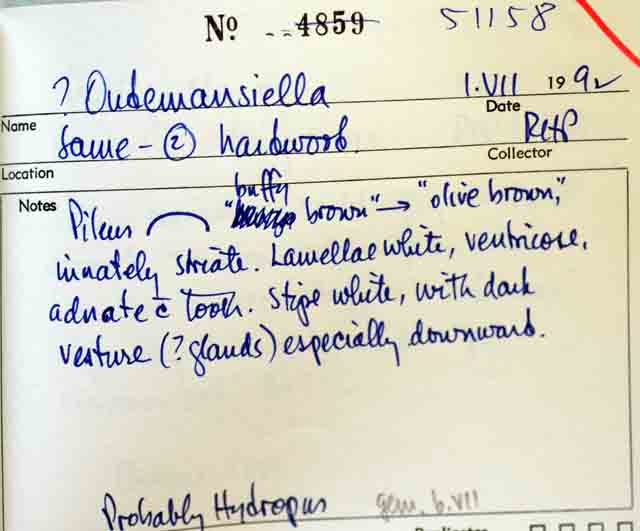
Pseudohiatula is a genus of fungi in the family Physalacriaceae. It was originally described as a subgenus of Mycena by the mycologist Rolf Singer before he moved to its own genus two years later. It was formerly thought to belong in the family Tricholomataceae, but a molecular phylogenetics study found it to be more closely The genus Cyptotrama in the Physalacriaceae. Rolf Singer had previously hypothesized these two genera to be closely related based on morphological features in 1986. It contains five species that are widely distributed in tropical areas.
Filoboletus
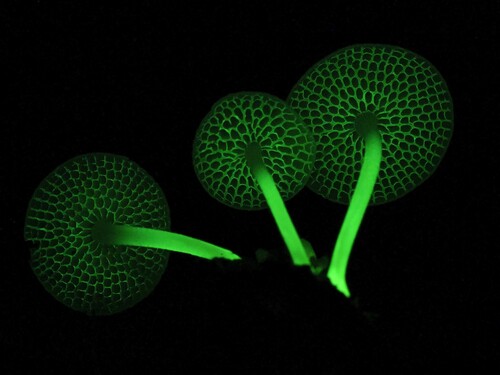
Filoboletus is a genus of fungi in the family Mycenaceae.