Category
page 1Ancient inventions

compass
thumb|upright=1.5|alt=compass with a slit at cover and looking hole|A modern military compass, with included Sight (device)|sight device for aligningA compass is a device that shows the cardinal directions used for navigation and geographic orientation. It typically consists of a magnetized needle or another element, such as a compass card or compass rose, that pivots to align itself with magnetic north. Other methods may be used, including gyroscopes, magnetometers, and GPS receivers.

tragedy
thumb|The classical Punjabi tragedy of Heer Ranjha, one of the four classic tragedies of [[Punjabi folklore; the tragedy's epic form by Waris Shah is regarded as one of the greatest pieces of Punjabi literature]]
.jpg)
toilet

lever
A lever is a simple machine consisting of a beam or rigid rod pivoted at a fixed hinge, or fulcrum. A lever is a rigid body capable of rotating on a point on itself. On the basis of the locations of fulcrum, load, and effort, the lever is divided into three types. It is one of the six simple machines identified by Renaissance scientists. A lever amplifies an input force to provide a greater output force, which is said to provide leverage, which is mechanical advantage gained in the system, equal to the ratio of the output force to the input force. As such, the lever is a mechanical advantage d

banknote
A banknote or bank notealso called a bill (North American English) or simply a noteis a type of paper money that is made and distributed ("issued") by a bank of issue, payable to the bearer on demand. Banknotes were originally issued by commercial banks, which were legally required to redeem the notes for legal tender (usually gold or silver coin) when presented to the chief cashier of the originating bank. These commercial banknotes were only traded at face value in the market served by the issuing bank. Commercial banknotes have primarily been replaced by national banknotes issued by central
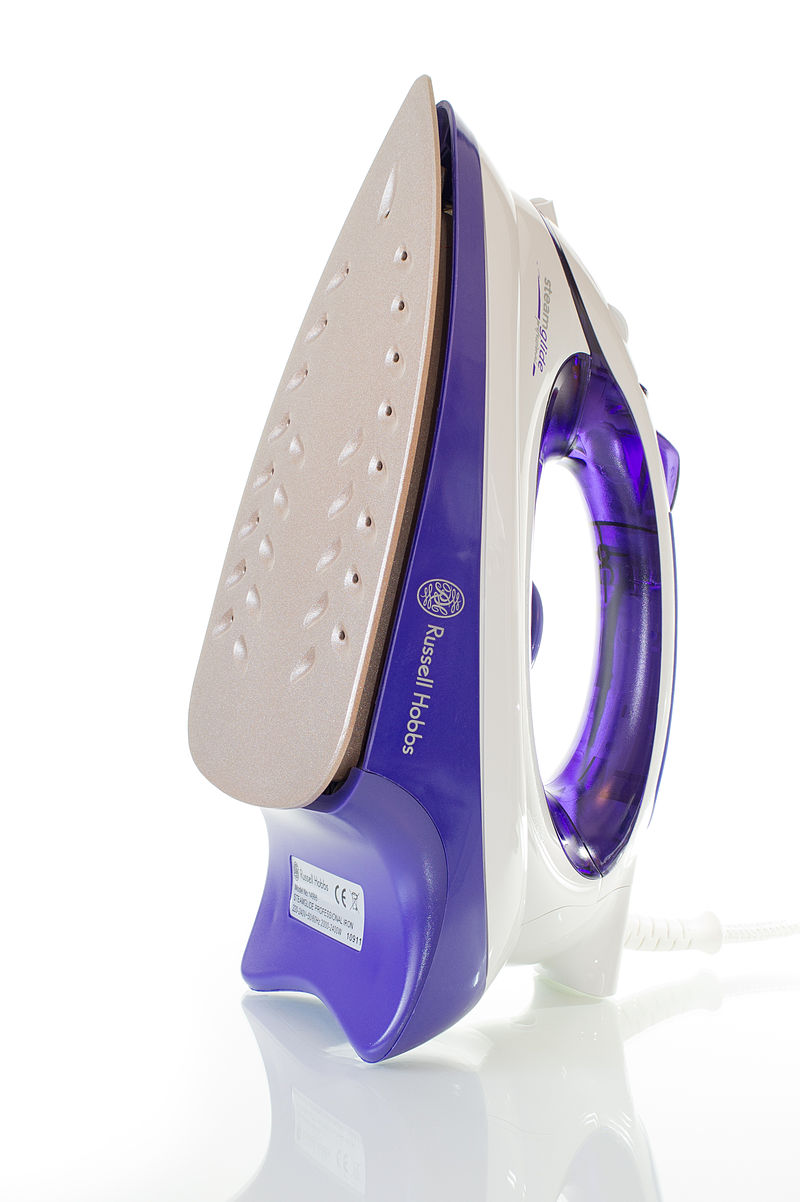
clothes iron
tool or appliance for smoothing cloth using heat and pressure

toothbrush
thumb|upright=1.35|alt=plastic toothbrushes |Three plastic toothbrushes
thumb|Head of a simple toothbrush

sundial
thumb|right|SSW facing, vertical declining sundial on the Moot Hall in Aldeburgh, Suffolk, England. The gnomon is a rod that is very narrow, so it functions as the style. The Latin motto loosely translates as "I only count the sunny hours."
[[File:Melbourne sundial at Flagstaff Gardens.JPG|thumb|right|A horizontal dial commissioned in 1862, the gnomon is the triangular blade. The style is its inclined edge.

distillation
thumb|upright|300px|Laboratory model of a still.1: The heat source to boil the mixture2: round-bottom flask containing the mixture to be boiled3: the head of the still4: mixture boiling-point thermometer5: the condenser of the still6: the cooling-water inlet of the condenser7: the cooling-water outlet of the condenser8: the distillate-receiving flask9: vacuum pump and gas inlet10: the receiver of the still11: the heat control for heating the mixture12: stirring mechanism speed control13: stirring mechanism and heating plate14: heating bath (oil/sand) for the flask15: the stirring mechanism (no

aqueduct
structure constructed to convey water

pump
thumb|right|A small, electrically powered pump
thumb|right|A large, electrically driven pump for Water supply network|waterworks near the [[Hengsteysee, Germany]]A pump is a device that moves fluids (liquids or gases), or sometimes slurries, by mechanical action, typically converted from electrical energy into hydraulic or pneumatic energy.

liquor
thumb|An old whiskey [[still]]
thumb|A display of various liquors in a supermarket
thumb|Some single-drink liquor bottles available in Germany
Liquor ( , sometimes hard liquor), spirits, distilled spirits, or spiritous liquor are alcoholic drinks produced by the distillation of grains, fruits, vegetables, or sugar that have already gone through alcoholic fermentation. While the word liquor usually refers to distilled alcoholic spirits rather than drinks produced by fermentation alone, it can sometimes be used more broadly to refer to any alcoholic beverage (or even non-alcoholic ones produced
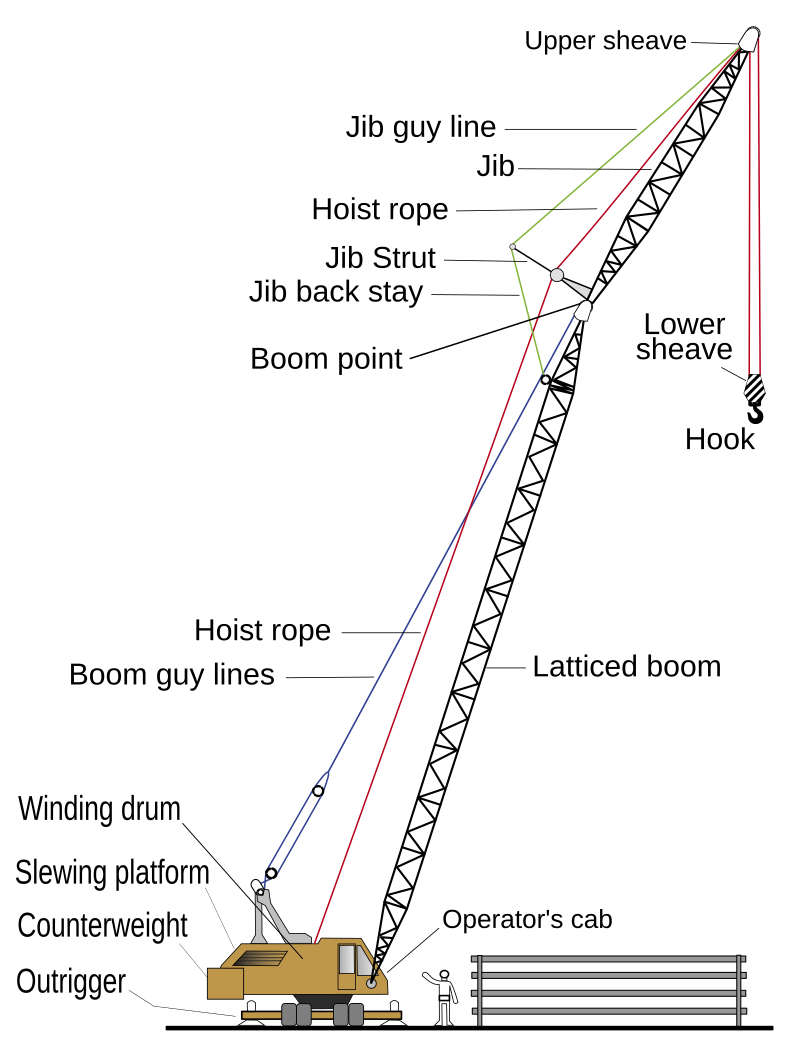
crane
type of machine specialised in lifting objects

Antikythera mechanism
ancient analog computer designed to calculate astronomical positions

watermill
thumb|Watermill of Braine-le-Château, Belgium (12th century)
thumb|Interior of the Lyme Regis watermill, UK (14th century)
A watermill or water mill is a mill that uses hydropower. It is a structure that uses a water wheel or water turbine to drive a mechanical process such as milling (grinding), rolling, or hammering. Such processes are needed in the production of many material goods, including flour, lumber, paper, textiles, and many metal products. These watermills may comprise gristmills, sawmills, paper mills, textile mills, hammermills, trip hammering mills, rolling mills, and wire drawi
.svg)
hydraulics
thumb|Hydraulics and other studies
thumb|An open channel, with a uniform depth. Open-channel hydraulics
thumb|Illustration of hydraulic and hydrostatic, from the "Table of Hydraulics and Hydrostatics", from Cyclopædia, or an Universal Dictionary of Arts and Sciences, edited by [[Ephraim Chambers, 1728, Vol. 1]]

Archimedes' screw
machine used for transferring water from a low-lying body of water into irrigation ditches

weather vane
meteorological instrumentation used for showing the direction of the wind

rudder
thumb|Modern ship rudder (the tall red rectangle behind the propeller (marine)|propeller)
thumbnail|right|'s rudder turned

water wheel
machine for harnessing energy from the flow of water

vending machine
machine which automatically dispenses beverages, food or non-food products to customers after a payment
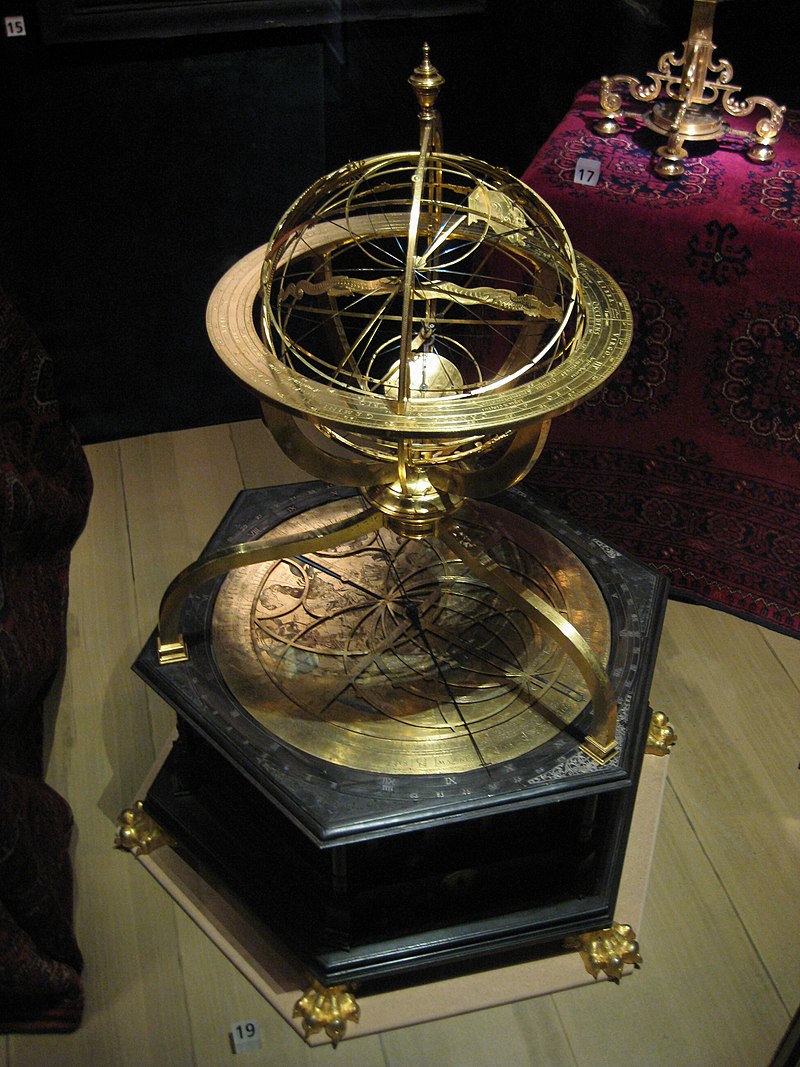
armillary sphere
model of objects in the sky

clock tower
tower with a large clock that can be read from afar

hypocaust
thumb|300px|right|Hypocaust under the floor in a Roman villa in Vieux-la-Romaine, near [[Caen, France]]

aeolipile
thumb|An illustration of Hero's aeolipile
An aeolipile, aeolipyle, or eolipile, also known as a '''Hero's (or Heron's) engine', is a simple, bladeless radial steam turbine which spins when the central water container is heated. Torque is produced by steam jets exiting the turbine. The Greek-Egyptian mathematician and engineer Hero of Alexandria described the device in the 1st century AD, and many sources give him the credit for its invention. However, Vitruvius was the first to describe this appliance in his De architectura'' ().
cotton gin
machine that separates cotton fibers from seeds
Roman concrete
building material used in construction during the late Roman Republic
underfloor heating
system of heating

escapement
thumb|Animation of an anchor escapement, widely used in [[pendulum clocks]]
Pythagorean cup
practical joke device
food steamer
device for steaming food
water organ
pipe organ powered by water
Heron's fountain
hydraulic machine invented by Heron of Alexandria
horse mill
type of mill

steam cannon
a large caliber projectile weapon powered by steam pressure
teeth cleaning twig
plant branch chewed for oral hygiene
Waru Waru
South American type of raised field agriculture
aqueduct bridge
bridge for transporting water
Hierapolis sawmill
water sawmill
Hydraulis of Dion
1st-century BCE musical instrument unearthed in Greece