Category
page 1Andhra cuisine

papad
A papadam, also known as a poppadom, papadom or papadum among other transliterations, is a snack that originated in the Indian subcontinent. Dough of black gram bean flour is either deep-fried or cooked with dry heat (flipped over an open flame) until crunchy. Other flours made from lentils, chickpeas, rice, tapioca, millet or potato are also used. Papadam is typically served as an accompaniment to a meal in India, Pakistan, Bangladesh, Nepal, Sri Lanka and the Caribbean or as an appetizer, often with dips such as chutneys, or toppings like chopped onions and chili peppers.

puri
food

dosa
thin pancakes originating from South India
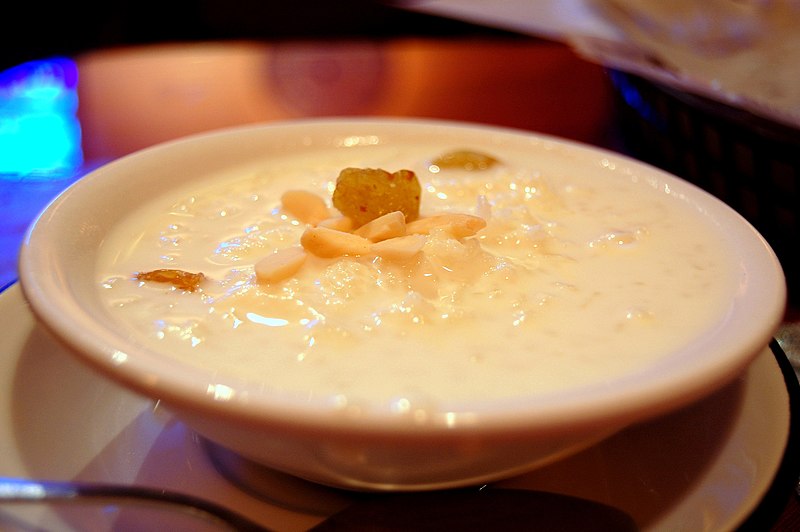
kheer
Kheer, khir, payesh, fenni or payasam is a pudding or porridge (specifically rice pudding) popular in the Indian subcontinent, usually made by boiling milk, sugar or jaggery, and rice. It can be additionally flavoured with dried fruits, nuts, cardamom and saffron. Instead of rice, it may contain cracked wheat, vermicelli (sevai), sago or tapioca (sabudana).

idli
Idli (; plural: idlis) or idly is a South Indian and Sri Lankan rice cake popular as a breakfast food. The cakes are made by steaming a batter consisting of fermented hulled black lentils and rice. The fermentation process breaks down the starches so that they are more readily metabolised by the body.
.jpg)
dal
In Indian cuisine, dal (also spelled daal or dhal pronunciation: ) are dried, split pulses (e.g., lentils, peas, and beans) that do not require soaking before cooking. India is the largest producer of pulses in the world. The term is also used for various soups prepared from these pulses. These pulses are among the leading staple foods in South Asian countries, and form an important part of the cuisines of the Indian subcontinent.

Tenualosa ilisha
The ilish (Tenualosa ilisha) (), also known as the ilishi, hilsa, pulasa, hilsa herring or hilsa shad, is a species of fish related to the herring, in the family Clupeidae. It is a very popular and sought-after food in the Bengal region and area, and is the national fish of Bangladesh and state fish of the Indian state of West Bengal.
sambar
Indian food
Vada
category of savoury fried snacks from India

thali
thumb|North Indian cuisine|North Indian style vegetarian thali served in a restaurant
Masala dosa
a variant of South Indian food dosa

Upma
Upma, uppumavu, uppindi, kharabath, upit, upeet, rulanv, uppuma, or uppittu is a dish of thick porridge from dry-roasted semolina or coarse rice flour. Upma originated from Southern India, and is most common in Andhra Pradesh, Karnataka, Kerala, Maharashtra, Odisha, Tamil Nadu and Telangana. Various seasonings and vegetables may be added during cooking.
Rasam
Soup dish from South India
medu vada
South Indian breakfast snack made from black gram
Bonda
Indian Food
Puran Poli
sweet dish of South India
gujia
Gujhia, also known as gujiya, gujia, gughara, pedakiya, purukiya, karanji, kajjikayalu, somas, or karjikayi, is a sweet, deep-fried pastry that is a popular dessert in the Indian subcontinent.

uttapam
An uttapam, uthappam, oothappam, uthapam, utapam or uttappam is a type of dosa from South India. Unlike a typical dosa, which is crisp and crepe-like, an uttapam is thicker, with toppings. The name is derived from the Tamil words appam and utthia or uttria, meaning "poured appam", because appam is cooked in a round-bottom pan, whereas utthia-appam is cooked on a flat skillet. Tamil ancient literature mentions it by name. The classic breakfast of Tamil residents consists of idli, dosas or uttappams mostly accompanied by sambar and chutney.

Kozhakkattai
Kozhukkattai (, Kozhukatta (), kudumu (Telugu: కుడుము), Modaka () is a popular South Indian dumpling made from rice flour, with a filling of grated coconut, jaggery, or chakkavaratti. Kozhukatta, although usually sweet, can sometimes be stuffed with a savory filling. Modak is a similar dish made in other parts of India.
pesarattu
Pesarattu (Telugu: పెసరట్టు; ), pesara attu, pesara dosa (mung bean dosa), or cheeldo is a crepe-like bread, originating in Andhra Pradesh, India, that is a variety of dosa. It is made with green gram batter, but, unlike a typical dosa, it does not contain Vigna mungo. Pesarattu is eaten as breakfast and as a snack in Andhra Pradesh. It is typically served with ginger chutney, peanut chutney or tamarind chutney. Green chilies, ginger and onions are used in variants.
Telugu cuisine
cuisine of South India native to the Telugu people from the state of Andhra Pradesh, India
pulihora
Pulihora, also known as Pulisoru, Pulinchoru, Puliyogare, Puliyodarai, Ambad Baath, Kokum rice, or simply Tamarind rice, is a common and traditional rice preparation in the South Indian states of Andhra Pradesh, Telangana, Tamil Nadu and Karnataka. means 'tangy' or 'sour' in South Indian languages, referring to the characterizing use of kokum or tamarind as one of the main ingredients.
Kakinada khaja
sweet pastry from India
Pootharekulu
Pootharekulu (plural) or poothareku (singular) is a popular Indian sweet from the Andhra Pradesh state of south India. The sweet is wrapped in a wafer-thin rice starch layer resembling paper and is stuffed with sugar, dry fruits and nuts. The sweet is popular for festivals, religious occasions and weddings in the Telugu states.
Aam papad
fruit leather made out of mango pulp
Avakaya
Avakaya () is a traditional pickle originating from the Indian state of Andhra Pradesh. It is a type of mango pickle made from raw green mangoes, a generous amount of mustard powder, red chili powder, salt, and sesame oil. Considered an iconic dish and a staple of Telugu cuisine, it is a fixture in virtually every Telugu household and a profound cultural signature of the region. It is known for its intense spicy, sour, and pungent flavour.
Ragi mudde
Kannad cuisine
Guntur chilli
group of chilli pepper cultivars
bamboo chicken
South Asian chicken curry prepared by stuffing chicken in bamboo segments
Poornalu
Poornalu, purnalu, boorelu (Telugu: బూరెలు) or burelu is an Indian sweet and dumpling made of rice flour stuffed with jaggery mixed dal paste and dry fruits. It is often served hot with ghee. It is called poornam in Telangana and Andhra Pradesh. Poornam preparation follows the traditional methods common to all South Indian cuisines. Poornam Boorelu are traditionally prepared using a rice-urad dal batter, and then packed with some shredded dry fruits and channa dal mixture known as poornam and it is then deep-fried in oil until golden brown.