Category
page 1Anthozoa orders

Actiniaria
order of cnidarians

Scleractinia
Scleractinia, also called stony corals or hard corals, are marine animals in the phylum Cnidaria that build themselves a hard skeleton. The individual animals are known as polyps and have a cylindrical body crowned by an oral disc in which a mouth is fringed with tentacles. Although some species are solitary, most are colonial. The founding polyp settles and starts to secrete calcium carbonate to protect its soft body. Solitary corals can be as much as across but in colonial species the polyps are usually only a few millimetres in diameter. These polyps reproduce asexually by budding, but rema

Pennatulacea
order of cnidarians
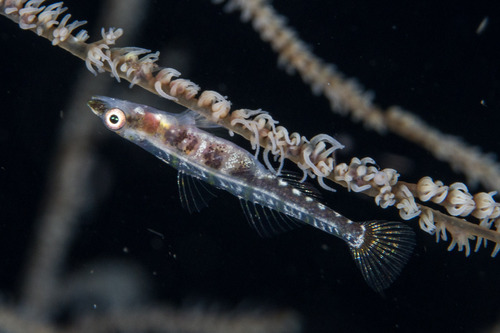
Antipatharia
order of cnidarians

Alcyonacea
Alcyonacea (synonyms: Alcyonaria, Alcyonarida), in English soft corals or alcyonacians, is a former order (or suborder) of Octocorallia. Since a 2022 revision of Octocorallia, the content of Alcyonacea has been included in the order Malacalcyonacea and, to a lesser extent, in the order Scleralcyonacea, these two new orders now making up the order Octocorallia.

Zoantharia
Zoanthids (also known as: zoanthiniarians, zoantharians (proper), colonial anemones, button polyps; scientific names: Zoanthiniaria, Zoanthinaria, Zoantharia, Zoanthidea, Zoanthidia, Zoantharida) are an order of hexacorals.
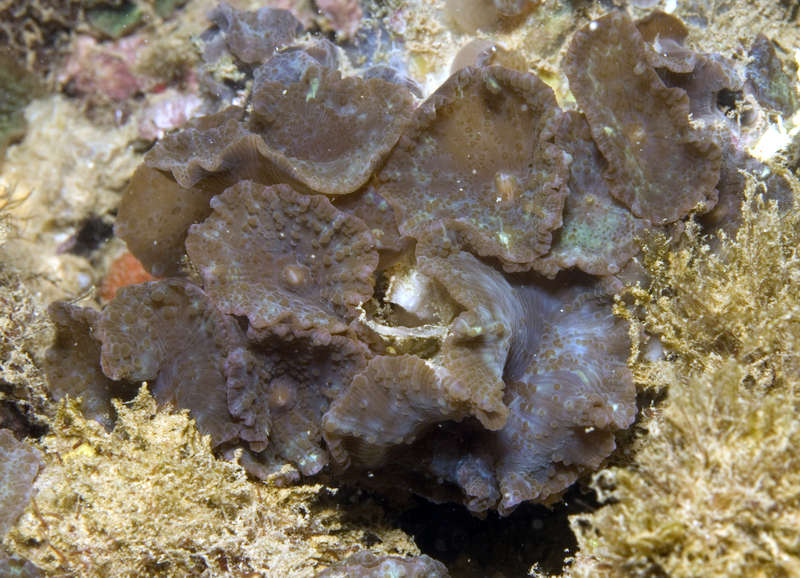
Corallimorpharia
Corallimorpharia is an order of marine cnidarians closely related to stony or reef building corals (Scleractinia). They occur in both temperate and tropical climates, although they are mostly tropical. Temperate forms tend to be very robust, with wide and long columns, whereas tropical forms tend to have very short columns with a wide oral disc and very short tentacles. The tentacles are usually arranged in rows radiating from the mouth. Many species occur together in large groups, although there are recorded instances of individuals. In many respects, they resemble the stony corals, except fo
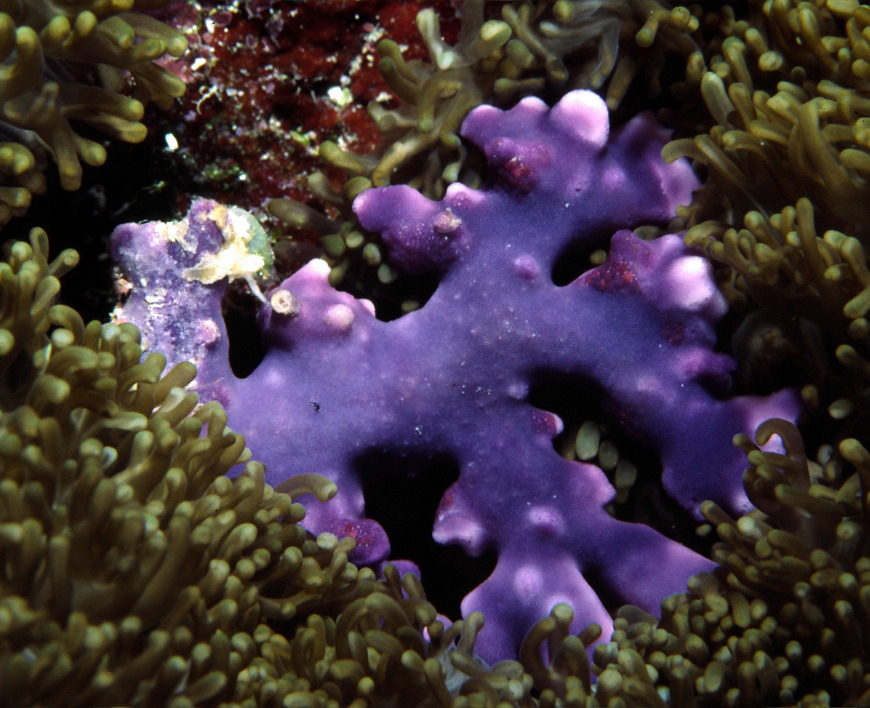
Helioporacea
Helioporacea is an order of the subclass Octocorallia that forms massive lobed crystalline calcareous skeletons in colonial corals. These corals first appeared in the Cretaceous period. It consists of two families, Helioporidae Moseley, 1876 and Lithotelestidae Bayer & Muzik, 1977.
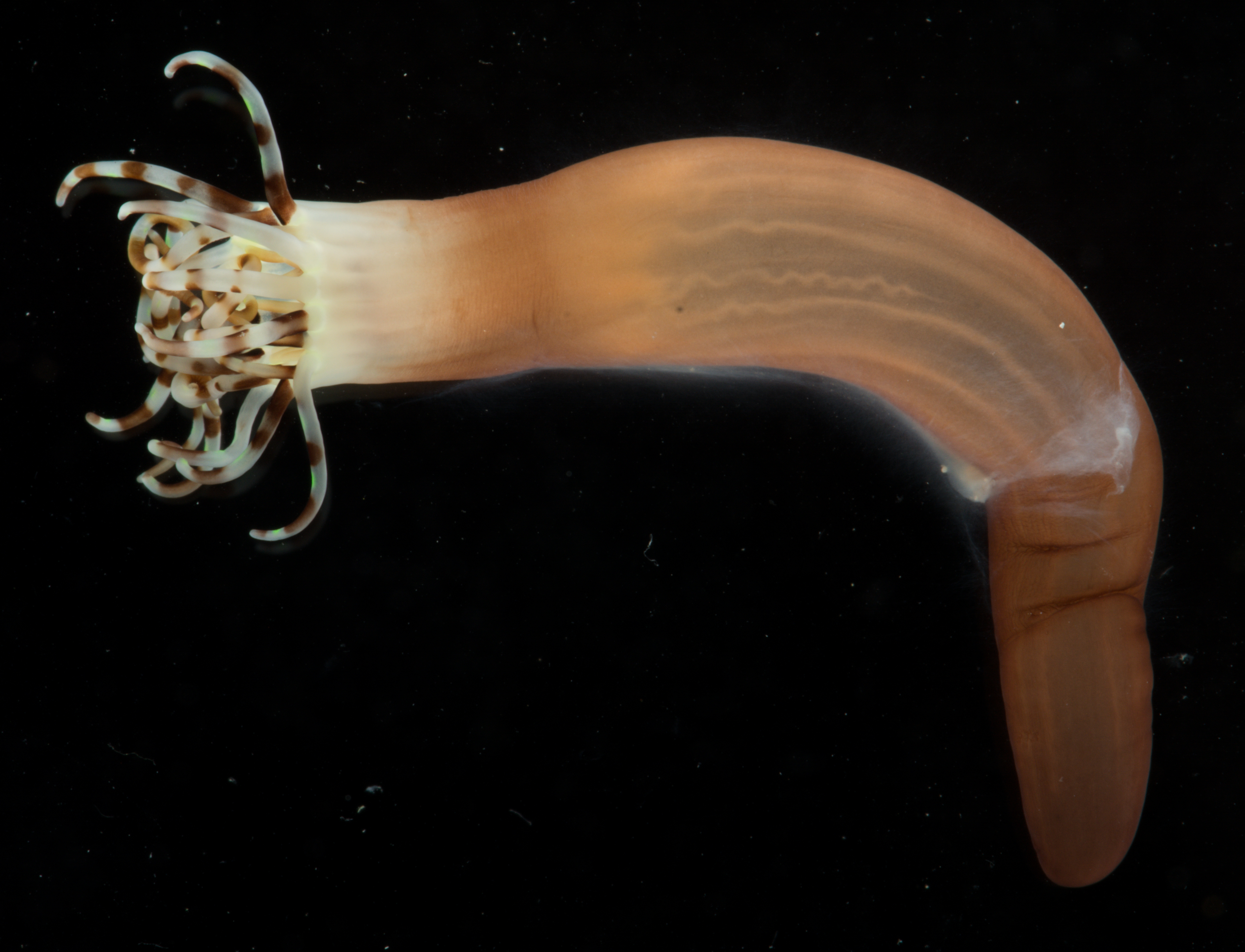
Arachnactidae
Arachnactidae is a family of tube-dwelling anemones in the order Ceriantharia. It is the only family in the monotypic order Penicillaria and comprises around 38 species. They differ from other ceriantharians in the makeup of their cnidome (the types of cnidocyte present), the relative sizes of the oral discs and the shape and structure of the mesenteries. These tube anemones dwell in parchment-like tubes immersed in soft sediment, and have two whorls of tentacles, the outer ones being much longer than the inner ones.
Spirularia
Spirularia is a suborder of marine cnidarians, tube-dwelling anemones, in the class Ceriantharia. It is one of the two suborders making up Ceriantharia, and includes two families, Botrucnidiferidae and Cerianthidae, and around 99 species. The two suborders differ in the makeup of their cnidome (the types of cnidocyte present), the relative sizes of the oral discs and the shape and structure of the mesenteries.