Category
page 1Asparagaceae genera

Agave
Agave (; ; ) is a genus of monocots native to the arid regions of the Americas. The genus is primarily known for its succulent and xerophytic species that typically form large rosettes of strong, fleshy leaves.

hyacinth
Hyacinthus is a genus of bulbous herbs and spring-blooming perennials. They are fragrant flowering plants in the family Asparagaceae, subfamily Scilloideae and are commonly called hyacinths (). The genus is native predominantly to the Eastern Mediterranean region from the south of Turkey to the Palestine region, although naturalized more widely.
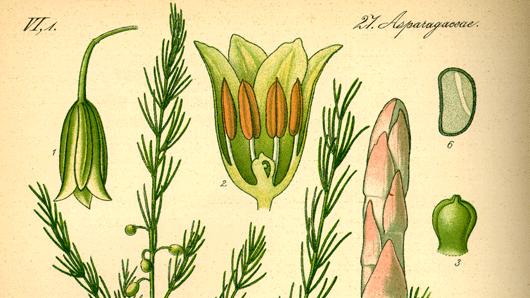
Asparagus
genus of plants
.jpg)
Yucca
Yucca ( ) is both the scientific name and common name for a genus native to North America from Panama to southern Canada. It contains 50 accepted species. In addition to yucca, they are also known as '''Adam's needle or Spanish-bayonet'. The genus is generally classified in the asparagus family in a subfamily with the Agave'', though historically it was part of the lily family. The species range from small shrubby plants to tree-like giants, such as the Joshua tree. All yuccas have rosettes of leaves that taper to points and inflorescences with many flowers that are mainly cream white with thi

Dracaena
genus of plants

Ornithogalum
thumb|Linnaeus' description of Ornithogalum 1753
Ornithogalum is a genus of perennial plants mostly native to southern Europe and southern Africa belonging to the family Asparagaceae. Some species are native to other areas such as the Caucasus. Some species are classified as noxious invasive weeds in some portions of North America. Growing from a bulb, species have linear basal leaves and a slender stalk, up to 30 cm tall, bearing clusters of typically white star-shaped flowers, often striped with green. The common name of the genus, star-of-Bethlehem, is based on its star-shaped flowers,

Polygonatum
Polygonatum , also known as '''King Solomon's-seal, Solomon's seal, or sealwort''', is a genus of flowering plants. In the APG III classification system, it is placed in the family Asparagaceae, subfamily Convallarioideae (formerly the family Ruscaceae). It has also been classified in the former family Convallariaceae and, like many lilioid monocots, was formerly classified in the lily family, Liliaceae. The genus is distributed throughout the temperate Northern Hemisphere. Most of the approximately 63 species occur in Asia, with 20 endemic to China.

Scilla
Scilla () is a genus of about 30 to 80 species of bulb-forming perennial herbaceous plants in the family Asparagaceae, subfamily Scilloideae. Sometimes called the squills in English, they are native to woodlands, subalpine meadows, and seashores throughout Europe, Africa and the Middle East. A few species are also naturalized in Australasia and North America. Their flowers are usually blue, but white, pink, and purple types are known; most flower in early spring, but a few are autumn-flowering. Several Scilla species are valued as ornamental garden plants.

Muscari
Muscari is a genus of perennial bulbous plants native to Eurasia that produce spikes of dense, most commonly blue, urn-shaped flowers resembling bunches of grapes in the spring. The common name for the genus is grape hyacinth, but they should not be confused with hyacinths. A number of species of Muscari are used as ornamental garden plants.

Convallaria
Convallaria is a genus of flowering plants, commonly known as lily-of-the-valley. It includes three species native to temperate Eurasia and the east-central United States.
{| class="wikitable"
|-
! Image !! Name !! Distribution
|-
|120px ||Convallaria keiskei || southeastern Siberia, Japan, Korea, northern, central, and southeastern China, Mongolia, and Myanmar
|-
|120px ||Convallaria majalis – lily-of-the-valley|| Europe, Turkey, Caucasus, Kazakhstan, and central Siberia
|-
|120px ||Convallaria pseudomajalis – American lily-of-the-valley; || east-central United States (southern Appalachians f
Hosta
thumb|Hosta sieboldiana by Abraham Jacobus Wendel, 1868
Hosta (, syn. Funkia) is a genus of plants commonly known as hostas, plantain lilies and occasionally by the Japanese name gibōshi. Hostas are widely cultivated as shade-tolerant foliage plants. The genus is placed in the family Asparagaceae, subfamily Agavoideae, and is native to northeast Asia (China, Japan, Korea, and the Russian Far East). Like many "lilioid monocots", the genus was once classified in the Liliaceae. The genus was named by Austrian botanist Leopold Trattinnick in 1812, in honor of the Austrian botanist Nicholas Thomas

Chlorophytum
Chlorophytum (,), sometimes colloquially referred to as the spider plants, is a genus of almost 200 species of evergreen perennial flowering plants in the Agavoideae within the Asparagaceae. The plants are native to the tropical and subtropical regions of Africa, Australia, and Asia.
.JPG)
Ruscus
Ruscus, commonly known as '''butcher's-broom''', is a genus of six species of flowering plants, native to western and southern Europe, Macaronesia, northwestern Africa, and southwestern Asia east to the Caucasus. In the APG III classification system, it is placed in the family Asparagaceae, subfamily Convallarioideae (formerly the family Ruscaceae). Like many lilioid monocots, it was formerly classified in the family Liliaceae.

Cordyline
Cordyline is a genus of about 24 species of woody monocotyledonous flowering plants in family Asparagaceae, subfamily Lomandroideae. The subfamily has previously been treated as a separate family Laxmanniaceae, or Lomandraceae. Other authors have placed the genus in the Agavaceae (now Agavoideae). Cordyline is native to the western Pacific Ocean region, from New Zealand, eastern Australia, southeastern Asia and Polynesia, with one species found in southeastern South America.

Aspidistra
Aspidistra is a genus of flowering plants in the family Asparagaceae, subfamily Convallarioideae, native to eastern and southeastern Asia, particularly China and Vietnam. They grow in shade under trees and shrubs. Their leaves arise more or less directly from ground level, where their flowers also appear. The number of species known has increased considerably from the 1980s onwards, with around 100 accepted . Aspidistra elatior is common worldwide as a foliage house plant that is very tolerant of neglect. It and other species can also be grown in shade outside, where they are generally hardy t
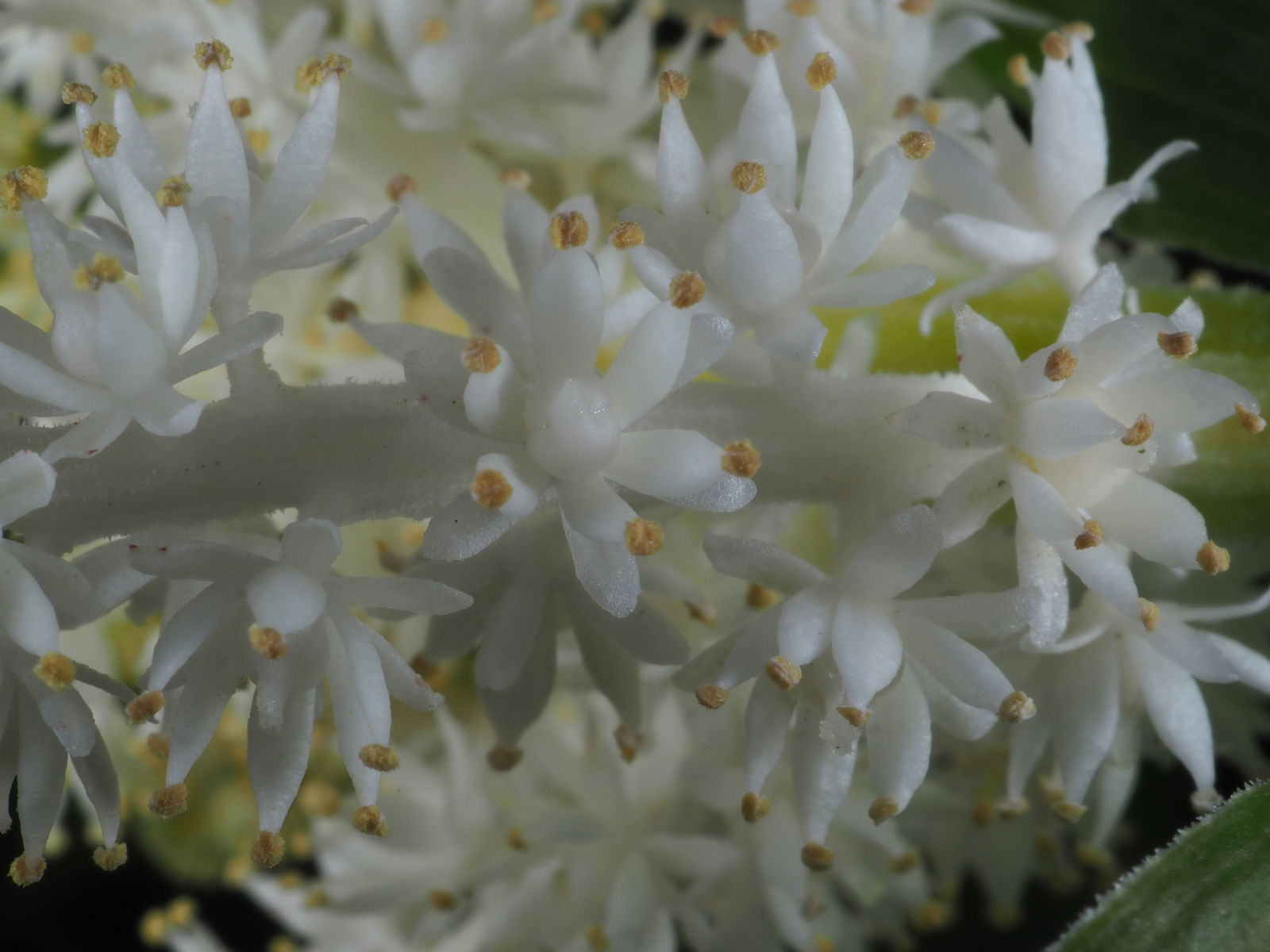
Maianthemum
Maianthemum includes the former genus Smilacina and is a genus of perennial herbaceous flowering plants with fleshy, persistent rhizomes. It is widespread across much of North America, Europe and Asia, and may be terrestrial, aquatic or epiphytic. It is characterized by simple, unbranched stems that are upright, leaning or hanging down and have 2–17 foliage leaves. Leaves are simple and may clasp the stem or be short-petiolate. The inflorescence is terminal and either a panicle or a raceme with few to many pedicelate flowers. Most species have 6 tepals and 6 stamens; a few have parts in 4s. Te

Hyacinthoides
Hyacinthoides is a genus of flowering plants in the family Asparagaceae, known as bluebells.

Drimia
thumb|Drimia maritima flowering in Khurvat Karta, Israel
Drimia is a genus of African, south European and south Asian flowering plants. In the APG IV classification system, it is placed in the family Asparagaceae, subfamily Scilloideae (formerly the family Hyacinthaceae). When broadly circumscribed, the genus includes a number of other genera previously treated separately, including Litanthus, Rhodocodon, Schizobasis and Urginea.

Nolina
Nolina is a genus of temperate and tropical xerophytic flowering plants belonging to the family Asparagaceae. The native distribution of the genus includes most of Mexico and the southern regions of the United States north to Nevada and Colorado. Especially in the USA, members of the genus are known as beargrass, some of which are cultivated as ornamental plants.
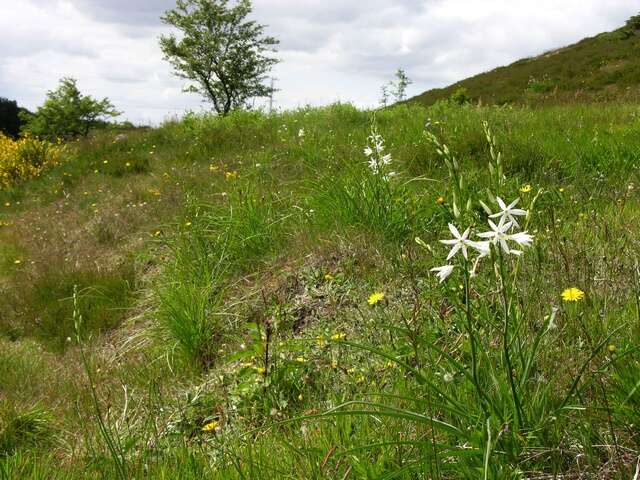
Anthericum
Anthericum is a genus of species, rhizomatous perennial plants in the family Asparagaceae, subfamily Agavoideae. It was formerly placed in its own family, Anthericaceae. The species have rhizomatous or tuberous roots, long narrow leaves and branched stems carrying starry white flowers. The members of this genus occur mainly in the tropics and southern Africa and Madagascar, but are also represented in Europe.

Camassia
thumb|right|upright=0.8|Cusick's camas (Camassia cusickii)
thumb|right|Common camas (Camassia quamash ssp. quamash)
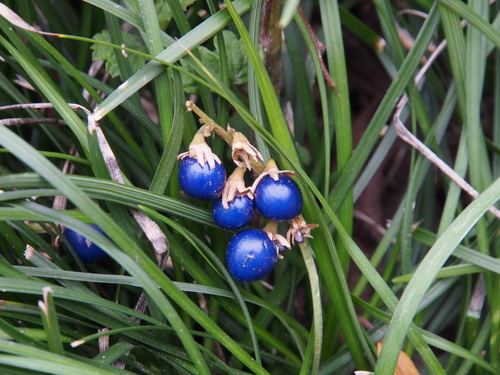
Ophiopogon
Ophiopogon (lilyturf) is a genus of evergreen perennial plants native to warm temperate to tropical East, Southeast, and South Asia. Despite their grasslike appearance, they are not closely related to the true grasses, the Poaceae. The name of the genus is derived from Greek ὄφις ophis, 'snake' and πώγων pogon, 'beard', most probably referring to its leaves and tufted growth. In the APG III classification system, it is placed in the family Asparagaceae, subfamily Convallarioideae (formerly the family Ruscaceae). Like many lilioid monocots, it was formerly classified in the Liliaceae.

Bellevalia
Bellevalia is a genus of flowering plants in the family Asparagaceae, subfamily Scilloideae. It was first described as a genus in 1808.
alt=Wild Bellevalia in Behbahan, Iran|thumb|Wild Bellevalia in Behbahan
It includes 81 species native to the Mediterranean Basin of North Africa, southern Europe, and Western Asia, as well as Ukraine, southern European Russia, the Caucasus, and western and Central Asia as far as Uzbekistan, Tajikistan, and Pakistan.

Eucomis
Eucomis is a genus of flowering plants in the family Asparagaceae, subfamily Scilloideae, native to southern Africa. Most species of this genus are commonly referred to as pineapple flowers or pineapple lilies. They are bulbous perennials with basal rosettes of leaves and stout stems covered in star-shaped flowers with a tuft of green bracts at the top, superficially resembling a pineapple – hence the common names.

Puschkinia
Puschkinia is a genus of four known species of bulbous perennials in the family Asparagaceae, subfamily Scilloideae. It is native to the Caucasus and the Middle East. Puschkinia scilloides is grown as an ornamental bulbous plant.

Furcraea
Furcraea is a genus of succulent plants belonging to the family Asparagaceae, native to tropical regions of Mexico, the Caribbean, Central America and northern South America. Some species are also naturalized in parts of Africa, the United States (Florida), Portugal, Thailand, India, and Australia, as well as on various oceanic islands. Plants of this genus are the origin of fique or cabuyo, a natural fiber.
Polianthes
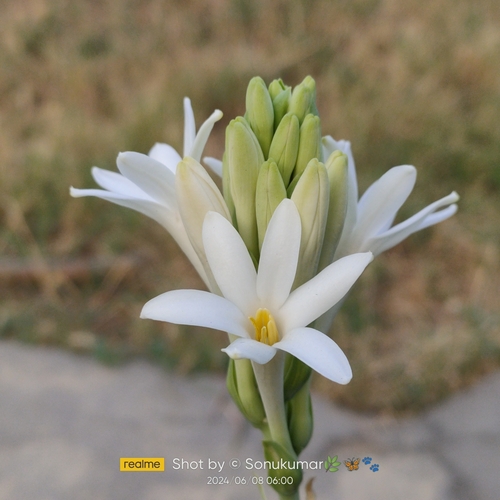
Polianthes is a genus of flowering plants in family Asparagaceae. It includes 23 species native to Mexico. One of its species is the tuberose, Polianthes tuberosa, a plant that is commonly used in perfume making.

Beaucarnea
Beaucarnea is a genus of flowering plants native to Mexico and Central America. In the APG III classification system, it is placed in the family Asparagaceae, subfamily Convallarioideae (formerly the family Ruscaceae). Beaucarnea is sometimes treated as a synonym of the genus Nolina, with the species being then transferred to that genus. However, recent research shows that Beaucarnea should be treated as an independent genus.

Liriope
genus of plants

Albuca
Albuca is a genus of flowering plants in the family Asparagaceae, subfamily Scilloideae. The genus is distributed mainly in southern and eastern Africa, with some species occurring in northern Africa and the Arabian Peninsula. Plants of the genus are known commonly as slime lilies.

Dasylirion
Dasylirion is a genus of succulent, rosette-forming plants in the Asparagaceae family, where it is included in the subfamily Convallarioideae. Most species are native to mountainous arid regions of Mexico, with some species also native to the Southwestern United States. The common name sotol is used in English and Spanish to describe various Dasylirion species, as well as giving its name to a distilled spirit made from some species of the genus.

Beschorneria
Beschorneria is a genus of succulent plants belonging to the family Asparagaceae, subfamily Agavoideae, native to semi-arid areas of Mexico and Central America. They are generally large evergreen perennials forming clumps of grey-green leaves, with tall flower-spikes to . Marginally hardy, they may require winter protection in areas subject to frost.
%20Hesperaloe%20campanulata%20fh%200642%20MEX%20Anfang%20April%20in%20Nordmexiko%20A.jpg)
Hesperaloe
Hesperaloe (false yucca) is a genus of flowering plants in the family Asparagaceae, subfamily Agavoideae. It contains perennial yucca-like plants with long, narrow leaves produced in a basal rosette and flowers borne on long panicles or racemes. The species are native to the arid parts of Texas in the United States and Mexico and are sometimes cultivated as xerophytic ornamental plants.

Lachenalia
Lachenalia is a genus of bulbous perennial plants in the family Asparagaceae, subfamily Scilloideae, which are usually found in Namibia and South Africa. Most of them have a dormancy period, but new roots will always grow every year.

Triteleia
Triteleia is a genus of monocotyledon flowering plants also known as triplet lilies. The 16 species are native to western North America, from British Columbia south to California and east to Wyoming and Arizona, with one species in northwestern Mexico. However, they are most common in California. They are perennial plants growing from a fibrous corm roughly spherical in shape. They get their name from the fact that all parts of their flowers come in threes.

Brodiaea
Brodiaea , also known by the common name cluster-lilies, is a monocot genus of flowering plants.

Chlorogalum
The common names soap plant, soaproot and amole refer to the genus Chlorogalum. They are native to western North America, with some species in Oregon but they are mostly found in California. Common names of the genus and several species derive from their use as soap.

Dipcadi
thumb|Dipcadi serotinum - MHNT

Ledebouria
Ledebouria is a genus of African bulbous perennial herbs in the Asparagus family, Asparagaceae, subfamily Scilloideae. Most members were previously part of the genus Scilla. A number of species are grown by cacti and succulent enthusiasts for their patterned leaves.
.JPG)
Paradisea
Paradisea (paradise lily) is a European genus of flowering plants in the family Asparagaceae. It was formerly classified in the family Anthericaceae or earlier in the Liliaceae. Paradisea is sometimes confused with Anthericum.

Veltheimia
Veltheimia is a genus of perennial plants native to the Cape Provinces of South Africa in the family Asparagaceae, subfamily Scilloideae. It was named in honour of August Ferdinand von Veltheim (1741–1801), a German patron of botany.

Milla
Milla, the Mexican star, is a genus of monocotyledonous plants in the family Asparagaceae, subfamily Brodiaeoideae. They are native mostly to Mexico, with one species extending into Guatemala, Honduras, Arizona, Texas and New Mexico.

Hyacinthella
Hyacinthella is a genus of bulbous flowering plants in the family Asparagaceae, subfamily Scilloideae (formerly the family Hyacinthaceae). It is native to eastern and south-eastern Europe through to northern Iran, reaching as far south as Palestine. Turkey is the main country in which species are found.
Manfreda
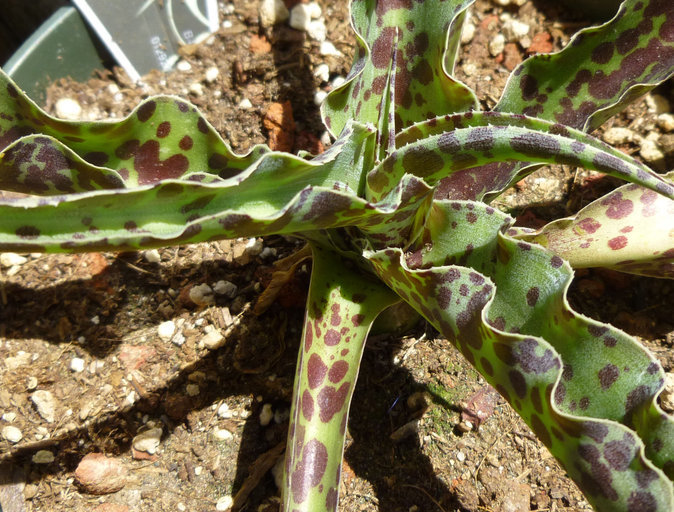
Manfreda is a genus of flowering plants in the family Asparagaceae, subfamily Agavoideae. Along with Polianthes, members are commonly called tuberoses. The generic name honours 14th-century Italian writer Manfredus de Monte Imperiale.

Massonia
Massonia is a genus of bulbous perennial flowering plants in the family Asparagaceae, subfamily Scilloideae (also treated as the family Hyacinthaceae). It is native to southern Africa, and is found in localities such as Namaqualand with hot and dry summers, being dormant in summer and growing during winter.
The genus Whiteheadia has been merged into Massonia. It is classed as a cryptophyte.
Hesperoyucca
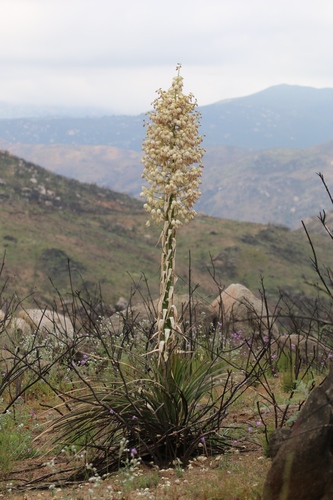
Hesperoyucca is a small genus of two recognized species of flowering plants closely related to, and recently split from, Yucca, which is in the century plant subfamily within the asparagus family.
Acanthocarpus
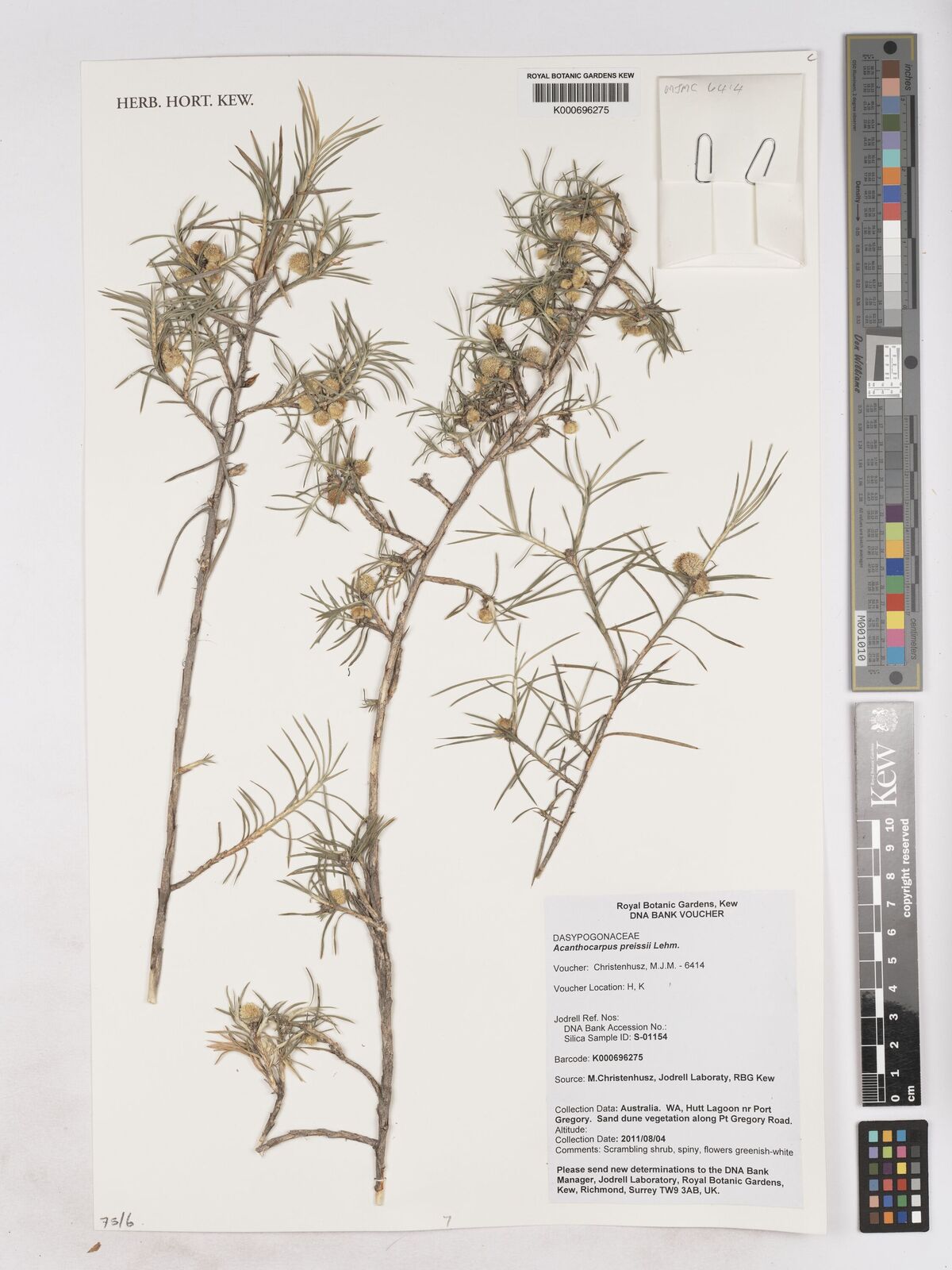
genus of plants

Lomandra
Lomandra, commonly known as mat rushes, is a genus of perennial, herbaceous monocots in the family Asparagaceae, subfamily Lomandroideae. The genus was first described in 1805 by Jacques Labillardière.

Alrawia
Alrawia is a genus of bulbous flowering plants in the family Asparagaceae, subfamily Scilloideae (also treated as the family Hyacinthaceae). It is native to north-eastern Iraq and Iran.
Eriospermum
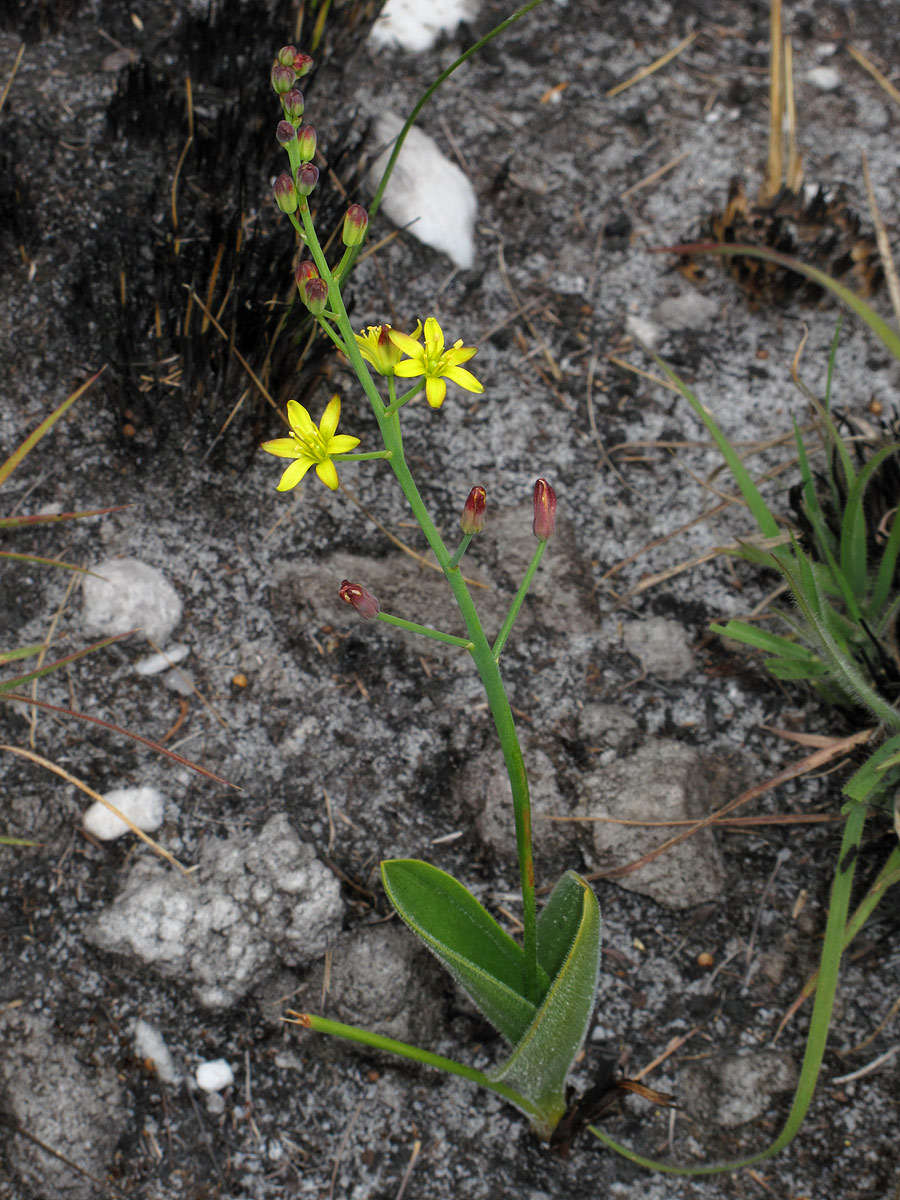
Eriospermum is a genus of tuberous flowering plants. It contains 114 species native to sub-Saharan Africa.
Thysanotus
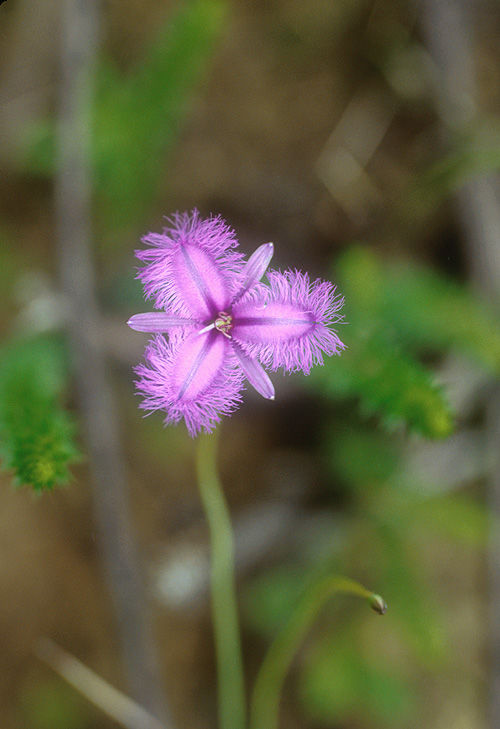
Thysanotus is a genus of about 60 species of flowering plants in the family Asparagaceae, mostly native to Western Australia. Plants in the genus are perennial herbs with bisexual flowers arranged singly or in groups of up to 50, with 6 mauve or blue tepals and the fruit a capsule surrounded by the remains of the perianth.
Echeandia
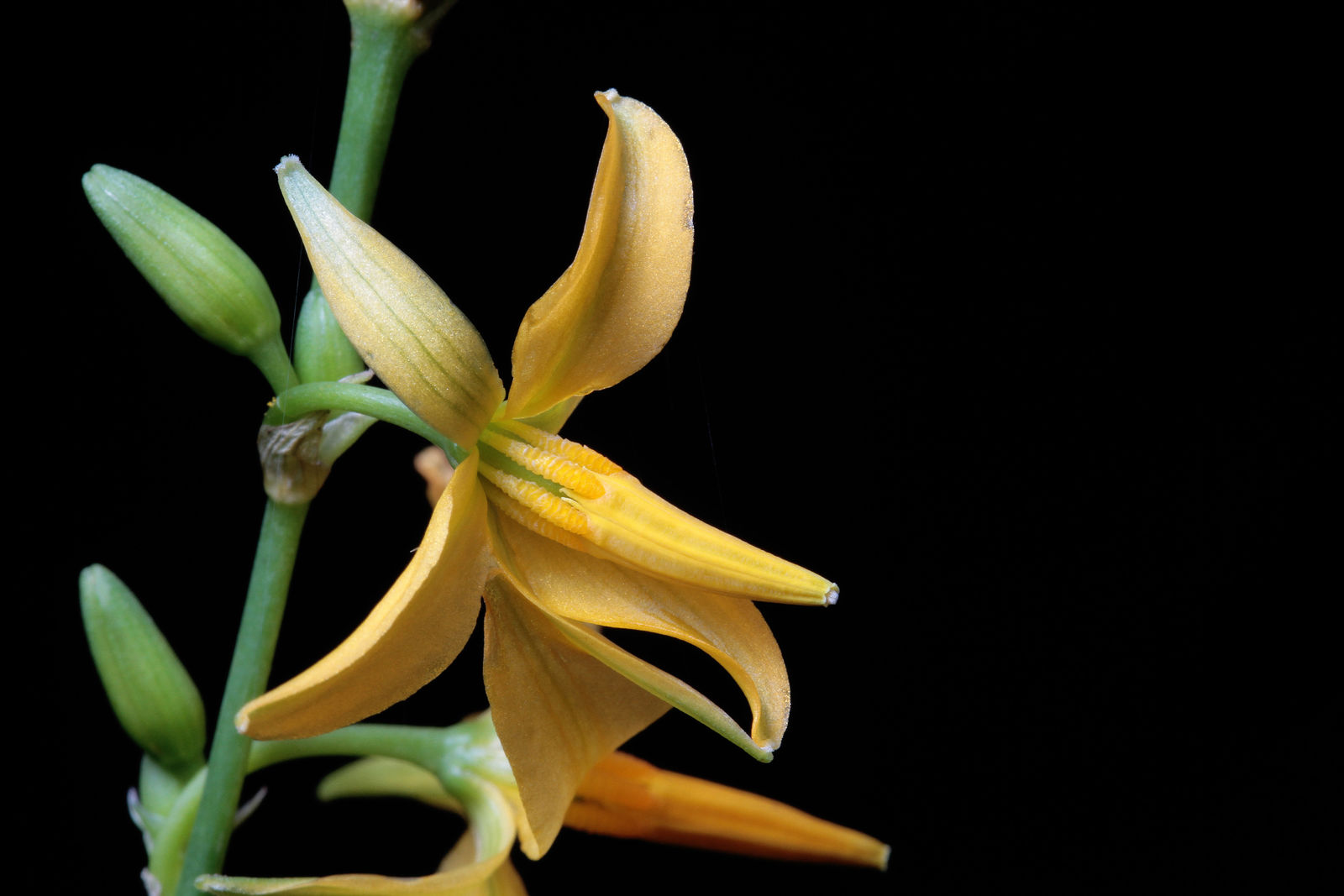
Echeandia (common name craglily) is a genus of New World plants in the century plant subfamily within the asparagus family.

Prospero
genus of plants

Bessera
Bessera is a genus of Mexican plants in the cluster lily subfamily within the asparagus family. It is a small genus of 5 known species of mostly herbaceous flowering plants with corms. They have flowers with petals and petaloid sepals (tepals) with compound pistils.

Dichelostemma
Dichelostemma is a genus of North American plants closely related to the genus Brodiaea and sometimes regarded as part of that group.

Muilla
Muilla is a genus of monocots in the family Asparagaceae. It includes four to five species of flowering plants.
.jpg)
Androstephium
The genus Androstephium is a group of North American plants in the cluster lily subfamily within the asparagus family. It contains two species native to the southwestern and south-central United States.
Merwilla
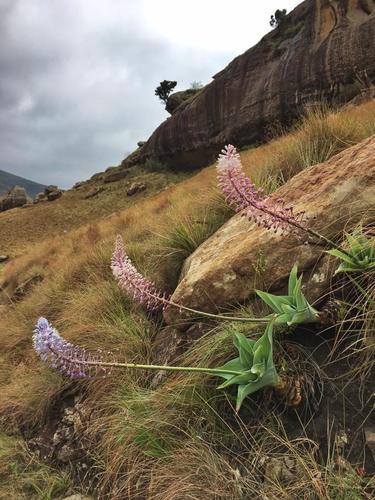
Merwilla is a genus of bulbous flowering plants in the family Asparagaceae, subfamily Scilloideae (also treated as the family Hyacinthaceae). It is distributed in southern Africa, from Zimbabwe to South Africa. This genus is named after the botanist Frederick Ziervogel Van der Merwe (1894–1968), who worked on this group.

Schoenolirion
Schoenolirion, rush-lily or sunnybell, is a genus of three recognized species of flowering plants, all endemic to the southeastern United States. In the APG III classification system, the genus is placed in the family Asparagaceae, subfamily Agavoideae (formerly the family Agavaceae).

Barnardia
Barnardia is a small genus of bulbous flowering plants in the family Asparagaceae, subfamily Scilloideae (also treated as the family Hyacinthaceae). The genus has two species, one found in the Balearic Islands and north-west Africa, the other in east China, Korea, Japan and adjacent localities. It was suggested in 2012 that the two species were not closely related.