Category
page 1Atmospheric dynamics

wind
thumb|upright=1.35|Cherry tree moving with the wind blowing about 22 m/sec (about 79 km/h or 49 mph)
thumb|Sound of wind blowing in a pine forest at around 25 m/sec, with Wind gust|gust alterations
Wind is the natural movement of air or other gases relative to a planet's surface. Winds occur on a range of scales, from thunderstorm flows lasting tens of minutes, to local breezes generated by heating of land surfaces and lasting a few hours, to global winds resulting from the difference in absorption of solar energy between the climate zones on Earth. The study of wind is called anemology.
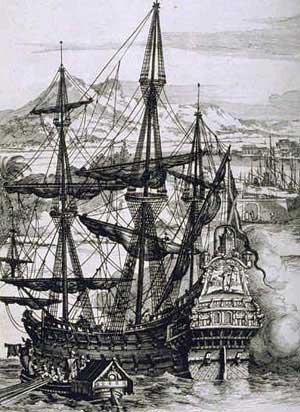
trade wind
permanent east-to-west prevailing winds that flow in the Earth's equatorial region
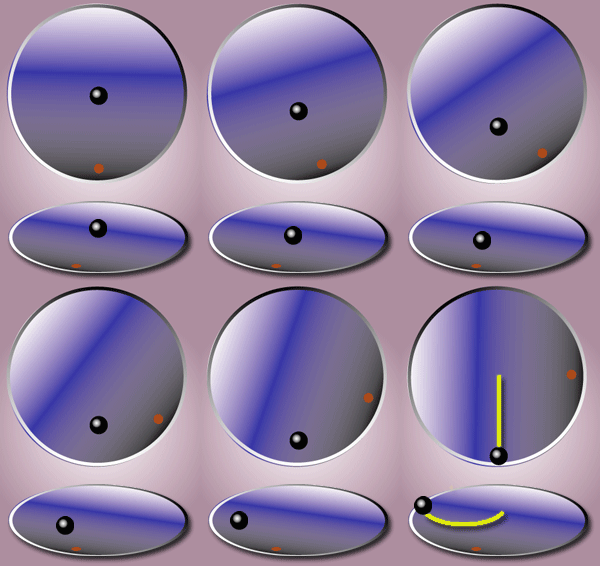
Coriolis force
apparent or fictitious force on objects moving within a reference frame that rotates with respect to an inertial frame

jet stream
fast-flowing atmospheric air-current
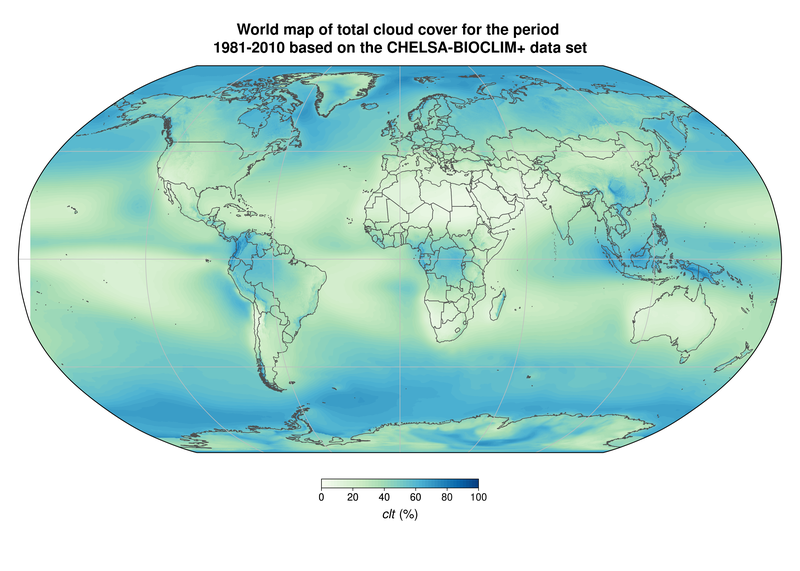
cloud cover
fraction of the sky obscured by clouds when observed from a particular location
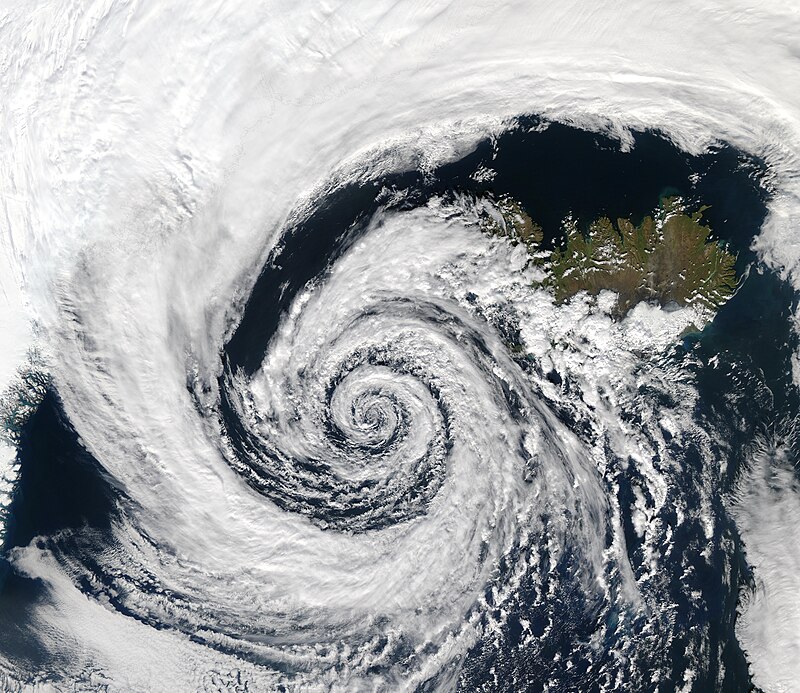
low pressure area
region of the atmosphere in which atmospheric pressure is lower than that of surrounding regions
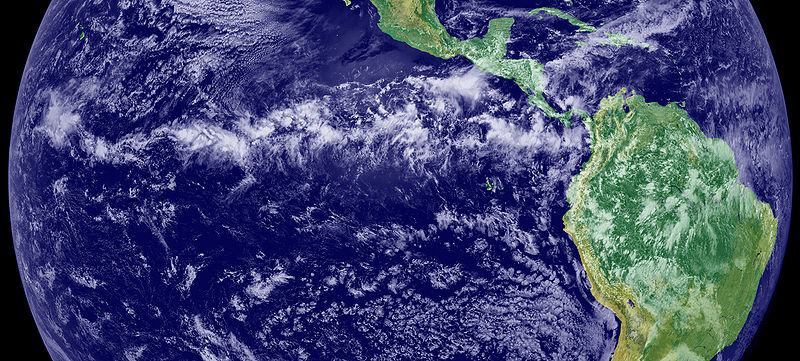
Intertropical Convergence Zone
Meteorological phenomenon

advection
In the fields of physics, engineering, and earth sciences, advection is the transport of a substance or quantity by bulk motion of a fluid. The properties of that substance are carried with it. Generally the majority of the advected substance is also a fluid. The properties that are carried with the advected substance are conserved properties such as energy. An example of advection is the transport of pollutants or silt in a river by bulk water flow downstream. Another commonly advected quantity is energy or enthalpy. Here the fluid may be any material that contains thermal energy, such as wat

polar vortex
persistent cold-core low-pressure area that circles one of the poles
Pampero
wind
trough
elongated region of low atmospheric pressure
geostrophic wind
theoretical wind that would result from an exact balance between the Coriolis force and the pressure gradient force
polar front
in meteorology
Rossby wave
type of inertial wave in the atmospheres and oceans of planets that largely owe their properties to rotation of the planet
Lee wave
natural atmospheric phenomenon
cold drop
meteorological term
synoptic scale meteorology
1000-km-order method of measuring weather systems
Rossby number
ratio of inertial force to Coriolis force

Baroclinic
thumb|right|300px|Density lines and isobar (meteorology)|isobars cross vertically in a baroclinic fluid.
thumb|right|300px| Visualization of a (fictive) formation of isotherms (red-orange) and isobars (blue) in a baroclinic atmospheric layering.
thumb|right|upright=1.2|A rotating tank experiment modelling baroclinic eddies in the atmosphere
In fluid dynamics, the baroclinity (often called baroclinicity) of a stratified fluid is a measure of how misaligned the gradient of pressure is from the gradient of density in a fluid. In meteorology, a baroclinic flow is one in which the density depends o
temperature gradient
temperature difference per length
atmospheric river
narrow corridor or filament of concentrated moisture in the atmosphere
scale height
distance over which a quantity decreases by a factor of e; for a planetary atmosphere, the distance over which pressure drops by that factor
pressure-gradient force
physical force from a pressure differential
ridge
elongated region of high atmospheric pressure
heat dome
weather phenomenon
Aleutian Low
semi-permanent low pressure center located near the Aleutian Islands
Madden–Julian oscillation
largest element of the intraseasonal variability in the tropical atmosphere
thermal wind
barotropic fluid
fluid whose density is a function of pressure only
Sudden stratospheric warming
meteorological phenomenon in the upper troposphere
Buys Ballot's law

cyclogenesis
thumb|upright=1.35|This collage of GOES 13 satellite images shows the development of a [[nor'easter over two days.]]
Cyclogenesis is the development or strengthening of cyclonic circulation in the atmosphere (a low-pressure area). Cyclogenesis is an umbrella term for at least three different processes, all of which result in the development of some sort of cyclone, and at any size from the microscale to the synoptic scale.
Kelvin wave
type of wave in the ocean or atmosphere
pressure gradient
a transition in the amount of pressure between two spatial locations
anti-greenhouse effect
global cooling phenomena
Thermal low
low-pressure areas that occur over the subtropics
internal wave
wave within a fluid medium, rather than on the surface
Brunt–Väisälä frequency
angular frequency at which a vertically displaced parcel will oscillate within a statically stable environment
quasi-biennial oscillation
tropical wind alternation between Krakatoa easterlies and Berson's westerlies
Coriolis frequency
equal to twice the rotation rate Ω of the Earth multiplied by the sine of the latitude φ
arctic front
semi-permanent weather front
geophysical fluid dynamics
fluid dynamics of naturally occurring flows, such as lava flows, oceans, and planetary atmospheres, on Earth and other planets
atmospheric instability
condition where the Earth's atmosphere is generally considered to be unstable
outflow boundary
in atmospheric science, boundary separating thunderstorm-cooled air from the surrounding air
atmospheric wave
periodic disturbance
Monsoon trough
Weather phenomenon
geopotential height
Measurement of height that adjusts for the variation of gravity with latitude and altitude
atmospheric tide
global-scale periodic oscillations of the atmosphere, analogous to ocean tides
Sudestada
Sudestada (Southeast blow) is the Argentine and Uruguayan name for a climatic phenomenon common to the Río de la Plata (an estuary formed by the combination of the Uruguay River and the Paraná River on the southeastern coastline of South America) and its surrounding region. The phenomenon consists of a sudden rotation of cold southern winds to the south-east. This change, while moderating the cold temperatures, loads the air masses with oceanic humidity, bringing heavy rain and rough seas in the coastal regions. The air circulation also increases the intensity of the winds. The Sudestada is mo
potential vorticity
simplified approach for understanding fluid motions in a rotating system
primitive equations
set of nonlinear differential equations used to approximate global atmospheric flow
wave cloud
a cloud form created by atmospheric internal waves.
anticyclogenesis
Anticyclogenesis is the development or strengthening of an anticyclonic circulation in the atmosphere. It is the opposite of anticyclolysis (the dissolution or weakening of an anticyclone) and has a cyclonic equivalent known as cyclogenesis. Anticyclones are alternatively referred to as high pressure systems.
isopycnal
Isopycnals are layers within the ocean that are stratified based on their densities and can be shown as a line connecting points of a specific density or potential density on a graph. Isopycnals are often displayed graphically to help visualize "layers" of the water in the ocean or gases in the atmosphere in a similar manner to how contour lines are used in topographic maps to help visualize topography.
Rossby parameter
used in geophysics and meteorology
beta plane
approximation whereby the Coriolis parameter, f, is set to vary linearly in space
Rossby radius of deformation
length scale at which rotational effects become as important as buoyancy or gravity wave effects in the evolution of the flow about some disturbance
air current
type of concentrated air flow within Earth's atmosphere
balanced flow
model of atmospheric motion
Papagayo wind
meteorological phenomenon in Central America