Category
page 1Auchenorrhyncha families
Cicadidae
thumb|Neotibicen linnei
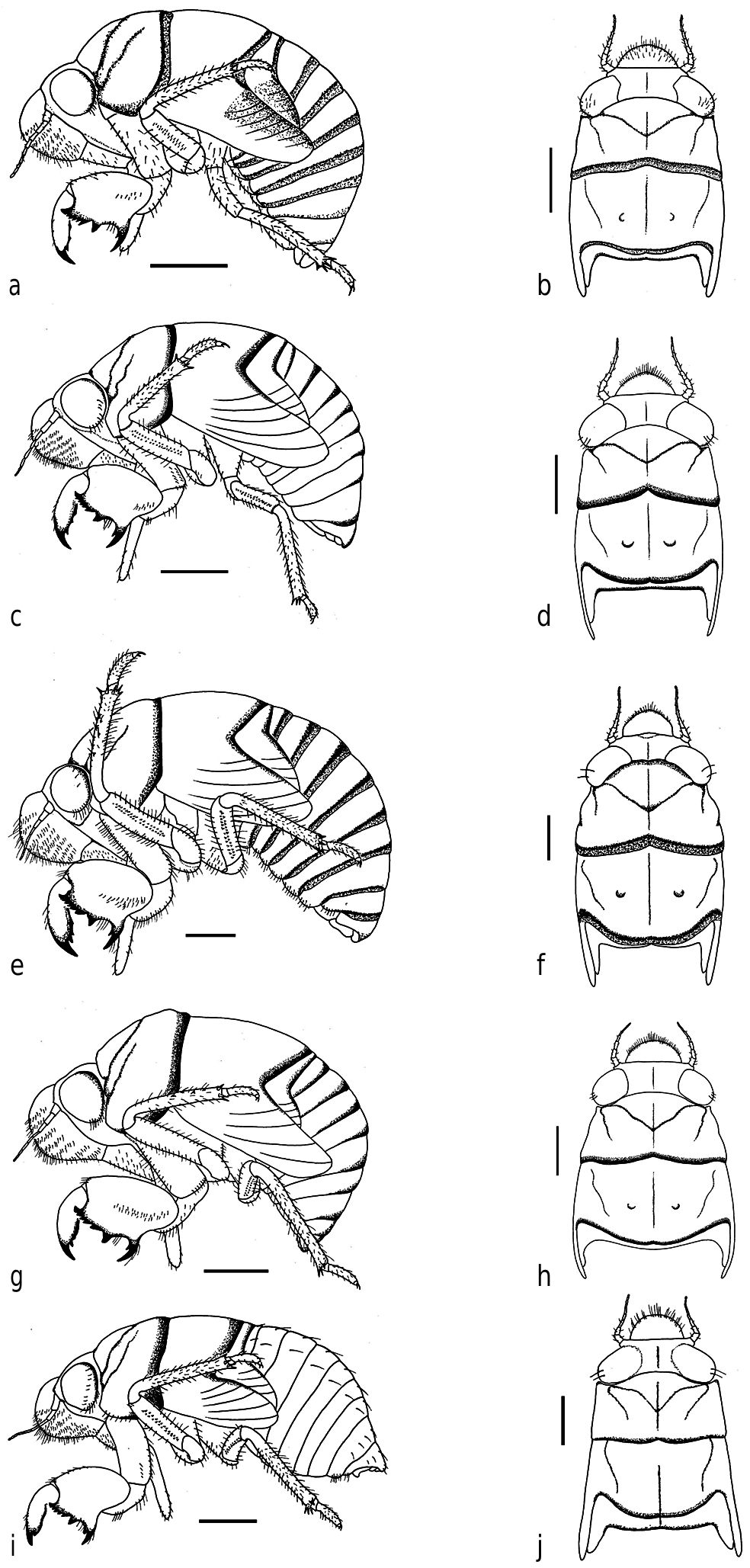
Cicadidae, the true cicadas, is one of two families of cicadas, with about 3,400 species in over 520 genera worldwide; it contains most living cicada species, except for the two belonging to its sister taxon, the Tettigarctidae. The classification of this family, of often very similar insects, has undergone many revisions, continuing into the 21st century; for example, many species previously assigned to the type genus Cicada, are now placed in different tribes.
.jpg)
Cercopidae
Cercopidae are the largest family of Cercopoidea, a xylem-feeding insect group, commonly called froghoppers. They belong to the hemipteran suborder Auchenorrhyncha. A 2023 phylogenetic study of the family suggested the elevation of the New World subfamily Ischnorhininae to full family status as Ischnorhinidae, leaving a monophyletic Old World Cercopinae.
Fulgoridae
The family Fulgoridae is a large group of hemipteran insects, especially abundant and diverse in the tropics, containing over 125 genera worldwide. They are mostly of moderate to large size, many with a superficial resemblance to Lepidoptera due to their brilliant and varied coloration. Various genera and species (especially the genera Fulgora and Pyrops) are sometimes referred to as lanternflies or lanthorn flies.

Aphrophoridae
The Aphrophoridae are a family of spittlebugs belonging to the order Hemiptera. There are at least 160 genera and 990 described species in Aphrophoridae.
thumb|Yezophora flavomaculata
thumb|left|Aphrophora corticea
thumb|Aphrophora nymph inside its spittle.

Delphacidae
Delphacidae is a family of planthoppers containing about 2000 species, distributed worldwide. Delphacids are separated from other "hoppers" by the prominent spur on the tibia of the hindleg.
Issidae
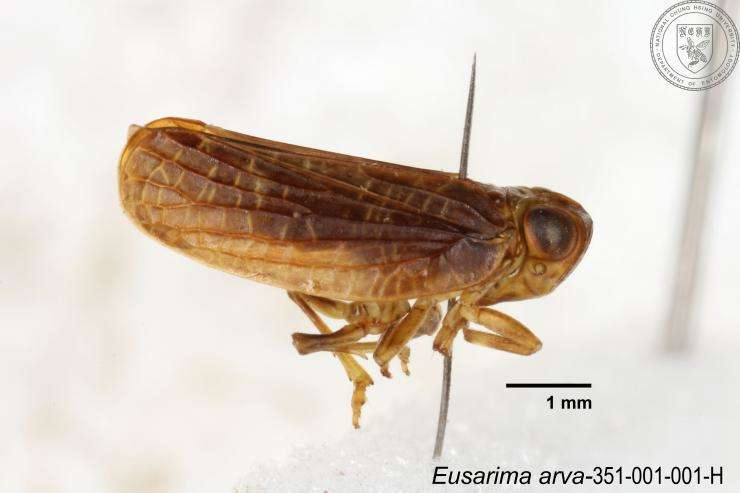
Issidae is a family of planthoppers described by Spinola in 1839, belonging to the order Hemiptera, suborder Auchenorrhyncha superfamily Fulgoroidea.

Cixiidae
The Cixiidae are a family of fulgoroid insects, one of many families commonly known as planthoppers, distributed worldwide and comprising more than 2,000 species from over 150 genera.
Flatidae
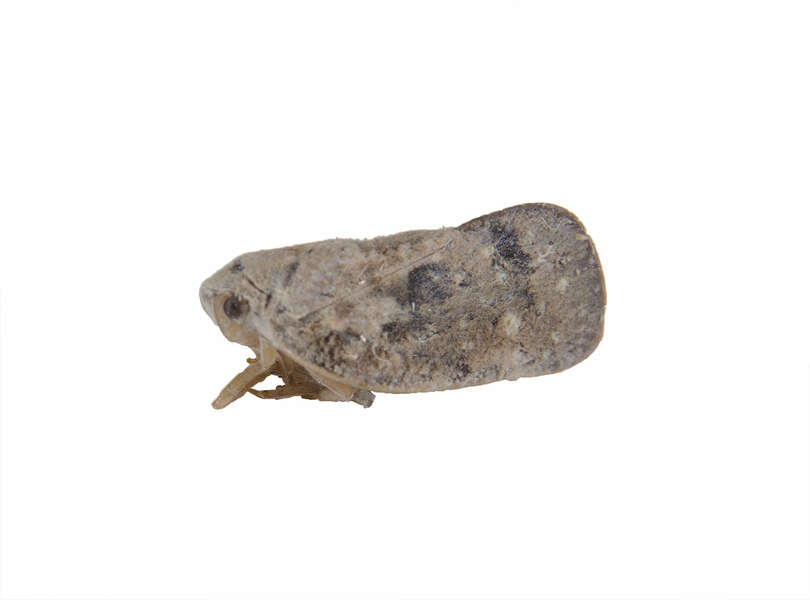
right|thumb|Flatid nymph from Assam, [[India]]
thumb|Ormenoides venusta nymph
thumb|A small clip showing a Flatid nymph of about 4 to 5mm walking

Dictyopharidae
Dictyopharidae is a family of planthoppers, related to the Fulgoridae. The family comprises nearly 760 species in more than 150 genera which are grouped into two subfamilies, Dictyopharinae and Orgeriinae.

Derbidae
The family Derbidae (commonly called derbids) is a large and diverse group of planthoppers (Fulgoroidea, Hemiptera), widely distributed in the tropics and also found in subtropical and temperate regions. It includes more than 150 genera and more than 1500 species. The adults suck the sap of plants while the nymphs live mainly in decaying organic matter, for example under the bark of dead tree trunks, feeding on fungi. In some groups of species the general structure of the insects is largely uniform, whereas in others like in the subfamily Otiocerinae various forms can be found. For example, th

Achilidae
Achilidae is a family of planthoppers, sometimes called "achilids" in the order Hemiptera. There are at least 520 described species in Achilidae.
Acanaloniidae
Acanaloniidae is a family of planthoppers. It is sometimes treated as a subfamily of Issidae (as Acanaloniinae).
Tropiduchidae
Tropiduchidae is a family of planthoppers in the order Hemiptera. There are at least 160 genera and 600 described species in Tropiduchidae.

Clastopteridae
thumb|Clastoptera xanthocephala
%20looked%20after%20by%20ants%20(17651433563).jpg)
Tettigometridae
The Tettigometridae are a family of Fulgoromorpha (planthoppers), with an Old World species distribution.

Machaerotidae
Machaerotidae are a family of bugs in the superfamily Cercopoidea which were formerly placed within Cercopidae. They are sometimes called tube-forming spittle-bugs as the nymphs form a calcareous tube within which they live. These bugs are mainly found in the Old World tropics. The adults of many genera have a long, free and spine-like process originating from the scutellum and thus superficially similar to the tree-hoppers, Membracidae. The tegmen or forewing, like typical bugs of the suborder Heteroptera, always has a distinct, membranous apical area.
Meenoplidae
Meenoplidae is a family of fulgoromorph planthoppers that are closely related to the Kinnaridae. They are small, with tent-like wings and usually are less than a centimetre long and a little more than a 100 species in around 25 genera are known with a distribution restricted to the Old World. They are distinguished by having one or more of their claval veins covered in sensory pits (appearing granular) along their length. The face is usually broad and the lateral carinae (keeled edges) are strongly elevated. The last segment of the labium is elongate. A median ocellus is usually present. The w

Eurybrachidae
Eurybrachidae (sometimes misspelled "Eurybrachyidae" or "Eurybrachiidae") is a small family of planthoppers with species occurring in parts of Asia, Australia and Africa. They are remarkable for the sophistication of their automimicry.
Ricaniidae
Ricaniidae is a family of planthopper insects, containing over 400 species worldwide. The highest diversity is in tropical Africa and Asia and in Australia, with a few species occurring in the Palearctic and Neotropical realms. It is one of the smaller families in the planthopper superfamily Fulgoroidea.
Achilixiidae
The Achilixiidae are a family of Fulgoromorpha (planthoppers); species may be found in the neotropical and Asian regions. They are closely related to Achilidae and are sometimes included under Achilidae as a subfamily. Like Achilidae, species generally feed on several species of plant though the nymph stage has been found to feed on fungus. Like other planthoppers, the immature stage is covered in a wax which may help protect it from predators. Achilixiidae are small or medium sized for planthoppers and are greatly compressed, not depressed like the Achilidae.
Kinnaridae
Kinnaridae is a family of fulgoroid planthoppers. This is a small family with a little more than 20 genera and about a 100 species. The family was erected by Muir in 1925 and most members are found in the Oriental and Neotropical regions and only a few in the Nearctic and Palaearctic regions.
Caliscelidae
Caliscelidae is a family of planthoppers, sap-sucking insects that belong to the order Hemiptera, suborder Auchenorrhyncha and superfamily Fulgoroidea. They are somewhat anomalous and have often been included within the family Issidae. Studies made in 2013 of the phylogeny of the Issidae and other groups using molecular techniques support the treatment of the group as a separate family. Sexual dimorphism can be marked. Some members of the family are called piglet bugs due to the shape of their snout. A particularly aberrant genus described in 2011 from India, Formiscurra, has males that resemb

Tettigarctidae
thumb|Paratettigarcta zealandica, fore and hindwing
thumb|Sanmai kongi from the upper Middle–lower Upper Jurassic Daohugou beds, China
Aetalionidae
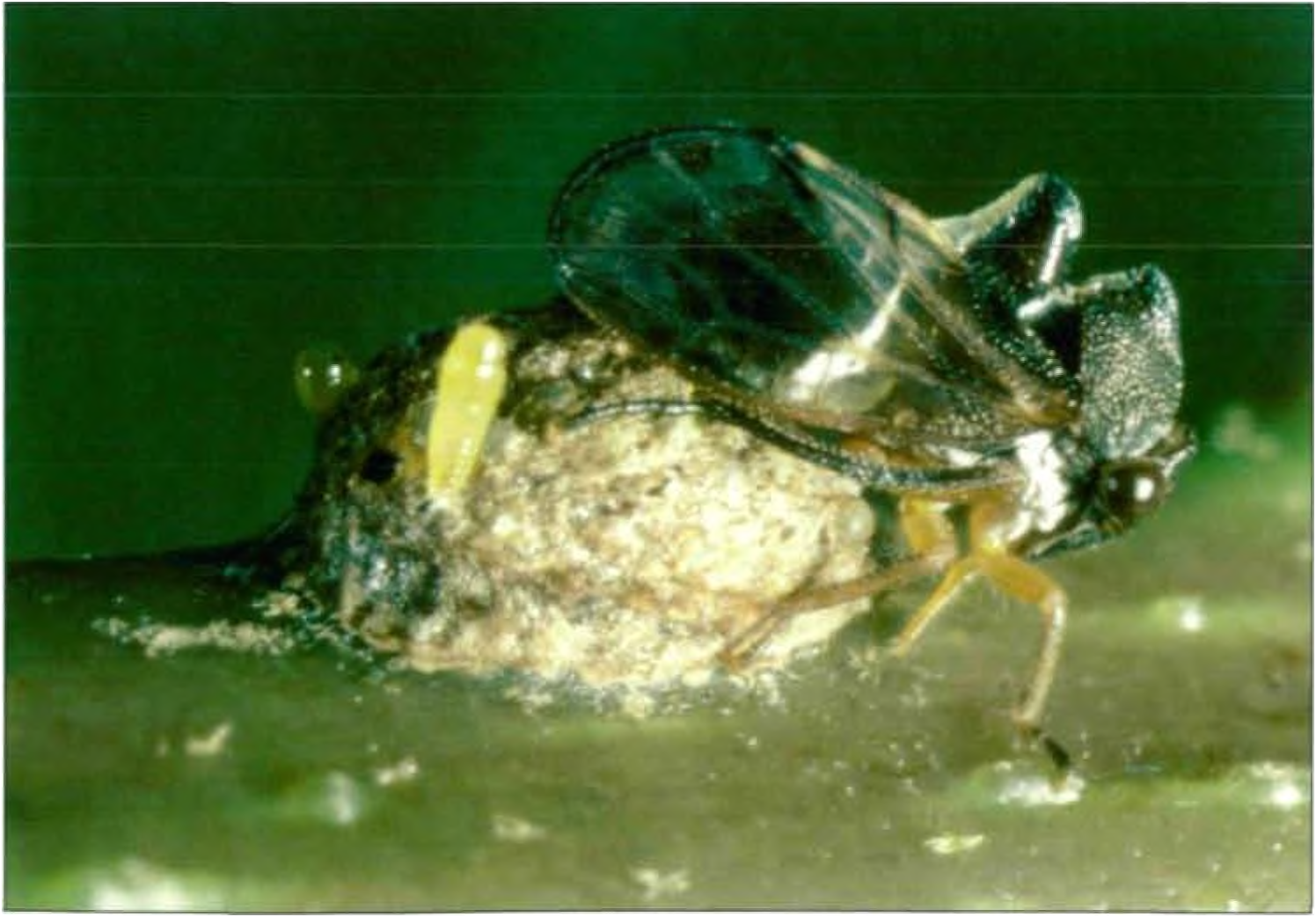
Aetalionidae are a family of treehoppers in the superfamily Membracoidea. Aetalionidae are somewhat like Membracidae in that they have one to three rows of short spines on the hind tibia but differ in having the front femur fused to the trochanter and the scutellum is completely exposed. The females have finger-like protrusions on the genital capsule. The family is mostly Neotropical. The subfamily Biturritiinae is Neotropical while the subfamily Aetalioninae has a Neotropical genus Aetalion and the sole Old World representative genus Darthula with a single species Darthula hardwickii (which i
Lophopidae
Lophopidae is a family of fulgoroid plant-hoppers with most species found in tropical South America and Asia (two genera occur in Africa).
Nogodinidae
Nogodinidae is a family of planthoppers. They have membranous wings with delicate venation and can be confused with members of other Fulgoroid families such as the Issidae and Tropiduchidae. Some authors treat it as a subfamily of the Issidae.
Gengidae
The Gengidae are a family of Fulgoromorpha (planthoppers), with species found in South Africa.

Myerslopiidae
Myerslopiidae is a family of tree-hoppers which consist of about 20 species in three genera with a distribution limited to New Zealand and Chile. Adult hoppers have a strongly sclerotized body with elytra-like tegmina meeting along the median. The hindwing is undeveloped. Based on observations on Mapuchea chilensis, they are thought to feed on phloem sap. They were formerly mistakenly placed as a tribe within the Ulopinae (Cicadellidae) by Evans and then raised to subfamily rank before being moved to a different suborder.
== References ==