Löcker, Holger;Löcker, Birgit;Holzinger, Werner E.
Derbidae
Sign in to saveThe family Derbidae (commonly called derbids) is a large and diverse group of planthoppers (Fulgoroidea, Hemiptera), widely distributed in the tropics and also found in subtropical and temperate regions. It includes more than 150 genera and more than 1500 species. The adults suck the sap of plants while the nymphs live mainly in decaying organic matter, for example under the bark of dead tree trunks, feeding on fungi. In some groups of species the general structure of the insects is largely uniform, whereas in others like in the subfamily Otiocerinae various forms can be found. For example, th
Species
FAMILY
- KingdomAnimalia
- PhylumArthropoda
- ClassInsecta
- OrderHemiptera
- FamilyDerbidae
via GBIF
Museum specimens
- Specimen records
- 908
- With media
- 4
- Family
- Derbidae
- Collections
- USNM, UCM, INHS, PSUC
- Recorded in
- Micronesia, Federated States Of, United States, Thailand, Panama
Wikidata facts
Show 5 more facts
- taxon rank
- family
- Commons category
- Derbidae
- taxon name
- Derbidae
- topic's main category
- Category:Derbidae
- taxon common name
- Derbid Planthoppers
Sources (2)
via Wikidata · CC0
~8 min read
Encyclopedic overview
5 sectionsContents
- Description
- Biology
- Taxonomy
- References
- External links
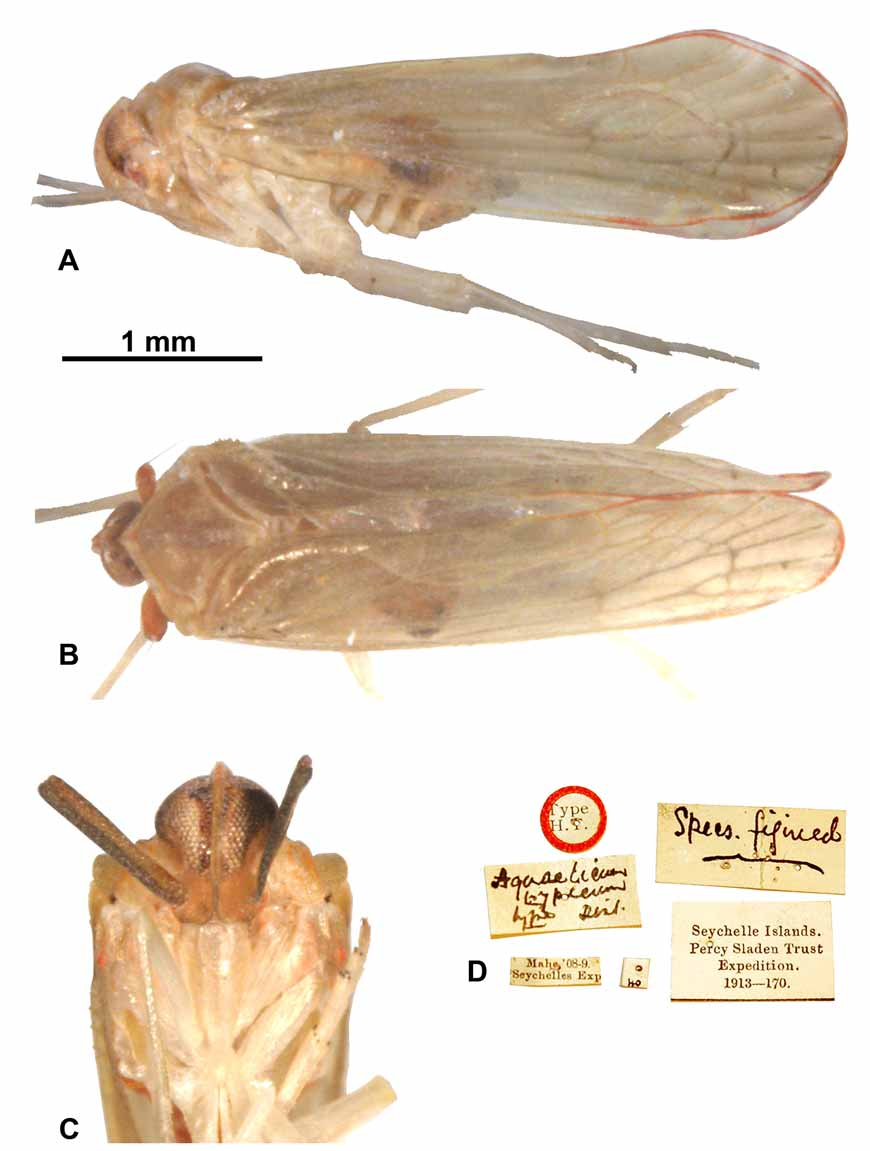
The family Derbidae (commonly called derbids) is a large and diverse group of planthoppers (Fulgoroidea, Hemiptera), widely distributed in the tropics and also found in subtropical and temperate regions. It includes more than 150 genera and more than 1500 species. The adults suck the sap of plants while the nymphs live mainly in decaying organic matter, for example under the bark of dead tree trunks, feeding on fungi. In some groups of species the general structure of the insects is largely uniform, whereas in others like in the subfamily Otiocerinae various forms can be found. For example, the shape of the head, the antennae or the wings can differ considerably among genera and species.
==Description== Derbids are typically 5–10 mm long from head to the end of the forewings. They can be distinguished from other planthopper families by a combination of different characters, the most important one being the very short terminal segment of the rostrum which is often only as long as wide. The illustration of Eocenchrea maorica on this page highlights the short terminal segment and also shows the general appearance of a derbid which is found in a number of tribes. The species in this example is from the tribe Cenchreini, subfamily Derbinae. In this form, the length of the body from head to tip of the abdomen is slightly more than half the length from head to tip of the forewings. The end of the wings and the profile of the head are uniformly rounded, the wings are held in a roof-like (tectiform) position when the insect is at rest and the antennae are small and inconspicuous. left|thumb|Eocenchrea maorica - short terminal segment of rostrum highlighted
Excerpted from Wikipedia’s “Derbidae” article, available under the CC BY-SA 4.0 licence.