Category
page 1Authoritarianism

Vladimir Putin
Vladimir Vladimirovich Putin is a Russian politician and former intelligence officer who has served as President of Russia since 2012, having previously served from 2000 to 2008. Putin also served as Prime Minister of Russia from 1999 to 2000 and again from 2008 to 2012. He has been described as the de facto leader of Russia since 2000.
.jpg)
dictatorship
A dictatorship is a form of government which is characterized by a leader who holds absolute or near-absolute political power. Politics in a dictatorship are controlled by a dictator, and they are facilitated through an inner circle of elites that includes advisers, generals, and other high-ranking officials. The dictator maintains control by influencing and appeasing the inner circle and repressing any opposition, which may include rival political parties, armed resistance, or disloyal members of the dictator's inner circle. Dictatorships can be formed by a military coup that overthrows the p

imperialism
thumb|The Rhodes Colossus|Political cartoon satirising the [[Cape to Cairo Railway, a symbol of British imperialism during the Scramble for Africa]]

Nicolás Maduro
Nicolás Maduro Moros is a Venezuelan politician and former union leader who became President of Venezuela in 2013. On 3 January 2026, US forces captured Maduro and his wife, Cilia Flores; they were transported to the US and charged with drug trafficking to which they pleaded not guilty. Although he was de facto removed from power, according to the Venezuelan government and interim president Delcy Rodríguez, he is still the de jure president of Venezuela. Prior to his presidency, he served as the vice president of Venezuela under President Hugo Chávez from 2012 to 2013 and as minister of foreign affairs from 2006 to 2012.
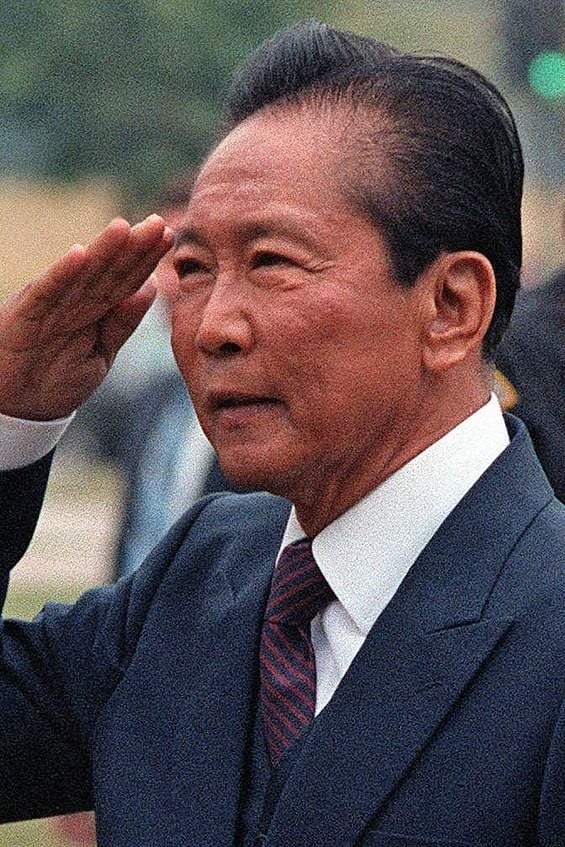
Ferdinand Marcos
President of the Philippines from 1965 to 1986

Ilham Aliyev
President of the Republic of Azerbaijan

Rodrigo Duterte
President of the Philippines from 2016 to 2022

theocracy
Theocracy or ethiocracy is a form of autocracy or oligarchy in which one or more deities are recognized as supreme ruling authorities giving divine guidance to human intermediaries with executive, legislative or judicial power who manage the government's daily affairs.

Mohammad Reza Pahlavi
Mohammad Reza Pahlavi was the last Shah of Iran from 1941 to 1979. He succeeded his father Reza Shah and ruled the Imperial State of Iran until he was overthrown in the Islamic Revolution led by Ruhollah Khomeini, which abolished the Iranian monarchy to establish the Islamic Republic of Iran. In 1967, he took the title Shahanshah, and held several others, including Aryamehr and Bozorg Arteshtaran. He was the second and last ruling monarch of the Pahlavi dynasty.

Abdel Fattah el-Sisi
President of the Republic of Egypt

oligarchy
Oligarchy (; ) is a form of government in which power rests with a small number of people. Leaders of such regimes are often referred to as oligarchs, and generally are characterized by having titles of nobility or high amounts of wealth.

Omar al-Bashir
President of Sudan from 1989 to 2019
.svg)
authoritarianism
Authoritarianism is a political system characterized by the rejection of political plurality, the use of strong central power to preserve the political status quo, and reductions in democracy, separation of powers, civil liberties, and the rule of law. Authoritarian regimes may be either autocratic or oligarchic and may be based upon the rule of a party, the military, or the concentration of power in a single person. States that have a blurred boundary between democracy and authoritarianism have sometimes been characterized as "hybrid democracies", "hybrid regimes" or "competitive authoritaria

autocracy
Autocracy is a form of government in which absolute power is held by one person, known as an autocrat. It includes both absolute monarchies and dictatorships, while it is contrasted with democracy and other forms of free government. The autocrat has total control over the exercise of civil liberties within the autocracy, choosing under what circumstances they may be exercised, if at all. Governments may also blend elements of autocracy and democracy, forming a mixed type of regime sometimes referred to as anocracy, hybrid regime, or electoral autocracy. The concept of autocracy has been recogn

absolute monarchy
form of government in which the monarch has absolute power
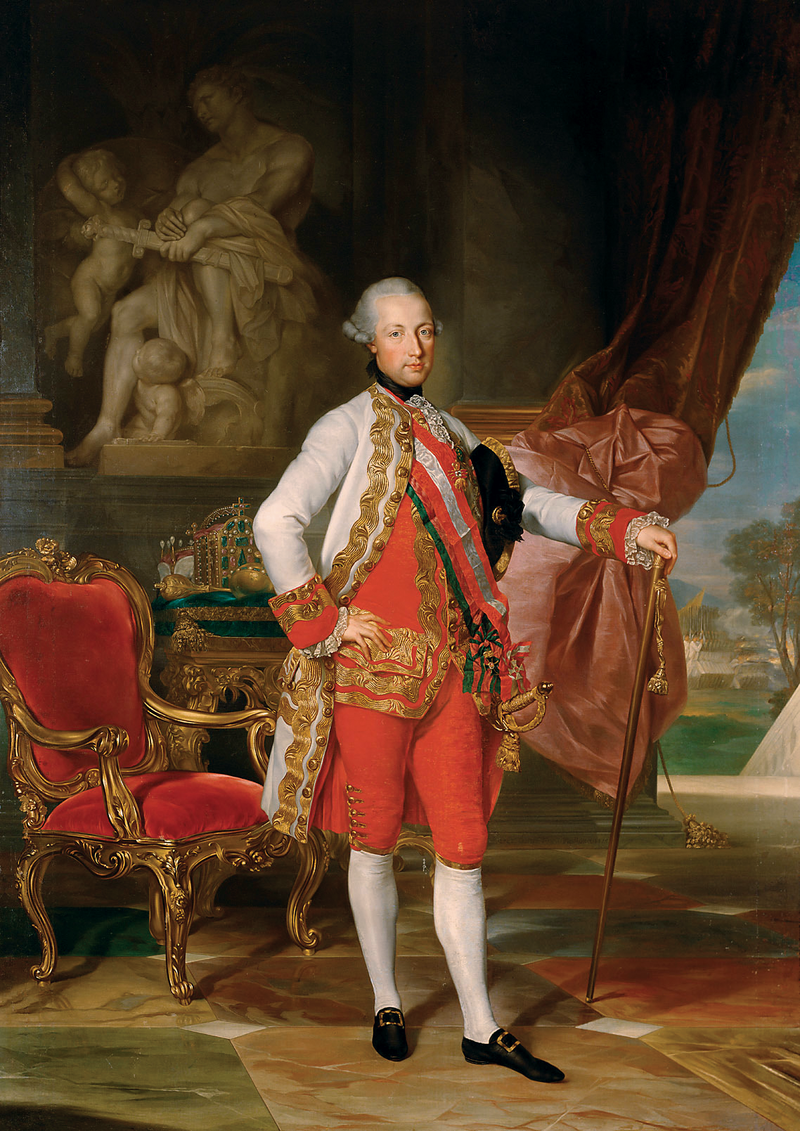
Joseph II, Holy Roman Emperor
Holy Roman Emperor from 1765 to 1790
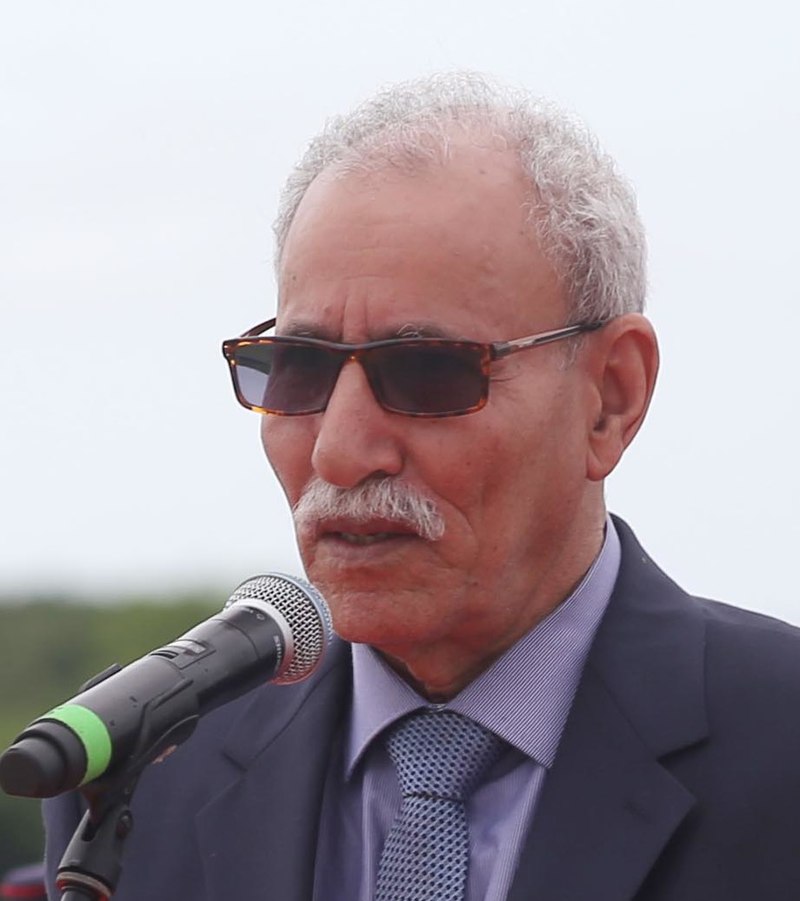
one-party state
political system with only one party permanently in control

Supreme Leader of Iran
The supreme leader of the Islamic Republic of Iran, officially styled as the leader of the Islamic Revolution or the leadership of the Islamic jurist by the Iranian Constitution, is the highest political and religious authority in Iran, taking precedence above the president who is the country's de jure head of state. The armed forces, judiciary, state radio and television, and other key government organizations such as the Guardian Council and Expediency Discernment Council are subject to the supreme leader.

Faure Essozimna Gnassingbé
Togolese politician

cult of personality
use of techniques of mass media, propaganda, the arts, patriotism, and government-organized demonstrations to create an idealized, heroic, and worshipful image of a leader or person

dictatorship of the proletariat
Marxist concept regarding the transitional period from capitalism to communism

Jacobins
The Society of the Friends of the Constitution (), renamed the Society of the Jacobins, Friends of Freedom and Equality () after 1792 and commonly known as the Jacobin Club () or simply the Jacobins (; ), was the most influential political club during the French Revolution of 1789. The period of its political ascendancy includes the Reign of Terror, during which well over 10,000 people were put on trial and executed in France, many for "political crimes".

Ancien Régime
1400s–1789 sociopolitical system of the Kingdom of France

Ibrahim Traoré
military leader of Burkina Faso since 2022

Nation of Islam
Black nationalist African-American new religious movement

Étienne Gnassingbé Eyadéma
President of Togo from 1967 to 2005
absolutism
form of government

police state
state controlled by the police force

dirty war in Argentina
period of state terrorism in Argentina from 1974 to 1983

Assimi Goïta
Mali's president and military officer

Operation Condor
series of anti-communist, anti-dissent campaigns in South America
%2009.jpg)
Putinism
thumb|300px|Vladimir Putin at the party congress of [[United Russia in 2011]]

Cesar Chavez
Cesario Estrada "Cesar" Chavez was an American labor unionist and political activist. Along with Dolores Huerta and Gilbert Padilla, he co-founded the National Farm Workers Association (NFWA), which later merged with the Agricultural Workers Organizing Committee (AWOC) to become the United Farm Workers (UFW). Ideologically, his worldview combined leftism with Catholic social teaching.

Georgian Dream
populist political party in Georgia

enlightened absolutism
form of absolute monarchy or despotism inspired by the Enlightenment
Bangladesh Awami League
Political party in Bangladesh

military junta
government led by a committee of military leaders

Peronism
thumb|Argentine president Juan Perón and first lady [[Eva Perón have been the central figures in the Justicialist Party.]]
thumb|(Clockwise from the top left) Symbols associated with Peronism: Peronist Party emblem, the federal star, the "Perón vuelve" (Perón returns) sign, and the "V" hand sign.

deep state
clandestine form of government of a state, operated through networks of covert power groups

Abdourahamane Tchiani
Nigerien army general and commander of the Nigerien presidential guard

victim blaming
social phenomenon that responsabilizes the victim of the damage suffered

Trumpism
Trumpism is the political ideology behind Donald Trump, the 45th and 47th president of the United States, and his political base. It is often used in close conjunction with the Make America Great Again (MAGA) political movement. It comprises ideologies such as right-wing populism, right-wing antiglobalism, national conservatism, Christian nationalism, and neo-nationalism, and features significant illiberal, authoritarian, and autocratic beliefs. Trumpists and Trumpians are terms that refer to individuals exhibiting its characteristics. There is significant academic debate over the prevalence o

cacique
thumb|right|Túpac Amaru II, an Andean cacique who led a 1781 rebellion against Spanish rule in Peru
thumb|Cangapol, chief of the Tehuelches, 18th century.
junta
Term for administrative council in Spain and Latin America

Interahamwe
The Interahamwe (, ) is a Hutu paramilitary organization active in the Democratic Republic of the Congo and Uganda. The Interahamwe was formed around 1990, as the youth wing of the National Republican Movement for Democracy and Development (MRND according to its French name), the then-ruling party of Rwanda, and enjoyed the backing of the Hutu Power government. The Interahamwe, led by Robert Kajuga, were the main perpetrators of the Rwandan genocide, during which an estimated 500,000 to 1,000,000 Tutsi, Twa, and moderate Hutus were killed from April to July 1994, and the term "Interahamwe" was
.webp)
Carlism
thumb|Carlist flag from the Third Carlist War (c. 1875), with the Carlist motto [[Dios, patria y rey ("God, Fatherland and King")]]
Carlism (; ; ; ) is a traditionalist and legitimist political movement in Spain aimed at establishing an alternative branch of the Bourbon dynasty, one descended from Don Carlos, Count of Molina (1788–1855), on the Spanish throne.

Bonapartism
thumb|"The Four Napoleons", 1858 propaganda image depicting Napoleon|Napoleon I, [[Napoleon II, Napoleon III, and Louis-Napoléon, Prince Imperial]]
People Power Party
right-wing populist political party in South Korea
Brazilian military government (1964–1985)
1964-1985 military regime in Brazil
Democratic Party of Turkmenistan
political party in Turkmenistan that has ruled Turkmenistan since its foundation in 1991

stratocracy
thumb|Portrait of Robert Filmer, the first person to use the term stratocracy in English
A stratocracy is a form of government headed by military chiefs. The branches of government are administered by military forces, the government is legal under the laws of the jurisdiction at issue, and is usually carried out by military workers.
tyranny of the majority
political concept
anti-authoritarianism
Anti-authoritarianism is opposition to authoritarianism. Anti-authoritarians usually believe in full equality before the law and strong civil liberties.
authoritarian personality
psychological trait/personality type
Reconquête
Reconquête (, ), stylised as Reconquête! (often shortened as R!), is a far-right political party in France founded in late 2021 by Éric Zemmour, who has since served as its leader. He was a candidate in the 2022 presidential election, in which he placed fourth with just over 7% of the vote as the best newcomer.
Attack
political party in Bulgaria
Greek Solution
political party in Greece
democratic backsliding
political phenomenon where liberal democracies gradually become illiberal and authoritarian
People's Democratic Party of Tajikistan
political party
Alliance for the Union of Romanians
political party in Romania and Moldova