Category
page 1Biological pest control wasps

wasps
A wasp is any insect of the narrow-waisted suborder Apocrita of the order Hymenoptera which is neither a bee nor an ant; this excludes the broad-waisted sawflies (Symphyta), which look somewhat like wasps, but are in a separate suborder. The wasps do not constitute a clade, a complete natural group with a single ancestor, as bees and ants are deeply nested within the wasps, having evolved from wasp ancestors. Wasps that are members of the clade Aculeata can sting their prey.

Vespa
Hornets are wasps of the genus Vespa in the subfamily Vespinae (the vespine wasps). They are the largest of the eusocial wasps, with some species reaching in length. They are similar in appearance to their close relatives the yellowjackets, but are distinguished from other vespine wasps by the relatively large top margin of the head. Worldwide, 22 species of Vespa are recognized. Most species only occur in the tropics of Asia, though the European hornet (V. crabro) is widely distributed throughout Europe, Russia, North America, and north-eastern Asia. Wasps of the genus Dolichovespula native t

Ichneumonidae
The Ichneumonidae, also known as ichneumon wasps, ichneumonid wasps, ichneumonids, or Darwin wasps, are a family of parasitoid wasps of the insect order Hymenoptera. They are one of the most diverse groups within the Hymenoptera with roughly 25,000 species described . However, this likely represents less than a quarter of their true richness as reliable estimates are lacking, along with much of the most basic knowledge about their ecology, distribution, and evolution. It is estimated that there are more species in this family than there are species of birds and mammals combined. Ichneumonid wa
Braconidae
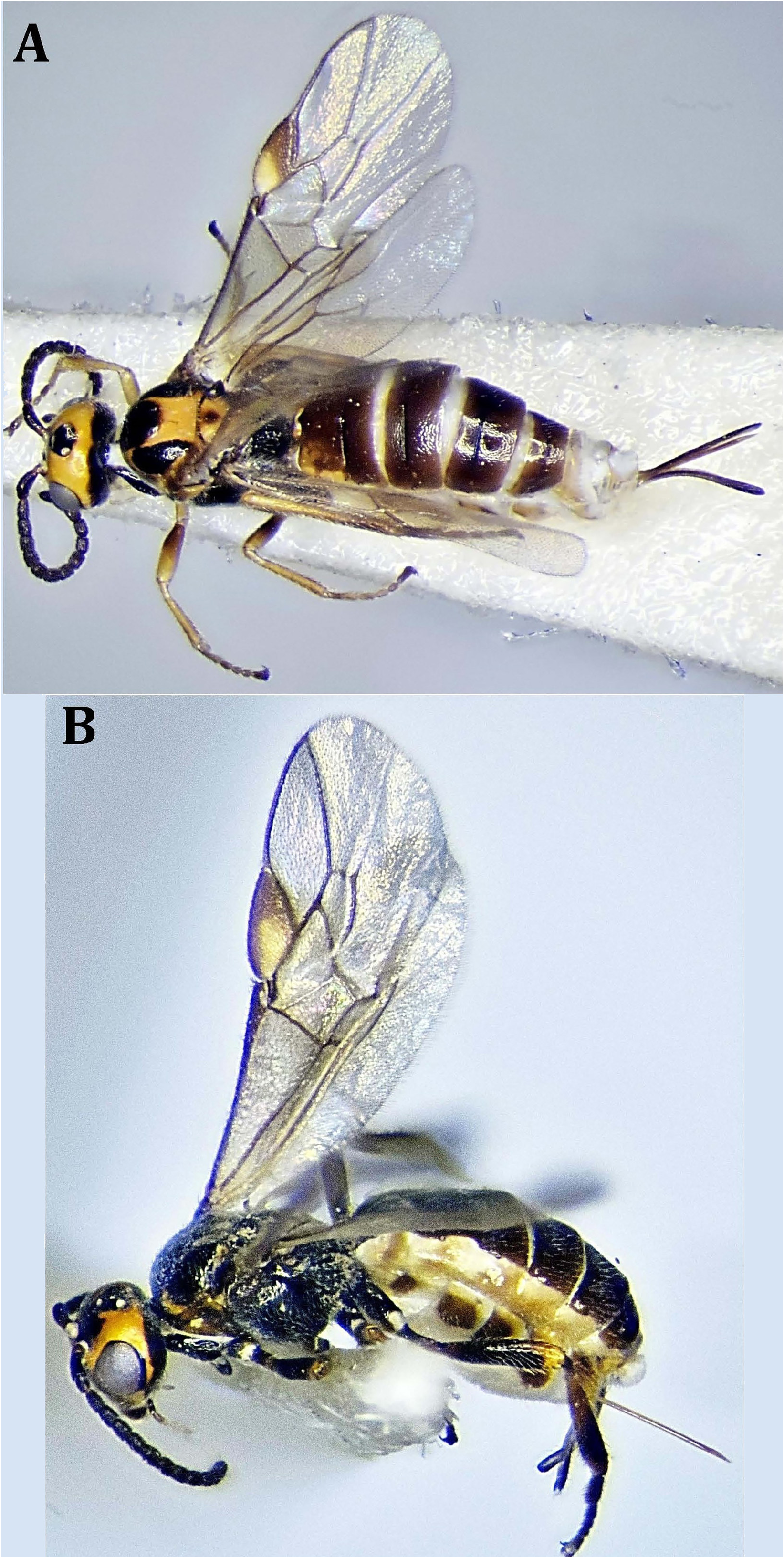
The Braconidae are a family of parasitoid wasps. After the closely related Ichneumonidae, braconids make up the second-largest family in the order Hymenoptera, with about 17,000 recognized species and many thousands more undescribed. One analysis estimated a total between 30,000 and 50,000, and another provided a narrower estimate between 42,000 and 43,000 species.
thumb|right|A female tropical braconid ovipositing into dead wood
.jpg)
Scoliidae
Scoliidae, the scoliid wasps, is a family of wasps comprising about 300 described species worldwide. They tend to be black, often marked with yellow or orange, and their wing tips are distinctively corrugated. Males are more slender and elongated than females, with significantly longer antennae, but the sexual dimorphism is not as apparent as in many of the Tiphiidae and Thynnidae.

Eumeninae
subfamily of insects
Ampulicidae
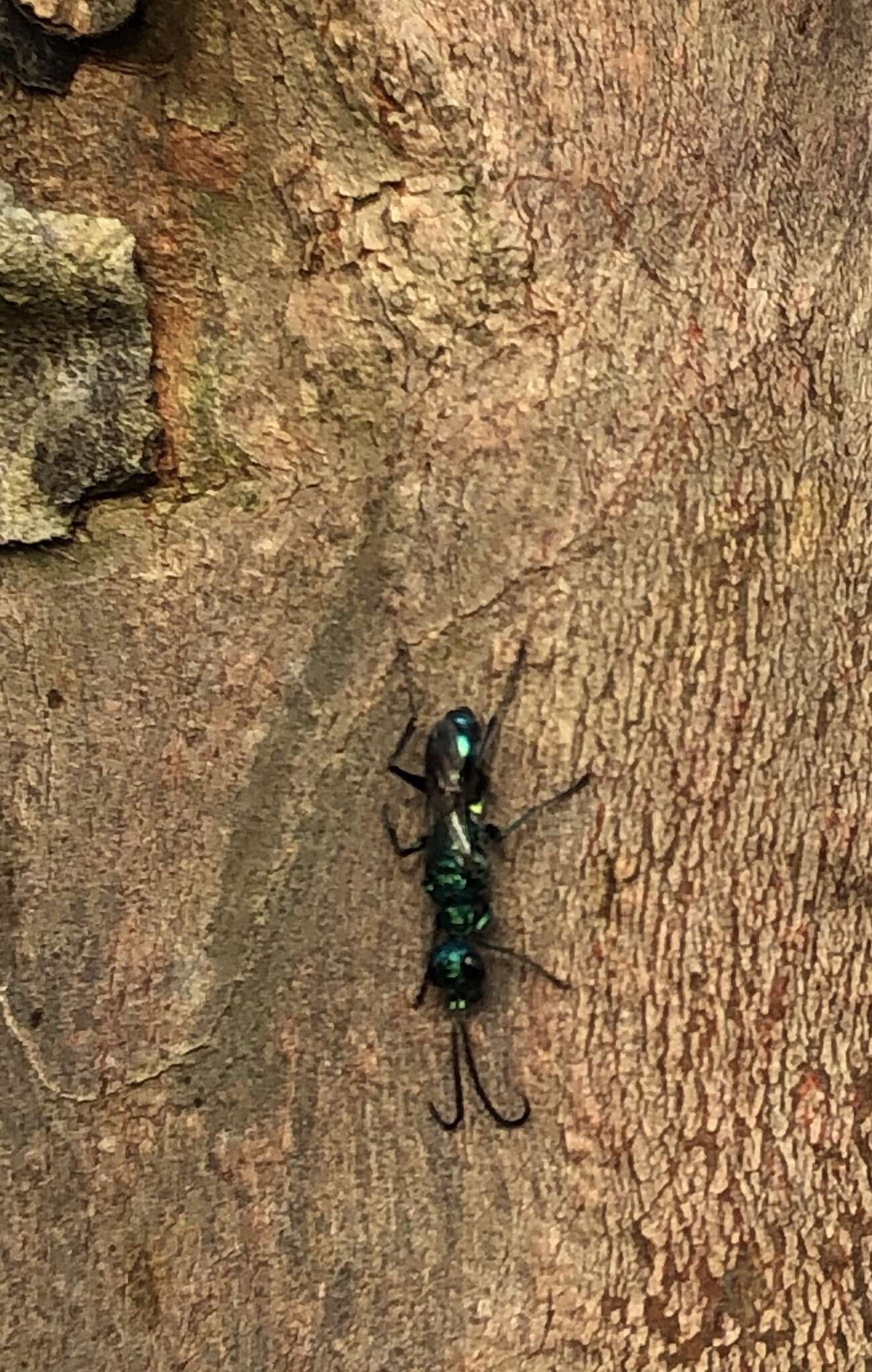
Ampulicidae, or cockroach wasps, are a small (about 170 species), primarily tropical family of sphecoid wasps, all of which use various cockroaches as prey for their larvae. They are the most primitive family of sphecoid hunting wasps. They tend to have elongated jaws, pronounced neck-like constrictions behind the head, strongly petiolate abdomens, and deep grooves on the thorax. Many are quite ant-like in appearance, though some are brilliant metallic blue, green, and hot pink.

Ampulex compressa
species of wasp

Vespinae
The subfamily Vespinae contains the largest and best-known groups of eusocial wasps, including true hornets (the genus Vespa), and the "yellowjackets" (genera Dolichovespula and Vespula). The remaining genus, Provespa, is a small, poorly known group of nocturnal wasps from Southeast Asia. One genus, Palaeovespa, has been described in the Paleocene to Eocene fossil records of North America and Europe. Collectively, the group can be found on all continents except Antarctica, and several of these wasps are invasive species, introduced beyond their native ranges, and can be major pests.
thumb|left

Chalcidoidea
superfamily of insects

Ammophila sabulosa
species of insect

Ichneumonoidea
The superfamily Ichneumonoidea contains one extinct and two extant families, including the two largest families within Hymenoptera: Ichneumonidae and Braconidae. The group is thought to contain as many as 100,000 species, many of which have not yet been described. Like other parasitoid wasps, they were long placed in the "Parasitica", variously considered as an infraorder or an unranked clade, now known to be paraphyletic.

Mymaridae
The Mymaridae, commonly known as fairyflies or fairy wasps, are a family of chalcidoid wasps found in temperate, subtropical, and tropical regions throughout the world. The family contains around 100 genera with 1,400 species.

Ammophila
genus of insects

Aphelinidae
right|thumb|226px|Eretmocerus sp.
Trichogramma
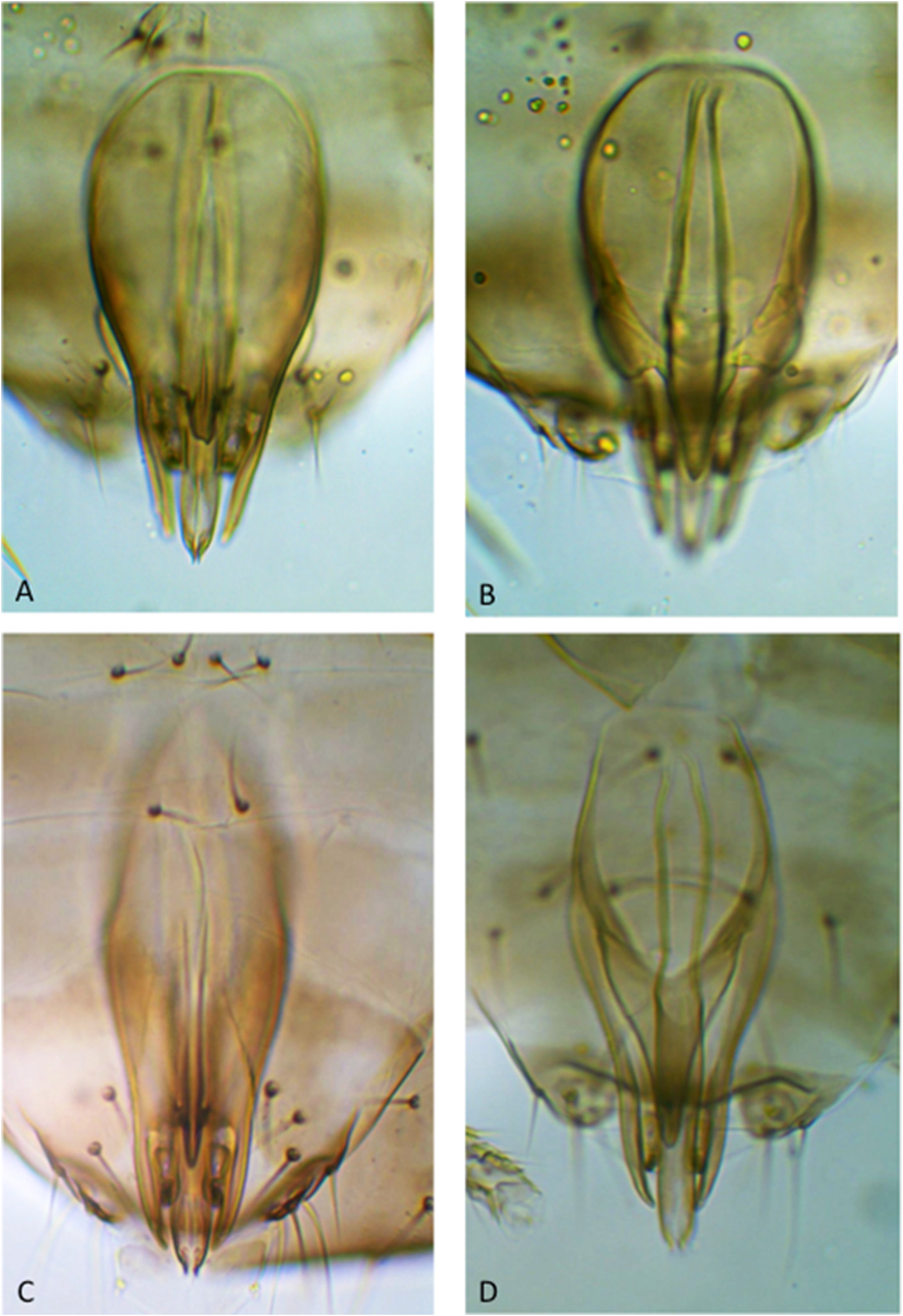
Trichogramma is a genus of minute polyphagous wasps that are endoparasitoids of insect eggs. Trichogramma is one of around 80 genera from the family Trichogrammatidae, with over 200 species worldwide.

Trichogrammatidae
thumb|A female Hydrophylita emporos on a female Psolodesmus mandarinus mandarinus.

Sphex
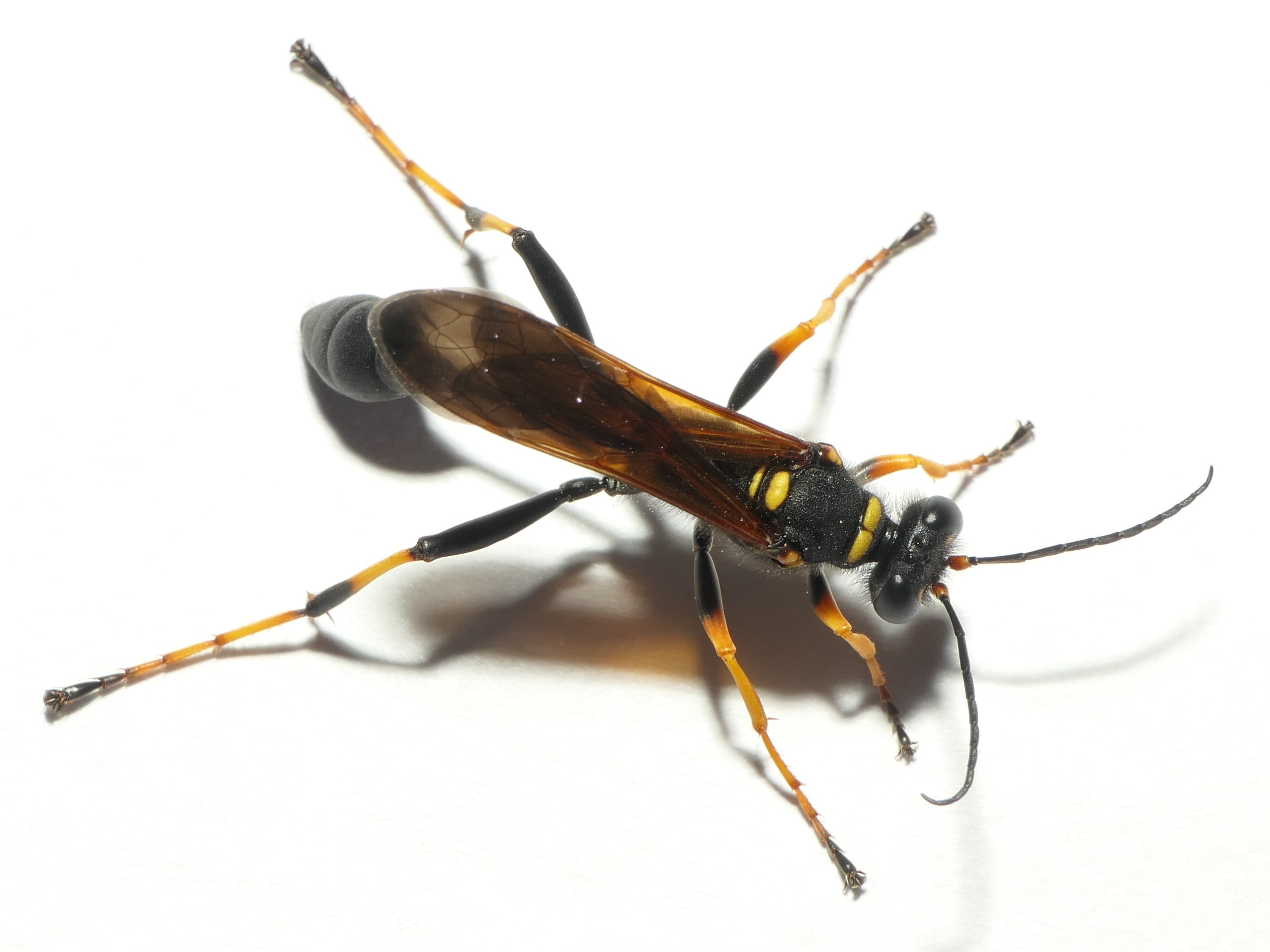
Sphex is a genus of cosmopolitan wasp that sting and paralyze prey insects. Sphex is one of many genera in the old digger wasp family Sphecidae (sensu lato), though most apart from the Sphecinae have now been moved to the family Crabronidae. There are over 130 known Sphex species.

Torymidae
Torymidae is a family of wasps in the superfamily Chalcidoidea. Most species in this family are small with attractive metallic coloration, and females generally have long ovipositors. Many are parasitoids on gall-forming insects, and some are phytophagous (plant-eating) species, sometimes using the galls formed by other insects. Over 960 species in about 70 genera are found worldwide. They are best recognized in that they are one of the few groups of Chalcidoidea in which the cerci are visible.
right|thumb|Torymus female
Ampulex
Ampulex is a large cosmopolitan genus of wasps belonging to the family Ampulicidae. Most of the >130 species occur in the tropics, particularly in the Old World, and fewer than 15 are known from the New World; fewer than 5 species are native to Europe or the United States, though the Old World species Ampulex compressa has spread to virtually everywhere that its host roaches (esp. the genus Periplaneta) can be found. The few species whose biology is known are parasitoids of cockroaches; they typically inject venom into the roach that subdues or immobilizes it, and then lay one to two eggs betw
Habrobracon hebetor
species of insect

Aphelinus mali
species of insect
Sceliphron caementarium
sphecid wasp species

Vespa ducalis
species of insect
.jpg)
Scelionidae
The hymenopteran family Scelionidae is a very large cosmopolitan group (over 3000 described species in some 176 genera) of exclusively parasitoid wasps, mostly small (0.5–10 mm), often black, often highly sculptured, with (typically) elbowed antennae that have a 9- or 10-segmented flagellum. It was once considered to be a subfamily of the Platygastridae, but has been revived in the most recent classification of Platygastroidea.
thumb
They are generally idiobionts, attacking the eggs of various insects, such as butterflies (e.g., the hackberry emperor), and spiders. Many scelionids are imp
Paper wasps
.jpg)
Sphecius
Cicada killer wasps (genus Sphecius) are large, solitary, ground-dwelling, predatory wasps. They are so named because they hunt cicadas and provision their nests with them, after stinging and paralyzing them. Twenty-one species worldwide are recognized. The highest diversity occurs in the region between North Africa and Central Asia.
Abispa
Abispa is a genus of large Australasian potter wasps belonging to the subfamily Eumeninae. The genus was first described in 1838 by Thomas Livingstone Mitchell.

Encarsia formosa
species of insect

Megarhyssa
thumb| Female Megarhyssa praecellens in China
Megarhyssa, also known as giant ichneumonid wasps, giant ichneumons, or stump stabbers, is a genus of large ichneumon wasps, with some species known for having the longest ovipositors of any insects. They are idiobiont ectoparasitoids of the larvae of wood-boring horntail wasps. The ovipositor can be mistaken for a large stinger. This is a genus of holometabolous insects within subfamily Rhyssinae that includes 37 species and belongs to Ichneumonidae, the family of wasps with the highest biodiversity in the world.

Trissolcus japonicus
species of insect

Euodynerus
thumb|E. hidalgo boreoorientalis subduing a caterpillar prey
thumb|E. megaera female
Euodynerus is a genus of potter wasps with a mainly Holarctic distribution, though a number of species extend through Indomalayan, Australasian, Afrotropical and northern Neotropical regions. Also, a single species is reported from Hawaii.

Rhynchium
thumb|Rhynchium brunneum, Taman Sari, 2014-05-19
Rhynchium is an Australian, Afrotropical, Indomalayan and Palearctic genus of potter wasps.
thumb|Rhynchium quinquecindum nambui. Iriomote Is., Japan.

Aphelinus abdominalis
species of insect
Astatinae
Astatidae is a cosmopolitan family of solitary wasps, peculiar for their males having very large compound eyes that broadly meet at the top of the head. The largest genus in this family is Astata, with about half of more than 160 species in the family.
Aleiodes
thumb|Aleiodes rugulosus
Epsilon
genus of hymenopterans

Diadegma semiclausum
species of insect

Chalybion californicum
species of wasp

Lariophagus distinguendus
species of insect
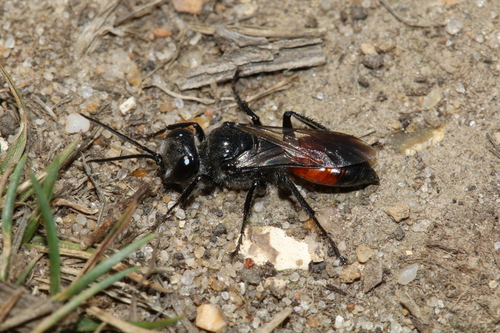
Astata
Astata is a cosmopolitan genus of solitary predatory wasps in the family Astatidae. They are known to prey on adults and nymphs of Pentatomidae. Astata is the largest genus in this subfamily, and is identified by features of its wing venation. The males of this genus and the related genus Dryudella have very large compound eyes that broadly meet at the top of the head.
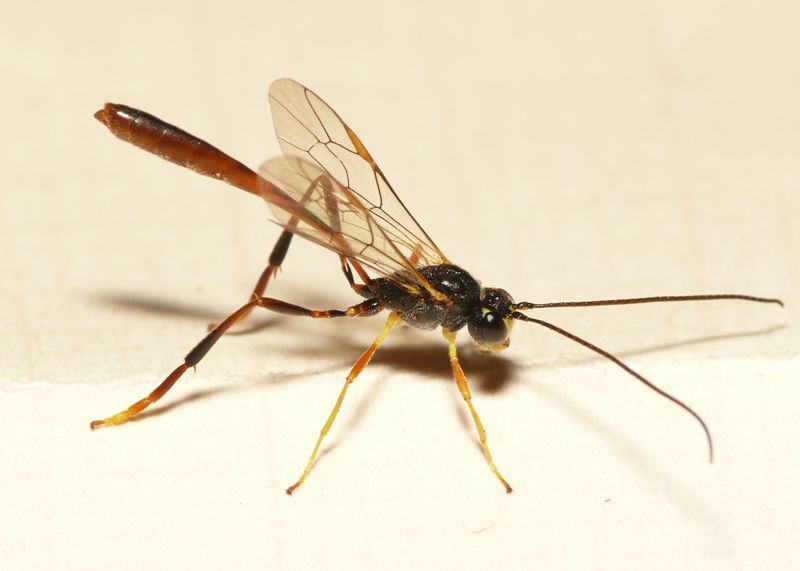
Agrypon flaveolatum
species of insect
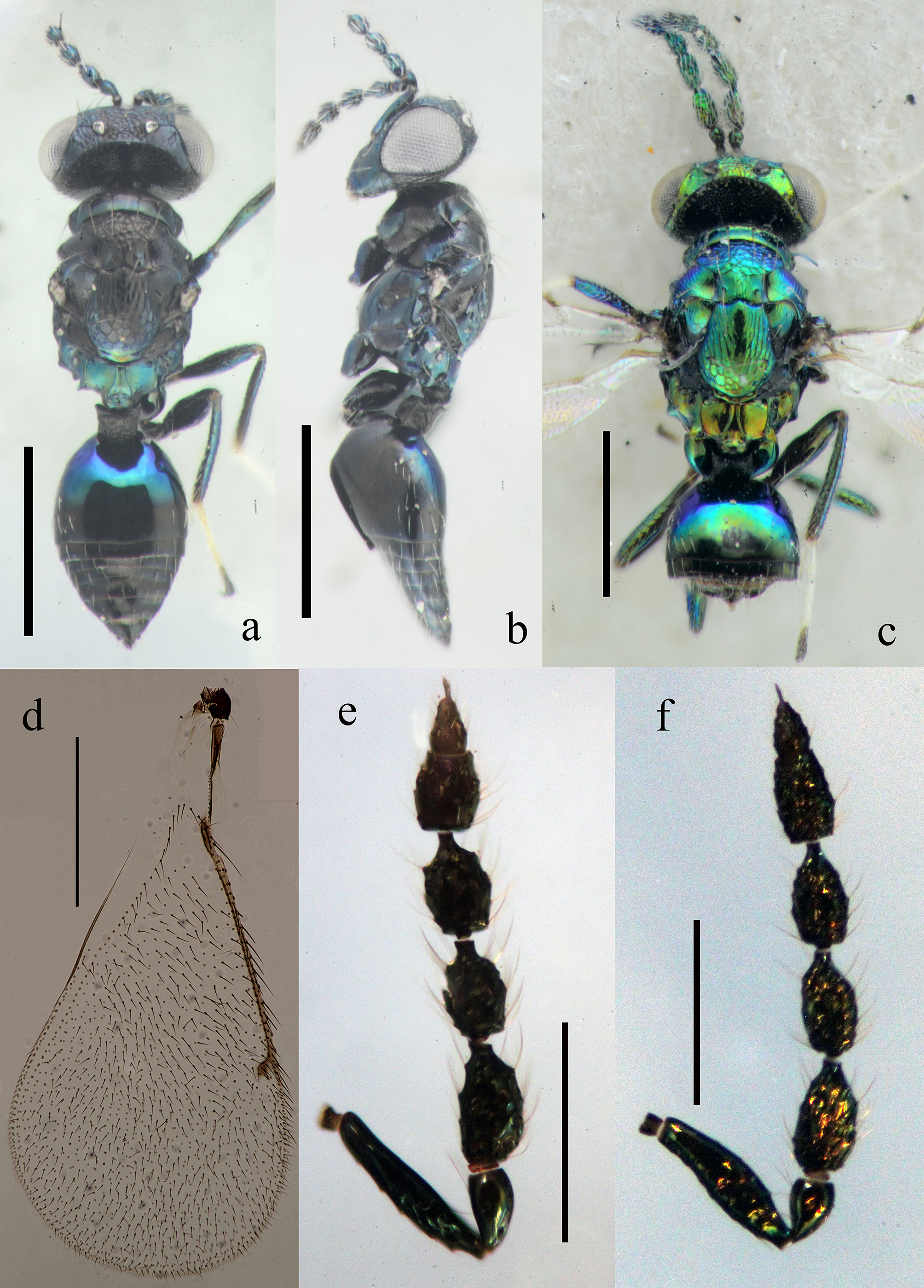
Pediobius foveolatus
species of insect

Scelio
Scelio is a large genus (at least 240 and possibly 500 species), the largest within the family Scelionidae, of parasitic wasp whose known target host include the eggs of grasshoppers (Acrididae, Orthoptera). They are found worldwide and some species have been implemented as biological control agents.

Allodynerus
Allodynerus is a genus of potter wasps. It is found in the Palearctic and the Afrotropics.

Diglyphus
Diglyphus is a genus of hymenopteran insects of the family Eulophidae. It is a parasitoid of Agromyzidae larvae, and therefore sometimes used in biological pest control.
Katamenes
Katamenes is a genus of potter wasps with species distributed in Europe and Africa. When originally named by Edmund Meade-Waldo, Katemenes was monotypic, containing only K. watsoni, but other species have since been moved from Eumenes to Katamenes.

Symmorphus
Symmorphus is a primarily holarctic genus of potter wasps. It is within the family Vespidae.

Alastor
genus of insects

Encarsia perniciosi
species of insect
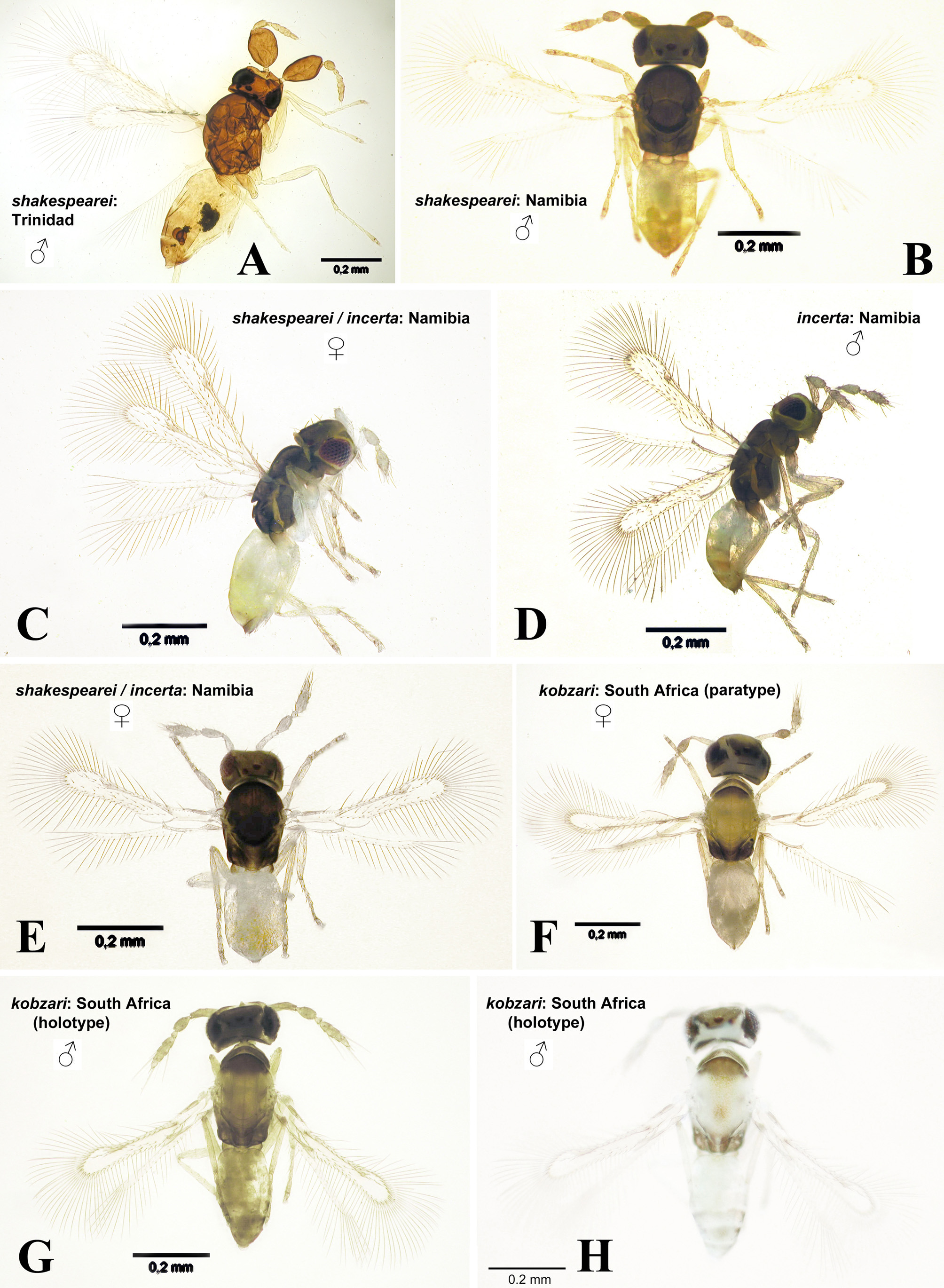
Goetheana
Goetheana is a genus of hymenopteran insects of the family Eulophidae. As a parasitoid of thrips, this wasp is used in biological pest control.
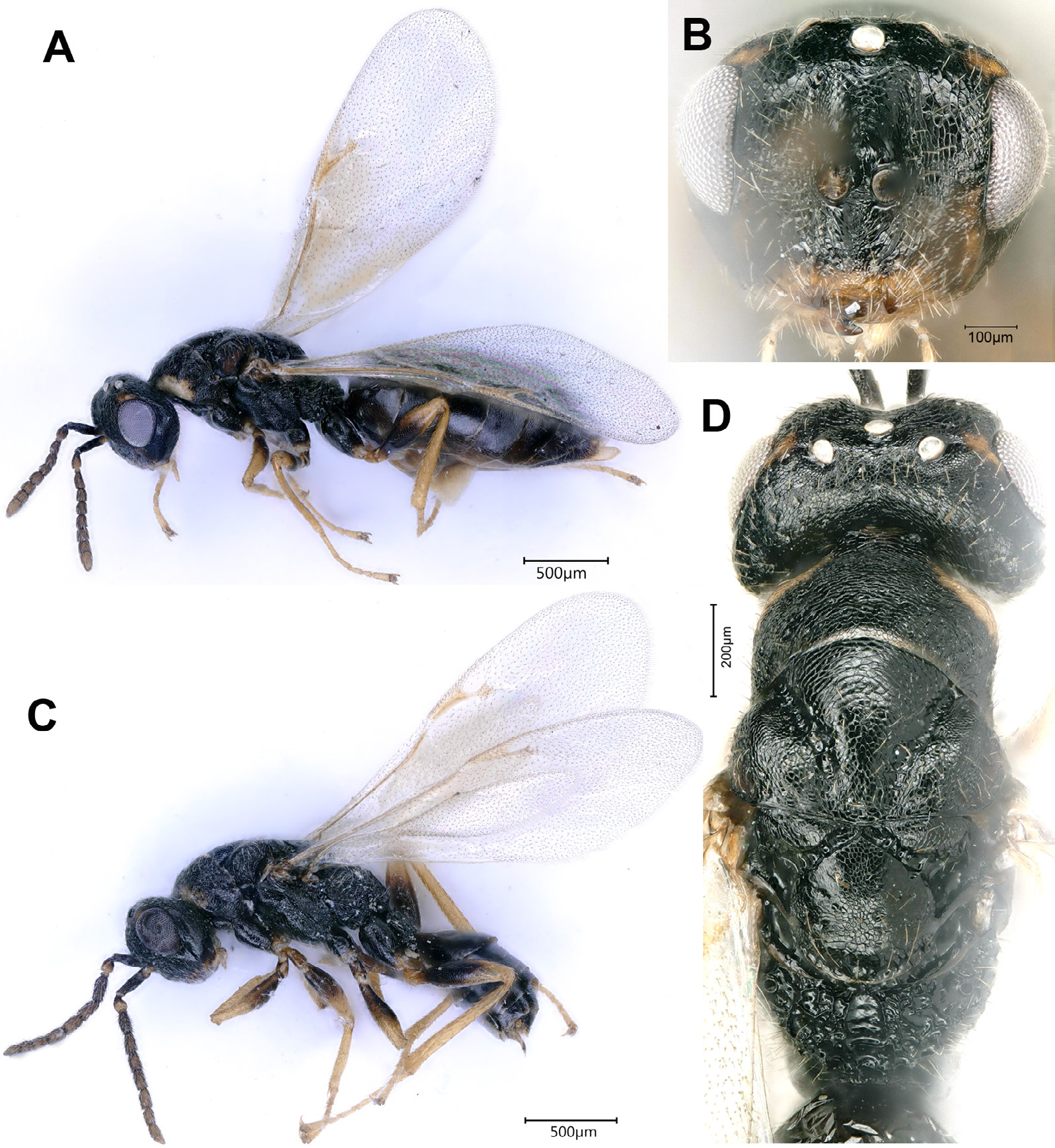
Tetramesa
thumb | right | Figure 1.
Tetramesa amica Lotfalizadeh, sp. nov. A female habitus in lateral view B head of female in frontal view C female antenna D male antenna.
Tetramesa is a genus of phytophagous wasps. The genus has over 200 described species , and recently the genera Aiolomorphus and Cathilaria have also been synonymized within Tetramesa in light of phylogenomic evidence. They are generally species-specific gall inducers and can be used as biological control for invasive grasses. Adults feed on nectar.

Pachodynerus
Pachodynerus is a fairly large (about 50 species) neotropical and nearctic genus of potter wasps with higher diversity in central South America. At least one species (Pachodynerus nasidens) has been introduced in other biogeographical regions, including several oceanic islands, while Pachodynerus erynnis occurs on Ascension Island as well as in North America. This genus is most closely related to the genus Euodynerus.
Pseudepipona
Pseudepipona is a genus of potter wasps found in the Palearctic, Nearctic, Afrotropical and Australian regions.

Oobius agrili
species of insect
Theocolax elegans
species of insect

Spathius
Spathius is a genus of doryctine wasps. The larvae of this genus of wasps feed on beetle larvae. They act as biological controllers of the certain pest beetles, such as Hylurgopinus rufipes and the emerald ash borer.
Trichilogaster acaciaelongifoliae
species of insect
Trichilogaster signiventris
species of insect

Aphytis melinus
species of insect