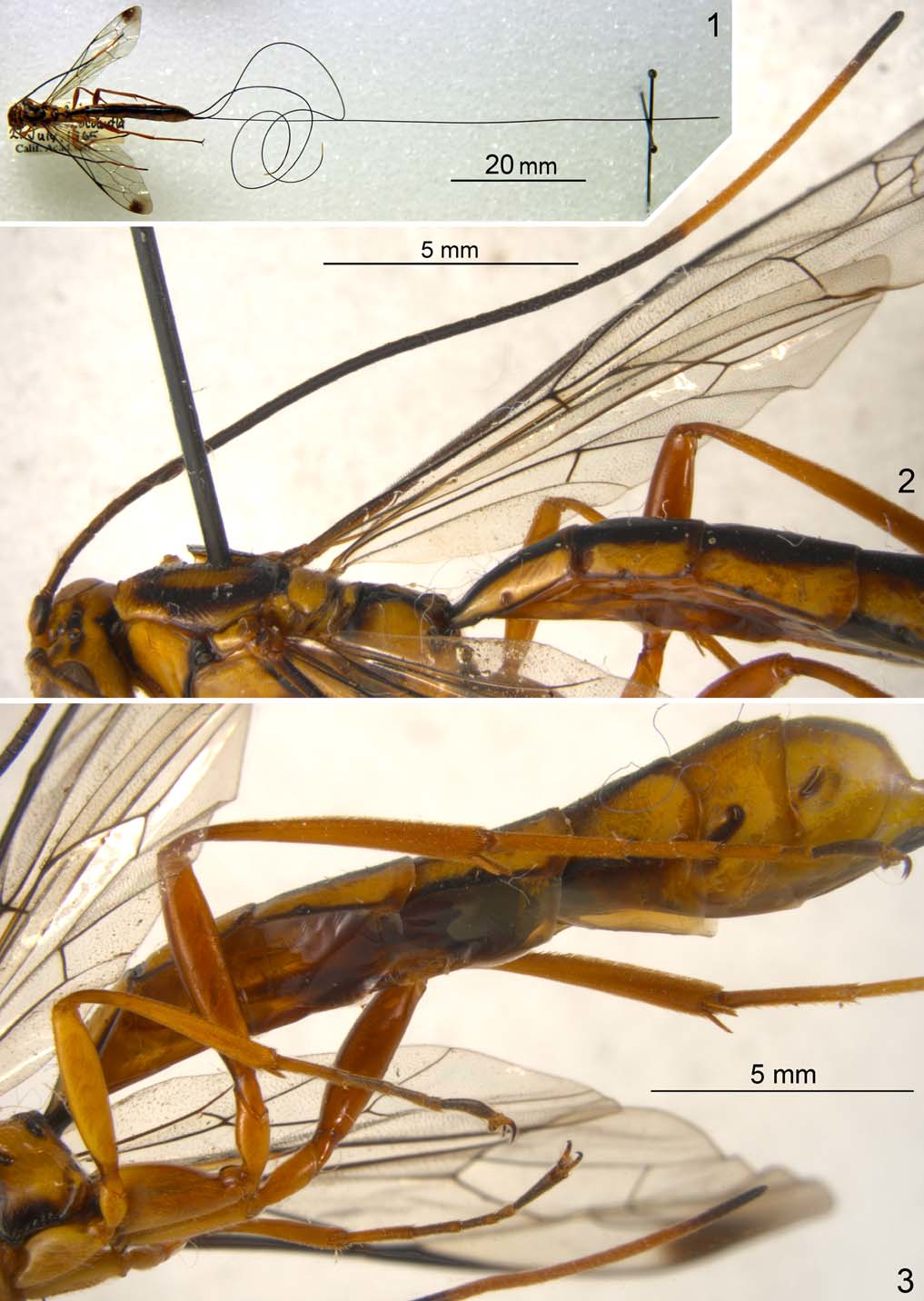
Khalaim, A. I.;Ruíz-Cancino, E.
Megarhyssa
Sign in to savethumb| Female Megarhyssa praecellens in China Megarhyssa, also known as giant ichneumonid wasps, giant ichneumons, or stump stabbers, is a genus of large ichneumon wasps, with some species known for having the longest ovipositors of any insects. They are idiobiont ectoparasitoids of the larvae of wood-boring horntail wasps. The ovipositor can be mistaken for a large stinger. This is a genus of holometabolous insects within subfamily Rhyssinae that includes 37 species and belongs to Ichneumonidae, the family of wasps with the highest biodiversity in the world.
Species
Long-tailed Giant Ichneumonid Wasp
GENUS
- KingdomAnimalia
- PhylumArthropoda
- ClassInsecta
- OrderHymenoptera
- FamilyIchneumonidae
Megarhyssa (лат. , от др.-греч. μεγα- «большой» и Rhyssa) — род наездников из семейства Ichneumonidae. Личинки паразитируют на личинках рогохвостов.
via GBIF
Wikidata facts
Show 5 more facts
- taxon common name
- Giant Ichneumons
- taxon name
- Megarhyssa
- taxon rank
- genus
- topic's main category
- Category:Megarhyssa
- Commons category
- Megarhyssa
Sources (2)
via Wikidata · CC0
~7 min read
Encyclopedic overview
11 sectionsContents
- Geographical range and habitat
- Description and identification
- Species of the United States and Canada
- Ecology
- Reproduction
- Reproductive cycle
- Mate choice and competition
- Evolution of flight
- Species
- References
- External links
thumb| Female Megarhyssa praecellens in China Megarhyssa, also known as giant ichneumonid wasps, giant ichneumons, or stump stabbers, is a genus of large ichneumon wasps, with some species known for having the longest ovipositors of any insects. They are idiobiont ectoparasitoids of the larvae of wood-boring horntail wasps. The ovipositor can be mistaken for a large stinger. This is a genus of holometabolous insects within subfamily Rhyssinae that includes 37 species and belongs to Ichneumonidae, the family of wasps with the highest biodiversity in the world.
==Geographical range and habitat== Megarhyssa species occur all over the world. There are only four Megarhyssa species known to inhabit the Nearctic region inhabiting decidious forests. They are widespread across the United States, and Canada. The species M. macrurus, M. atrata, and M. greenei are known to be sympatric in the northeastern United States. M. macrurus is known to inhabit further southern regions as well, reaching Mexico. M. nortoni has been introduced to South Africa, Australia, and New Zealand as a biological control agent.
Excerpted from Wikipedia’s “Megarhyssa” article, available under the CC BY-SA 4.0 licence.