Category
page 1Blood

blood
Blood is a body fluid in the circulatory system of humans and other vertebrates that delivers necessary substances such as nutrients and oxygen to the cells of the body, and transports metabolic waste products away from those same cells.

white blood cell
type of cells of the immunological system

blood type
classification of blood based on antibodies and antigens on red blood cell surfaces
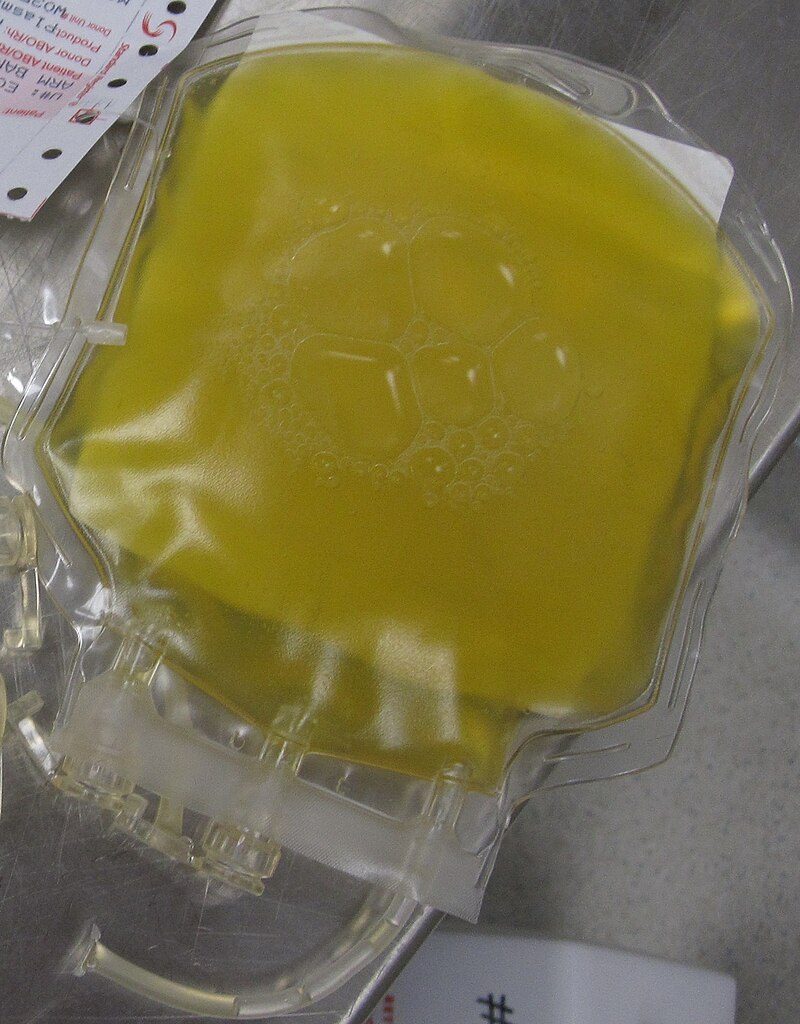
blood plasma
liquid component of blood

hematology
Hematology (spelled haematology in British English) is the branch of medicine concerned with the study of the cause, prognosis, treatment, and prevention of diseases related to blood. It involves treating diseases that affect the production of blood and its components, such as blood cells, hemoglobin, blood proteins, bone marrow, platelets, blood vessels, spleen, and the mechanism of coagulation. Such diseases might include hemophilia, sickle cell anemia, blood clots (thrombus), other bleeding disorders, and blood cancers such as leukemia, multiple myeloma, and lymphoma. The laboratory analysi

blood transfusion
generally the process of receiving blood or blood products into one's circulation intravenously

blood coagulation
Coagulation, also known as clotting, is the process by which blood changes from a liquid to a gel forming a blood clot. The process involves activation, adhesion and aggregation of platelets, as well as deposition and maturation of fibrin. Coagulation results in hemostasis, the cessation of blood loss from a damaged vessel, allowing repair.

blood serum
cell free fraction of blood

blood cell
cell produced by hematopoiesis

hemolymph
thumb|Collection of hemolymph from a worker honeybee.

Rh blood group system
human blood group system

bloodletting
right|framed|Ancient Greek painting on a vase, showing a physician (iatros) bleeding a patient
Bloodletting (or blood-letting) is the deliberate withdrawal of blood from a patient to prevent or cure illness and disease. Bloodletting, whether by a physician or by leeches, was based on an ancient system of medicine in which blood and other bodily fluids were regarded as "humors" that had to remain in proper balance to maintain health. It was the most common medical practice performed by surgeons from antiquity until the late 19th century, a span of over 2,000 years. In Europe, the practice conti
blood phobia
irrational fear of blood
livor mortis
sign of death

antiserum
In immunology, antiserum is a blood serum containing antibodies (either monoclonal or polyclonal) that is used to spread passive immunity to many diseases via blood donation (plasmapheresis). For example, convalescent serum, or passive antibody transfusion from a previous human survivor, was the only known effective treatment for Ebola infection with a high success rate of 7 out of 8 patients surviving.

neutropenia
Neutropenia is an abnormally low concentration of neutrophils (a type of white blood cell) in the blood. Neutrophils make up the majority of circulating white blood cells and serve as the primary defense against infections by destroying bacteria, bacterial fragments and immunoglobulin-bound viruses in the blood. People with neutropenia are more susceptible to bacterial infections and, without prompt medical attention, the condition may become life-threatening (neutropenic sepsis).
blood oxygen saturation
fraction of oxygen-saturated hemoglobin relative to total hemoglobin in the blood
lumen
cavity within an organ

hemodynamics
Hemodynamics or haemodynamics are the dynamics of blood flow. The circulatory system is controlled by homeostatic mechanisms of autoregulation, just as hydraulic circuits are controlled by control systems. The hemodynamic response continuously monitors and adjusts to conditions in the body and its environment. Hemodynamics explains the physical laws that govern the flow of blood in the blood vessels.
cord blood
blood in the placenta and umbilical cord blood
lochia
In obstetrics, lochia is the vaginal discharge after giving birth, containing blood, mucus, and uterine tissue. Lochia discharge typically continues for four to eight weeks after childbirth, a time known as the postpartum period or puerperium. A 2016 review ties this "lochial period" to worldwide customs of postpartum confinement, a time for the new mother and baby to bond.
-Griechische%20Bilderchroniken-pl%20II-Sarti%20tabuli%20iIliaca-detail.jpg)
ichor
In Greek mythology, ichor () is the ethereal fluid making up the blood of the gods and/or immortals. The Ancient Greek word () is of uncertain etymology, and has been suggested to be a foreign word, possibly the pre-Greek substrate.
Jan Janský
Czech doctor, neurologist and psychiatrist (1873–1921)
oxygen saturation
relative measure of the amount of oxygen that is dissolved or carried in a given medium
venous blood
blood in a vein
bloodstain pattern analysis
Forensic method
inclusion body
cell component formed of aggregated molecules such as proteins or other biopolymers
arterial blood
blood in an artery

Vacutainer
right|frame|A range of Vacutainer tubes containing blood
CD55 molecule (Cromer blood group)
mammalian protein found in Homo sapiens
buffy coat
component of blood
autohemotherapy
therapy using a patient's own blood, with various forms from quackery to low-evidence medicine

Blood type distribution by country
Wikimedia list article

blood volume
volume of blood in the circulatory system of an individual
Basigin (Ok blood group)
Basigin (BSG) also known as extracellular matrix metalloproteinase inducer (EMMPRIN) or cluster of differentiation 147 (CD147) is a protein that in humans is encoded by the BSG gene. This protein is a determinant for the Ok blood group system. There are three known antigens in the Ok system; the most common being Oka (also called OK1), OK2 and OK3. Basigin has been shown to be an essential receptor on red blood cells for the human malaria parasite, Plasmodium falciparum. The common isoform of basigin (basigin-2) has two immunoglobulin domains, and the extended form basigin-1 has three.

autotransfusion
Autotransfusion is a process wherein a person receives their own blood for a transfusion, instead of banked allogenic (separate-donor) blood. There are two main kinds of autotransfusion: Blood can be autologously "pre-donated" (termed so despite "donation" not typically referring to giving to one's self) before a surgery, or alternatively, it can be collected during and after the surgery using an intraoperative blood salvage device (such as a Cell Saver, HemoClear or CATS). The latter form of autotransfusion is utilized in surgeries where there is expected a large volume blood loss – e.g. aneu

autohaemorrhaging
thumb|Horned lizard showing evidence of autohaemorrhaging
Autohaemorrhaging, or reflex bleeding, is the action of animals deliberately ejecting blood from their bodies. Autohaemorrhaging has been observed as occurring in two variations. In the first form, blood is squirted toward a predator. The blood of these animals usually contains toxic compounds, making the behaviour an effective chemical defense mechanism. In the second form, blood is not squirted, but is slowly emitted from the animal's body. This form appears to serve a deterrent effect, and is used by animals whose blood does not seem
fetal bovine serum
main component of many culture media

blood in stool
symptom
blood oath
pact between the leaders of the seven Hungarian tribes in the 9th century
blood red
color
haematopoietic system
organs involved in the production of blood
blood lead level
level of lead in blood
theatrical blood
substitute for blood in a theatrical or cinematic performance
cffDNA
fetal DNA in the maternal bloodstream
complement component 4
protein involved in the intricate complement system
Fåhræus–Lindqvist effect
Fluid dynamics phenomenon in blood
fibrin glue
medical product used in surgery
Blood plasma fractionation
processes of separating the various components of blood plasma
blood fractionation
the separation of blood into its component parts
Vroman effect
Chloride shift
shift of chloride ion inside RBC due to movement of bicarbonate ion outside
hemolysis
classification of streptococcal bacteria by ability to break down red blood cells
blood residue
wet and dry remnants of blood
Impurity after childbirth
Social or religious concept
photopheresis
__NOTOC__
In medicine, photopheresis (aka extracorporeal photopheresis or ECP) is a form of apheresis and photodynamic therapy in which blood is subject to apheresis to separate buffy coat (WBC + platelets) from whole blood, chemically treated with 8-methoxypsoralen (instilled into a collection bag or given per os in advance), exposed to ultraviolet light (UVA), and then returned to the patient. Activated 8-methoxypsoralen crosslinks DNA in exposed cells, ultimately resulting apoptosis of nucleated cells. The photochemically damaged T-cells returned to the patient appear to induce cytotoxic ef
hemorheology
Hemorheology, also spelled haemorheology (haemo from Greek 'αἷμα, haima 'blood'; and rheology, from Greek ῥέω rhéō, 'flow' and -λoγία, -logia 'study of'), or blood rheology, is the study of flow properties of blood and its elements of plasma and cells. Proper tissue perfusion can occur only when blood's rheological properties are within certain levels. Alterations of these properties play significant roles in disease processes. Blood viscosity is determined by plasma viscosity, hematocrit (volume fraction of red blood cell, which constitute 99.9% of the cellular elements) and mechanical proper