Category
page 1Bovids of Africa

African buffalo
species of mammal

aurochs
The aurochs (Bos primigenius; or ; pl.: aurochs or aurochsen; also ure or urus) is an extinct species of bovine, considered to be the wild ancestor of modern domestic cattle. With a shoulder height of up to in bulls and in cows, it was one of the largest herbivores in the Holocene; it had massive elongated and broad horns that reached in length.

Common eland
species of mammal

Greater kudu
species of mammal

blue wildebeest
species of mammal

bongo
species of mammal
.JPG)
sitatunga
The sitatunga (Tragelaphus spekii) or marshbuck is a swamp-dwelling medium-sized antelope found throughout central Africa, centering on the Democratic Republic of the Congo, the Republic of the Congo, Cameroon, parts of Southern Sudan, Equatorial Guinea, Burundi, Ghana, Botswana, Rwanda, Zambia, Gabon, the Central African Republic, Tanzania, Uganda and Kenya.
The sitatunga is mostly confined to swampy and marshy habitats. They occur in tall and dense vegetation as well as seasonal swamps, marshy clearings in forests, riparian thickets and mangrove swamps.
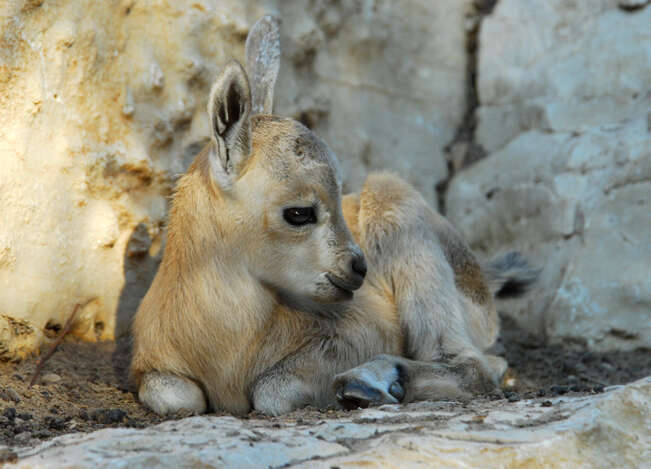
Nubian ibex
species of mammal

duiker
A duiker is a small to medium-sized brown antelope native to sub-Saharan Africa, found in heavily wooded areas. The 22 extant species, including three sometimes considered to be subspecies of the other species, form a clade or natural grouping, either considered to be the subfamily Cephalophinae or the tribe Cephalophini.

Black wildebeest
species of mammal

Giant eland
species of mammal

Beatragus hunteri
The hirola (Beatragus hunteri), also called the '''Hunter's hartebeest or Hunter's antelope', is a critically endangered antelope species found as of now, only in Kenya along the border of Somalia. It was first described by the big game hunter and zoologist H.C.V. Hunter in 1888. It is the only living member of the genus Beatragus'', though other species are known from the fossil record. The global hirola population is estimated at 300–500 animals and there are none in captivity. According to a document produced by the International Union for Conservation of Nature "the loss of the hirola woul

Tragelaphus imberbis
species of mammal

Harnessed bushbuck
species of mammal

Common tsessebe
species of mammal

mountain nyala
species of mammal

Red hartebeest
subspecies of African grassland antelope

Lichtenstein's hartebeest
species of mammal
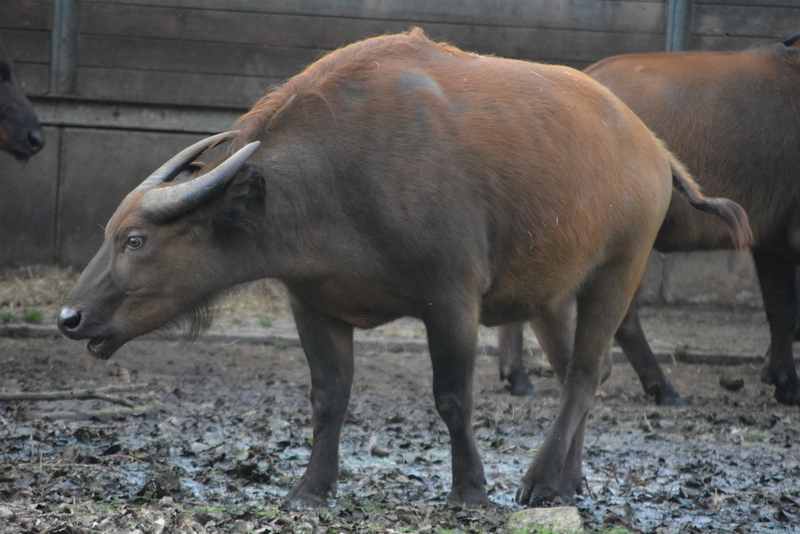
African forest buffalo
subspecies of mammal
%20calf%20eating%20composite.jpg)
Topi
thumb|220x124px | right
Damaliscus lunatus jimela is a subspecies of topi, and is usually just called a topi. It is a highly social and fast type of antelope found in the savannas, semi-deserts, and floodplains of sub-Saharan Africa.
Bubal hartebeest
subspecies of mammal
Bangweulu tsessebe
species of mammal
Korrigum
The korrigum (Damaliscus lunatus korrigum), also known as Senegal hartebeest, is a subspecies of the topi, a large African antelope.

Coke's hartebeest
subspecies of African grassland antelope

Lelwel hartebeest
subspecies of Alcelaphus buselaphus
Coastal topi
subspecies of mammal
Tragelaphini
The tribe Tragelaphini (referred to by some authors as "Strepsicerotini"), or the spiral-horned antelopes, are bovines that are endemic to sub-Saharan Africa. These include the bushbucks, kudus, and the elands. The scientific name is in reference to the mythical creature the tragelaph, a Chimera with the body of a stag and the head of a goat. They are medium-to-large, tall, long-legged antelopes characterized by their twisted horns and striking pelage coloration patterns (most common is the distinctive white, vertical barring).
Tiang
subspecies of mammal
Damaliscus lunatus lunatus
subspecies of mammal