Category
page 1Building materials

iron
Iron is a chemical element; it has symbol Fe () and atomic number 26. It is a metal that belongs to the first transition series and group 8 of the periodic table. It is, by mass, the most common element on Earth, forming much of Earth's outer and inner core. It is the fourth most abundant element in the Earth's crust. In its metallic state it was mainly deposited by meteorites.

aluminium

wood

steel
Steel is an alloy of iron and carbon that demonstrates improved mechanical properties compared to the pure form of iron. Due to its high elastic modulus, yield strength, fracture strength and low raw material cost, steel is one of the most commonly manufactured materials in the world. Steel is used in structures (as concrete reinforcing rods or steel beams), in bridges, infrastructure, tools, ships, trains, cars, bicycles, machines, electrical appliances, furniture, and weapons.

brick
thumb|A single brick
thumb|A wall constructed in glazed-headed Flemish bond brickwork pattern, with various shades and lengths

concrete
thumb|A single concrete block, as used for construction

cement
thumb|Cement powder in a bag, ready to be mixed with aggregates and water.
thumb|right|Cement block construction examples from the Multiplex Manufacturing Company of Toledo, Ohio, in 1905

Bambusoideae
Bamboos are a diverse group of mostly evergreen perennial flowering plants making up the subfamily Bambusoideae of the grass family Poaceae. Giant bamboos are the largest members of the grass family, in the case of Dendrocalamus sinicus having individual stalks (culms) reaching a length of , up to in diameter and a weight of up to . The internodes of bamboos can also be of great length. Kinabaluchloa wrayi has internodes up to in length, and Arthrostylidium schomburgkii has internodes up to in length, exceeded in length only by papyrus. By contrast, the stalks of the tiny bamboo Raddiella vane

cast iron
group of iron-carbon alloys

floor
A floor is the bottom surface of a room or vehicle. Floors vary from simple dirt in a cave to many layered surfaces made with modern technology. Floors may be stone, wood, bamboo, metal, or any other material that can support the expected load.

stainless steel
chromium-containing steel alloy resistant to corrosion

calcium hydroxide
chemical compound

felt
thumb|upright=1.35|Samples of felt in different colors
thumb|Kazakhs|Kazakh felt [[yurt]]
roof tile
tile designed mainly to keep out rain

tile
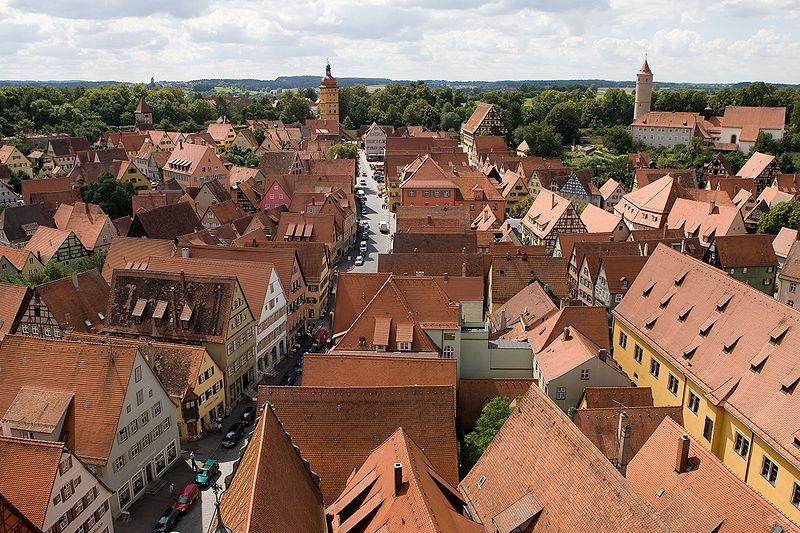
Tiles are usually thin, square or rectangular coverings manufactured from hard-wearing material such as ceramic, stone, metal, baked clay, or even glass. They are generally fixed in place in an array to cover roofs, floors, walls, edges, or other objects such as tabletops. Alternatively, tile can sometimes refer to similar units made from lightweight materials such as perlite, wood, and mineral wool, typically used for wall and ceiling applications. In another sense, a tile is a construction tile or similar object, such as rectangular counters used in playing games (see tile-based game). The w

bitumen
thumb|Natural bitumen from the Dead Sea
thumb|Refined bitumen
thumb|upright|The University of Queensland [[pitch drop experiment, demonstrating the viscosity of bitumen]]

building material
material used for construction purposes
lime
calcium oxide or hydroxide

cage
right|thumb|Spherical cage containing watermelons in Russia
A cage is an enclosure often made of mesh, bars, or wires, used to confine, contain or protect something or someone. A cage can serve many purposes, including keeping an animal or person in captivity, capturing an animal or person, displaying an animal at a zoo, or protecting an object from external threats (i.e. theft, damage).

laterite
thumb|upright|Traditional laterite temple in Kerala
thumb|upright|alt=This monument is constructed of laterite brickstones. It commemorates Buchanan who first described laterite at this site.|Monument of laterite brickstones at Angadipuram, [[Kerala, India, which commemorates where laterite was first described and discussed by Buchanan-Hamilton in 1807]]

plaster
thumb|Stucco plaster [[reliefs, such as this work at the Château de Fontainebleau, were hugely influential in Northern Mannerism. A plaster low-relief decorative frieze is above it.]]

masonry
thumb|A mason laying a brick on top of the mortar
thumb|Bridge over the Isábena (river)|Isábena river in the Monastery of Santa María de Obarra, masonry construction with stones

slate
Slate is a fine-grained, foliated, homogeneous, metamorphic rock derived from an original shale-type sedimentary rock composed of clay or volcanic ash through low-grade, regional metamorphism. It is the finest-grained foliated metamorphic rock. Foliation may not correspond to the original sedimentary layering, but instead is in planes perpendicular to the direction of metamorphic compression.

asphalt concrete
material used for paving roads

Thuja plicata
species of plant

reinforcing bar
thumb|Two bundles of full-length rebar, which will be placed, bent, or cut as required by installation

portland cement
binder used as basic ingredient of concrete

gypsum drywall
thumb|Various sized cuts of drywall with tools for maintenance and installation
dry stone walling
mortarless masonry method

wrought iron
iron alloy with a very low carbon content and with fibrous slag inclusions, worked with hammers or dies
Roman concrete
building material used in construction during the late Roman Republic

thatched roof
thumb|right|A thatched public house|pub (The Williams Arms) at [[Wrafton, North Devon, England]]
Thatching is the craft of building a roof with dry vegetation such as straw, water reed, sedge (Cladium mariscus), rushes, heather, or palm branches, layering the vegetation so as to shed water away from the inner roof. Since the bulk of the vegetation stays dry and is densely packed—trapping air—thatching also functions as insulation. It is a very old roofing method and has been used in both tropical and temperate climates. Thatch is still employed by builders in developing countries, usually with
prestressed concrete
form of concrete used in construction
formwork
thumb|Animation depicting construction of multi-story building using aluminum handset formwork.
thumb|Modular steel frame formwork for a foundation. Rebar has been stubbed up out of the concrete slab to form the base of future [[columns]]
thumb|upright|Timber formwork for a concrete column. Adjustable metal screw jacks both stabilize and plumb the form
thumb|Aluminum formwork system
thumb|Sketch of the side view of traditional timber formwork used to form a flight of stairs
thumb|Placing a wall form. A matching form will be placed on the opposite side to create the space to pour concrete into
autoclaved aerated concrete
lightweight, precast building material
wood shingle
thin, tapered pieces of wood primarily used to cover roofs and walls of buildings to protect them from the weather
crushed stone
artificial gravel of angular shape, used as construction aggregate
plank
flat rectangular piece of timber
paver
stone, wood or tile structure which can serve as floor; pavement type with solid blocks

Monel
thumb|The Art Deco gate in the entrance hall of Detroit's [[Guardian Building is made from Monel.]]

caulking
thumb|upright|Silicone-based caulk on this upturned bathroom sink will spread smoothly, sealing the gap, when the sink is turned over and installed.
bituminous waterproofing
roll roofing and waterproofing material
twig
thumb|Twigs covered in powdered snow
building insulation
protection of buildings against heat transfers

rubble
Rubble is broken stone, of irregular size, shape and texture; undressed especially as a filling-in. Rubble naturally found in the soil is known also as 'brash' (compare cornbrash). Where present, it becomes more noticeable when the land is ploughed or worked.

geotextile
thumb|A selection of woven and non-woven geotextile samples
corrugated galvanised iron
type of metal building material

countertop
thumb|A stainless steel countertop
engineered wood
range of derivative wood products
fiber-reinforced concrete
fiber-reinforced composite material from concrete and fibers
lime mortar
building material
glass brick
architectural element made from glass, providing visual obscuration while admitting light

lath
thumb|right|250px|Sawn lath, seen from the back with hardened plaster from the other side showing through. Sawn lath became popular after the introduction of the [[circular saw in the 19th century.]]
thumb|Roof laths span across between the rafters and support the wood shingles.A lath or slat is a thin, narrow strip of straight-grained wood used under roof shingles or tiles, on lath and plaster walls and ceilings to hold plaster, and in lattice and trellis work.

ETFE
Ethylene tetrafluoroethylene (ETFE) is a fluorine-based plastic. It was designed to have high corrosion resistance and strength over a wide temperature range. ETFE is a polymer, and its source-based name is poly (ethene-co-tetrafluoroethene). It is also known under the DuPont brand name Tefzel and is sometimes referred to as "Teflon Film". ETFE has a relatively high melting temperature and excellent chemical, electrical, and high-energy-radiation resistance properties.
==Properties==
Useful comparison tables of PTFE against FEP, PFA, and ETFE can be found on Chemours' website, listing the mech

grout
thumb|Using a rubber grout float to smooth grout between tiles
construction waste
unwanted material produced directly or incidentally by the construction or industries

scagliola
thumb|300px|Italian scagliola top, second half of the 18th century
geopolymer
thumb|SEM image of a geopolymer granule prepared from metakaolin by alkaline activation to be further used as a sorbent.
A geopolymer is an inorganic, often ceramic-like material, that forms a stable, covalently bonded, non-crystalline to semi-crystalline network through the reaction of aluminosilicate materials with an alkaline or acidic solution. Many geopolymers may also be classified as alkali-activated cements or acid-activated binders. They are mainly produced by a chemical reaction between a chemically reactive aluminosilicate powder e.g. metakaolin or other clay-derived powders, natura

fiberboard
thumb|Medium-density fiberboard or MDF (topmost two), and [[hardboard (bottommost three)]]
dimension stone
natural stone that has been finished to specific sizes and shapes