Category
page 1Diabetes

diabetes
Diabetes mellitus, commonly known as diabetes, is a group of common endocrine diseases characterized by sustained high blood sugar levels. Diabetes tends to progress in severity, and is due to either a reduced production of the hormone insulin by the pancreas or unresponsiveness of bodily cells to insulin's effects. Classic symptoms include the three Ps: polydipsia (excessive thirst), polyuria (excessive urination), and polyphagia (excessive hunger), together with weight loss and blurred vision. If left untreated, the disease can lead to many health complications, including disorders of the ca

blood glucose
glucose concentration in blood

World Diabetes Day
global awareness campaign on 14 November

gluconeogenesis
Gluconeogenesis (GNG) is a metabolic pathway that results in the biosynthesis of glucose from certain non-carbohydrate carbon substrates. It is a ubiquitous process, present in plants, animals, fungi, bacteria, and other microorganisms. In vertebrates, gluconeogenesis occurs mainly in the liver and, to a lesser extent, in the cortex of the kidneys. It is one of two primary mechanisms – the other being degradation of glycogen (glycogenolysis) – used by humans and many other animals to maintain blood sugar levels, avoiding low levels (hypoglycemia). In ruminants, because dietary carbohydrates te
glycemic index
number associated with a particular type of food that indicates the food's effect on a person's blood glucose level
glycated haemoglobin
form of haemoglobin chemically linked to a sugar
insulin resistance
human disease

glycogen catabolic process
class=skin-invert-image|thumb|Glycogen|346x346px
class=skin-invert-image|thumb|Glucose
class=skin-invert-image|thumb|Glucose-6-phosphate
Glycogenolysis is the breakdown of glycogen (n) to glucose-1-phosphate and glycogen (n-1). Glycogen branches are catabolized by the sequential removal of glucose monomers via phosphorolysis, by the enzyme glycogen phosphorylase.
Hibiscus tea
drink made from sepals of Hibiscus sabdariffa
gastric inhibitory polypeptide
mammalian protein found in Homo sapiens

islet amyloid polypeptide
thumb|250px|right|Amino acid sequence of amylin with disulfide bridge and cleavage sites of insulin degrading enzyme indicated with arrows
Amylin, or islet amyloid polypeptide (IAPP), is a 37-residue peptide hormone. It is co-secreted with insulin from the pancreatic β-cells in the ratio of approximately 100:1 (insulin:amylin). Amylin plays a role in glycemic regulation by slowing gastric emptying and promoting satiety, thereby preventing post-prandial spikes in blood glucose levels.
C-peptide
The connecting peptide, or C-peptide, is a short 31-amino-acid polypeptide that connects insulin's A-chain to its B-chain in the proinsulin molecule. In the context of diabetes or hypoglycemia, a measurement of C-peptide blood serum levels can be used to distinguish between different conditions with similar clinical features.
glycemic load
estimate of how much a quantity of food will raise a person's blood glucose level
soda tax
tax or surcharge on soft drinks
prediabetes syndromeverga
Prediabetes is a component of metabolic syndrome and is characterized by elevated blood sugar levels that fall below the threshold to diagnose diabetes mellitus. It usually does not cause symptoms, but people with prediabetes often have obesity (especially abdominal or visceral obesity), dyslipidemia with high triglycerides and/or low HDL cholesterol, and hypertension. It is also associated with increased risk for cardiovascular disease (CVD). Prediabetes is more accurately considered an early stage of diabetes, as health complications associated with type 2 diabetes often occur before the dia
feline diabetes
disease in cats
Blood sugar regulation
regulation of glucose

proinsulin
Proinsulin is the prohormone precursor to insulin made in the beta cells of the Pancreatic Islets, specialized regions of the pancreas. In humans, proinsulin is encoded by the INS gene. The pancreatic islets only secrete between 1% and 3% of proinsulin intact. However, because proinsulin has a longer half life than insulin, it can account for anywhere from 5–30% of the insulin-like structures circulating in the blood. There are higher concentrations of proinsulin after meals and lower levels when a person is fasting. Additionally, while proinsulin and insulin have structural differences, proin
diabetes mellitus and pregnancy
Human disease
Fundus camera
medical imaging of the eyes
dawn phenomenon
an observed increase in blood glucose levels that takes place in the early morning, often between 2 a.m. and 8 a.m.
Chronic Somogyi rebound
Theoretical elevated blood sugar for diabetics in the morning
fructosamine
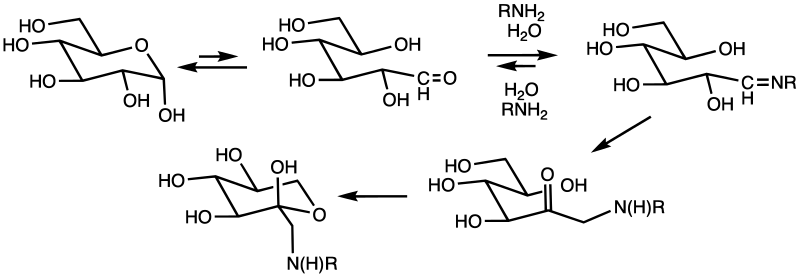
Fructosamines are compounds that result from glycation reactions between glucose and a primary amine, followed by isomerization via the Amadori rearrangement. Biologically, fructosamines are recognized by fructosamine-3-kinase, which may trigger the degradation of advanced glycation end-products (though the true clinical significance of this pathway is unclear). Fructosamine can also refer to the specific compound 1-amino-1-deoxy-D-fructose (isoglucosamine), first synthesized by Nobel laureate Hermann Emil Fischer in 1886.
laminopathy
Laminopathies (lamino- + -pathy) are a group of rare genetic disorders caused by mutations in genes encoding proteins of the nuclear lamina. Since the first reports of laminopathies in the late 1990s, increased research efforts have started to uncover the vital role of nuclear envelope proteins in cell and tissue integrity in animals. Laminopathies are a group of degenerative diseases, other disorders associated with inner nuclear membrane proteins are known as nuclear envelopathies.
polyol pathway
series of interconnected biochemical reactions
homeostatic model assessment
method used to quantify insulin resistance and beta-cell function
pediatric endocrinology
medical subspecialty
diabetes in dogs
disease
history of diabetes
aspect of history