Category
page 1Drought-tolerant plants

Cactus
A cactus (: cacti, cactuses, or less commonly, cactus) is a member of the plant family Cactaceae (), a family of the order Caryophyllales comprising about 127 genera with some 1,750 known species. The word cactus derives, through Latin, from the Ancient Greek word (káktos), a name originally used by Theophrastus for a spiny plant whose identity is now not certain. Cacti occur in a wide range of shapes and sizes. They are native to the Americas, ranging from Patagonia in the south to parts of western Canada in the north, with the exception of Rhipsalis baccifera, which is also found in Africa a

Salvia rosmarinus
Salvia rosmarinus, synonym Rosmarinus officinalis, commonly known as rosemary, is a shrub with fragrant, evergreen, needle-like leaves and purple or sometimes white, pink, or blue flowers. It is a member of the mint family, Lamiaceae.

Aloe vera
species of plant, herb

Achillea millefolium
species of plant

Sambucus
Sambucus is a genus of between 20 and 30 species of flowering plants in the family Adoxaceae. The various species are commonly referred to as elder, with the flowers as elderflower, and the fruit as elderberry.

Agave
Agave (; ; ) is a genus of monocots native to the arid regions of the Americas. The genus is primarily known for its succulent and xerophytic species that typically form large rosettes of strong, fleshy leaves.

Ribes
Ribes () is a genus of approximately 200 known species of flowering plants, predominantly native to the temperate regions of the Northern Hemisphere. Ribes is the sole genus in the plant family Grossulariaceae. The genus includes species commonly referred to as redcurrants, blackcurrants, whitecurrants, and gooseberries. Several species are cultivated both for their edible fruit and as ornamental plants in horticulture. Ribes are the main alternate host for white pine blister rust, a fungal pathogen impacting five-needle pines.

Laurus nobilis
species of plant

dragon fruit
frameless|right|alt=Ripe, longitudinal section
thumb|Dragon fruit sold in a market in Chiayi, Taiwan|alt=Market stall in [[Taiwan]]
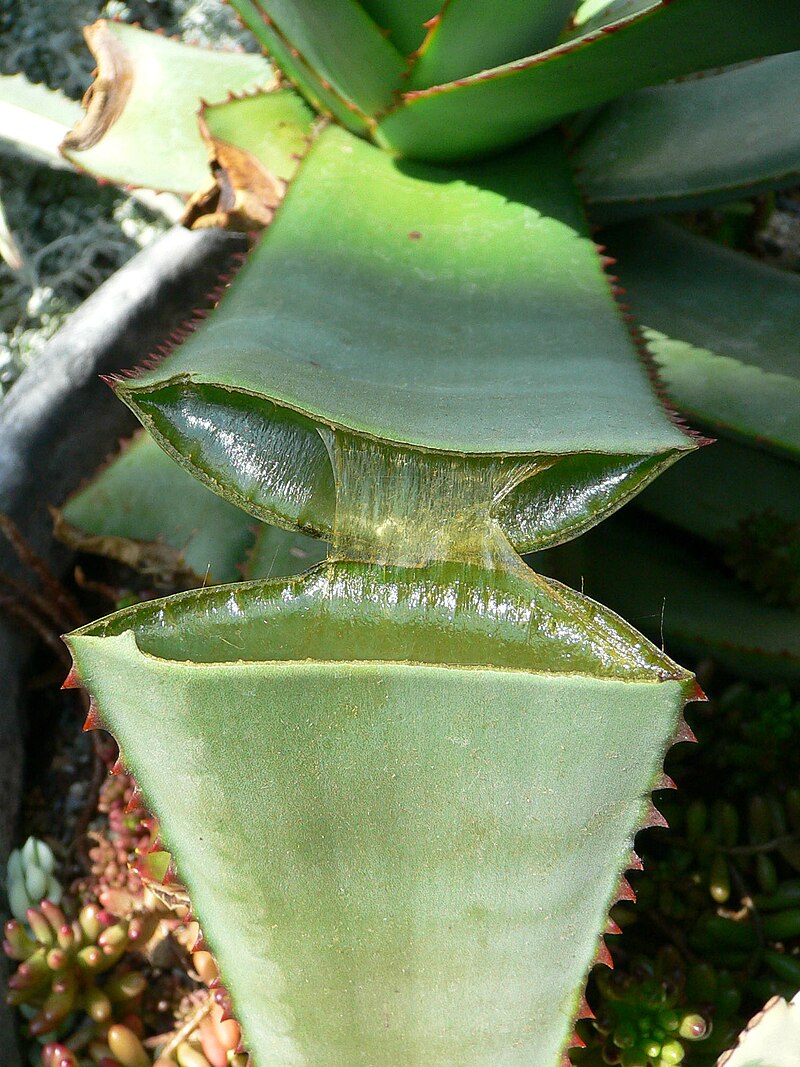
succulent plant
Plants having some parts that are more than normally thickened and fleshy

Lavandula angustifolia
species of plant

Atriplex
Atriplex () is a plant genus of about 250 species, known by the common names of saltbush and orache (; also spelled orach). It belongs to the subfamily Chenopodioideae of the family Amaranthaceae s.l..
The genus is quite variable and widely distributed. It includes many desert and seashore plants and halophytes, as well as plants of moist environments.
The generic name originated in Latin and was applied by Pliny the Elder to the edible oraches. The name saltbush derives from the fact that the plants retain salt in their leaves; they are able to grow in areas affected by soil salination.

Myrtus
thumb|Myrtus communis – MHNT

Carnegiea gigantea
alt=Example Of Old Growth Saguaro Cactus|thumb|Old growth saguaro
The saguaro ( , ; Carnegiea gigantea) is a tree-like cactus species in the monotypic genus Carnegiea that can grow to be over tall. It is native to the Sonoran Desert in Arizona, the Mexican state of Sonora, and the Whipple Mountains and Imperial County areas of California. Saguaro typically grow at elevations ranging from sea level to 4,500', although they may be found at up to 5,000'. The saguaro blossom is the state wildflower of Arizona. Its scientific name is given in honor of Andrew Carnegie. In 1933, Saguaro National Park

Agave americana
species of plant

xerophyte
A xerophyte () is a species of plant that has adaptations to survive in an environment with little liquid water. Examples of xerophytes include cacti, pineapple and some gymnosperm plants. The morphology and physiology of xerophytes are adapted to conserve water during dry periods. Some species called resurrection plants can survive long periods of extreme dryness or desiccation of their tissues, during which their metabolic activity may effectively shut down. Plants with such morphological and physiological adaptations are said to be . Xerophytes such as cacti are capable of withstanding exte

Pistacia
thumb|Mastic resin from Pistacia lentiscus
Pistacia is a genus of flowering plants in the cashew family, Anacardiaceae. It contains 10 to 20 species that are native to Africa and Eurasia from the Canary Islands, all of Africa, and southern Europe, warm and semidesert areas across Asia, and North America from Guatemala to Mexico, as well as southern Texas.

Nepeta
Nepeta is a genus of flowering plants in the family Lamiaceae. The genus name, from Latin (“catnip”), is reportedly in reference to Nepete, an ancient Etruscan city. There are 295 accepted species.

Sansevieria
thumb|Sansevieria ehrenbergii in habitat.
Sansevieria is a historically recognized genus of flowering plants, native to Africa, notably Madagascar, and southern Asia, now included in the genus Dracaena on the basis of molecular phylogenetic studies. Common names for the 70 or so species formerly placed in the genus include '''mother-in-law's tongue, devil's tongue, jinn's tongue, bow string hemp, snake plant and snake tongue'. In the APG III classification system, Dracaena'' is placed in the family Asparagaceae, subfamily Convallarioideae (formerly subfamily Nolinoideae); before that it was pl
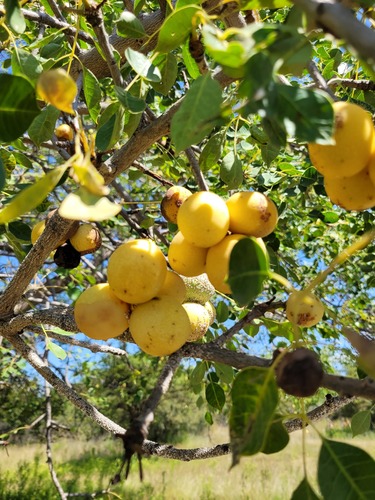
Sclerocarya birrea
species of plant

Ziziphus mauritiana
species of plant

Arctostaphylos
Arctostaphylos (/ˌɑːrktoʊˈstæfɪləs, -lɒs/; from ἄρκτος árktos "bear" and σταφυλή staphulḗ "bunch of grapes") is a genus of plants within the family Ericaceae. Many plants within the genus Arctostaphylos are also commonly called manzanitas(/ˌmænzəˈniːtəz/) or bearberries. There are 107 taxa within Arctostaphylos, 106 of which are found in the California Floristic Province. From prostrate shrubs to small erect trees, Arctostaphylos is known for characteristic red bark, urn-shaped flowers and being fire adapted .

Buddleja davidii
species of plant

Salsola
Salsola is a genus of the subfamily Salsoloideae in the family Amaranthaceae. The genus sensu stricto is distributed in Australia, central and southwestern Asia, North Africa, and the Mediterranean. Common names of various members of this genus and related genera are saltwort (for their salt tolerance) and tumbleweed or roly-poly. The genus name Salsola is from the Latin , meaning .

Cascabela thevetia
species of plant

Lonicera japonica
species of plant

Festuca rubra
species of plant

Adenium obesum
species of plant

Lavandula stoechas
species of plant
%20Asch.%20&%20Graebn.%20-%20H.M.%20Longhi-Wagner,%20UFRGS,%20Brazil_fullsize.jpg)
Cortaderia selloana
species of plant

Ribes sanguineum
species of plant

Rhamnus alaternus
species of plant

Kroenleinia grusonii
species of plant in the family Cactaceae

Carex flacca
species of plant

Ribes aureum
species of plant

Dodonaea viscosa
species of plant

Calocedrus
upright=0.9|thumb|California incense cedar, in Lassen Volcanic National Park

Carpobrotus edulis
species of plant

Cistus salviifolius
species of perennial ligneous plant of the family Cistaceae

Echium wildpretii
species of plant

Selenicereus undatus
species of cactus

Verbena bonariensis
species of plant in the Verbena family

Mesembryanthemum crystallinum
species of plant

Crassula arborescens
species of plant

Beaucarnea recurvata
species of plant

Euphorbia resinifera
species of plant

Thymus praecox
species of plant

Agave attenuata
species of plant

Aspidistra elatior
species of plant

Prunus lusitanica
species of flowering plant

Achillea filipendulina
species of plant

Ligustrum ovalifolium
species of plant

Salvia yangii
flowering herbaceous perennial plant in the family Lamiaceae

Gazania rigens
species of plant

Aloe succotrina
medicinal aloe

Microbiota decussata
species of plant

Koeleria macrantha
species of plant

Portulacaria afra
species of plant

Graptopetalum paraguayense
species of plant

Euphorbia ingens
species of plant