Category
page 1Emotions

happiness
thumb|upright=1.2|A 93-year-old man from Pichilemu, Chile. His smile and facial expression indicates his happiness.

fear
%20MET%20DP854052.jpg)
anger
thumb|upright=1.4|right|From Left to right: Wrath and Rage (emotion)|Rage, Wrath and [[Fear, Wrath and Despair]]

hatred
thumb|344x344px|A man glowering, expressing hatred or jealousy.

hope
thumbnail|262px|A girl with a hopeful expression
-%20What%20courage!%20(Que%20valor!)%20MET%20MM13446.jpg)
courage
thumb|right|Que valor! – a sketch of Agustina de Aragón by Goya. She manned a cannon alone in a siege of [[Saragossa and her bravery rallied the defenders.]]

depression
state of low mood and aversion to activity

sadness
thumb|A detail of the 1672 sculpture Entombment of Christ, showing Mary Magdalene crying

anxiety
thumb|Anxiety underlies The Scream (1893) by [[Edvard Munch, which grapples with a complex human experience.]]

envy
thumb|305x305px|Portrait of a demented woman or The Monomaniac of Envy, by Théodore Géricault,

jealousy
Jealousy generally refers to the thoughts or feelings of insecurity, fear, and concern over a relative lack of possessions or safety.

shame
thumb|right|Eve covers herself and lowers her head in shame in Rodin's Eve after the Fall.

pessimism
thumb|220px|An optimist and a pessimist, Vladimir Makovsky, 1893
pleasure
Pleasure is an experience that feels good, that involves the enjoyment of something. It contrasts with pain or suffering, which are forms of feeling bad. It is closely related to value, desire and action: humans and other conscious animals find pleasure enjoyable, positive or worthy of seeking. A great variety of activities may be experienced as pleasurable, such as eating, having sex, listening to music or playing games. Pleasure is part of various other mental states such as ecstasy, euphoria and flow. Happiness and well-being are closely related to pleasure but not identical with it. There

boredom
thumb|right|262px|A souvenir seller in [[Moscow appears bored as she waits for customers.]]

surprise
emotional state experienced as the result of an unexpected event
%20Pacientia%20(titel%20op%20object)%2C%20RP-P-OB-10.853.jpg)
patience
thumb|Patience, engraving by [[Hans Sebald Beham, 1540]]

joy
thumb|upright=1.2|Laughter is a typical expression of joy
.jpg)
gratitude
thumb|upright=1.2|Gratitude. Statue in Palácio Nacional da Ajuda.

nostalgia
thumb|The archives director for The Saturday Evening Post said that the magazine has been regarded with "a mixture of nostalgia and affection". Shown: a [[Norman Rockwell cover from August 1924.]]

loneliness
thumb|Loneliness by Hans Thoma ([[National Museum in Warsaw)]]
%202.jpg)
empathy
alt=A small child hugs an older, injured child|thumb|Hugging is a common display of empathy

melancholia
thumb| Physiognomy of the melancholic temperament (drawing by Thomas Holloway made for [[Johann Kaspar Lavater's Essays on Physiognomy, )]]

trust
assumption of and reliance on the honesty of another party

guilt
emotional experience arising when one believes they have violated personal or universal moral standards and feels responsible for the transgression

apathy
Apathy, also referred to as indifference, is a lack of feeling, emotion, interest, and/or concern about something. It is a state of indifference, and/or the suppression of emotions such as concern, excitement, motivation, or passion. An apathetic individual has an absence of interest in or concern about emotional, social, spiritual, philosophical, virtual, or physical life and the world. Apathy can also be defined as a person's lack of goal orientation. Apathy falls in the less extreme spectrum of diminished motivation, with abulia in the middle and akinetic mutism being more extreme than both
.jpg)
lust
thumb|262px|Detail: Luxuria (Lust), in The Seven Deadly Sins and the Four Last Things, by [[Hieronymus Bosch]]

disgust
thumb|upright=1.3 |Oscar Gustave Rejlander portraying disgust in plates from Charles Darwin's [[The Expression of the Emotions in Man and Animals]]

passion
feeling of intense enthusiasm towards or compelling desire for someone or something

shyness
thumb |upright=1.6| Shyness is a personality trait distinct from Extraversion and introversion|introversion and [[social anxiety disorder.]]

hysteria
thumb|alt=refer to caption|An 1893 depiction of a woman with hysteria

enthusiasm
thumb|262px|Men reacting enthusiastically

romantic love
thumb|Romeo and Juliet, by [[Frank Dicksee, considered to be the archetypal romantic couple, depicting the play's iconic balcony scene]]
%20(14785143685).jpg)
panic
thumb|Illustration in Charles Darwin's [[The Expression of the Emotions in Man and Animals]]

social alienation
condition in social relationships

sympathy
Sympathy is the perception of, understanding of, and supportive reaction to the distress or need of another life form.
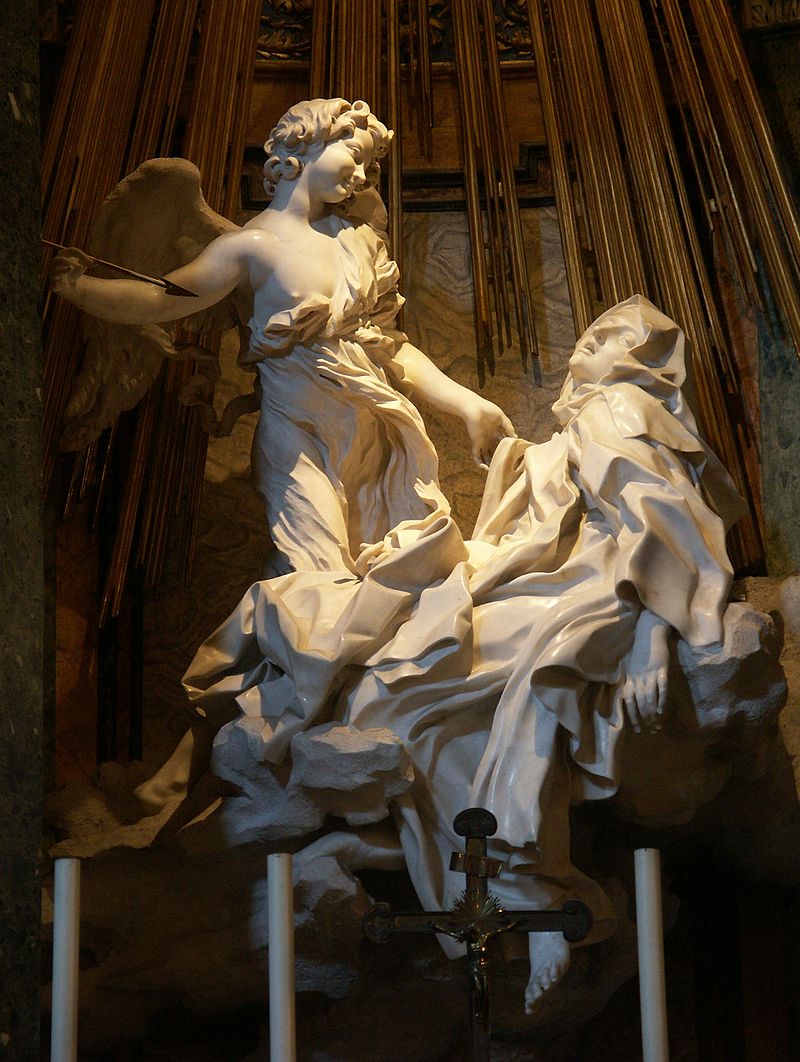
ecstasy
advanced emotion, subjective experience of total involvement of the subject, with an object of their awareness

frustration
thumb|262px|A frustrated man sitting in a traffic jam

insult
thumb|280px|A portion of Hippolyte Delaroche's 1836 oil painting ''[[Charles I Insulted by Cromwell's Soldiers]]
thumb|240px|Charles IX of Sweden|Duke Karl Insulting the Corpse of [[Klaus Fleming'', Albert Edelfelt, 1878. Fleming's wife Ebba Stenbock on the right.]]

euphoria
Euphoria ( ) is the experience (or affect) of pleasure or excitement and intense feelings of well-being and happiness. Certain natural rewards and social activities, such as aerobic exercise, laughter, listening to or making music and dancing, can induce a state of euphoria. Euphoria is also a symptom of certain neurological or neuropsychiatric disorders, such as mania. Romantic love and components of the human sexual response cycle are also associated with the induction of euphoria. Certain drugs, many of which are addictive, can cause euphoria, which at least partially motivates their recrea

kindness
thumb|Placard for kindness, at the People's Climate March (2017)
Kindness is a type of behavior marked by acts of generosity, consideration, or concern for others, without expecting praise or reward in return. It is a subject of interest in philosophy, religion, and psychology.

desire
thumb|Désir, sculpture by Aristide Maillol
Desires are states of mind that are expressed by terms like "wanting", "wishing", "longing" or "craving". A great variety of features is commonly associated with desires. They are seen as propositional attitudes towards conceivable states of affairs. They aim to change the world by representing how the world should be, unlike beliefs, which aim to represent how the world actually is. Desires are closely related to agency: they motivate the agent to realize them. For this to be possible, a desire has to be combined with a belief about which action woul

solitude
300px|thumb|Howard Pyle's 19th century illustration of a marooned [[pirate]]
Solitude, also known as social withdrawal, is a state of seclusion or isolation, meaning lack of socialisation. Effects can be either positive or negative, depending on the situation. Short-term solitude is often valued as a time when one may work, think, or rest without disturbance. It may be desired for the sake of privacy. Long-term solitude may stem from soured relationships, loss of loved ones, deliberate choice, infectious disease, mental disorders, neurological disorders such as circadian rhythm sleep disorder,
%2C%20from%20The%20Seven%20Vices%20MET%20DP867537.jpg)
pride
thumb|16th-century print by Georg Pencz, depicting pride as one of the [[seven vices]]
Pride is a primary emotion characterized by a sense of security with one's identity, performance, and/or accomplishments. It is widely considered the opposite of shame. Depending on the context, pride may be viewed as either a virtue or a vice. Typically, pride arises from praise, independent self-reflection, or a fulfilled feeling of belonging.
.jpg)
contempt
thumb|right|200px|This picture of Thomas Ward, arrested for stealing a £1 coin, can be seen as showing contempt.
thumb|A painting by Louis-Léopold Boilly (ca. 1797).The woman has been interpreted as a [[prostitute (who is disdaining the inadequate coin proffered by the fashionable gentleman getting his shoes shined at left).]]

contentment
Contentment is a moderate form of happiness, a state of being or emotion in which one is satisfied with their current life situation, and the state of affairs in one's life as they presently are. If one is content, they are at inner peace with their situation and how the elements in one's life are situated. Contrary to popular belief, it is possible to be content with one's life regardless of the circumstance, regardless of whether things are going as one expected or not.

disappointment
thumb|262px|Disappointment (1882), by Julius LeBlanc Stewart
%20-%20Google%20Art%20Project.jpg)
remorse
Remorse is a distressing emotion experienced by an individual who regrets actions which they have done in the past which they deem to be shameful, hurtful, or wrong. Remorse is closely allied to guilt and self-directed resentment. When a person regrets an earlier action or failure to act, it may be because of remorse or in response to various other consequences, including being punished for the act or omission. People may express remorse through apologies, trying to repair the damage they have caused, or self-imposed punishments.
%20-%20The%20Pillory.JPG)
humiliation
thumb|upright=1.2|The Pillory, from The Costume of Great Britain (1805)
affection
thumb|right|200px|Two children showing affection
mental confusion
In psychology, confusion is the quality or emotional state of being bewildered or unclear. The term acute mental confusion is often used interchangeably with delirium in the International Statistical Classification of Diseases and Related Health Problems and the Medical Subject Headings publications to describe the pathology. These refer to the loss of orientation, or the ability to place oneself correctly in the world by time, location and personal identity. Mental confusion is sometimes accompanied by disordered consciousness (the loss of linear thinking) and memory loss (the inability to co

worry
thumb|A depiction of Rama in the Ramayana. Worried about his wife Sita, he is consoled by his brother Lakshmana.

loyalty
thumb|Schoolchildren reciting the Pledge of Allegiance to the United States flag

escapism
thumb|200px|King Ludwig II of Bavaria was famous for his escapism, which involved his admiration for the work of [[Richard Wagner. In this caricature, he is portrayed in the role of King Lohengrin.]]

sincerity
thumb|right|A person is sincere when their spoken words match their thoughts

grief
Grief is the response to the loss of something deemed important, in particular the death of a person or animal to which a bond or affection was formed. Although conventionally focused on the emotional response to loss, grief also has physical, cognitive, behavioral, social, cultural, spiritual, political and philosophical dimensions. While the terms are often used interchangeably, bereavement refers to the state of loss, while grief is the reaction to that loss.
.jpg)
adoration
thumb|right|300px|Adoration, 1913, by William Strang
Adoration is respect, reverence, strong admiration, and love for a certain person, place, or thing. The term comes from the Latin adōrātiō, meaning "to give homage or worship to someone or something".
ambivalence
Ambivalence is a state of having simultaneous conflicting reactions, beliefs, or feelings towards some object. Stated another way, ambivalence is the experience of having an attitude towards someone or something that contains both positively and negatively valenced components. The term also refers to situations where "mixed feelings" of a more general sort are experienced, or where a person experiences uncertainty or indecisiveness.

infatuation
thumb|right|230px|An illustrated depiction of Mahābhārata character [[Ulupi becoming infatuated with Arjuna]]
Infatuation, also known as being smitten, is the personal state of being largely driven by a potentially uninformed or unreasonable passion, usually towards another person for whom one has developed strong romantic or sexual feelings.

acceptance
thumb|262px|Soviet Red Army soldiers accepting their defeat by surrendering to the military units of the German Army during the [[Great Patriotic War in the Soviet Union. Photograph taken in 1942 by Tamás Konok.]]
Acceptance in psychology is a person's recognition and assent to the finality of a situation without attempting to change or protest it. This plays out at both the individual and societal level as people experience change.