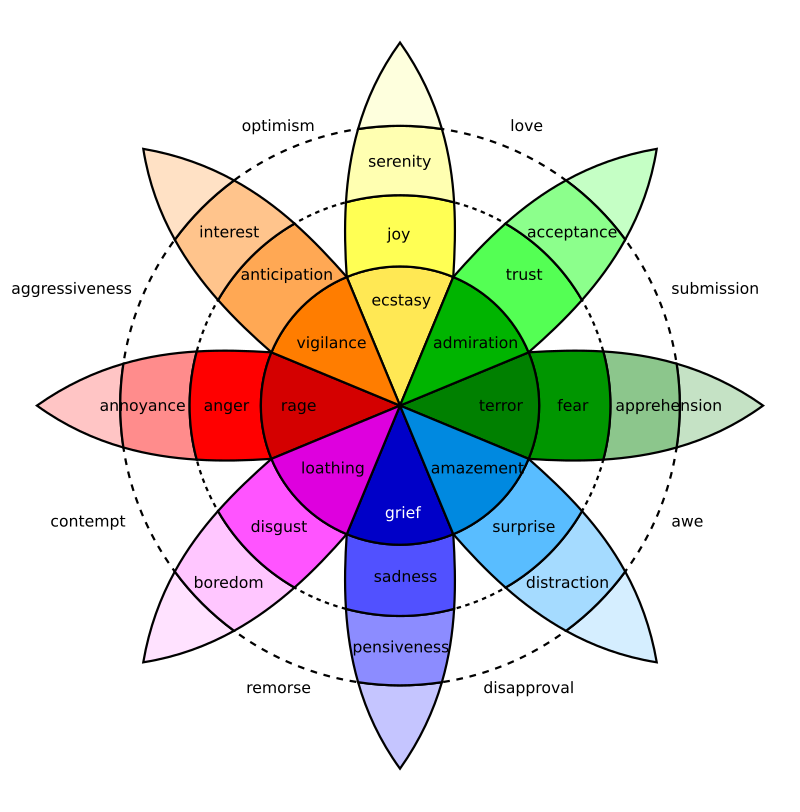
File:Plutchik-wheel.svg · Wikimedia Commons · See Wikimedia Commons
remorse
Sign in to saveRemorse is a distressing emotion experienced by an individual who regrets actions which they have done in the past which they deem to be shameful, hurtful, or wrong. Remorse is closely allied to guilt and self-directed resentment. When a person regrets an earlier action or failure to act, it may be because of remorse or in response to various other consequences, including being punished for the act or omission. People may express remorse through apologies, trying to repair the damage they have caused, or self-imposed punishments.
Remorse is a painful emotion that arises when someone regrets something they did or failed to do—typically because they believe their action was wrong, shameful, or hurtful to others. People experiencing remorse may express it through apologies, attempts to fix the damage they caused, or by punishing themselves, and it matters because it can motivate people to make amends and change their behavior.
AI-generated from the Wikipedia summary — may contain errors.
Wikidata facts
- Subclass of
- regret
- Image
- Orestes Pursued by the Furies by William-Adolphe Bouguereau (1862) - Google Art Project.jpg
Show 1 more fact
- Commons category
- Remorse
via Wikidata · CC0
~17 min read
Encyclopedic overview
10 sectionsContents
- Studies on apologizing
- Compunction
- Falsified expressions
- Psychopathy
- Forgiveness
- Versus self-condemnation
- Buyer's remorse
- See also
- References
- External links
Remorse is a distressing emotion experienced by an individual who regrets actions which they have done in the past which they deem to be shameful, hurtful, or wrong. Remorse is closely allied to guilt and self-directed resentment. When a person regrets an earlier action or failure to act, it may be because of remorse or in response to various other consequences, including being punished for the act or omission. People may express remorse through apologies, trying to repair the damage they have caused, or self-imposed punishments.
In a legal context, the perceived remorse of an offender is assessed by Western justice systems during trials, sentencing, parole hearings, and in restorative justice. However, there are epistemological problems with assessing an offender's level of remorse.
Excerpted from Wikipedia’s “remorse” article, available under the CC BY-SA 4.0 licence.