Category
page 1Epidemiology

virus
A virus is a submicroscopic infectious agent that replicates only inside the living cells of an organism. Viruses infect all life forms, from animals and plants to microorganisms, including bacteria and archaea. Viruses are found in almost every ecosystem on Earth and are the most numerous type of biological entity. Since Dmitri Ivanovsky's 1892 article describing a non-bacterial pathogen infecting tobacco plants and the discovery of the tobacco mosaic virus by Martinus Beijerinck in 1898, more than 16,000 of the millions of virus species have been described in detail. The study of viruses is

infection
An infection is the invasion of tissues by pathogens, their multiplication, and the reaction of host tissues to the infectious agent and the toxins they produce. An infectious disease, also known as a transmissible disease or communicable disease, is an illness resulting from an infection.

epidemiology
Epidemiology is the study and analysis of the distribution (who, when, and where), patterns and determinants of health and disease conditions in a defined population, and application of this knowledge to prevent diseases.

social distancing
reduction of human social interaction in an effort to prevent the spread of infectious disease
mortality rate
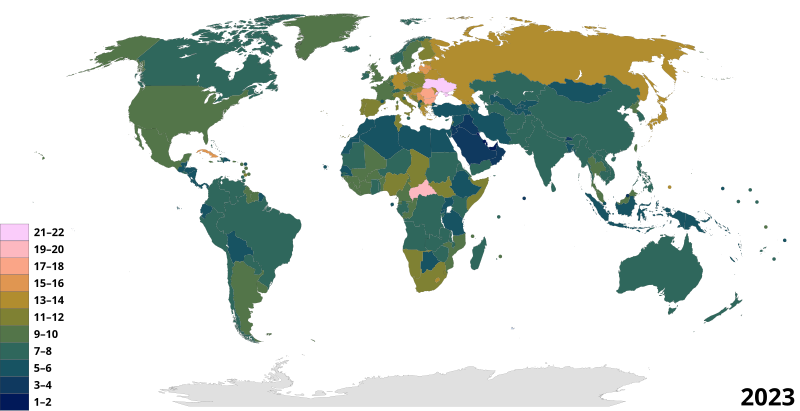
measure of the number of deaths in a population from a given cause, scaled by population, in a set period of time

herd immunity
protection from infectious disease that occurs when a sufficient fraction of a population has become immune (through vaccination or previous infections)
incubation period
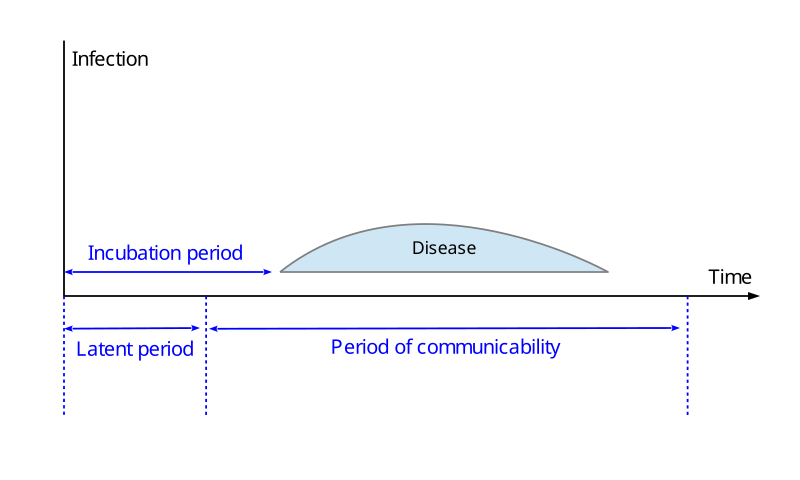
time between an infection and the onset of disease symptoms

endemic disease
epidemiological term describing a disease which is constantly present in a specific area
.jpg)
prevalence
thumb|upright=1.8|A depiction of prevalence
In epidemiology, prevalence is the proportion of a particular population found to be affected by a medical condition (typically a disease or a risk factor such as smoking or seatbelt use) at a specific time. It is derived by comparing the number of people found to have the condition with the total number of people studied and is usually expressed as a fraction, a percentage, or the number of cases per 10,000 or 100,000 people. Prevalence is most often used in questionnaire studies.

Koch's postulates
four criteria showing a causal relationship between a causative microbe and a disease
vector
agent that carries and transmits an infectious pathogen into another living organism

basic reproduction number
metric in epidemiology showing average measure of a pathogen’s infectiousness

serology
Serology is the scientific study of antibodies in the serum and other body fluids. Such antibodies are typically formed in response to an infection (against a given microorganism), against other foreign proteins (in response, for example, to a mismatched blood transfusion), or to one's own proteins (in instances of autoimmune disease).
incidence
measure of the probability of occurrence of a given medical condition in a population within a specified period of time
comorbidity
In medicine, comorbidity refers to the simultaneous presence of two or more medical conditions in a person; often co-occurring (that is, concomitant or concurrent) with a primary condition. It originates from the Latin term (meaning "sickness") prefixed with ("together") and suffixed with -ity (to indicate a state or condition). Comorbidity includes all additional ailments a person may experience alongside a primary diagnosis, which can be either physiological or psychological in nature. In the context of mental health, comorbidity may refer to the concurrent existence of mental disorders, for
contact tracing
process of finding and identifying people in close contact with someone who is infected with a transmissible pathogen
case fatality rate
the proportion of deaths from an infectious disease compared to the number of diagnosed cases
index case
initial patient in the population of an epidemiological investigation
relative risk
in statistics and epidemiology
cohort study
form of longitudinal study
natural reservoir
living host, such as an animal or a plant, inside of which an infectious pathogen naturally lives and reproduces
disease outbreak
sudden increase in occurrences of a disease in a particular time and place
French paradox
catchphrase for the apparent paradox that French people have a low incidence of heart disease while consuming many saturated fats
odds ratio
statistic quantifying the association between two events
cause of death
specific disease or injury resulting in a human's death, which may be recorded on a death certificate
lethality
Lethality (also called deadliness or perniciousness) is how capable something is of causing death. Most often it is used when referring to diseases, chemical weapons, biological weapons, or their toxic chemical components. The use of this term denotes the ability of these weapons to kill, but also the possibility that they may not kill. Reasons for the lethality of a weapon to be inconsistent, or expressed by percentage, can be as varied as minimized exposure to the weapon, previous exposure to the weapon minimizing susceptibility, degradation of the weapon over time and/or distance, and incor
cross-sectional study
type of study based on universal sampling
diseases of affluence
health conditions thought to be a result of increasing wealth in society
etiology
reason or origination of some disease
viral load
amount of virus found in host tissue or a given volume of fluid
case-control study
type of observational study comparing two existing groups differing in outcome
natural experiment
empirical study in which individuals/clusters exposed to the experimental and control conditions are determined by factors outside the control of the investigators (nature), but the process governing the exposures arguably resembles random assignment
contagious disease
subset category of transmissible diseases, which are transmitted to other persons
eradication of infectious diseases
complete extermination of a disease-causing agent to reduce its incidence to zero
Peto's paradox
biological observation of cancer rate not correlating with number of cells in an organism
infectivity
In epidemiology, infectivity is the ability of a pathogen to establish an infection. More specifically, infectivity is the extent to which the pathogen can enter, survive, and multiply in a host. It is measured by the ratio of the number of people who become infected to the total number exposed to the pathogen.
HIV Drug Resistance Database
Database at Stanford University that tracks 93 common mutations of HIV
.jpg)
fomite
thumb|right|Detecting whether medics have inadvertently transferred fluids to their clothing during a training sequence using simulated bodily fluids carrying an ultraviolet dye
A fomite () or fomes () is any inanimate object that, when contaminated with or exposed to infectious agents (such as pathogenic bacteria, viruses or fungi), can transfer disease to a new host.
epizootiology
Veterinary epidemiology (also known as epizootiology or epizoology) is the branch of epidemiology that studies the frequency, distribution, and determinants of health and disease in animal populations. While human epidemiology focuses on disease in human populations, veterinary epidemiology applies the same principles and methods to domestic animals, livestock, and wildlife, with the goal of preventing, mitigating, or eliminating the impact of disease in susceptible populations. In veterinary practice, epidemiological methods are used not only to enhance animal health but also to improve produ
hygiene hypothesis
hypothesis in medicine that early childhood exposure to certain microorganisms (e.g. gut flora, helminths) protects against allergies
survival rate
percentage of people in a study or treatment group still alive for a given period of time after diagnosis
excess mortality
public health measurements
gold standard test
diagnostic test or benchmark that is the best available under reasonable conditions
Corrupted Blood incident
virtual pandemic in World of Warcraft, which began on 13 Sept. 2005 and lasted for a month
infection control
medical field concerned with preventing healthcare-associated infection, a practical sub-discipline of epidemiology
flatten the curve
public health strategy
Bradford Hill criteria
Principles for establishing a causal relationship
Mark and recapture
ecological sampling method
number needed to treat
average number of patients who need to be treated to prevent one additional bad outcome
Glasgow effect
low life expectancy and poor health of residents of Scotland, and Glasgow in particular, compared to the rest of Europe
coinfection
Coinfection is the simultaneous infection of a host by multiple pathogen species. In virology, coinfection includes simultaneous infection of a single cell by two or more virus particles. An example is the coinfection of liver cells with hepatitis B virus and hepatitis D virus, which can arise incrementally by initial infection followed by superinfection.
pharmacoepidemiology
Pharmacoepidemiology is the study of the uses and effects of drugs in well-defined populations.
five-year survival rate
type of survival rate
epidemiology of HIV/AIDS
pandemic of Human Immunodeficiency Virus
attack rate
percentage of the population that contracts the disease in an at risk population during a specified time interval
enzootic
Enzootic describes the situation where a disease or pathogen is continuously present in at least one species of non-human animal in a particular region. It is the non-human equivalent of endemic.
supervised injection site
medical facility
sexual risk behavior
sexual behavior risking contracting sexually transmitted disease or pregnancy
diseases of poverty
diseases more prevalent in low-income populations

epidemiological modeling
using a mathematical model to understand infectious disease transmission and predict the likely outcome of an epidemic