Category
page 1Extant Burdigalian first appearances

Corvus
Corvus is a widely distributed genus of passerine birds ranging from medium-sized to large-sized in the family Corvidae. It includes species commonly known as crows, ravens, and rooks. The species commonly encountered in Europe are the carrion crow, hooded crow, common raven, and rook; those discovered later were named "crow" or "raven" chiefly on the basis of their size, crows generally being smaller. The genus name is Latin for "raven".
.jpg)
Bovidae
Bovidae is the biological family of cloven-hoofed, ruminant mammals that includes cattle, bison, buffalo, antelopes, and goat-antelopes such as sheep and goats. There are 143 extant species and 300 known extinct species of bovids, which are divided into either 11 major subfamilies, or two subfamilies with thirteen tribes. The earliest known bovid had evolved by 20 million years ago, in the early Miocene.
%20(white%20background).jpg)
Procyonidae
Procyonidae ( ) is a New World family of the order Carnivora. It includes the raccoons, ringtails, cacomistles, coatis, kinkajous, olingos, and olinguitos. Procyonids inhabit a wide range of environments and are generally omnivorous.
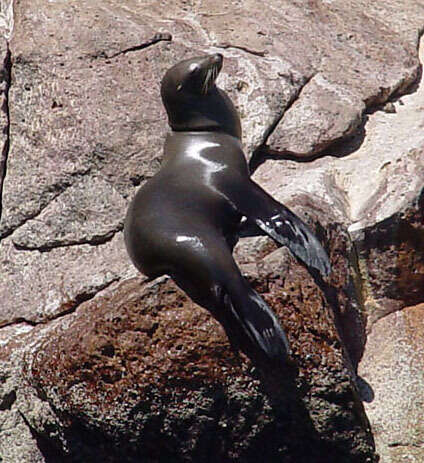
Otariidae
family of mammals

Ochotona
A pika ( , ) is a small, mountain-dwelling mammal native to Asia and North America. With short limbs, a very round body, an even coat of fur, and no external tail, they resemble their close relative the rabbit, but with short, rounded ears. The large-eared pika of the Himalayas and nearby mountains lives at elevations of more than .

Giraffidae
The Giraffidae are a family of ruminant artiodactyl mammals that share a recent common ancestor with deer and bovids. This family, once a diverse group spread throughout Eurasia and Africa, presently comprises only two extant genera, the giraffe (between one and eight, usually four, species of Giraffa, depending on taxonomic interpretation) and the okapi (the only known species of Okapia). Both are confined to sub-Saharan Africa: the giraffe to the open savannas, and the okapi to the dense rainforest of the Congo. The two genera look very different on first sight, but share a number of common

Rana
genus of amphibians

Agaricaceae
The Agaricaceae are a family of basidiomycete fungi and include the genus Agaricus, as well as basidiomycetes previously classified in the families Tulostomataceae, Lepiotaceae, and Lycoperdaceae.

Orycteropodidae
Orycteropodidae is a family of afrotherian mammals. Although there are many fossil species, the only species surviving today is the aardvark (Orycteropus afer). Orycteropodidae is recognized as the only family within the order Tubulidentata, (), referring to the tubule-style teeth, so the two are effectively synonyms.

great hammerhead
species of shark (Sphyrna mokarran)
.png)
Pecora
Pecora is an infraorder of even-toed hoofed mammals with ruminant digestion. Most members of Pecora have cranial appendages projecting from their frontal bones; only two extant genera lack them, Hydropotes and Moschus. The name "Pecora" comes from the Latin word , which means "cattle". Although most pecorans have cranial appendages, only some of these are properly called "horns", and many scientists agree that these appendages did not arise from a common ancestor, but instead evolved independently on at least two occasions. Likewise, while Pecora as a group is supported by both molecular and m

Carcharhinus brachyurus
species of fish

Ranzania laevis
species of fish in the Molidae family

Notoryctes
genus of mammals

Anhinga
The darters, anhingas, or snakebirds are mainly tropical waterbirds in the family Anhingidae, which contains a single genus, Anhinga. There are four living species, three of which are very common and widespread while the fourth is rarer and classified as near-threatened by the IUCN. The term snakebird is usually used without any additions to signify whichever of the completely allopatric species occurs in any one region. It refers to their long thin neck, which has a snake-like appearance when they swim with their bodies submerged, or when mated pairs twist it during their bonding displays. "D
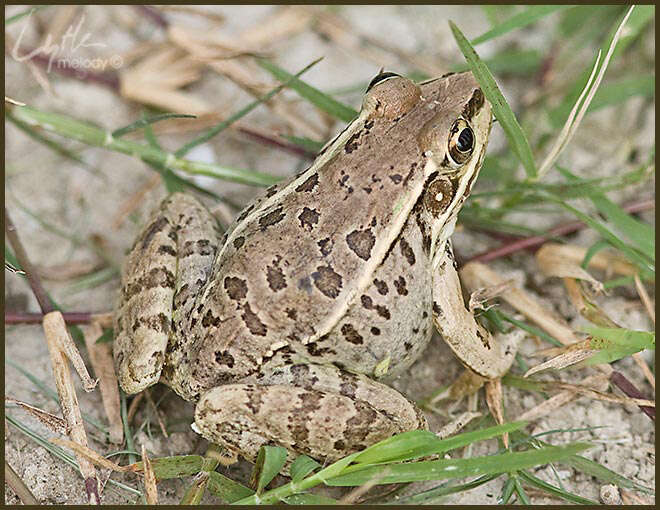
Lithobates
Lithobates is a genus of frogs belonging to the family Ranidae, native to the Americas. The name is derived from '' (stone) and : '' (one that treads), meaning one that treads on rock, or rock climber. As presently defined, it includes many of eastern North America's most familiar aquatic frog species, including the American bullfrog, green frog, and the leopard frogs.

Gavialis
thumb|upright|A skull of the extinct Gavialis species G. bengawanicus, which lived in the Pleistocene

Makaira
Makaira (Latin via Greek: μαχαίρα "sword") is a genus of marlin in the family Istiophoridae. It includes the Atlantic blue and Indo-Pacific blue marlins. In the past, the black marlin was also included in this genus, but today it is placed in its own genus, Istiompax.

Incilius
Incilius is a genus of toads in the true toad family, Bufonidae. They are sometimes known as the Central American toads or Middle American toads and are found in southern USA, Mexico, Central America, and northern Pacific South America (Colombia and Ecuador). They are an ecologically and biogeographically diverse group of toads, including micro-endemic species such as Incilius spiculatus that are restricted to undisturbed cloud forests, and widespread lowland species such as Incilius valliceps that predominantly occur in disturbed habitats.
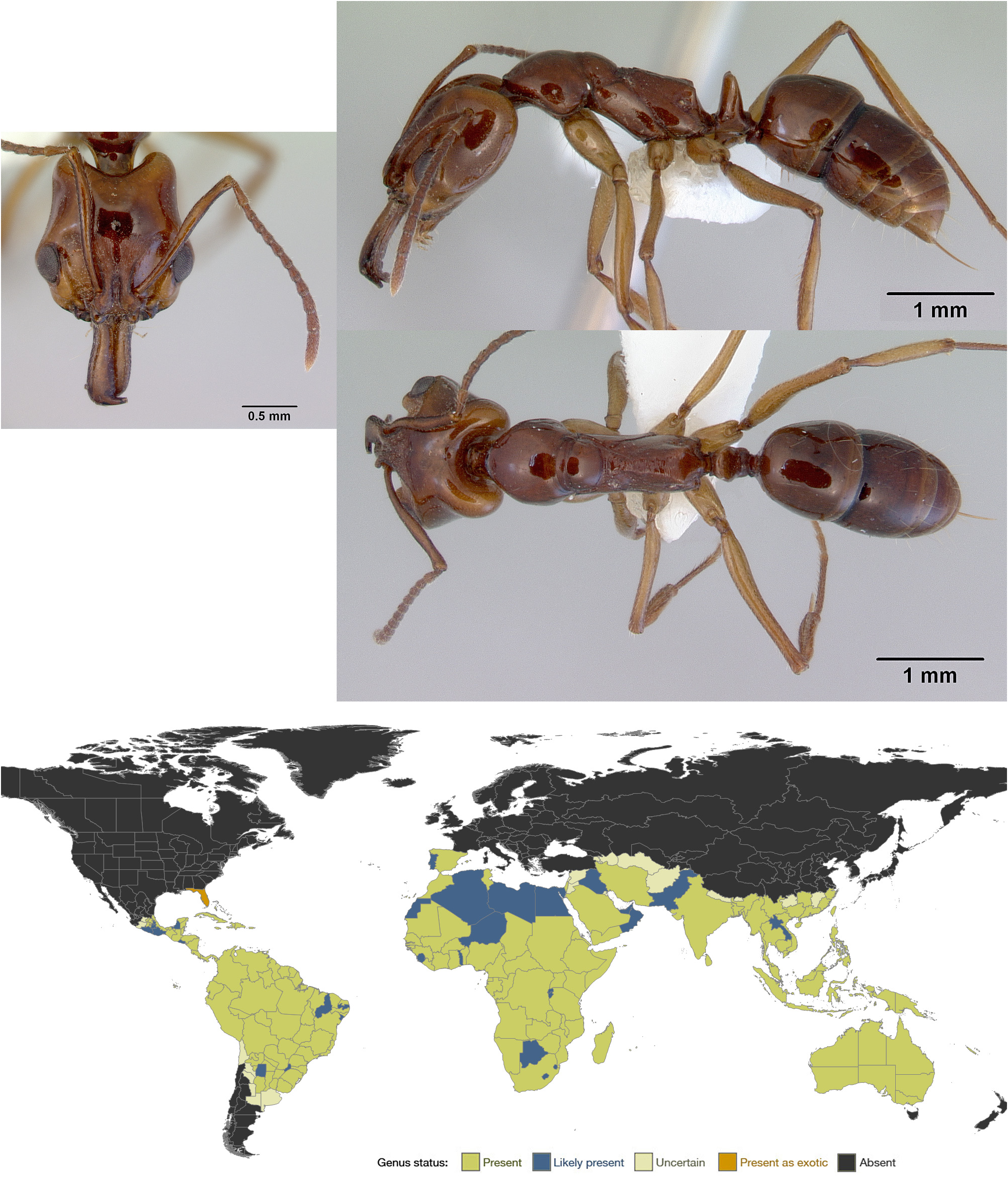
Anochetus
Anochetus is a genus of small, carnivorous ants found in the tropics and subtropics throughout the world.
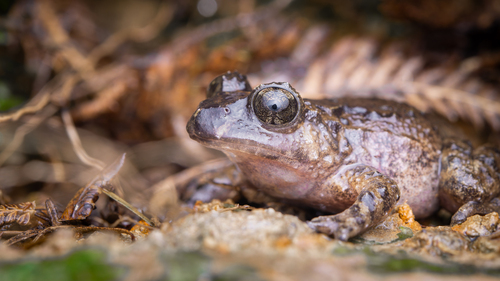
Leiopelma
__NOTOC__
Leiopelma is a genus of New Zealand primitive frogs, belonging to the suborder Archaeobatrachia. It is the only genus in the monotypic family Leiopelmatidae. The leiopelmatids' unique and ancestral features indicate they are part of an ancient lineage. While some taxonomists have suggested combining the North American frogs of the genus Ascaphus in the family Ascaphidae with the New Zealand frogs of the genus Leiopelma in the family Leiopelmatidae, the current consensus is that these two groups constitute two separate families. The three extant species of Leiopelmatidae are only foun
%20panamensis.jpeg)
Lutzomyia
Lutzomyia is a genus of phlebotomine sand flies consisting of nearly 400 species, at least 33 of which have medical importance as vectors of human disease. Species of the genus Lutzomyia are found only in the New World, distributed in southern areas of the Nearctic and throughout the Neotropical realm. Lutzomyia is one of the two genera of the subfamily Phlebotominae to transmit the Leishmania parasite, with the other being Phlebotomus, found only in the Old World. Lutzomyia sand flies also serve as vectors for the bacterial Carrion's disease and a number of arboviruses.

Acropyga
Acropyga is a genus of small formicine ants. Some species can be indirect pests. A. acutiventris, which is found from India to Australia, tends subterranean, root-feeding mealybugs of the species Xenococcus annandalei. Living, gravid females are carried in the jaws of A. acutiventris queens during their nuptial flight, to establish the symbiotic association in founding colonies. Other Acropyga species have relationships with different species of mealybugs, and it could be a trait common to the whole genus.

Macrochelys
Macrochelys is a genus of very large freshwater turtles in the family Chelydridae, native to the Southeastern and Midwestern United States. Only a single extant species was recognized until 2014, when a study divided it into two or possibly three species. These turtles are easily recognized by three distinct dorsal ridges with raised spikes.
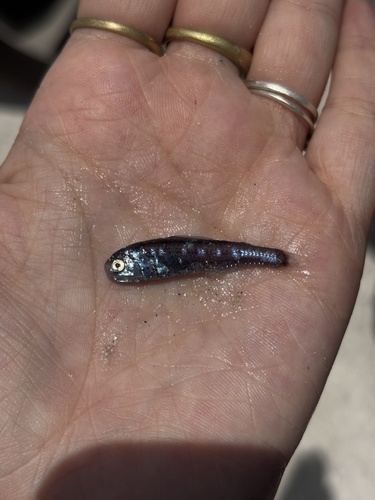
Bolinichthys
Bolinichthys is a genus of lanternfishes.
Otarioidea
Otarioidea is a superfamily of pinnipeds that includes the families Odobenidae, Otariidae and their stem-relatives. In the past when the pinnipeds were considered to be a polyphyletic group of marine mammals, a few points of cranial and dental morphology suggested that the otarioids originated from a line of bears. One extinct family, Enaliarctidae, was postulated to be otarioids that were a transitional clade between Hemicyoninae (an extinct subfamily of dog-like bears) and Otariidae. Recent comprehensive studies have, however, since the 1990s found pinnipeds to be a monophyletic clade of aqu
Totoaba
The totoaba or totuava (Totoaba macdonaldi) is a species of marine fish endemic to the Gulf of California in Mexico. It is the largest member of the drum family Sciaenidae and is the only extant species in the genus Totoaba. Originally an abundant species, the totoaba is now considered endangered due to human-related threats that contributed to its population decline.
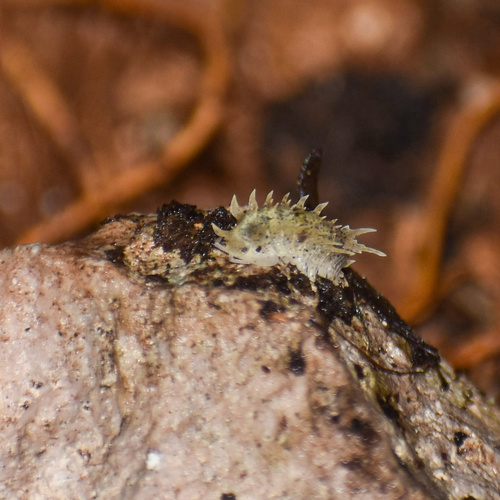
Pseudarmadillo
Pseudarmadillo is a genus of woodlice from the Greater Antilles. All extant species live in Cuba, with one species also extending to the Bahamas:
Pseudarmadillo agramontino Armas & Juarrero de Varona, 1999 – Camagüey Province
Pseudarmadillo assoi Armas & Juarrero de Varona, 1999 – Cienfuegos Province
Pseudarmadillo auritus Armas & Juarrero de Varona, 1999 – Sancti Spíritus Province
Pseudarmadillo bidentatus Armas & Juarrero de Varona, 1999 – Guantánamo Province
Pseudarmadillo buscki Boone, 1934 – La Habana Province
Pseudarmadillo carinulatus Saussure, 1857 – Cuba and the Bahamas
Pseudarmadillo