Category
page 1Extant Silurian first appearances

shark
Sharks are a group of elasmobranch cartilaginous fishes characterized by a ribless endoskeleton, dermal denticles, five to seven gill slits on each side, and pectoral fins that are not fused to the head. Modern sharks are classified within the division Selachii and are the sister group to the Batomorphi (rays and skates). Some sources extend the term "shark" as an informal category including extinct members of Chondrichthyes (cartilaginous fish) with a shark-like morphology, such as hybodonts. Shark-like chondrichthyans such as Cladoselache and Doliodus first appeared in the Devonian Period (4

scorpion
Scorpions (order Scorpiones) are predatory arachnids with eight legs, a pair of grasping pincers and a narrow, segmented tail, often carried in a characteristic forward curve over the back and always ending with a stinger. The evolutionary history of scorpions goes back 435 million years. They mainly live in deserts but have adapted to a wide range of environmental conditions, and can be found on all continents except Antarctica. There are over 2,500 described species, with 22 extant (living) families recognized to date. Their taxonomy is being revised to account for 21st-century genomic studi

leech
Leeches are segmented parasitic or predatory worms that comprise the subclass Hirudinea within the phylum Annelida. They are closely related to the oligochaetes, which include the earthworm, and like them have soft, muscular segmented bodies that can lengthen and contract. Both groups are hermaphrodites and have a clitellum, but leeches typically differ from the oligochaetes in having suckers at both ends and ring markings that do not correspond with their internal segmentation. The body is muscular and relatively solid; the coelom, the spacious body cavity found in other annelids, is reduced

centipede
Centipedes (from Neo-Latin , "hundred", and Latin , "foot") are predatory arthropods belonging to the class Chilopoda (Ancient Greek , kheilos, "lip", and Neo-Latin suffix , "foot", describing the forcipules) of the subphylum Myriapoda, an arthropod group which includes millipedes and other multi-legged animals. Centipedes are elongated segmented (metameric) animals with one pair of legs per body segment. All centipedes are venomous and can inflict painful stings, injecting their venom through pincer-like appendages known as forcipules or toxicognaths, which are actually modified legs instead

Arachnida
Arachnids are arthropods in the class Arachnida () of the subphylum Chelicerata. Arachnida includes, among others, spiders, scorpions, ticks, mites, pseudoscorpions, harvestmen, camel spiders, whip spiders and vinegaroons.

Chondrichthyes
Chondrichthyes (; ) is a class of jawed fish that contains the cartilaginous fish or chondrichthyans, which all have skeletons primarily composed of cartilage. They can be contrasted with the Osteichthyes or bony fish, which have skeletons primarily composed of bone tissue. Chondrichthyes are aquatic vertebrates with paired fins, paired nares, placoid scales, conus arteriosus in the heart, and a lack of opercula and swim bladders. Within the infraphylum Gnathostomata, cartilaginous fishes are distinct from all other jawed vertebrates.

Osteichthyes
Osteichthyes ( ; ), also known as osteichthyans or commonly referred to as the bony fish, is a diverse clade of vertebrate animals that have endoskeletons primarily composed of bone tissue, encompassing both the conventional bony fishes and, in a cladistic sense, all tetrapods. They can be contrasted with the Chondrichthyes (cartilaginous fish) and the extinct placoderms and acanthodians, which have endoskeletons primarily composed of cartilage. The vast majority of extant fish are members of Osteichthyes, being an extremely diverse and abundant group consisting of 45 orders, over 435 families

Actinopterygii
Actinopterygii (; ), members of which are known as ray-finned fish or actinopterygians, is a class of bony fish that constitutes nearly 99% of the over 30,000 living species of fish. The vast majority of extant actinopterygian species are teleosts, and by species count they dominate the subphylum Vertebrata, comprising over 50% of all living vertebrates. They are the most abundant nektonic aquatic animals and are ubiquitous throughout freshwater, brackish and marine environments from the deep sea to subterranean waters to the highest mountain streams. Extant species can range in size from Paed

Myriapoda
Myriapods () are the members of subphylum Myriapoda, containing arthropods such as millipedes and centipedes. The group contains about 13,000 species, all of them terrestrial.

Diplopoda
Millipedes (originating from the Latin , "thousand", and , "foot") are a group of arthropods that are characterised by having two pairs of jointed legs on most body segments; they are known scientifically as the class Diplopoda, the name derived from this feature. Each double-legged segment is a result of two single segments fused together. Most millipedes have very elongated cylindrical or flattened bodies with more than 20 segments, while pill millipedes are shorter and can roll into a tight ball. Although the name "millipede" derives from Latin for "thousand feet", no species was known to h

tracheophyte
clade of plants with xylem and phloem
Sarcopterygii
Sarcopterygii (; )—sometimes considered synonymous with Crossopterygii ()—is a clade (traditionally a class or subclass) of vertebrate animals which includes a group of bony fishes commonly referred to as lobe-finned fishes. These vertebrates are characterised by prominent muscular limb buds (lobes) within their fins, which are supported by articulated appendicular skeletons. This is in contrast to the other clade of bony fishes, the Actinopterygii, which have only skin-covered bony spines supporting the fins.

Lycopodiophyta
The lycophytes, when broadly circumscribed, are a group of vascular plants that include the clubmosses. They are sometimes placed in a division Lycopodiophyta or Lycophyta or in a subdivision Lycopodiophytina. They are one of the oldest lineages of extant (living) vascular plants; the group contains extinct plants that have been dated from the Silurian (ca. 425 million years ago). Lycophytes were some of the dominating plant species of the Carboniferous period, and included the tree-like Lepidodendrales, some of which grew over in height, although extant lycophytes are relatively small plants.

Xiphosura
Xiphosura (; , in reference to its sword-like telson) is an order of arthropods related to arachnids. They are more commonly known as horseshoe crabs (a name applied more specifically to the only extant family, Limulidae). They first appear in the fossil record in the Early Ordovician, around 480 million years ago. Currently, there are only four living species. Xiphosura contains one suborder, Xiphosurida, and several stem-genera.

Chondrostei
Chondrostei is a subclass of non-neopterygian ray-finned fish. While the term originally referred to the paraphyletic grouping of all non-neopterygian ray-finned fish, it was redefined by Patterson in 1982 to be a clade comprising the Acipenseriformes (which includes sturgeon and paddlefish) and their extinct relatives.

Chara
genus of algae
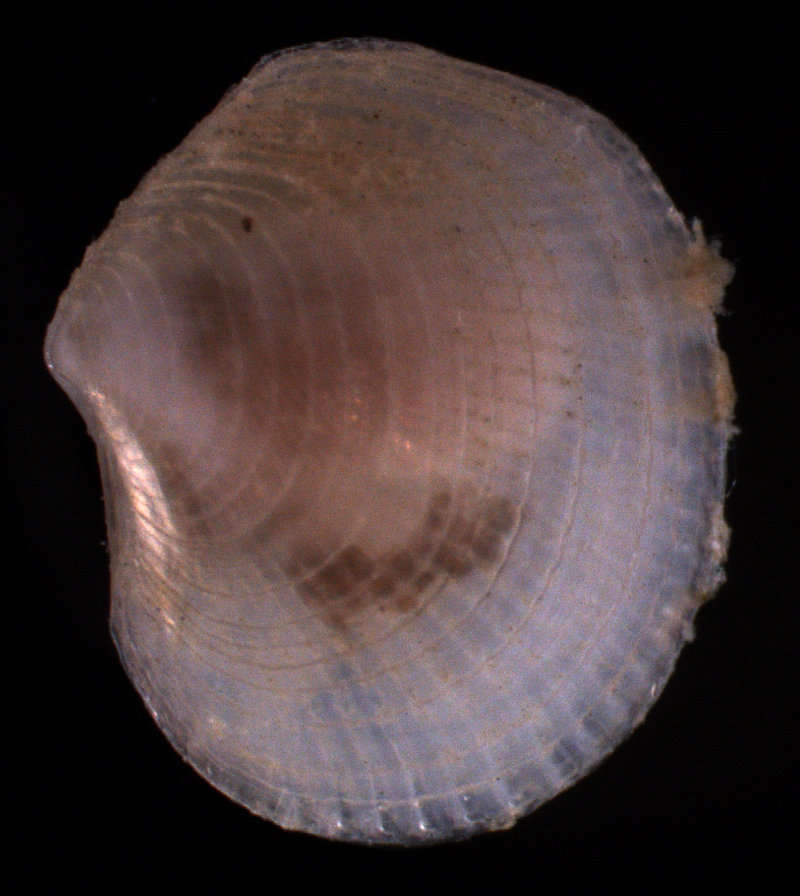
Lucinidae
Lucinidae, common name hatchet shells, is a family of saltwater clams, marine bivalve molluscs.
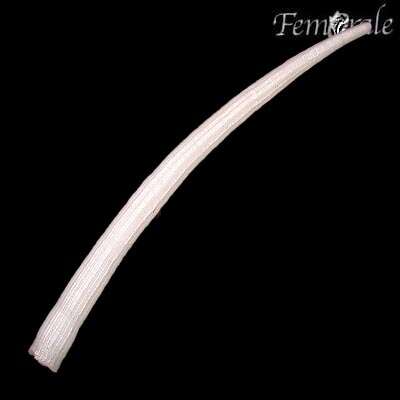
Dentalium
genus of molluscs
Cylindroleberididae
Cylindroleberididae is a family of ostracods that shows remarkable morphological diversity. The defining feature is the possession of gills: 7–8 leaf-like pairs at the posterior of the body. Other features common to all species in the family include a "baleen-comb" on both the maxilla and the fifth limb, a sword-shaped coxal endite on the mandible, and the triaenid bristles on the basal endites of the mandible.

Capulus
Capulus is a genus of small sea snails, marine gastropod mollusks in the family Capulidae, the cap snails.