Category
page 1French inventions
film
upright=1.35|thumb|thumbtime=6:15|A Trip to the Moon (1902) is considered to be a turning point in the development of narrative and science fiction films.

photography
thumb|upright=1.1|Photography of Sierra Nevada

Olympic Games
The modern Olympic Games are the world's biggest international sporting events. They feature summer and winter sports events in which thousands of athletes from around the world participate in a variety of athletic competitions. The Olympic Games, open to both amateur and professional athletes, involve more than 200 teams, each team representing a sovereign state or territory. The Games often, but not always, substitute for any world championships during the year in which they take place. The Olympics are staged every four years. Since 1994, they have alternated between the Summer and Winter Olympics every two years during the four-year Olympiad.

bus
thumb|New Routemaster [[double-decker bus in London, United Kingdom]]
thumb|Volvo B5LH [[single-decker bus in Singapore]]
thumb|Youngman [[articulated bus in Ürümqi, China]]
thumb|New Flyer [[trolleybus in Toronto, Canada]]
animation
Animation is a filmmaking technique whereby pictures are created or manipulated and then played in sequence to create the illusion of moving images. In traditional animation, images are drawn or painted by hand on transparent celluloid sheets to be photographed and exhibited on film. Animation has been recognized as an artistic medium, specifically within the entertainment industry. Many animations are either traditional animations or computer animations made with computer-generated imagery (CGI). Stop motion animation, in particular claymation, is also prominent alongside these other forms, a

umbrella
thumb|An umbrella
alt=|thumb|Woman holding a parapluie at Zenkō-ji, Nagano, JapanAn umbrella (parasol or rarely parapluie) is a folding canopy supported by wooden or metal ribs that is mounted on a wooden, metal, or plastic pole. It is usually designed to protect a person against sun or rain. Initially they were used in warmer countries for shade from the sun, but in modern times they evolved to also be used for protection from rain. Etymologically, the term umbrella is to be used when protecting from the sun, but is also commonly used when protecting from rain. Some countries specifically use

Braille script
thumb|Accessibility Braille [[dashboard in elevator]]

sewing machine
machine used to stitch fabric

guillotine
thumb|The guillotine used in Luxembourg between 1798 and 1821
A guillotine ( ) is an apparatus designed for effectively carrying out executions by beheading. The device consists of a tall, upright frame with a weighted and angled blade suspended at the top. The condemned person is secured with a pillory at the bottom of the frame, holding the position of the neck directly below the blade. The blade is then released, swiftly and forcefully decapitating the victim with a single, clean pass; the head falls into a basket or other receptacle below.

cue sports
skill games using cue stick to strike billiard balls
%20paratroopers%20jump%20from%20a%20U.S.%20Air%20Force%20C-130%20Hercules%20aircraft%20over%20Bangladesh%20during%20exercise%20Cope%20South%2014%20Nov.%2010%2C%202013%20131110-F-SI013-240.jpg)
parachute
thumb|upright=1.35|Paratroopers deploying their parachutes during an exercise

vehicle registration plate
metal or plastic identification plate attached to a motor vehicle or trailer
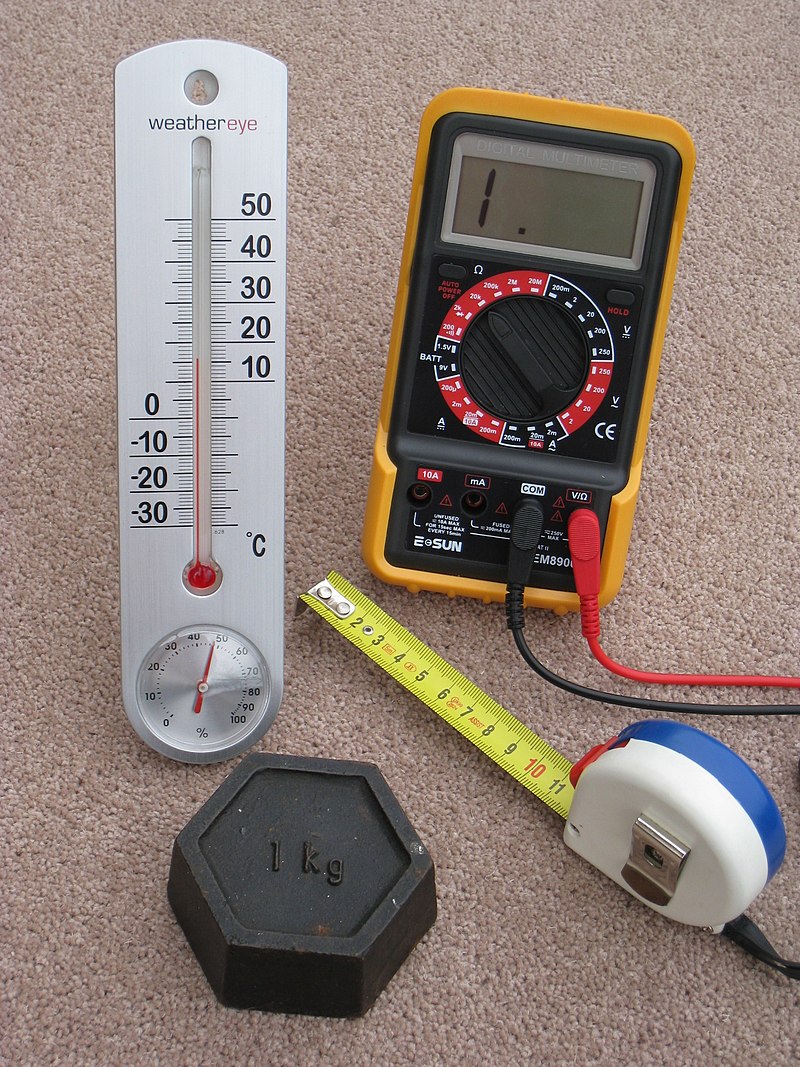
metric system
decimal system of units that uses the metre as the basis for its unit of length

sonar
thumb|upright=1.35|French Georges Leygues-class frigate|F70 type frigates (here, ) are fitted with [[variable depth sonar (VDS) type DUBV43 or DUBV43C towed sonars.]]
thumb|upright=1.35|A sonar image of the Soviet Navy minesweeper T-297, formerly the Latvian Virsaitis, which was shipwrecked in December 1941 in the [[Gulf of Finland.]]
.jpg)
stethoscope
The stethoscope (from Ancient Greek () and () ) is a medical device for auscultation, or listening to internal sounds of an animal or human body. It typically has a small disc-shaped resonator that is placed against the naked skin, with either one or two tubes connected to two earpieces. A stethoscope can be used to listen to the sounds made by the heart, lungs or intestines, as well as blood flow in arteries and veins. In combination with a manual sphygmomanometer, it is commonly used when measuring blood pressure. It was invented in 1816 by René Laennec and the binaural version by Arthur Lea

margarine
Margarine (, also , ) is a spread used for flavoring, baking, and cooking. It is most often used as a substitute for butter. Although originally made from animal fats, most margarine consumed today is made from vegetable oil. The spread was originally named oleomargarine from Latin for oleum (olive oil) and Greek margarite ("pearl", indicating luster). The name was later shortened to margarine, or sometimes oleo (particularly in the Deep South region of the United States).

pencil sharpener
device for sharpening a pencil's writing point by shaving away its worn surface

bayonet
thumb| British infantryman in 1941 with a Pattern 1907 bayonet affixed to his [[Lee–Enfield rifle]]
A bayonet (from Old French , now spelt ) is a knife, dagger, sword, or spike-shaped melee weapon designed to be mounted on the end of the barrel of a rifle, carbine, musket or similar long firearm, allowing the gun to be utilized as a spear in close combat.

cabaret
thumb|Henri de Toulouse-Lautrec, [[At the Moulin Rouge, The Dance, 1890]]
Cabaret is a form of theatrical entertainment featuring music song, dance, recitation, or drama. The performance venue might be a pub, casino, hotel, restaurant, or nightclub with a stage for performances. The audience, often dining or drinking, does not typically dance but usually sits at tables. Performances are usually introduced by a master of ceremonies (M.C.). The entertainment, as performed by an ensemble of actors and according to its European origins, is often (but not always) oriented towards adult audiences an

Prolog
Prolog is a logic programming language that has its origins in artificial intelligence, automated theorem proving, and computational linguistics.

grater
thumb|Box grater with a vegetable slicing surface (top) and grating surface (front) displayed
A grater, also referred to as a shredder, is a kitchen utensil used to grate or shred foods into fine pieces. They come in several shapes and sizes, with box graters being the most common. Other styles include paddles, microplane/rasp graters, and rotary drum graters.

Foucault pendulum
simple device conceived as an experiment to demonstrate the rotation of the Earth
.jpg)
daguerreotype process
thumb|Daguerreotype portrait of a daguerreotypist displaying daguerreotypes and cases pictured in an airtight frame, 1845
thumb|upright=1.1|Daguerreotype of Louis Daguerre in 1844 by Jean-Baptiste Sabatier-Blot

pressure cooker
utensil for cooking food under high pressure steam
roundabout
vi:Vòng xuyến
.jpg)
carousel
thumb|A double-decker carousel in France
right|thumb|A carousel in Tokyo Dome City in Japan
A carousel or carrousel (mainly North American English), merry-go-round (International English), or galloper (British English) is a type of amusement ride consisting of a rotating circular platform with seats for riders. The seats are traditionally in the form of rows of animal figures (usually horses) mounted on posts, many of which move up and down to simulate galloping. Sometimes chair-like or bench-like seats are used, and occasionally mounts can take the form of non-animals, such as airplanes or ca

hot air balloon
lighter than air aircraft consisting of a bag, called an envelope, which contains heated air

roller coaster
type of amusement ride found at amusement parks and carnivals

hair dryer
type of appliance used to dry hair

funicular
thumb|upright|Funicular in Baku, Azerbaijan

roulette
thumb|Roulette ball
thumb|upright|"Gwendolen at the roulette table" – 1910 illustration to George Eliot's [[Daniel Deronda]]
Roulette (named after the French word meaning "little wheel") is a casino game which was likely developed from the Italian game Biribi. In the game, a player may choose to place a bet on a single number, various groupings of numbers, the color red or black, whether the number is odd or even, or if the number is high or low.

metronidazole
Metronidazole, sold under the brand name Flagyl and Metrogyl among others, is an antibiotic and antiprotozoal medication. It is used either alone or with other antibiotics to treat pelvic inflammatory disease, endocarditis, and bacterial vaginosis. It is effective for dracunculiasis, giardiasis, trichomoniasis, and amebiasis. It is an option for a first episode of mild-to-moderate Clostridioides difficile colitis if vancomycin or fidaxomicin is unavailable. Metronidazole is available orally (by mouth), as a cream or gel, and by slow intravenous infusion (injection into a vein).

gas chamber
sealed room into which gas is pumped in, causing death by poisoning or asphyxiation

Fresnel lens
compact composite lens

bidet
thumb|A modern bidet that resembles a traditional washbasin type
thumb|Woman on a Bidet, by Louis-Léopold Boilly, 1790
thumb|bidet horse, early 1900s
A bidet (, ) is a bowl or receptacle designed to be sat upon in order to wash a person's genitalia, perineum, inner buttocks, and anus.

Bézier curve
curve used in computer graphics and related fields

burette
thumb|right|50px
A burette (also spelled buret) is a graduated glass tube with a tap at one end, for delivering known volumes of a liquid, especially in titrations. It is a long, graduated glass tube, with a stopcock at its lower end and a tapered capillary tube at the stopcock's outlet. The flow of liquid from the tube to the burette tip is controlled by the stopcock valve.

croquette
A croquette (; ; Spanish: croqueta) is a deep-fried roll originating in French cuisine and most extended in Spanish cuisine consisting of a thick binder combined with a filling, which is then breaded. It is served as a side dish, a snack, or fast food worldwide.

canning
thumb|Industrial canning machines used for mass-producing canned salmon in 1917
Canning is a method of food preservation in which food is processed and sealed in an airtight container (jars like Mason jars, and steel and tin cans). Canning provides a shelf life that typically ranges from one to five years, although under specific circumstances, it can be much longer. A freeze-dried canned product, such as canned dried lentils, could last as long as 30 years in an edible state.

Tower of Hanoi
mathematical game or puzzle

neon lamp
light source

pitot tube
pressure measurement instrument used to measure fluid flow velocity

modafinil
Modafinil, sold under the brand name Provigil among others, is a central nervous system (CNS) stimulant medication used to treat narcolepsy, sleep apnea, and shift work sleep disorder. It is taken by mouth. Modafinil is a first-line treatment for narcolepsy in the United States and Europe.

celesta
The celesta () or celeste (), also called a bell-piano, is a struck idiophone operated by a keyboard. It looks similar to an upright piano (four- or five-octave), albeit with smaller keys and a much smaller cabinet, or a large wooden music box (three-octave). The keys connect to hammers that strike a graduated set of metal (usually steel) plates or bars suspended over wooden resonators. Four- or five-octave models usually have a damper pedal that sustains or damps the sound. The three-octave instruments do not have a pedal because of their small "table-top" design. One of the best-known works

Pascal's calculator
thumb|A Pascaline signed by Pascal in 1652
thumb|Top view and overview of the entire mechanism. This version of Pascaline was for accounting.

polo shirt
shirt with a collar

ramjet
thumb|upright=1.2|250px|Simple ramjet operation, with Mach numbers of flow shown

barrel organ
mechanical musical instrument

multivibrator
A multivibrator is an electronic circuit used to implement a variety of simple two-state devices such as relaxation oscillators, timers, latches and flip-flops. The first multivibrator circuit, the astable multivibrator oscillator, was invented by Henri Abraham and Eugene Bloch during World War I. It consisted of two vacuum tube amplifiers cross-coupled by a resistor-capacitor network. They called their circuit a "multivibrator" because its output waveform was rich in harmonics. A variety of active devices can be used to implement multivibrators that produce similar harmonic-rich wave forms; t
.jpg)
(±)-promethazine

rabies vaccine
group of vaccines against infection of humans and animals with the rabies virus

coronagraph
thumb|Coronagraph image of the Sun
A coronagraph is a telescopic attachment designed to block out the direct light from a star or other bright object so that nearby objects – which otherwise would be hidden in the object's bright glare – can be resolved. Most coronagraphs are intended to view the corona of the Sun, but a new class of conceptually similar instruments (called stellar coronagraphs to distinguish them from solar coronagraphs) are being used to find extrasolar planets and circumstellar disks around nearby stars as well as host galaxies in quasars and other similar objec

thermal solar power station
large-scale solar thermal system using concentrated sunlight and a steam cycle

catalytic converter
emission control device that treats engine exhaust gas by catalyzing pollutant-destroying redox reactions

radiosonde
thumb|Modern radiosondes showing progress of miniaturisationthumb|A Global Positioning System|GPS sonde, approx 220 × 80 ×75 mm (8.7 × 3.1 × 3 in) (with grounding station in the background, used to perform a 'ground check' and also recondition the humidity sensor)

pyrometer
thumb|upright|An optical pyrometer
thumb|upright|A sailor checking the temperature of a ventilation system
Vernier scale
auxiliary scale of a measurement device, that aids to increase measurement precision

cinematograph
thumb| Lumière at the Institut Lumière, France

injector
thumb|right|350px|Injector typically used in steam locomotives
thumb|right|400px|A- Steam from boiler, B- Needle valve, C- Needle valve handle, D- Steam and water combine, E- Water feed, F- Combining cone, G- Delivery nozzle and cone, H- delivery chamber and pipe, K- Check valve, L- Overflow
weather balloon
meteorological instrumentation