Category
page 1Hematology

blood
Blood is a body fluid in the circulatory system of humans and other vertebrates that delivers necessary substances such as nutrients and oxygen to the cells of the body, and transports metabolic waste products away from those same cells.

blood type
classification of blood based on antibodies and antigens on red blood cell surfaces
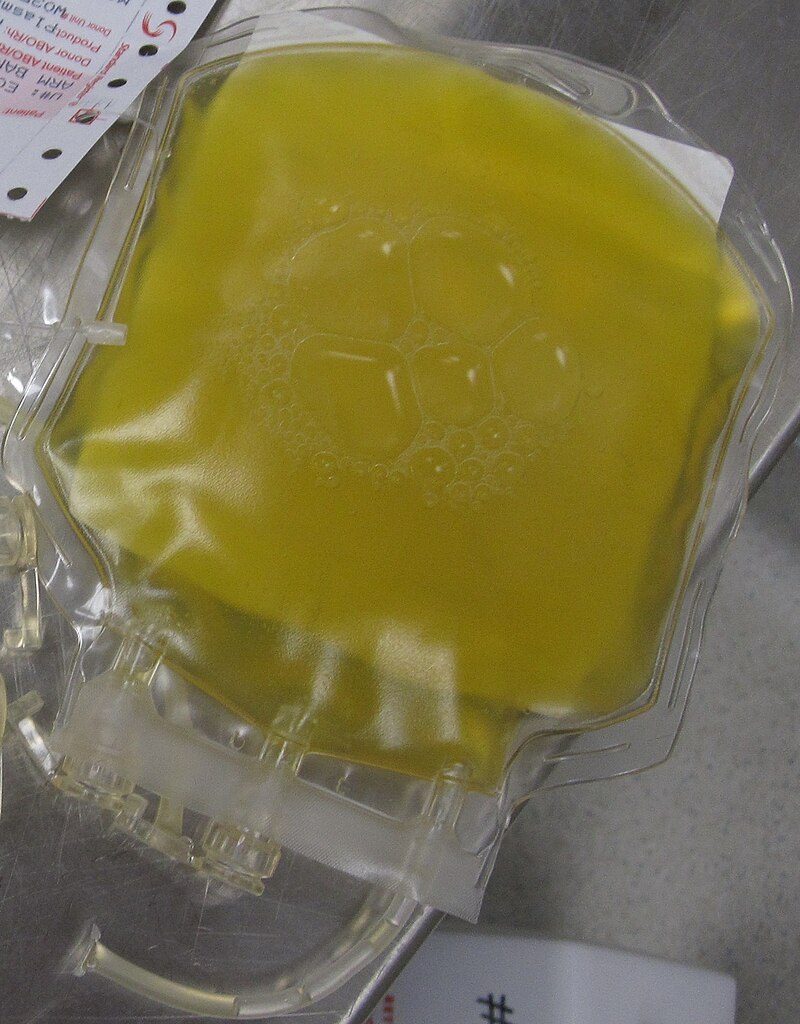
blood plasma
liquid component of blood

hematology
Hematology (spelled haematology in British English) is the branch of medicine concerned with the study of the cause, prognosis, treatment, and prevention of diseases related to blood. It involves treating diseases that affect the production of blood and its components, such as blood cells, hemoglobin, blood proteins, bone marrow, platelets, blood vessels, spleen, and the mechanism of coagulation. Such diseases might include hemophilia, sickle cell anemia, blood clots (thrombus), other bleeding disorders, and blood cancers such as leukemia, multiple myeloma, and lymphoma. The laboratory analysi

blood transfusion
generally the process of receiving blood or blood products into one's circulation intravenously

blood donation
activity in which a person or other mammal voluntarily has blood drawn to be tranfused

lymphoma

thrombosis
Thrombosis () is the formation of a blood clot inside a blood vessel, obstructing the flow of blood through the circulatory system. When a blood vessel (a vein or an artery) is injured, the body uses platelets (thrombocytes) and fibrin to form a blood clot to prevent blood loss. Even when a blood vessel is not injured, blood clots may form in the body under certain conditions. A clot, or a piece of the clot, that breaks free and begins to travel around the body is known as an embolus. Thrombosis can cause serious conditions such as stroke and heart attack.

embolism
thumb|Thrombotic embolism, branch left pulmonary artery, hemorrhagic infarction apex left lower lobe.
An embolism is the lodging of an embolus, a blockage-causing piece of material, inside a blood vessel. The embolus may be a blood clot (thrombus), a fat globule (fat embolism), a bubble of air or other gas (gas embolism), amniotic fluid (amniotic fluid embolism), or foreign material.

bruise
A bruise, also known as a contusion, is a type of hematoma of tissue, the most common cause being capillaries damaged by trauma, causing localized bleeding that extravasates into the surrounding interstitial tissues. Most bruises occur close enough to the epidermis such that the bleeding causes a visible discoloration. The bruise then remains visible until the blood is either absorbed by tissues or cleared by immune system action. Bruises which do not blanch under pressure can involve capillaries at the level of skin, subcutaneous tissue, muscle, or bone.

hemolysis
thumb|170px|A red blood cell in a hypotonic solution, causing water to move into the cell
thumb|170px|A red blood cell in a hypertonic solution, causing water to move out of the cell

hemostasis
In biology, hemostasis or haemostasis is a process to prevent and stop bleeding, meaning to keep blood within a damaged blood vessel (the opposite of hemostasis is hemorrhage). It is the first stage of wound healing. Hemostasis involves three major steps:
vasoconstriction
temporary blockage of a hole in a damaged blood vessel by a platelet plug
blood coagulation (formation of fibrin clots)

thrombus
A thrombus ( thrombi) is a solid or semisolid aggregate from constituents of the blood (platelets, fibrin, red blood cells, white blood cells) within the circulatory system during life. A blood clot is the final product of the blood coagulation step in hemostasis in or out of the circulatory system. There are two components to a thrombus: aggregated platelets and red blood cells that form a plug, and a mesh of cross-linked fibrin protein. The substance making up a thrombus is sometimes called cruor. A thrombus is a healthy response to injury intended to stop and prevent further bleeding, but c
deep vein thrombosis
formation of a blood clot (thrombus) in a deep vein
Thomas Hodgkin
British pathologist and social reformer (1798-1866)
hematopoietic stem cell transplantation
medical procedure to replace bone marrow stem cells
cobalamin binding intrinsic factor
mammalian protein found in Homo sapiens
agglutination
clumping of particles

hemagglutinin
thumb|300px|Illustration showing influenza virus attaching to [[cell membrane via the surface protein hemagglutinin]]
The term hemagglutinin (alternatively spelt haemagglutinin, from the Greek , 'blood' + Latin , 'glue') refers to any protein that can cause red blood cells (erythrocytes) to clump together ("agglutinate") in vitro. They do this by binding to the sugar residues on a red blood cell; when a single hemagglutinin molecule binds sugars from multiple red blood cells, it "glues" these cells together. As a result, they are carbohydrate-binding proteins (lectins). The ability to bind red

cauterization
Cauterization (or cauterisation, or cautery) is a medical practice or technique of burning a part of a body to remove or close off a part of it. It destroys some tissue in an attempt to mitigate bleeding and damage, remove an undesired growth, or minimize other potential medical harm, such as infections when antibiotics are unavailable.

venipuncture
thumb|upright|Still photo of a venipuncture procedure
thumb|Video of a venipuncture procedure
Protein C, inactivator of coagulation factors Va and VIIIa
mammalian protein found in Homo sapiens
hemotoxin
Haemotoxins, hemotoxins or hematotoxins are toxins that destroy red blood cells, disrupt blood clotting, and/or cause organ degeneration and generalized tissue damage. The term haemotoxin is to some degree a misnomer since toxins that damage the blood also damage other tissues. Injury from a haemotoxic agent is often very painful and can cause permanent damage and in severe cases death. Loss of an affected limb is possible even with prompt treatment.
PAF
chemical compound
bone marrow examination
medical test performed on blood samples

hemosiderin
thumb|Histopathology of a case of chronic pulmonary congestion, showing interstitium with hemosiderin deposition (black arrow), edema and collagenous thickening. The alveolus contains a siderophage (white arrow, characterized by coarse brown pigment, which is slightly refractile).
thumb|Hemosiderin image of a kidney viewed under a microscope. The brown areas represent hemosiderin
packed red blood cell
red blood cells separated for blood transfusion
congenital rubella syndrome
human disease
ironeman
iron metabolism in the body

apheresis
Apheresis (ἀφαίρεσις (aphairesis, "a taking away")) is a medical technology in which the blood of a person is passed through an apparatus that separates one particular constituent and returns the remainder to the circulation. It is thus an extracorporeal therapy.
venous thrombosis
blood clot (thrombus) that forms within a vein
partial thromboplastin time
test for coagulation of the blood
diapedesis
passage of a leukocyte between the tight junctions of endothelial cells lining blood vessels
Jan Janský
Czech doctor, neurologist and psychiatrist (1873–1921)
Bence Jones protein
urinary protein found in plasma cell disorders
hemaglutination
Hemagglutination, or haemagglutination, is a specific form of agglutination that involves red blood cells (RBCs). It has two common uses in the laboratory: blood typing and the quantification of virus dilutions in a haemagglutination assay.
Solute carrier family 40 member 1
Ferroportin-1, also known as solute carrier family 40 member 1 (SLC40A1) or iron-regulated transporter 1 (IREG1), is a protein that in humans is encoded by the SLC40A1 gene. Ferroportin is a transmembrane protein that transports iron from the inside of a cell to the outside of the cell. Ferroportin is the only known iron exporter.
Virchow's triad
three factors thought to contribute to thrombosis

embolus
thumb|Illustration depicting an embolism within the bloodstream, and lodging at a site of vascular narrowing due to plaque
An embolus (; : emboli; from the Greek ἔμβολος "wedge", "plug") is an unattached mass that travels through the bloodstream and is capable of creating blockages. When an embolus occludes a blood vessel, it is called an embolism or embolic event. There are a number of different types of emboli, including blood clots, cholesterol plaque or crystals, fat globules, gas bubbles, and foreign bodies, which can result in different types of embolisms.

hematidrosis
Hematidrosis, also called hematohidrosis, haematidrosis, hemidrosis and blood sweat, is a very rare condition in which a human sweats blood. The term is from Greek / (αἷμα/αἵματος), meaning blood, and (ἱδρώς), meaning sweat.
CD55 molecule (Cromer blood group)
mammalian protein found in Homo sapiens
Haldane effect
Deoxygenated blood increases the capacity for carbon dioxide transport
arterial blood
blood in an artery
streptolysin
Streptolysins are two homogenous exotoxins from Streptococcus pyogenes. Types include streptolysin O (SLO; slo), which is oxygen-labile, and streptolysin S (SLS; sagA), which is oxygen-stable.
immunophenotyping
Immunophenotyping is a technique used to study the protein expressed by cells. This technique is commonly used in basic science research and laboratory diagnostic purpose. This can be done on tissue section (fresh or fixed tissue), cell suspension, etc. An example is the detection of tumor markers, such as in the diagnosis of leukemia. It involves the labelling of white blood cells with antibodies directed against surface proteins on their membrane. By choosing appropriate antibodies, the differentiation of leukemic cells can be accurately determined. The labelled cells are processed in a flow
cross-matching
Cross-matching or crossmatching is a test performed before a blood transfusion as part of blood compatibility testing. Normally, this involves adding the recipient's blood plasma to a sample of the donor's red blood cells. If the blood is incompatible, the antibodies in the recipient's plasma will bind to antigens on the donor red blood cells. This antibody-antigen reaction can be detected through visible clumping or destruction of the red blood cells, or by reaction with anti-human globulin. Along with blood typing of the donor and recipient and screening for unexpected blood group antibodies
bone marrow suppression
disease
Basigin (Ok blood group)
Basigin (BSG) also known as extracellular matrix metalloproteinase inducer (EMMPRIN) or cluster of differentiation 147 (CD147) is a protein that in humans is encoded by the BSG gene. This protein is a determinant for the Ok blood group system. There are three known antigens in the Ok system; the most common being Oka (also called OK1), OK2 and OK3. Basigin has been shown to be an essential receptor on red blood cells for the human malaria parasite, Plasmodium falciparum. The common isoform of basigin (basigin-2) has two immunoglobulin domains, and the extended form basigin-1 has three.
vascular occlusion
blockage of a blood vessel

thromboembolism
thumb|right|Animation showing the formation of an occlusive blood clot in a vein. Several platelets attach to the lips of the valve, narrowing the opening and causing more platelets and red blood cells to pool and clot. Clotting of immobile blood on both sides of the blockage can cause the clot to spread in both directions. Acute blockage (embolism) of a blood vessel by a thrombus that has detached from its place of formation (on the wall of a vessel) and entered the circulating blood. As a result of this blockage, blood flow in the vessel stops—a condition called thromboembolism.

immunohaematology
Immunohematology is a branch of hematology and transfusion medicine which studies antigen-antibody reactions and analogous phenomena as they relate to the pathogenesis and clinical manifestations of blood disorders. A person employed in this field is referred to as an immunohematologist or colloquially as a blood banker. Their day-to-day duties include blood typing, cross-matching and antibody identification.
alt=Red White Blood cells.jpg|thumb|
Immunohematology and Transfusion Medicine is a medical post graduate specialty in many countries. The specialist Immunohematology and Transfusion Phys
Azurophilic granule
cellular object readily stainable with a Romanowsky stain.
Divicine
Divicine (2,6-diamino-4,5-dihydroxypyrimidine) is an oxidant and a base with alkaloidal properties found in fava beans and Lathyrus sativus. It is an aglycone of vicine. A common derivative is the diacetate form (2,6-diamino-1,6-dihydro-4,5-pyrimidinedione).
emicizumab
Emicizumab, sold under the brand name Hemlibra, is a humanized bispecific monoclonal antibody for the treatment of haemophilia A, developed by Genentech and Chugai (both organizations are subsidiaries of Hoffmann-La Roche). Emicizumab is a bispecific factor IXa- and factor X-directed antibody.
superficial vein thrombosis
Blood clot in a vein near the skin surface
crizanlizumab
Crizanlizumab, sold under the brand name Adakveo among others, is a monoclonal antibody medication that binds to P-selectin. It is a medication used to reduce the frequency of vaso-occlusive crisis in people aged 16 years and older who have sickle cell anemia. It is given by injection into a vein.
SFTS virus
species of virus
hematoporphyrin
Hematoporphyrin (Photodyn, Sensibion) is a porphyrin prepared from hemin. It is a derivative of protoporphyrin IX, where the two vinyl groups have been hydrated (converted to alcohols). It is a deeply colored solid that is usually encountered as a solution. Its chemical structure was determined in 1900.
Elliptocyte
thumb|right|blood film in a patient with [[hereditary elliptocytosis: approximately 60% to 70% of the RBCs are elliptocytes.]]
thumb|Elliptocyte compared to other forms of poikilocytosis.
Antigen-antibody interaction
immune response chemical interaction