Category
page 1Islamic architecture

mosque
thumb|The Prophet's Mosque in [[Medina, one of the holiest mosques in Islam]]

Kaaba
The Kaaba (), also spelled Kaba, Kabah or Kabah, sometimes referred to as al-Kaba al-Musharrafa (), is a stone building at the center of Islam's most important mosque and holiest site, the Masjid al-Haram in Mecca, Saudi Arabia. It is considered by Muslims to be the Baytullah () and determines the qibla () for Muslims around the world.

madrasa
alt=|thumb|upright=1.25|The three madrasas at the Registan of [[Samarkand, built during the Timurid Renaissance]]

Qibla
thumb|Muslims surrounding and facing the [[Kaaba for prayer]]
The qibla () is the direction towards the Kaaba in the Sacred Mosque in Mecca, which is used by Muslims in various religious contexts, particularly the direction of prayer for the salah. According to Islamic tradition, the Kaaba is believed to be a sacred site built by prophets Abraham and Ishmael, and that its use as the qibla was ordained by God in several verses of the Quran revealed to Muhammad in the second Hijri year. Prior to this revelation, Muhammad and his followers in Medina faced Jerusalem for prayers. Most mosques conta
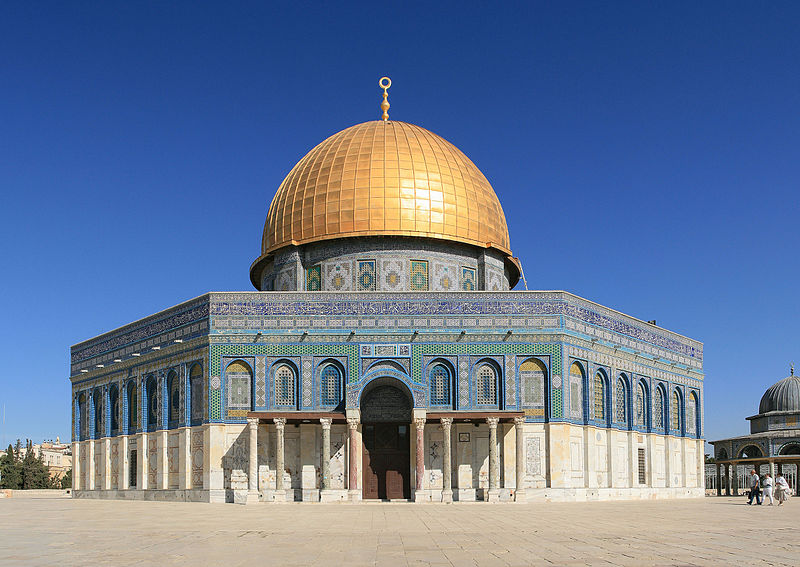
Islamic architecture
architectural style

caravanserai
thumb|The Izadkhast Caravanserai|Izadkhast caravanserai (early 17th century), [[Fars province, Iran]]

hammam
thumb|upright=1.2|Ali Gholi Agha hammam, [[Isfahan, Iran]]
A hammam (), also often called a Turkish bath by Westerners, is a type of steam bath or a place of public bathing associated with the Islamic world. It is a prominent feature in the culture of the Muslim world and was inherited from the model of the Roman thermae. Muslim bathhouses or hammams were historically found across the Middle East, North Africa, al-Andalus (Islamic Iberia, i.e. Spain and Portugal), Central Asia, the Indian subcontinent, and in Southeastern Europe (notably Balkans and Hungary) under Ottoman rule.
Ottoman architecture
architecture of the Ottoman Empire
Sufi lodge
a building designed specifically for gatherings of a Sufi brotherhood

architecture of Iran
architecture associated with Iran
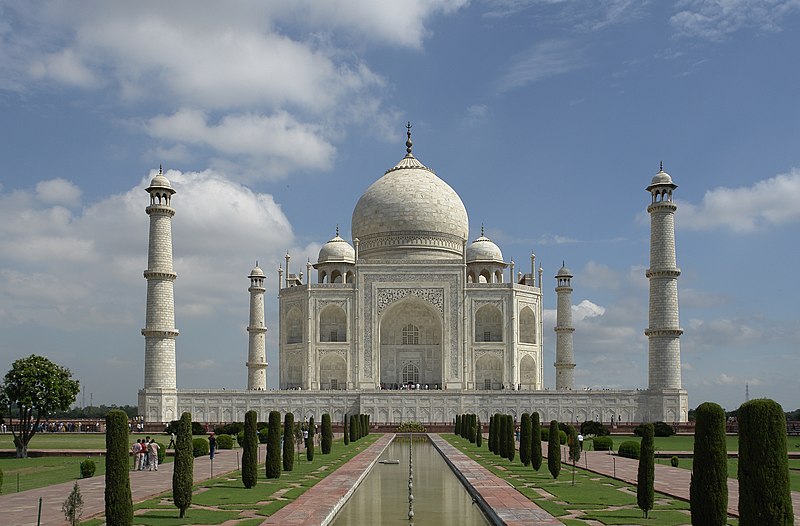
Mughal architecture
Indo-Islamic architecture from 16th to 18th century India
congregational mosque
main mosque of a city or state

windcatcher
thumb |An ab anbar (water reservoir) with windcatchers (openings near the top of the towers) in the central desert city of [[Yazd, Iran]]
thumb |Aghazadeh Mansion in Abarkooh, [[Iran, has an elaborate 18-m windtower with two levels of openings, plus some smaller windtowers.]]
.jpg)
muqarnas
thumb|upright=1.3|Muqarnas as seen from below in the iwan entrance to the Shah Mosque in [[Isfahan, Iran (17th century)]]
thumb|upright=1.3|Muqarnas dome in the Sala de Dos Hermanas at the Alhambra in [[Granada, Spain (14th century)]]
Muqarnas (), also known in Iberian architecture as Mocárabe (from ), is a form of three-dimensional decoration in Islamic architecture in which rows or tiers of niche-like elements are projected over others below. It is an archetypal form of Islamic architecture, integral to the vernacular of Islamic buildings, and typically featured in domes and vaults, as well
medina quarter
distinct city section found in many North African cities

kasbah
300px|thumb|upright=1.5|Kasbah of Sfax in [[Tunisia]]
Moorish architecture
architectural style historically developed in the western Islamic world

husayniyya
{|class="wikitable" align="right"
|-
! colspan="2" align="center" bgcolor="#CCCCCC" | Husayniyya
|-
| colspan="2" align="center" | 250px A husayniyya in Dar es Salaam, Tanzania
|-
| colspan="1" align="left" | Arabic
| colspan="1" align="right" | (ḥusayniyya) (maʾtam)
|-
| colspan="1" align="left" | Azerbaijani
| colspan="1" align="right" |
|-
| colspan="1" align="left" | Hindi
| colspan="1" align="right" | (imāmbāṛā)
(āshurkhānā)
|-
| colspan="1" align="left" | Bengali
| colspan="1" align="right" | (imāmbāṛā)
|-
| colspan="1" align="left" | Iranian Persian
| colspan="1" align="right" |
zawiya
Islamic religious school or monastery

ribat
thumb|Ribat of Monastir, [[Tunisia]]

Mashrabiya
thumb|300px|A mashrabiya in Tunisia

imamzadeh
An imamzadeh () is a Persian term with two related meanings: a type of holy person in Shia Islam, and the shrine-tomb of such a person.

jali
thumb|Jali at Taranga Jain temple|Ajitnath Jain Temple, 11th-century [[Gujarat]]
thumb|A jali is typically open, but this example of a 17th-century jali from the last Mughal period was owned by a wealthy merchant and probably placed with the external portal. Basically, the impression is friendly and inviting as the inside of the palace, but secure to outside world. The iris (plant)|iris pattern at the top is a departure from the earlier geometry and indicates a Persian influence.
Aga Khan Award for Architecture
architecture prize

külliye
thumb|right|400px|Süleymaniye Mosque and Külliye in [[Istanbul]]

sahn
thumb|right|260px|Large sahn of the Great Mosque of Kairouan, surrounded by riwaq (arcades), in [[Tunisia.]]

dargah
thumb|The Tomb of Salim Chishti at [[Fatehpur Sikri, India was built in 1581 during the reign of Mughal Emperor Akbar.]]
Indo-Islamic architecture
Islamic architecture in India
Moroccan riad
traditional Moroccan house or palace with an interior garden or courtyard
Mamluk architecture
Egyptian architectural style (13th-16th centuries)
Girih tiles
five tiles used in Islamic decorative art

Semi-dome
thumb|257x257px|Typical Early Christian/Byzantine apse with a hemispherical semi-dome decorated in [[mosaic (Basilica di Sant'Apollinare in Classe in Ravenna)]]
In architecture, a semi-dome (or half-dome) is a half dome that covers a semi-circular area in a building.
Moroccan architecture
overview of the architecture in Morocco

Dikka
thumb|The dikka in the Mosque-Madrasa of Sultan Hassan|Mosque of Sultan Hasan in [[Cairo]]
thumb|The müezzin mahfili in the Selimiye Mosque, Edirne|Selimiye Mosque of [[Edirne, Turkey]]
A dikka or dakka (), also known in Turkish as a müezzin mahfili, is a raised platform or tribune in a mosque from which the Quran is recited and where the muezzin chants or repeats in response to the imam's prayers. It is also used by the muezzin to chant the second call to prayer (iqama), which indicates to worshippers that the prayer is about to begin. On special occasions or evenings, such as during the mont
Abbasid architecture
architecture of the Abbasid Caliphate

K. A. C. Creswell
English architectural historian (1879–1974)
mescit
thumb|A mescit in Malatya
Mescit (, ), also known as small mosque, is a small Muslim prayer space or mosque, typically used for daily prayers rather than large congregational gatherings such as the Friday (Jumu'ah) or Eid prayers. In Turkish usage, a mescit is smaller than a cami (mosque) and usually does not have a minbar (pulpit) or minaret.
mahal
type of palace
multifoil arch
architectural element
Liwan
thumb|right|350px|An architectural drawing of a typical Levantine house, with the liwan area in grey.
Liwan (, , from Persian ) is a long narrow-fronted hall or vaulted portal in ancient and modern Levantine homes that is often open to the outside. An Arabic loanword to English, it is ultimately derived from the Persian , which preceded by the article al ("the"), came to be said as in Arabic, and later, English.
qa'a
reception room type
Akhund Abuturab Tomb
Azerbaijani nationally significant historical-architectural monument
Bademlik Mosque
mosque in Edirne, northwestern Turkey
Fatimid architecture
building style of the 10th to 12th centuries
Muqarnas
academic journal
Ovdan
Was built in the 14th century in the Balakhani settlement by order of Shirvanshah Emir Khaja Zeynaddin.
ArchNet
alt=Screenshot of the Archnet homepage|thumb|Archnet homepage, March 8, 2018.
right|thumb|Archnet logo (2002–2013)
Archnet is a collaborative digital humanities project focused on Islamic architecture and the built environment of Muslim societies. Conceptualized in 1998 and originally developed at the MIT School of Architecture and Planning in co-operation with the Aga Khan Trust for Culture. It has been maintained by the Aga Khan Documentation Center at MIT and the Aga Khan Trust for Culture since 2011.
Khalwa
small prayer space or mosque in Islamic tradition