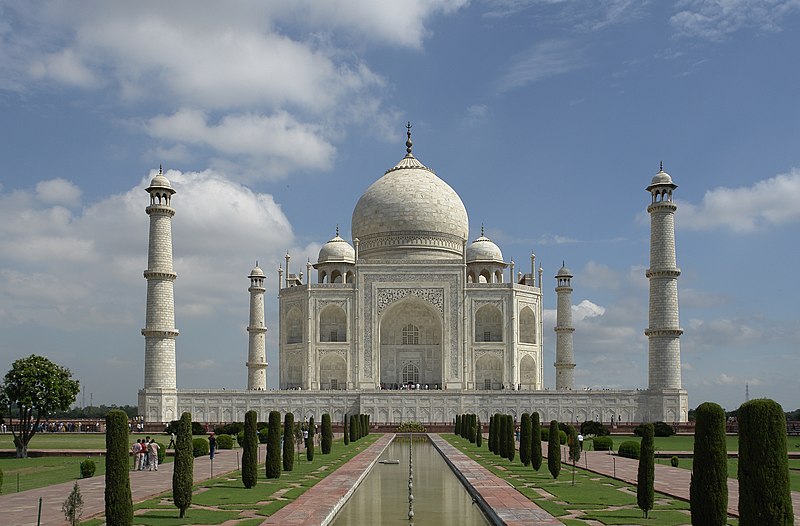
File:Taj_Mahal,_Agra,_India.jpg · Wikimedia Commons · See Wikimedia Commons
Mughal architecture
Sign in to saveAlso known as Moghul architecture, Mogul architecture, Mogol architecture
Indo-Islamic architecture from 16th to 18th century India
Key facts
- Years active
- 16th–19th centuries (primarily)
via Wikipedia infobox
Wikidata facts
- Part of
- Indo-Islamic architecture
- Country
- Mughal Empire
- Image
- Taj Mahal, Iconic view, Agra, India.jpg
Show 3 more facts
- topic's main category
- Category:Mughal architecture
- Commons category
- Mughal architecture
- facet of
- Mughal Empire
Sources (2)
via Wikidata · CC0
~31 min read
Encyclopedic overview
Mughal architecture is the style of architecture developed in the Mughal Empire in the 16th, 17th and 18th centuries throughout the ever-changing extent of their empire in the Indian subcontinent. It developed from the architectural styles of earlier Indo-Islamic architecture and from Iranian and Central Asian architectural traditions, particularly the Timurid architecture. It also further incorporated and syncretized influences from wider Indian architecture, especially during the reign of Akbar (r. 1556–1605). Mughal buildings have a uniform pattern of structure and character, including large bulbous domes, slender minarets at the corners, massive halls, large vaulted gateways, and delicate ornamentation. Examples of the style are found mainly in modern-day India, Pakistan, Bangladesh, and Afghanistan.
The Mughal dynasty was established after the victory of Babur at Panipat in 1526. During his five-year reign, Babur took considerable interest in erecting buildings, though few have survived. His grandson Akbar commissioned extensive construction projects, and Mughal architectural style developed significantly during his reign. Among his accomplishments were Agra Fort, the fort-city of Fatehpur Sikri, and the Buland Darwaza. Akbar's son Jahangir commissioned the Shalimar Gardens in Kashmir.
Excerpted from Wikipedia’s “Mughal architecture” article, available under the CC BY-SA 4.0 licence.