Category
page 1Languages written in Cyrillic script

Russian
East Slavic language

Ukrainian
East Slavic language

Bulgarian
South Slavic language

Belarusian
East Slavic language

Serbian
standardized variety of Serbo-Croatian language used by Serbs

Macedonian
South Slavic language mostly spoken in North Macedonia

Lingua Franca Nova
auxiliary constructed language, originally created by C. George Boeree, and largely based on a Romance substrate partially creolized then modified by some evolutive rules of simplification

Mongolian
official language of Mongolia
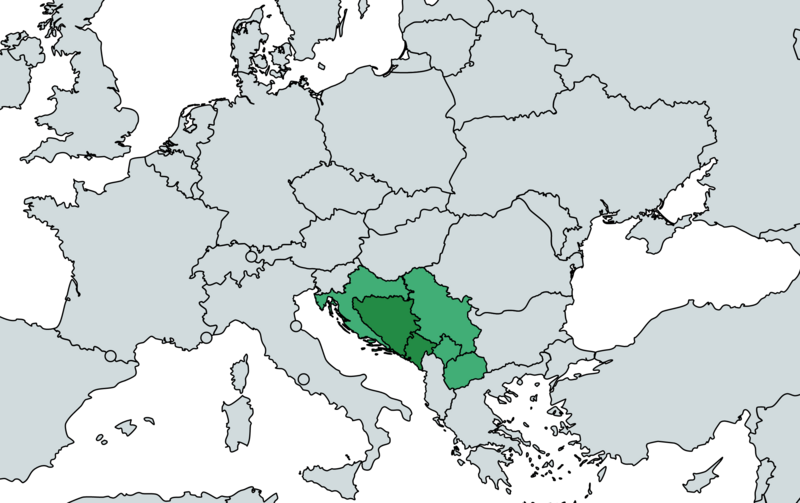
Bosnian
South Slavic language; a standardized variety of the Serbo-Croatian pluricentric language

Bashkir
Turkic language spoken in Russia

Abkhaz
Northwest Caucasian language native to northwestern Georgia

Chechen
Northeast Caucasian language spoken mostly in Chechnya and by Chechen people

Serbo-Croatian
Serbo-Croatian, also known as Bosnian-Croatian-Montenegrin-Serbian (BCMS), is a Western South Slavic language and the primary language of Serbia, Croatia, Bosnia and Herzegovina, and Montenegro. It is a pluricentric language with four mutually intelligible standard varieties, namely Serbian, Croatian, Bosnian, and Montenegrin.
Avar
language belonging to the Avar–Andic group of the Northeast Caucasian language family

Montenegrin
normative variety of Serbo-Croatian in Montenegro

Interslavic
Interslavic ( / ) is a pan-Slavic auxiliary language. Its purpose is to facilitate communication between speakers of various Slavic languages, as well as to allow people who do not speak a Slavic language to communicate with Slavic speakers by being mutually intelligible with most, if not all, Slavic languages. For Slavs and non-Slavs, it can be used for educational purposes as well. Its use spans a broad range of fields, including tourism and education.

Adyghe
one of the official languages of the Republic of Adygea in Russia

Buryat
variety of Mongolic spoken by the Buryats that is classified either as a language or as a major dialect group of Mongolian

Karachay-Balkar
thumb|Karachay–Balkar-language version of the Quran|Koran
Karachay–Balkar (, ), often referred to as the "mountaineer language" (, ) by its speakers, is a Turkic language spoken by the Karachays and Balkars in Kabardino-Balkaria and Karachay-Cherkessia, European Russia, as well as by an immigrant population in Afyonkarahisar Province, Turkey. It is divided into two dialects: Karachay-Baksan-Chegem, which pronounces two phonemes as and and Malkar, which pronounces the corresponding phonemes as and . The modern Karachay–Balkar written language is based on the Karachay–Baksan–Chegem dialect. The

Abaza
language of the Caucasus mountains in the Russian Karachay–Cherkess Republic by the Abazins
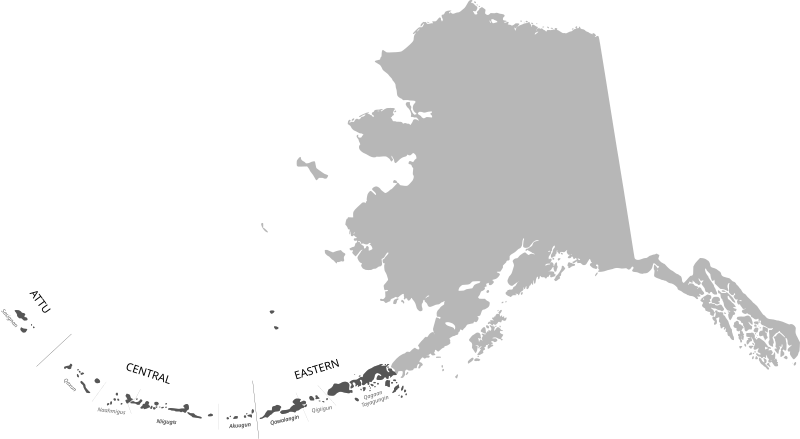
Aleut
language of the Eskimo–Aleut language family

Altai
language of the Turkic group of languages
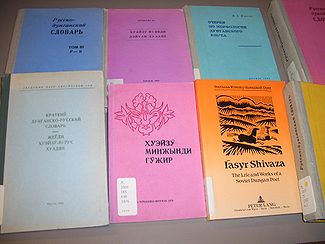
Dungan
divergent variety of Central Plains Mandarin spoken in Central Asia
Aghul
Lezgic language spoken by the Aghuls in southern Dagestan (Russia) and in Azerbaijan

Southern Altai
Kipchak Turkic language of the Altai Republic, Russia
Archi
language
Alyutor
language of Russia that belongs to the Chukotkan branch of the Chukotko-Kamchatkan languages