Category
page 1Laxatives

Aloe
thumb|180px|Succulent plants, such as this aloe, store water in their enlarged fleshy leaves, stems, or roots, as shown in this split aloe leaf. This allows them to survive in arid environments.
thumb|alt=Aloe Vera houseplant|Spikes on an Aloe Vera houseplant

plum
thumb|African Rose plums (Japanese or Chinese plum)
A plum is a fruit of some species in Prunus subg. Prunus. Dried plums are usually called prunes.
thumb|Plum flowers
thumb|180px|Plum unripe fruits

Plantago
Plantago is a genus of about 200 species of flowering plants in the family Plantaginaceae, commonly called plantains or fleaworts. The common name plantain is shared with the unrelated cooking plantain. Most are herbaceous plants, though a few are subshrubs growing to tall.

glycerol
Glycerol () is a sugar alcohol with chemical formula . It has three carbon atoms and as many hydroxyl groups. It is a colorless, odorless, sweet-tasting, viscous liquid at Standard Ambient Temperature and Pressure (SATP). Because of its three hydroxyl groups, glycerol is miscible with water and is hygroscopic in nature.

phenolphthaleina
Phenolphthalein ( ) is a chemical compound with the formula C20H14O4 and is often written as "HIn", "HPh", "phph" or simply "Ph" in shorthand notation. Phenolphthalein is often used as an indicator in acid–base titrations. For this application, it turns colorless in acidic solutions and pink in basic solutions. It belongs to the class of dyes known as phthalein dyes.

magnesium sulfate
chemical compound

D-sorbitol
Sorbitol (), less commonly known as glucitol (), is a sugar alcohol with a sweet taste which the human body metabolizes slowly. It can be obtained by reduction of glucose, which changes the converted aldehyde group (−CHO) to a primary alcohol group (−CH2OH). Most sorbitol is made from potato starch, but it is also found in nature, for example in apples, pears, peaches, and prunes. It is converted to fructose by sorbitol-6-phosphate 2-dehydrogenase. Sorbitol is an isomer of mannitol, another sugar alcohol; the two differ only in the orientation of the hydroxyl group on carbon2. While similar, t

Rhamnus
genus of plants

castor oil
vegetable oil obtained by pressing the seeds of the Castor plant, Ricinus communis
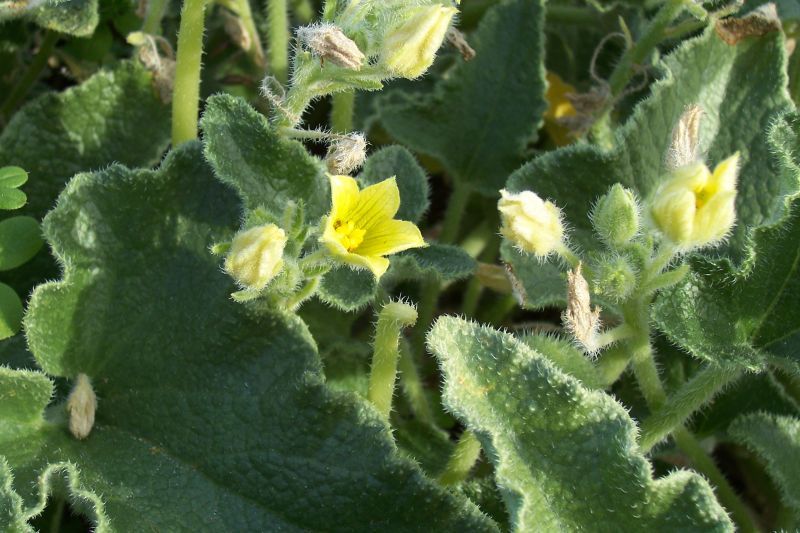
Ecballium elaterium
Ecballium is a genus of flowering plants in the family Cucurbitaceae containing a single species, Ecballium elaterium, also called the squirting cucumber. Its unusual common name derives from the ripe fruit squirting a stream of mucilaginous liquid containing its seeds as a means of seed dispersal, an example of rapid plant movement.

laxative
thumb|Glycerin suppositories used as laxatives.
Laxatives, purgatives, or aperients are substances that loosen stools and increase bowel movements. They are used to treat and prevent constipation.

enema
thumb|250px|Rectal bulb syringe to administer smaller enemas.
magnesium hydroxide
inorganic compound
β-lactulose
Lactulose is a non-absorbable sugar used in the treatment of constipation and hepatic encephalopathy. It is administered orally for constipation, and either orally or rectally for hepatic encephalopathy. It generally begins working after 8–12 hours, but may take up to 2 days to improve constipation.
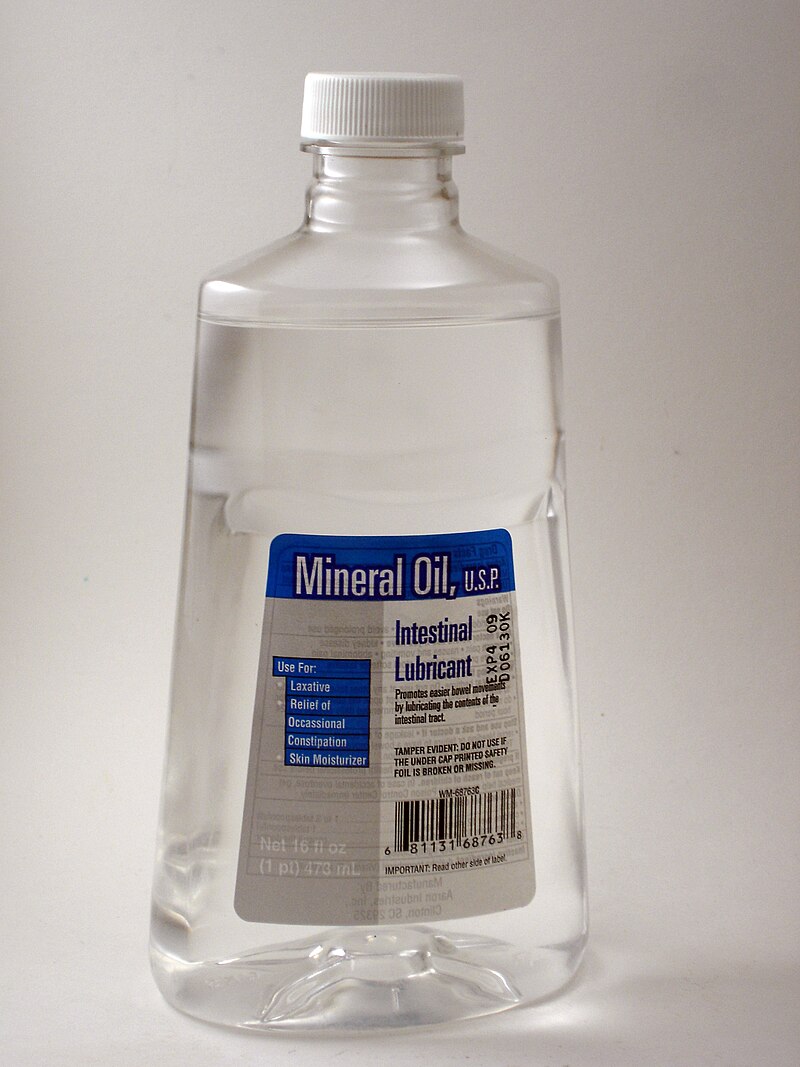
mineral oil
liquid mixture of higher alkanes from a mineral source, particularly a distillate of petroleum
suppository
A suppository is a dosage form used to deliver medications by insertion into a body orifice (any opening in the body), where it dissolves or melts to exert local or systemic effects. There are three types of suppositories, each to insert into a different sections: rectal suppositories into the rectum, vaginal suppositories into the vagina, and urethral suppositories into the urethra of a male.
sodium lauryl sulfate
chemical compound
calomel
chemical compound

prune
thumb|Dried plums (prunes)
lactitol
Lactitol is a disaccharide sugar alcohol produced from lactose. It is used as a replacement bulk sweetener for low calorie foods with 30–40% of the sweetness of sucrose. It is also used medically as a laxative.
polyethylene glycol
polymer
bisacodyl
Bisacodyl is an organic compound that is used as a stimulant laxative drug. It works directly on the colon to produce a bowel movement. It is typically prescribed for relief of episodic and chronic constipation and for the management of neurogenic bowel dysfunction, as well as part of bowel preparation before medical examinations, such as for a colonoscopy.
docusate sodium
Docusate is the common chemical and pharmaceutical name of the anion bis(2-ethylhexyl) sulfosuccinate, also commonly called dioctyl sulfosuccinate (DOSS).
senna glycoside
chemical compound
magnesium citrate
chemical compound
methyl cellulose
chemical compound
Gaz
pastry
lubiprostone
Lubiprostone, sold under the brand name Amitiza among others, is a medication used in the management of chronic idiopathic constipation, predominantly irritable bowel syndrome-associated constipation in women and opioid-induced constipation. The drug is owned by Mallinckrodt and is marketed by Takeda Pharmaceutical Company.
sodium picosulfate
chemical compound
okadaic acid
chemical compound

cucurbitacin
right|thumb|200px|Cucurbit-5-ene with standard carbon numbering
right|thumb|200px|3D structure of cucurbitacin E as found in the [[crystal structure]]

macrogol
Macrogol is the international nonproprietary name used for polyethylene glycol (PEG) as a medication ingredient. It is usually followed by a number indicating the average molecular weight, indicating the length of the polymer of the specific molecule in use. Macrogol is used as a laxative to treat constipation in children and adults. It is taken by mouth. Benefits usually occur within three days. It is also used as an excipient. It is also used to clear the bowels before a colonoscopy, when the onset of the laxative effect is more rapid, typically within an hour.

L-glucose
-Glucose is an organic compound with formula C6H12O6 or O=CH[CH(OH)]5H, specifically one of the aldohexose monosaccharides. As the -isomer of glucose, it is the enantiomer of the more common -glucose.
Template:Laxatives
Wikimedia template
danthron
Dantron (INN), also known as chrysazin or 1,8-dihydroxyanthraquinone, is an orange-colored organic substance. Many structurally-related compounds are known. In terms of its molecular structure, it is related anthraquinone by the replacement of two hydrogen atoms by hydroxyl groups (–OH). It is used in some countries as a stimulant laxative.
oxyphenisatin
Oxyphenisatine (or oxyphenisatin) is a laxative. It is closely related to bisacodyl, sodium picosulfate, and phenolphthalein. Long-term use is associated with liver damage, and as a result, it was withdrawn in most countries in the early 1970s. The acetate derivative oxyphenisatine acetate was also once used as a laxative.
liquid paraffin
mineral oil used in cosmetics and medicine
Cholagogue
A cholagogue is a substance that is purported by humoral practitioners to encourage the discharge of bile from the system, purging it downward. Deployment is no longer recommended because the biliary purge, like the traditional kidney purge, can cause pancreatic problems.
bisoxatin
Bisoxatin (formula: C20H15NO4) is a laxative. It can be synthesized from isatin.
cathartic
In medicine, a cathartic is a substance that accelerates defecation. This is similar to a laxative, which is a substance that eases defecation, usually by softening feces. It is possible for a substance to be both a laxative and a cathartic. However, agents such as psyllium seed husks increase the bulk of the feces.
elobixibat
Elobixibat is an inhibitor of the ileal bile acid transporter (IBAT), undergoing development in clinical trials for the treatment of chronic constipation and irritable bowel syndrome with constipation (IBS-C).
Zythos
Zythum (from Latin, based on , zŷthos), sometimes also known as zythus or zythos, was a malt beer made in ancient Egypt. The earliest existing records of brewing relate to the production of zythum by ancient Egyptians, .
polycarbophil calcium
pharmaceutical drug