Category
page 2Lichen genera
.jpg)
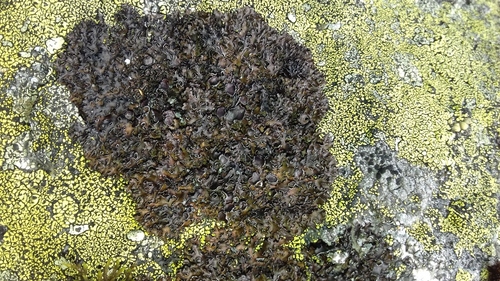
Toninia
Toninia is a genus of lichen-forming fungi in the family Ramalinaceae. The genus contains about 70 recognised species that are distributed worldwide, with many found in arctic and alpine environments as well as arid regions. These lichens are characterised by their often reduced or scale-like thalli and distinctive black apothecia (fruiting bodies) that typically become convex with age and contain needle-shaped ascospores. Toninia species primarily grow on soil, rocks, and other mineral substrates, and are distinguished from related genera by their spore-producing structures and chemical react
Cetrariella
Cetrariella is a genus of foliose lichens in the family Parmeliaceae. It contains three species.

Cresponea
Cresponea is a genus of lichens in the family Opegraphaceae. The genus, circumscribed in 1993, contains species that were formerly classified in Lecanactis. Cresponea is widely distributed, but most species are found in tropical and subtropical regions. The genus is named in honor of the Spanish lichenologist Ana Crespo.
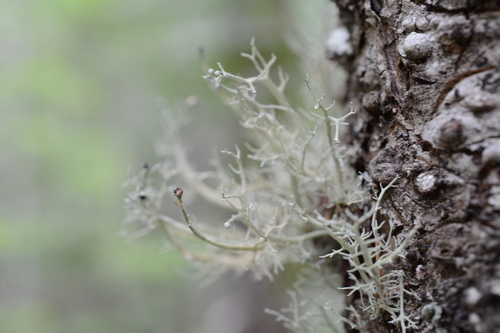
Sphaerophorus
Sphaerophorus is a genus of lichenized fungi in the order Lecanorales.
%20Lumbsch%20169507.jpg)
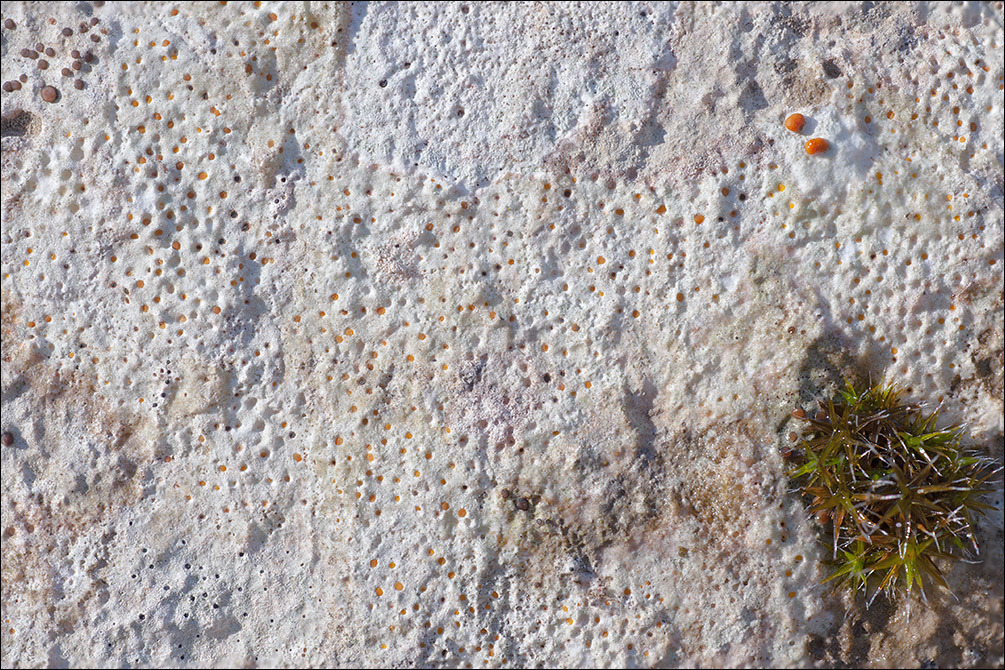
Diploschistes
Diploschistes is a genus of lichen-forming fungi in the family Graphidaceae. Commonly known as crater lichens, members of the genus are crustose lichens with a thick, cracked (areolate) body (thallus) with worldwide distribution. The fruiting part (apothecia) are immersed in the thick thallus so as to have the appearance of being small "craters". The widespread genus contains about 43 species.
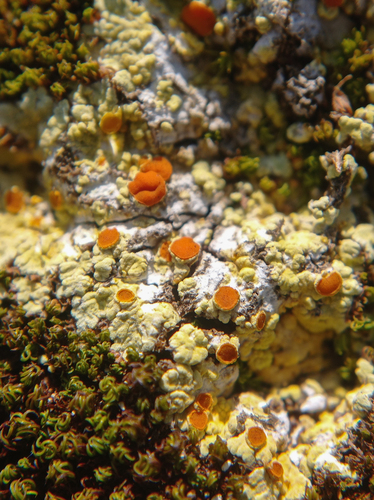
Fulgensia
Fulgensia is a fungal genus in the family Teloschistaceae. The genus was circumscribed by Abramo Bartolommeo Massalongo and Giuseppe De Notaris in 1853, with Fulgensia vulgaris assigned as the type species. Although the genus has had several species in it at times in its taxonomic history, it is now monotypic, as most of its former species have been transferred to Gyalolechia or other Teloschistaceae genera.

Lecidea
Lecidea is a genus of crustose lichens with a carbon-black ring or outer margin (exciple) around the fruiting body disc (apothecium), usually (or always) found growing on (saxicolous) or in (endolithic) rock. Lichens that have such a black exciple are called lecideine, meaning "like Lecidea, even if they are not in this genus. Members of the genus are commonly called disk lichens or tile lichens.
Antennulariella
Antennulariella is a genus of fungi in the family Antennulariellaceae. First described in 1915, species in the genus form thin, crust-like films that cling directly to rock or bark surfaces and fade imperceptibly into their surroundings. The fungi are distinguished by their distinctive black reproductive structures covered in short hairs, and they appear to rely solely on spores for reproduction since no asexual structures have been observed.

Physconia
Physconia is a genus of lichen-forming fungi in the family Physciaceae. It comprises 13 species. The genus was established in 1965 by the lichenologist Josef Poelt and is characterized by leaf-like growth forms with typically less than 3 mm wide that often have a whitish, powdery coating on their tips. These lichens can be distinguished from similar genera by their distinctive brown ascospores that have thick walls, fine warts, and a single dividing wall but lack the end thickenings found in related groups.
.jpg)
Pannaria
Pannaria is a genus of lichen-forming fungi in the family Pannariaceae. These lichens form leaf-like, scaly, or crusty patches that typically arrange themselves in loose rosettes on tree bark in humid forests. Most species partner with nitrogen-fixing cyanobacteria, though some contain green algae instead. The genus was established in 1828 and now includes about 80 recognized species found worldwide, particularly in tropical and subtropical regions.
Protoblastenia
Protoblastenia is a genus of lichens in the family Psoraceae. It was originally circumscribed by Alexander Zahlbruckner in 1908 as a section of genus Blastenia. J. Steiner promoted it to generic status in 1911.

Rinodina
Rinodina is a genus of lichen-forming fungi in the family Physciaceae. The genus has a widespread distribution and contains about 265 species. It is hypothesized that a few saxicolous species common to dry regions of western North America, southern Europe, North Africa and central Asia may date back 240 million years to the Middle Triassic.

Coenogonium
Coenogonium is a genus of filamentous lichens in the monotypic family Coenogoniaceae. It has about 90 species. Most species are leaf-dwelling or grow on bark, although a few are known to grow on rocks under certain conditions, and some are restricted to growth on termite nests. The genus was circumscribed in 1820 by German naturalist Christian Gottfried Ehrenberg.

Platismatia
Platismatia is genus of medium to large foliose lichens in the family Parmeliaceae. The genus is widespread and contains 11 species. They resemble many other genera of foliose lichens in the Parmeliaceae, particularly Parmotrema, Cetrelia, and Asahinea. Most species are found in forests on the trunks and branches of conifer trees, although some species grow on rocks.

Biatora
Biatora is a genus of lichens in the family Ramalinaceae. Originally circumscribed in 1817, the genus consists of crustose and squamulose lichens with green algal photobionts, biatorine apothecia, colorless, simple to 3-septate ascospores, and bacilliform pycnospores.
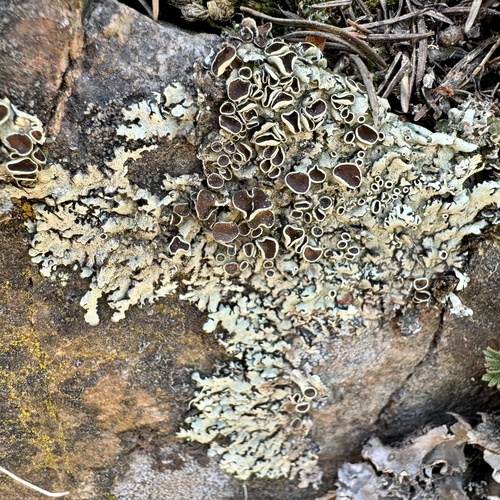
Xanthoparmelia
Xanthoparmelia (commonly known as green rock shields or rock-shield lichens) is a genus of foliose lichens in the family Parmeliaceae. This genus of lichen is commonly found in the United States, South America, southern Africa, Europe, Australia, and New Zealand.
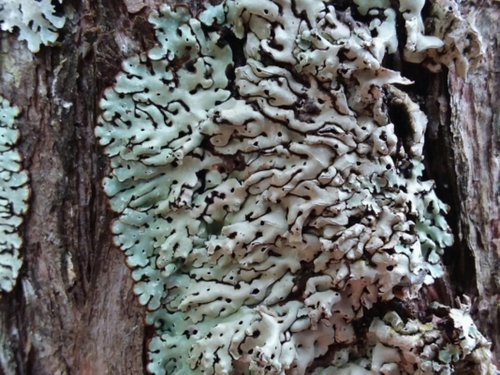
Menegazzia
Menegazzia is a genus of lichenized fungi containing roughly 70 accepted species. The group is sometimes referred to as the tree flutes, honeycombed lichens, or hole-punch lichens. The most obvious morphological feature of the genus is the distinctive perforations spread across the upper side of the thallus. This makes the group easy to recognise, even for those not particularly familiar with lichen identification.
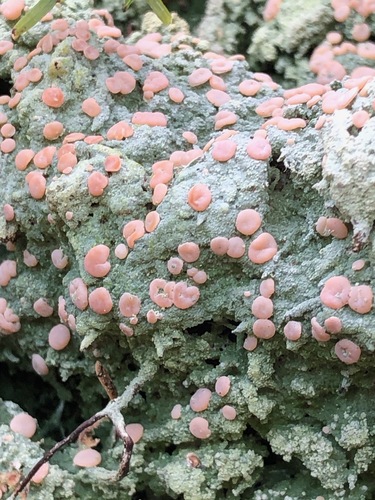
Icmadophila
Icmadophila is a genus of crustose lichen. The genus has a widespread distribution in the Northern Hemisphere and contains six species. The only species found in North America, Icmadophila ericetorum, has a mint green crustose thallus that is dotted with bright pink apothecial disks, and is sometimes colloquially referred to as "fairy puke". It aggressively grows over mosses on well-rotted wood and peat. It looks very distinctive, but may be confused with species of Dibaeis.

Enterographa
Enterographa is a genus of lichens in the family Roccellaceae. These lichens grow as thin, paint-like crusts on tree bark that range in colour from off-white and pale grey to dark olive-green or brown, sometimes breaking into networks of tiny, flat blocks. They reproduce through tiny slits or dots embedded in the crust that contain spindle-shaped spores divided into multiple cells, distinguishing them from other similar-looking bark lichens.

Roccella
genus of fungi
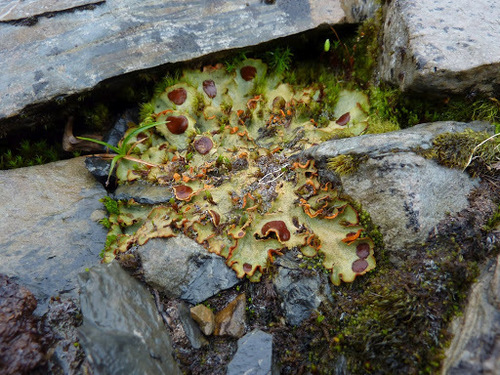
Solorina
Solorina is a genus of 10 species of lichenized fungi in the family Peltigeraceae. The genus was first described by the Swedish botanist Erik Acharius in 1808. Members of the genus are commonly called socket lichens.

Chaenotheca
Chaenotheca is a genus of lichen-forming fungi in the family Coniocybaceae. The reproduction structures are a mass of loose ascospores that are enclosed by a cup-shaped sitting on top of a tiny stalk, having the appearance of a dressmaker's pin (called a mazaedium), hence the common name pin lichen. Genus members are also commonly called needle lichens. The genus has a worldwide distribution, with the greatest diversity in the temperate forests of the northern hemisphere, though species have also been recorded from the southern hemisphere including Australia, New Zealand, and South America. Sp

Allantoparmelia
Allantoparmelia is a genus of lichenised fungi in the large family Parmeliaceae. It is a genus of only three currently accepted species. All three Allantoparmelia lichens have a foliose growth form. They appear to be a very slow growing group of lichens, with a mean annual thallus diameter increase of only 0.23–0.35 mm per year.

Agonimia
Agonimia is a genus of lichen-forming fungi in the family Verrucariaceae. These lichens typically form crusts made of tiny grain-like clumps or small scale-like fragments on tree bark and rocks, with some species developing delicate leaf-like structures up to 5 mm across. The genus includes about 22 species found worldwide, characterized by their black flask-shaped reproductive structures and distinctive brick-patterned ascospores.

Bactrospora
Bactrospora is a genus of lichen-forming fungi of uncertain familial placement in the order Arthoniales. These lichens grow as thin crusts on tree bark in shaded, humid environments and are distinguished by their unusually long, needle-like spores that often break apart into smaller pieces. Species in the genus are found worldwide, particularly in tropical and temperate forests where they help form part of the diverse bark-dwelling lichen community.

Trapeliopsis
Trapeliopsis is a genus of lichen-forming fungi in the family Trapeliaceae. These lichens form thin, granular crusts or tiny overlapping scales () that create miniature rosette patterns on their growing surface. The genus was established in 1980 by Hannes Hertel and Gotthard Schneider and includes about 20 species found worldwide.

Graphis
genus of fungi

Calicium
Calicium is a genus of leprose lichens. It is in the family Caliciaceae, and has 40 species.
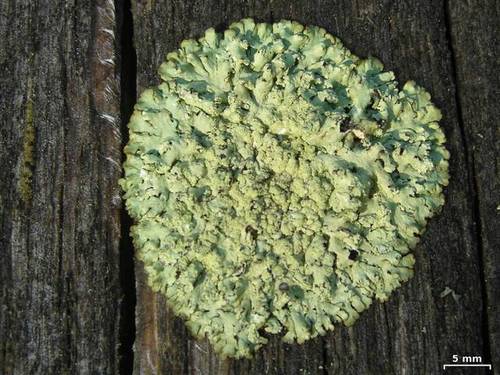
Parmeliopsis
Parmeliopsis is a genus of lichens in the family Parmeliaceae. The genus contains two species. Members of this genus are commonly called bran lichens.
.JPG)
Melanelixia
Melanelixia is a genus of foliose lichens in the family Parmeliaceae. It contains 15 Northern Hemisphere species that grow on bark or on wood. The genus is characterized by a pored or fenestrate epicortex (a thin homogeneous polysaccharide layer on the surface of the cortex), and the production of lecanoric acid as the primary chemical constituent of the medulla. Melanelixia was circumscribed in 2004 as a segregate of the related genus Melanelia.

Parmotrema
Parmotrema is a genus of lichen belonging to the family Parmeliaceae. It is a large genus, containing an estimated 300 species, with a centre of diversity in subtropical regions of South America and the Pacific Islands.

Phaeographis
Phaeographis is a genus of lichen-forming fungi in the family Graphidaceae. It has an estimated 180 species.

Buellia
Buellia is a genus of mostly lichen-forming fungi in the family Caliciaceae. The fungi are usually part of a crustose lichen. In this case, the lichen species is given the same name as the fungus. But members may also grow as parasites on lichens (lichenicolous). The algae in the lichen (the photobiont partner) is always a member of the genus Trebouxia.

Baeomyces
Baeomyces is a genus of lichen-forming fungi in the family Baeomycetaceae. Members of Baeomyces are commonly called beret lichens. These lichens are radily recognised by their distinctive "matchstick" appearance, with small brown fruiting bodies held up on short stalks above a crusty base. They typically grow in disturbed habitats such as roadsides, bare soil, and mining sites, where they act as pioneer colonisers of acidic ground.
.jpg)
Bacidia
Bacidia is a genus of lichen-forming fungi in the family Ramalinaceae. These lichens are characterised by their crustose growth form, distinctive club-shaped reproductive structures called apothecia that contain long, needle-like spores, and their symbiotic partnership with green algae. Bacidia species typically grow on various substrates including tree bark, rock surfaces, and occasionally soil, and are distinguished from related genera by their specific spore characteristics and internal structures.

Cryptothecia
Cryptothecia is a genus of white to greenish crustose lichens that grow on bark, wood, or leaves, in tropical or subtropical areas worldwide. It has a conspicuous prothallus that develops around its periphery which can be bright red in some species, hence the common name wreath lichen. The main vegetative body (thallus) lacks a cortex (ecorticate and is often immersed in the substrate or byssoid (whispy, like teased wool). The medulla is white, well defined, and often peppered with calcium oxalate crystals. Ascomata are not well defined, being cushions of soft white mycelium immersed in the me

Lecanactis
Lecanactis is a genus of crustose lichens, commonly called old wood lichens. The mycobiont (fungus partner) is in the family Roccellaceae. The photobiont is an algae in the genus Trentepohlia. These lichens typically grow as thin crusts on tree bark or rocks, producing small black fruiting bodies that may appear as round discs or elongated slits. The genus contains about 20 species found worldwide, with some species considered rare and threatened by habitat loss.
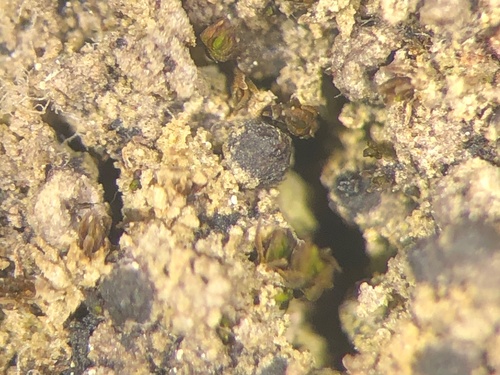
Thelopsis
Thelopsis is a genus of lichen-forming fungi in the family Gyalectaceae. The genus was established by the Finnish lichenologist William Nylander in 1855 and contains small bark-dwelling crustose lichens that form thin crusts on surfaces. These lichens make flask-shaped fruiting bodies called perithecia, which contain numerous small ascospores divided by cross-walls. Recent molecular studies have revealed that the genus forms a closely related group within the broader Gyalecta complex, leading to taxonomic revisions that now recognise about a dozen species worldwide.

Trypethelium
Trypethelium is a genus of lichenized fungi in the family Trypetheliaceae. The widespread genus contains about 50 species predominantly found in tropical areas. Trypethelium was circumscribed by German botanist Kurt Polycarp Joachim Sprengel in 1804.

Imshaugia
Imshaugia is a genus of seven species of foliose lichens in the family Parmeliaceae. They are commonly known as starburst lichens.

Pseudephebe
Pseudephebe is a genus of fruticose lichens in the family Parmeliaceae. It contains three species that grow on rocks.

Fellhanera
Fellhanera is a genus of mostly leaf-dwelling lichens in the family Ectolechiaceae. Established by the lichenologist Antonín Vězda in 1986 and named in honour of the Austrian lichenologist Josef Hafellner, the genus comprises 69 accepted species as of 2026. These small lichens form powdery, crust-like growths that adhere tightly to their substrate without developing a true protective skin (a ), and they produce distinctive chemical compounds including roccellic acid and zeorin that help distinguish them from similar-looking genera.
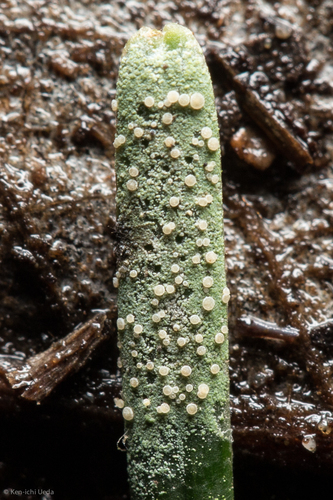
Catillaria
Catillaria is a genus of crustose lichens in the family Catillariaceae. The genus was circumscribed by Italian lichenologist Abramo Bartolommeo Massalongo in 1852. It is the type genus of Catillariaceae, which was circumscribed by Austrian lichenologist Josef Hafellner in 1984.

Fellhaneropsis
Fellhaneropsis is a genus of lichen-forming fungi in the family Ectolechiaceae. The genus comprises 11 accepted species as of 2025. These inconspicuous lichens form extremely thin, smooth to powdery films that spread over bark, leaves, or other plant surfaces, and unlike their close relatives in Fellhanera, they produce no detectable lichen products.

Anzia
Anzia is a genus of foliose lichens known as black-foam lichens in the large family Parmeliaceae. It was formerly included in the monogeneric family Anziaceae, but this has since been subsumed into the Parmeliaceae.

Hypotrachyna
Hypotrachyna is a genus of lichenized fungi within the family Parmeliaceae. According to the Dictionary of the Fungi (10th edition, 2008), the widespread genus contains about 198 species. Hypotrachyna was circumscribed by American lichenologist Mason Ellsworth Hale Jr in 1974.
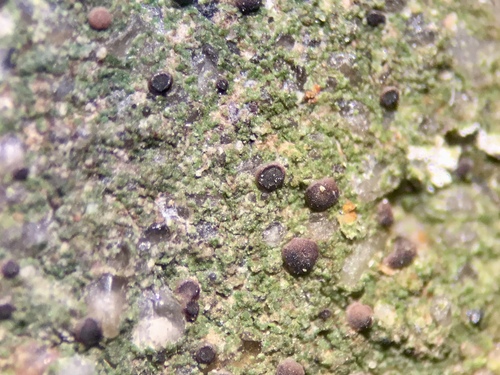
Bacidina
Bacidina is a genus of crustose lichens in the family Ramalinaceae.

Bunodophoron
Bunodophoron is a genus of lichen-forming fungi in the family Sphaerophoraceae. The genus has a broad distribution in the Southern Hemisphere, with several species also present in oceanic regions of the Northern Hemisphere. Established in 1861 by the Italian botanist Abramo Bartolommeo Massalongo, the genus comprises about 20 accepted species that form shrubby, often tufted growths with flattened, strap-like branches. These lichens are characterised by their distinctive black, powdery spore masses that develop at the tips of fertile branches and their production of various lichen products incl

Pseudevernia
Pseudevernia is a genus of foliose lichens in the family Parmeliaceae. The type species of the genus, Pseudevernia furfuracea (commonly known as tree moss), has substantial commercial value in the perfume industry.

Schismatomma
Schismatomma is a genus of mostly lichen-forming fungi in the family Roccellaceae. These lichens form thin crusts on bark or rock surfaces and reproduce through disc-shaped fruiting bodies that release spores, as well as through powdery patches that help them spread. At least one species is critically endangered due to habitat loss from deforestation in Colombia.
Carbonea
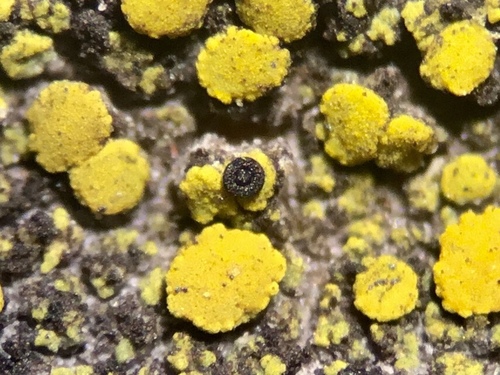
Carbonea is a genus of fungi in the family Lecanoraceae. Most of the species grow on lichens. The genus is widespread, and contains 20 species. Carbonea was originally circumscribed as a subgenus of Lecidea in 1967 before it was promoted to generic status in 1983.

Parmelina
Parmelina is a genus of lichen belonging to the family Parmeliaceae. The genus was circumscribed in 1974 by American lichenologist Mason Hale with Parmelina tiliacea assigned as the type species.

Allocetraria
Allocetraria is a genus of lichenized fungi in the family Parmeliaceae. It consists of 12 species, with a center of distribution in China.
Arctoparmelia
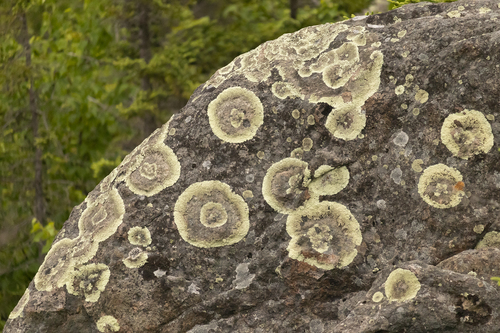
Arctoparmelia is a genus of foliose lichens in the family Parmeliaceae. Established in 1986, the genus comprises five species of rock-dwelling lichens found primarily in arctic and boreal regions of the Northern Hemisphere. These lichens are characterized by their distinctive velvety or ivory-white to pale brown lower surfaces, concentric growth patterns, and unique chemistry, including the presence of alectoronic acid and negative reactions to iodine-based tests. Arctoparmelia species, commonly known as ring lichens, vary in size from small thalli to specimens up to in diameter, and typically

Dendrographa
Dendrographa is a genus of lichen-forming fungi in the family Roccellaceae. It has seven species. These lichens form small, shrubby tufts that cling to bark or coastal rocks along the Pacific seaboard, with brown-grey main branches and paler, pencil-thin tips that lack a protective outer skin. The genus was originally established in 1895 for a single Pacific coast species, but molecular studies in the 2010s expanded it by transferring four additional species from other genera and led to the discovery of a seventh species in Brazil.

Porpidia
Porpidia is a genus of crustose lichens in the family Lecideaceae. Porpidia species primarily inhabit siliceous rocks, pebbles, and stonework, with rare occurrences on bark, wood, and compacted soil. The thallus, or body of the lichen, varies in appearance from thick and crusty to barely visible. It may form a continuous layer or develop cracks resulting in a segmented, structure. The colour of the thallus ranges from grey and white to orange.
Calvitimela
Calvitimela is a fungal genus in the family Tephromelataceae, comprising 11 species of lichen. These lichens grow tightly attached to rocks, appearing as thin, crust-like layers on their surface. They are primarily found in alpine and arctic regions around the world. Calvitimela species are characterised by their (segmented) thallus and black, shiny, convex apothecia (fruiting bodies). The genus currently includes eleven recognised species, though recent genetic studies have revealed unexpected diversity within this group. Calvitimela lichens are known for their varied secondary metabolites, w

Polyblastia
Polyblastia is a genus of lichenized fungi in the family Verrucariaceae. As of 2020, it consists of about 40 species combined with about 50 orphaned species.
The main difference with the genus Verrucaria is related to spores, which are muriform in Polyblastia.

Catapyrenium
Catapyrenium is a genus of squamulose lichens in the family Verrucariaceae. These small lichens grow as clusters of tiny scales ( that lie flat against rocks and soil, often in dry or disturbed habitats. The genus includes about 18 species found worldwide, particularly in arid and semi-arid regions where they help stabilize soil surfaces.

Hyperphyscia
Hyperphyscia is a genus of lichen-forming fungi in the family Physciaceae. These lichens form tightly attached, leaf-like crusts that spread outward in rosettes, with individual radiating in shallow, overlapping tiers that are seldom more than a millimetre or two wide and range in colour from pale brownish-grey to dark brown. They reproduce through brown, disc-shaped fruiting bodies that sit directly on the upper surface and contain thick-walled brown ascospores divided by a single cross-wall, typical of many members of their family.