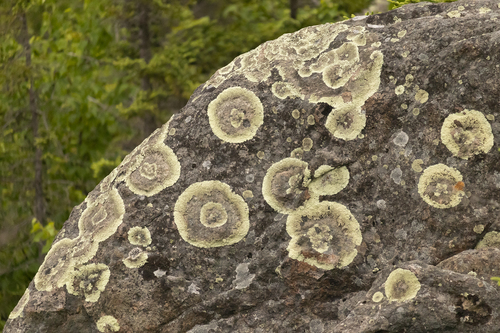
(c) Denis Doucet, some rights reserved (CC BY-NC), uploaded by Denis Doucet · cc-by-nc
Arctoparmelia
Sign in to saveArctoparmelia is a genus of foliose lichens in the family Parmeliaceae. Established in 1986, the genus comprises five species of rock-dwelling lichens found primarily in arctic and boreal regions of the Northern Hemisphere. These lichens are characterized by their distinctive velvety or ivory-white to pale brown lower surfaces, concentric growth patterns, and unique chemistry, including the presence of alectoronic acid and negative reactions to iodine-based tests. Arctoparmelia species, commonly known as ring lichens, vary in size from small thalli to specimens up to in diameter, and typically
In the Vinony graph
Vinony's link graph records 11 inbound references to Arctoparmelia, and connects out to Nepal, Alaska and Carl Linnaeus.
It is catalogued under topics including Lecanorales genera, Lichen genera and Parmeliaceae.
Vinony links it to 8 Wikipedia language editions.
Species
Concentric Ring Lichen
GENUS
- KingdomFungi
- PhylumAscomycota
- ClassLecanoromycetes
- OrderLecanorales
- FamilyParmeliaceae
via GBIF
Museum specimens
- Specimen records
- 24
- Family
- Parmeliaceae
- Collections
- DUKE, ILLS, UMFK, ASU, UAAH, TRH
- Recorded in
- United States, Ecuador, Norway, Sweden
Wikidata facts
- Instance of
- taxon
- Parent taxon
- Parmeliaceae
- Image
- Arctoparmelia centrifuga-1.jpg
Show 5 more facts
- Commons category
- Arctoparmelia
- taxon name
- Arctoparmelia
- taxon rank
- genus
- taxonomic type
- Arctoparmelia centrifuga
- taxon common name
- 北极梅属
Sources (2)
via Wikidata · CC0
~8 min read
Encyclopedic overview
5 sectionsContents
- Taxonomy
- Description
- Habitat and distribution
- Species
- References
Arctoparmelia is a genus of foliose lichens in the family Parmeliaceae. Established in 1986, the genus comprises five species of rock-dwelling lichens found primarily in arctic and boreal regions of the Northern Hemisphere. These lichens are characterized by their distinctive velvety or ivory-white to pale brown lower surfaces, concentric growth patterns, and unique chemistry, including the presence of alectoronic acid and negative reactions to iodine-based tests. Arctoparmelia species, commonly known as ring lichens, vary in size from small thalli to specimens up to in diameter, and typically grow on exposed rocks in cold, dry environments. While most species show broad circumpolar distributions, some are restricted to specific regions.
==Taxonomy==
Excerpted from Wikipedia’s “Arctoparmelia” article, available under the CC BY-SA 4.0 licence.