Category
page 1Light sources

Sun
The Sun is the star located at the centre of the Solar System. It is a massive sphere of hot plasma, heated to incandescence by nuclear fusion reactions in its core, radiating the energy from its surface mainly as visible light and infrared radiation with 10% at ultraviolet energies. It is the main source of energy for life on Earth. The Sun has been an object of veneration in many cultures and a central subject of astronomical research since antiquity.

star
A star is a luminous spheroid of plasma held together by self-gravity. The nearest star to Earth is the Sun. Many other stars are visible to the naked eye at night; their immense distances from Earth make them appear as fixed points of light. The most prominent stars have been categorised into constellations and asterisms, and many of the brightest stars have proper names. Astronomers have assembled star catalogues that identify the known stars and provide standardized stellar designations. The observable universe contains an estimated to stars. Only about 4,000 of these stars are visible to t

aurora
An aurora ( aurorae or auroras) is a natural light display in Earth’s upper atmosphere caused by charged particles from the Sun colliding with atoms in the atmosphere. These collisions excite oxygen and nitrogen, which then emit light of different colors such as green, red, and purple. When observed in high-latitude regions they are called polar lights and aurora polaris. In the Arctic they are called northern lights (aurora borealis); in the Antarctic, the terms southern lights (aurora australis) are used. Auroras display dynamic patterns of radiant light that appear as curtains, rays, spiral

firework
thumb|Ritual devils and townspeople participate in a Correfoc (firerun) at the culmination of Festa Major 2012, in Vilanova i la Geltrú
Fireworks are low explosive pyrotechnic devices used for aesthetic and entertainment purposes. They are most commonly used in fireworks displays (also called a fireworks show or pyrotechnics), combining a large number of devices in an outdoor setting. Such displays are the focal point of many cultural and religious celebrations, though mismanagement can lead to fireworks accidents.
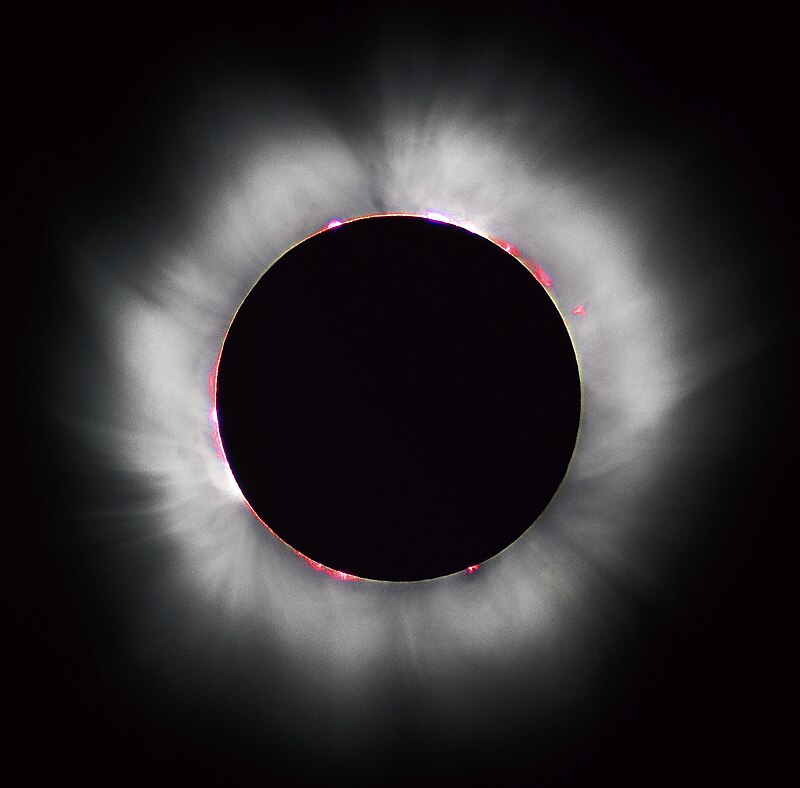
solar corona
plasma "atmosphere" of the Sun

sunlight
thumb|right|The Sun, as seen from low Earth orbit overlooking the International Space Station. This sunlight is not filtered by the lower atmosphere, which blocks much of the solar spectrum.

bioluminescence
thumb|Flying and glowing firefly, [[Photinus pyralis]]
thumb|upright |Female glowworm, [[Lampyris noctiluca]]
Bioluminescence is the production of light by an organism as the result of a chemiluminescence reaction. It occurs in a wide variety of organisms, including marine vertebrates and invertebrates, terrestrial arthropods such as fireflies, some fungi, and microorganisms such as some bacteria and dinoflagellates. In some animals, the light is bacteriogenic, produced by symbiotic bacteria such as those from the genus Vibrio; in others, it is autogenic, produced by the animals themselves. Bi

light pollution
anthropogenic light in the night environment, caused by excess or misdirected lighting
%20as%20of%20January%2020%2C%202020.jpg)
photosphere
thumb|alt=A miasma of plasma|Sun's surface in false color|228x228px
The photosphere is a star's outer shell from which light is radiated. It extends into a star's surface until the plasma becomes opaque, equivalent to an optical depth of approximately , or equivalently, a depth from which 50% of light will escape without being scattered.

St. Elmo's fire
weather phenomenon

Cherenkov radiation
electromagnetic phenomenon

luminescence
right|thumb|Luminol reacting with haemoglobin is a familiar demonstration of [[chemiluminescence.]]
thumb|UV-induced photoluminescence used in microbiological diagnostics.

list of brightest stars
Wikimedia list article

zodiacal light
glow in the night sky appearing to extend from the Sun's direction and along the zodiac

moonlight
thumb|Earthlight illuminates the dim side of the Moon, while direct sunlight illuminates the bright side.

flash
device producing a burst of artificial light

electroluminescence
thumbnail|Views of a liquid crystal display, both with electroluminescent backlight switched on (top) and switched off (bottom)
Electroluminescence (EL) is an optical and electrical phenomenon, in which a material emits light in response to the passage of an electric current or to a strong electric field. This is distinct from black body light emission resulting from heat (incandescence), illumination by light (photoluminescence), chemical reactions (chemiluminescence), reactions in a liquid (electrochemiluminescence), sound (sonoluminescence), or other mechanical action (mechanoluminescence),

sonoluminescence
right|thumb|Single-bubble sonoluminescence – a single, cavitating bubble
Sonoluminescence is luminescence induced by sound waves, such as in the emission of light from imploding bubbles in a liquid when excited by sound. Sonoluminescence is sometimes considered a kind of mechanoluminescence. However, mechanoluminescence is typically defined as pertaining to solids, while sonoluminescence usually pertains to liquids. The related terms acoustoluminescence and sonotriboluminescence have been used to describe sound-induced luminescence in solids (e.g., crystals suspended in slurries).
light pillar
atmospheric optical phenomenon in the form of a vertical band of light which appears to extend above and/or below a light source
%20on%2013th%20of%20August%202015.jpg)
airglow
thumb|Airglow over Auvergne, France
thumb|Yellow, green and red bands of airglow along Earth's limb as seen from space.

campfire
thumb|200px|right|A campfire made using twigs and pine cones.
A campfire is a fire at a campsite that provides light, warmth, and heat for cooking. It can also serve as a beacon and an insect and predator deterrent. Established campgrounds often provide a stone or steel fire ring for safety. Campfires are a popular feature of camping. At summer camps, the word campfire often refers to an event (ceremony, get together, etc.) at which there is a fire. Some camps refer to the fire itself as a campfire.

planetshine
thumb|right|220px|Saturn's moon Mimas is lit by Saturnshine on the right and sunshine at the top.
thumb|right|220px|The Moon lit by [[earthshine, captured by the lunar-prospecting Clementine spacecraft in 1994. Clementine's color enhanced image reveals (from right to left) the Moon lit by earthshine, the Sun's corona rising over the Moon's dark limb, and the planets Saturn, Mars, and Mercury (the three dots at lower left).]]

triboluminescence
thumb|right|Triboluminescence of nicotine -salicylate
Triboluminescence is a phenomenon in which light is generated when a material is mechanically pulled apart, ripped, scratched, crushed, or rubbed (see tribology). The phenomenon is not fully understood but appears in most cases to be caused by the separation and reunification of static electric charges, see also triboelectric effect. The term comes from the Greek τρίβειν ("to rub"; see tribology) and the Latin lumen (light). Triboluminescence can be observed when breaking sugar crystals and peeling adhesive tapes.
glow stick
self-contained, short-term light-source
solar transition region
Section of Sun's atmosphere
.png)
cathodoluminescence
thumb|Color cathodoluminescence of a diamond in Scanning electron microscope|SEM, real colors
earthquake light
optical phenomenon
guide number
unit of measurement

earthlight
thumb|right|The night side of the Moon, illuminated by earthshine, becomes visible next to the narrow crescent (11 percent, age of the Moon = 3.3 days) with ash-grey moonlight.
list of supernova remnants
Wikimedia list article
transient luminous event
short-lived electrical phenomena that occur at high altitudes over lightning storms (sprites, jets, etc.)
lists of stars
Wikimedia list of lists
backlight
thumbnail|Views of a liquid-crystal display, both with electroluminescent backlight switched on (top) and switched off (bottom)

Steve
thumb|A STEVE over Little Bow Resort, [[Alberta, in August 2015]]
thumb|A STEVE over Crossfield, Alberta, in March 2018 (around 12:30 a.m.)

starlight
thumb|Starry sky crossed with the Milky Way and a [[meteor]]
dry thunderstorm
thunderstorm with little or no precipitation
stellar corona
outermost layer of a star's atmosphere
Muzzle flash
light created by gunfire
ashen light
hypothesised glow in Venus's light
Swedish torch
source of light

skyglow
thumb|right|Mexico City at night, showing skyglow
thumb|A map from 1996 to 1997 showing the extent of skyglow over Europe
synchrotron light source
particle accelerator designed to produce intense x-ray beams
list of light sources
Wikimedia list article
single photon source
light source that emits light as single particles or photons
Luchina
thumb|200px|Burning luchina
thumb|A knife for splintering luchinas
light organ
electronic sound-responsive lighting device
mechanoluminescence
Mechanoluminescence is light emission resulting from any mechanical action on a solid.
Fractoluminescence is caused by stress that results in the formation of fractures, that in turn yield light.
Piezoluminescence is caused by pressure that results in elastic deformation and large polarization from the piezoelectric effect.
Triboluminescence is nominally caused by rubbing, but sometimes occurs because of resulting fractoluminescence. It is often used as a synonym.
Crystalloluminescence
Crystalloluminescence is the effect of luminescence produced during crystallization, specifically during nucleation. The phenomenon was first reported in the 1800s from the rapid crystallization of potassium sulfate from an aqueous solution.
meteorite fall
falling of meteors