Category
page 1Mammal subfamilies

Bovinae
Bovines (subfamily Bovinae) comprise a diverse group of 10 genera of medium to large-sized ungulates, including cattle, bison, African buffalo, water buffalos, and the four-horned and spiral-horned antelopes. The members of this group of bovids are classified into loose tribes rather than formal subgroups, as the evolutionary relationships within the groups are still uncertain. General characteristics include cloven hooves and usually at least one of the sexes of a species having true horns. The largest extant bovine is the gaur.

Caprinae
The subfamily Caprinae, also sometimes referred to as the tribe Caprini, is part of the ruminant family Bovidae, and consists of mostly medium-sized bovids. A member of this subfamily is called a caprine.

Gerbillinae
Gerbillinae is one of the subfamilies of the rodent family Muridae and includes the gerbils, jirds, and sand rats. Once known as desert rats, the subfamily includes about 110 species of African, Indian, and Asian rodents, including sand rats and jirds, all of which are adapted to arid habitats. Most are primarily active during the day, making them diurnal (but some species, including the common household pet, exhibit crepuscular behavior), and almost all are omnivorous.

Homininae
The Homininae (; hominines) is a subfamily of the family Hominidae (hominids). The Homininae encompass humans, and are also called "African hominids" or "African apes". This subfamily includes two tribes, Hominini and Gorillini, both having extant (or living) species as well as extinct species.

Antilopinae
Antilopinae is a subfamily of even-toed ungulates in the family Bovidae. The members of tribe Antilopini are often referred to as true antelopes, and include the gazelles, blackbucks, springboks, gerenuks, dibatags, and Central Asian gazelles. True antelopes occur in much of Africa and Asia, with the highest concentration of species occurring in East Africa in Sudan, Eritrea, Ethiopia, Somalia, Kenya, and Tanzania. The saiga (tribe Saigini) inhabits Central and Western Asia, mostly in regions from the Tibetan Plateau and north of the Indian subcontinent. The dwarf antelope species of tribe Neo

Arvicolinae
The Arvicolinae are a subfamily of rodents that includes the voles, lemmings, and muskrats. They are most closely related to the other subfamilies in the Cricetidae (comprising the hamsters and New World rats and mice). Some authorities place the subfamily Arvicolinae in the family Muridae along with all other members of the superfamily Muroidea. Some refer to the subfamily as the Microtinae (yielding the adjective "microtine") or rank the taxon as a full family, the Arvicolidae.

Colobinae
The Colobinae or leaf-eating monkeys are a subfamily of the Old World monkey family that includes 61 species in 11 genera, including the black-and-white colobus, the large-nosed proboscis monkey, and the gray langurs. Some classifications split the colobine monkeys into two tribes, while others split them into three groups. Both classifications put the three African genera Colobus, Piliocolobus, and Procolobus in one group; these genera are distinct in that they have stub thumbs, hence their family name, which comes from Ancient Greek κολοβός (kolobós), meaning "docked". The various Asian gene
Cervinae
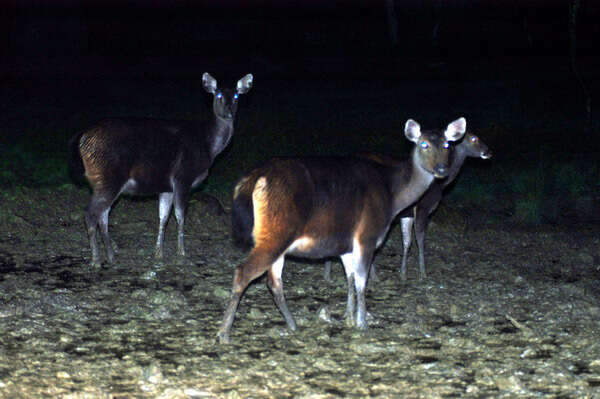
The Cervinae or the Old World deer, are a subfamily of deer. Alternatively, they are known as the plesiometacarpal deer, due to having lost the parts of the second and fifth metacarpal bones closest to the foot (though retaining the parts away from the foot), distinct from the telemetacarpal deer of the Capreolinae (which have instead retained these parts of those metacarpals, while losing the parts away from the foot instead).

Murinae
The Old World rats and mice, part of the subfamily Murinae in the family Muridae, comprise at least 519 species. Members of this subfamily are called murines. In terms of species richness, this subfamily is larger than all mammal families except the Cricetidae and Muridae, and is larger than all mammal orders except the bats and the remainder of the rodents.
.JPG)
Hutia
Hutias (known in Spanish as jutía) are moderately large cavy-like rodents of the subfamily Capromyinae that inhabit the Caribbean islands. Most species are restricted to Cuba, but species are known from all of the Greater Antilles, as well as the Bahamas and (formerly) Little Swan Island off of Honduras.
Capreolinae
The Capreolinae (synonym Odocoileinae Pocock, 1923) are a subfamily of deer. The scientific name derives from its type genus, Capreolus. Alternatively, they are known as the telemetacarpal deer, due to their bone structure being different from the plesiometacarpal deer subfamily Cervinae. The telemetacarpal deer maintain their distal lateral metacarpals, while the plesiometacarpal deer maintain only their proximal lateral metacarpals.
The Capreolinae are believed to have originated in the Middle Miocene, between 7.7 and 11.5 million years ago, in Central Asia.

Machairodontinae
Machairodontinae (from Ancient Greek μάχαιρα (mákhaira), a type of ancient sword, and ὀδούς (odoús), meaning "tooth") is an extinct subfamily of carnivoran mammals of the cat family Felidae, representing the earliest diverging major branch of the family.
Cercopithecinae
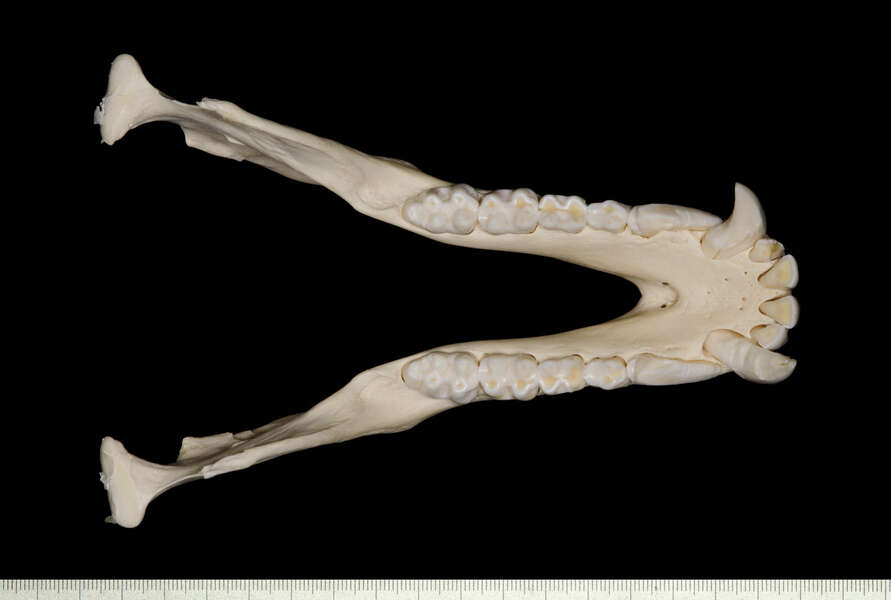
The Cercopithecinae are a subfamily of the Old World monkeys, which comprises roughly 71 species, including the baboons, the macaques, and the vervet monkeys. Most cercopithecine monkeys are limited to sub-Saharan Africa, although the macaques range from the far eastern parts of Asia through northern Africa, as well as on Gibraltar.
Ponginae
Ponginae , also known as the Asian hominids, is a subfamily in the family Hominidae. Once a diverse lineage of Eurasian apes, the subfamily has only one extant genus, Pongo (orangutans), which contains three extant species; the Sumatran orangutan (Pongo abelii), the Tapanuli orangutan (Pongo tapanuliensis) and the Bornean orangutan (Pongo pygmaeus). All three species are listed as critically endangered by the International Union for Conservation of Nature (IUCN).
Xerinae
The Xerinae are the most species-rich subfamily of squirrels, many of which are highly terrestrial. They include the tribes Marmotini (marmots, chipmunks, prairie dogs, and other Holarctic ground squirrels), Xerini (African and some Eurasian ground squirrels), and Protoxerini (African tree squirrels).
Sigmodontinae
Sigmodontinae is a subfamily of rodents that includes New World rats and mice, with at least 376 species. Many authorities include the Neotominae and Tylomyinae as part of a larger definition of Sigmodontinae. When those genera are included, the species count numbers at least 508. Their distribution includes much of the New World, but the genera are predominantly South American, such as brucies. They invaded South America from Central America as part of the Great American Interchange near the end of the Miocene, about 5 million years ago. Sigmodontines proceeded to diversify explosively in the
Sciurinae
Sciurinae () is a subfamily of squirrels (in the family Sciuridae), uniting the flying squirrels with certain related tree squirrels. Older sources place the flying squirrels in a separate subfamily (Pteromyinae) and unite all remaining sciurids into the subfamily Sciurinae, but this has been strongly refuted by genetic studies.
.jpg)
Tremarctinae
The Tremarctinae or short-faced bears is a subfamily of Ursidae that contains one living representative, the spectacled bear (Tremarctos ornatus) of South America, and several extinct species from four genera: the Florida spectacled bear (Tremarctos floridanus), the North American giant short-faced bears Arctodus (A. pristinus and A. simus), the South American giant short-faced bear Arctotherium (including A. angustidens, A. vetustum, A. bonariense, A. wingei, and A. tarijense) as well as Plionarctos (P. edensis and P. harroldorum), which is thought to be ancestral to the other three genera. O
Neotominae
The Neotominae are a subfamily of the family Cricetidae. They consist of four tribes, 16 genera, and many species of New World rats and mice, predominantly found in North America. Among them are the well-known deer mice, packrats, and grasshopper mice.
Callosciurinae
The Callosciurinae are an Asiatic subfamily of squirrels containing over 60 species (mostly found in South East Asia) named after the genus Callosciurus, which means "beautiful squirrels".
Deomyinae
The subfamily Deomyinae consists of four genera of mouse-like rodents that were previously placed in the subfamilies Murinae and Dendromurinae. They are sometimes called the Acomyinae, particularly in references that antedate the discovery that the link rat, Deomys ferugineus, is part of the clade. Deomyinae is the older name and therefore has priority over Acomyinae.

Hemigalinae
The Hemigalinae are a subfamily of the viverrids denominated and first described by John Edward Gray in 1864.
Hemigalinae species are native to Southeast Asia from southern China through Indochina, Malay Peninsula to Sumatra, Borneo and Sulawesi.

Caviinae
Caviinae is a subfamily uniting all living members of the family Caviidae with the exception of the maras, capybaras, and Kerodon. The subfamily traditionally contained the guinea pig or cavy-like forms along with the cursorially adapted (running) Kerodon. Molecular results suggest the Caviinae as so defined would be paraphyletic and Kerodon is more closely related to maras and capybaras than to other caviines. This led Woods and Kilpatrick (2005) to unite Kerodon and capybaras into the subfamily Hydrochoerinae within the Caviidae. These studies also suggest Microcavia and Cavia are more close
Suinae
Suinae is a subfamily of artiodactyl mammals that includes several of the extant members of Suidae and their closest relatives – the domestic pig and related species, such as babirusas. Several extinct species within the Suidae are classified in subfamilies other than Suinae. However, the classification of the extinct members of the Suoidea – the larger group that includes the Suidae, the peccary family (Tayassuidae), and related extinct species – is controversial, and different classifications vary in the number of subfamilies within Suidae and their contents. Some classifications, such as th
Dendromurinae
Dendromurinae is a subfamily of rodents in the family Nesomyidae and superfamily Muroidea. The dendromurines are currently restricted to Africa, as is the case for all extant members of the family Nesomyidae. The authorship of the subfamily has been attributed to both Alston, 1876, and (incorrectly) to G. M. Allen, 1939.
Caluromyinae
Caluromyinae is a subfamily of opossums. It includes the extant genera Caluromys and Caluromysiops, as well as the extinct Pachybiotherium. Until recently, the genus Glironia was also included. It has sometimes been classed as a full family, Caluromyidae.
.jpg)
Borophaginae
The extinct Borophaginae form one of three subfamilies found within the canid family. The other two canid subfamilies are the extinct Hesperocyoninae and extant Caninae. Borophaginae, called "bone-crushing dogs", were endemic to North America during the Oligocene to Pliocene and lived roughly 34—2.5 million years ago, existing for about .
Tylomyinae
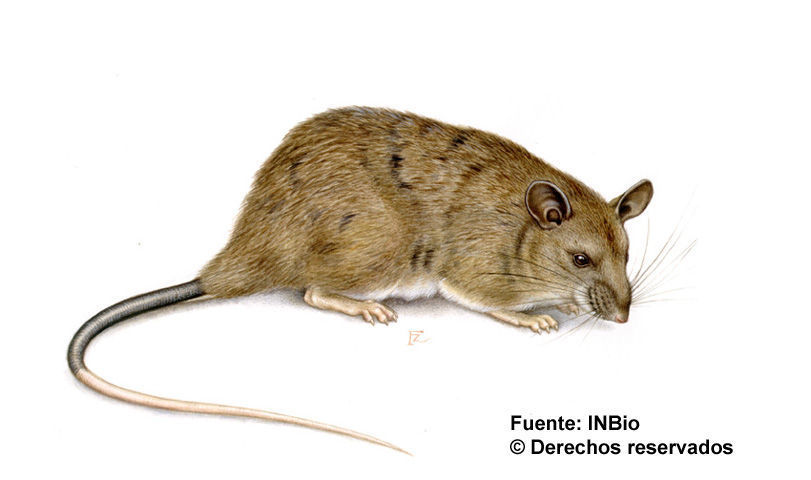
The subfamily Tylomyinae consists of several species of New World rats and mice including the vesper and climbing rats. They are not as well known as their relatives in the subfamilies Sigmodontinae and Neotominae. Many authorities place all three of these subfamilies in a single subfamily, Sigmodontinae.
Macropodinae
Macropodinae is a subfamily of marsupials in the family Macropodidae, which includes the kangaroos, wallabies, and related species. The subfamily includes about ten genera and at least 51 species. It includes all living members of the Macropodidae except for the banded hare-wallaby (Lagostrophus fasciatus), the only surviving member of the subfamily Lagostrophinae.
Hydrochoerinae
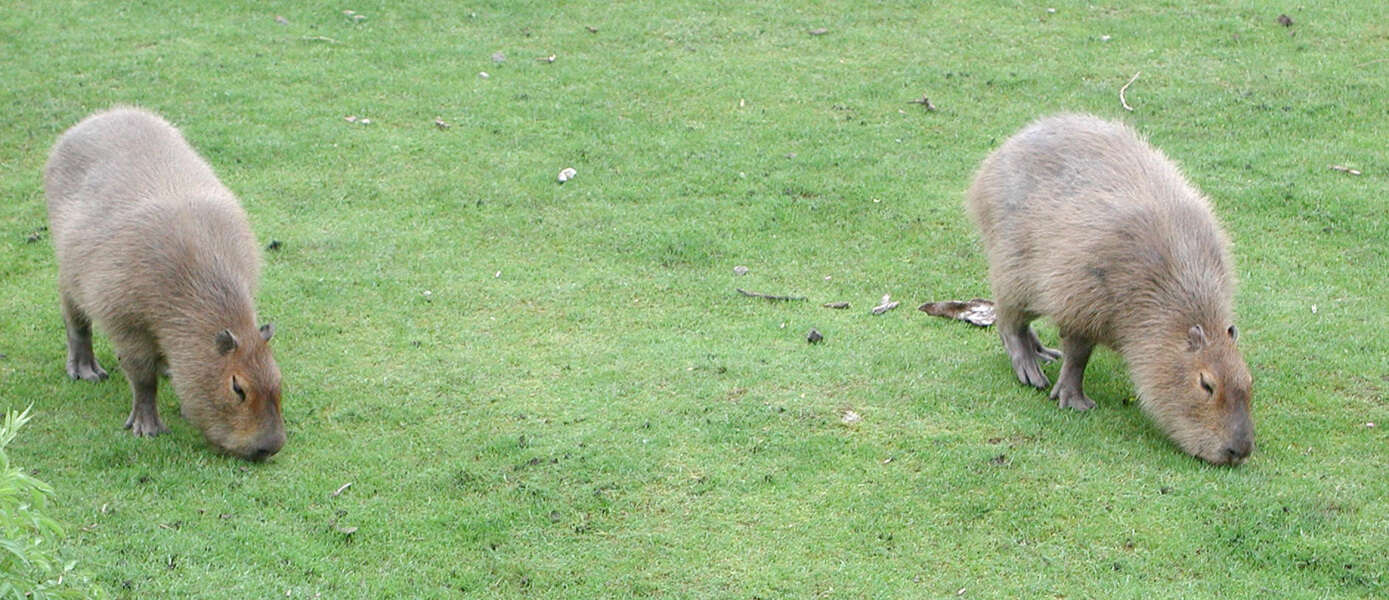
Hydrochoerinae (from Ancient Greek ὕδωρ (húdor), meaning "water", and χοίρος (khoíros), meaning "pig") is a subfamily of Caviidae, consisting of two living genera, Hydrochoerus, the capybaras, and Kerodon, the rock cavies. In addition, a number of extinct genera related to capybaras should also be placed in this subfamily. The taxonomy of Hydrochoerinae is confused because, until 2005, living capybaras and their extinct relatives were placed in their own family, Hydrochoeridae. Recent molecular phylogenetic studies recognize a close relationship between Hydrochoerus and Kerodon, supporting pla
Rhizomyinae
The rodent subfamily Rhizomyinae includes the Asian bamboo rats and certain of the African mole-rats. The subfamily is grouped with the Spalacinae and the Myospalacinae into a family of fossorial muroid rodents basal to the other Muroidea.
Tenrecinae
Tenrecinae is a tenrec subfamily endemic to the island of Madagascar. It contains the largest species in the family, Tenrec ecaudatus. All members of the genus possess spines, analogous to those of hedgehogs, for defense against predators.
Dasyurinae
The subfamily Dasyurinae includes several genera of small carnivorous marsupials native to Australia: quolls, kowari, mulgara, kaluta, dibblers, phascogales, pseudantechinuses, and the Tasmanian devil. The subfamily is defined largely on biochemical criteria.
Euphractinae
Euphractinae is an armadillo subfamily in the family Chlamyphoridae.
Nesomyinae
The Malagasy rodents are the sole members of the subfamily Nesomyinae. These animals are the only native rodents of Madagascar, come in many shapes and sizes, and occupy a wide variety of ecological niches. There are nesomyines that resemble gerbils, rats, mice, voles, and even rabbits. There are arboreal, terrestrial, and semi-fossorial varieties.
Sminthopsinae
The subfamily Sminthopsinae includes several genera of small, carnivorous marsupials native to Australia: kultarrs, ningauis, dunnarts, and planigales.
Vespertilioninae
The Vespertilioninae are a subfamily of vesper bats from the family Vespertilionidae.

Leithiinae
Leithiinae is a subfamily of dormice. It is named after the Leithia, an extinct genus of giant dormouse from the Pleistocene of Sicily.
Glirinae
The Glirinae are a subfamily of dormice (Gliridae); it contains two extant genera, one being monotypic and the other containing two species:
Oryzorictinae
Oryzorictinae is a subfamily of tenrecs endemic to the island of Madagascar. It is the largest of three tenrec subfamilies. Oryzorictinae is thought to have split from the lineage of its closest relative, Geogale, about 30 million years (Ma) ago. The deepest phylogenetic split within the subfamily, that between Oryzorictes and a clade composed of Microgale plus Nesogale, is thought to have occurred about 28 Ma ago. In turn, Microgale and Nesogale are thought to have diverged about 19 Ma ago.
Perodicticinae
Perodicticinae is a subfamily of the family Lorisidae. It includes five species of African primates as shown under taxonomy below.
Pteropodinae
The Pteropodinae are a subfamily of megabats. Taxa within this subfamily are:
Genus Acerodon
Sulawesi flying fox, A. celebensis
Talaud flying fox, A. humilis
Giant golden-crowned flying fox, A. jubatus
Palawan fruit bat, A. leucotis
Sunda flying fox, A. mackloti
Genus Desmalopex
White-winged flying fox, D. leucopterus
Small white-winged flying fox, D. microleucopterus
Genus Eidolon — straw-coloured fruit bats
Madagascan fruit bat, E. dupreanum
Straw-coloured fruit bat, E. helvum
Genus Mirimiri
Fijian monkey-faced bat, M. acrodonta
Genus Neopteryx
Small-toothed fruit bat, N. frosti
Genus
Glossophaginae
Glossophaginae is a subfamily of leaf-nosed bats.
Myospalacinae
Zokors are Asiatic burrowing rodents resembling mole-rats. They include two genera: Myospalax and Eospalax. Zokors are native to much of China, Kazakhstan, and Siberian Russia.
Carolliinae
Carolliinae is a subfamily of bats.
Dipodinae
Dipodinae is a subfamily of Dipodidae.
Sthenurinae
Sthenurinae (from Sthenurus, Greek for 'strong-tailed') is a subfamily within the marsupial family Macropodidae, known as short-faced kangaroos or sthenurine kangaroos. No members of this subfamily are extant today, with all becoming extinct by the late Pleistocene. Procoptodon goliah, the largest macropodid known to have existed, was a sthenurine kangaroo, but sthenurines occurred in a range of sizes, with Procoptodon gilli being the smallest at the size of a small wallaby.
Stenodermatinae
Stenodermatinae is a large subfamily of bats in the family Phyllostomidae.
Chlamyphorinae
Chlamyphorinae is a subfamily of South American armadillos in the family Chlamyphoridae. Members of this subfamily, the fairy armadillos, are largely fossorial and have reduced eyes and robust forearms with large claws for digging.
Kerivoulinae
Kerivoulinae is a subfamily of vesper bats. There are 25 species in 2 genera within this subfamily.
Murininae
The Murininae are a subfamily of bats in the family Vespertilionidae. They include the tube-nosed bats and hairy-winged bats in the genera Murina, Harpiola, and Harpiocephalus.
Camelinae
Camelinae is a subfamily of artiodactyls of the family Camelidae. Camelinae include the tribes Camelini and Lamini. A third tribe, Camelopini, created by S. D. Webb (1965), was formerly included, but was discarded by J. A. Harrison (1979) after it was shown to be polyphyletic: it consisted of the genera Camelops and Megatylopus, which were moved to Camelini and Lamini respectively.
Hydrodamalinae
Hydrodamalinae is a recently extinct subfamily of the sirenian family Dugongidae. The Steller's sea cow (Hydrodamalis gigas) was hunted to extinction by 1768, while the genus Dusisiren is known from fossils dating from the middle Miocene to early Pliocene.
Monachinae
Monachinae (known colloquially as "Southern seals") is a subfamily of Phocidae whose distribution is found in the tropical, temperate and polar regions of the Southern Hemisphere, though in the distant past fossil representatives have been found on both sides of the North Atlantic Ocean. The difference between members of this group and members of Phocinae is in monachines the hindclaws are greatly reduced in size. Furthermore, all species have 34 chromosomes. There are three tribes recognized here: Monachini (monk seals), Miroungini (elephant seals), and Lobodontini (Antarctic seals and a hand
Perognathinae
Perognathinae is a subfamily of rodents consisting of two genera of pocket mice. Most species live in complex burrows within the deserts and grasslands of western North America, They feed mostly on seeds and other plant parts, which they carry in their fur-lined cheek pouches to their burrows.
Allactaginae
Allactaginae is a subfamily of rodents.
Dipodomyinae
Dipodomyinae is a subfamily of heteromyid rodents, the kangaroo rats and mice. Dipodomyines, as implied by both their common and scientific names, are bipedal; they also jump exceptionally well. Kangaroo rats and mice are native to desert and semidesert ecosystems of western North America from southern Canada to central Mexico. They are generally herbivorous foragers, and dig and live in burrows.
Myotinae
Myotinae is a subfamily of vesper bats. It contains three genera: Eudiscopus, Myotis, and Submyotodon. Before the description of Submyotodon and analysis of its phylogenetics, as well as a phylogenetic analysis of Eudiscopus, the only member of Myotinae was Myotis.
Echimyinae
Echimyinae is a subfamily of rodents belonging to the spiny rats family Echimyidae. It contains 14 arboreal genera—all the members of the tribe Echimyini, plus Callistomys—a few terrestrial genera (Thrichomys, Hoplomys, and Proechimys), and a subaquatic genus (Myocastor).
Dugonginae
REDIRECT Dugongidae