Category
page 1Moth families

Sphingidae
The Sphingidae are a family of moths commonly called sphinx moths, also colloquially known as hawk moths, with many of their caterpillars known as hornworms. It includes about 1,450 species. It is best represented in the tropics, but species are found in every region. They are moderate to large in size and are distinguished among moths for their agile and sustained flying ability, similar enough to that of hummingbirds as to be reliably mistaken for them. Their narrow wings and streamlined abdomens are adaptations for rapid flight. The family was named by French zoologist Pierre André Latreill

Noctuidae

Tortricidae
The Tortricidae are a family of moths, commonly known as tortrix moths or leafroller moths, in the order Lepidoptera. This large family has over 11,000 species described, and is the sole member of the superfamily Tortricoidea, although the genus Heliocosma is sometimes placed within this superfamily. Many of these are economically important pests. Olethreutidae is a junior synonym. The typical resting posture is with the wings folded back, producing a rather rounded profile.

Saturniidae
Saturniidae, members of which are commonly named the saturniids, is a family of Lepidoptera with an estimated 2,300 described species. The family contains some of the largest species of moths in the world. Notable members include the emperor moths, royal moths, and giant silk moths (or wild silk moths).

Tineidae
Tineidae is a family of moths in the order Lepidoptera described by Pierre André Latreille in 1810. Collectively, they are known as fungus moths or tineid moths. The family contains considerably more than 3,000 species in more than 300 genera. Most of the tineid moths are small or medium-sized, with wings held roofwise over the body when at rest. They are particularly common in the Palaearctic, but many occur elsewhere, and some are found very widely as introduced species.
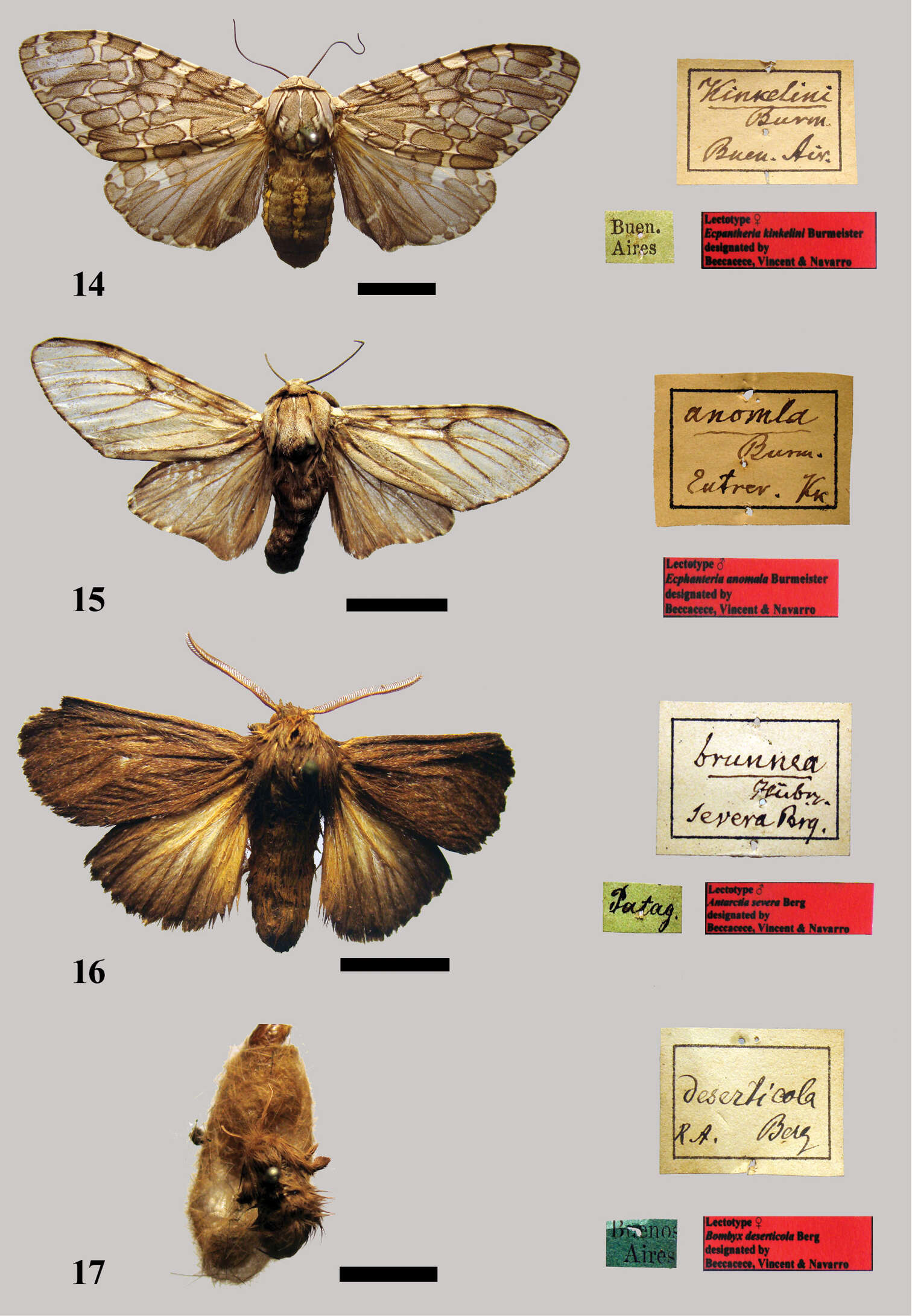
Bombycidae
The Bombycidae are a family of moths known as silkworm moths. The best-known species is Bombyx mori (Linnaeus), or domestic silk moth, native to northern China and domesticated for millennia. Another well-known species is Bombyx mandarina, also native to Asia.

Zygaenidae
thumb|right|150px|Larva showing warning colours, flattening
thumb|200px|right|Zygaena filipendulae

Pyralidae
thumb|Sciota uvinella, larva found on sweetgum
.jpg)
Lasiocampidae
The Lasiocampidae are a family of moths also known as eggars, tent caterpillars, snout moths (although this also refers to the Pyralidae), or lappet moths. Over 2,000 species occur worldwide, and probably not all have been named or studied. It is the sole family in superfamily Lasiocampoidea.
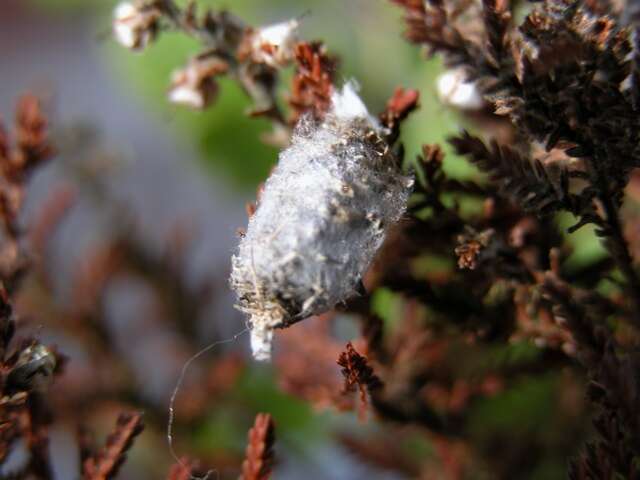
Psychidae
family of insects

Micropterigidae
Micropterigoidea is the superfamily of "mandibulate archaic moths", all placed in the single family Micropterigidae, containing currently about twenty living genera. They are considered the most primitive extant lineage of lepidoptera (Kristensen, 1999), and the sole superfamily in the suborder Zeugloptera. The name comes from the Greek for mikros, little and pterux, a wing. Unique among the Lepidoptera, these moths have chewing mouthparts rather than a proboscis, and are seen feeding, often in large aggregations, on the pollen of the flowers of many herbaceous plants, shrubs and trees. The fo

Cossidae
The Cossidae, the cossid millers or carpenter millers, make up a family of mostly large miller moths. This family contains over 110 genera with almost 700 known species, and many more species await description. Carpenter millers are Lepidoptera found worldwide, They are nocturnal, except for the Southeast Asian subfamily Ratardinae.
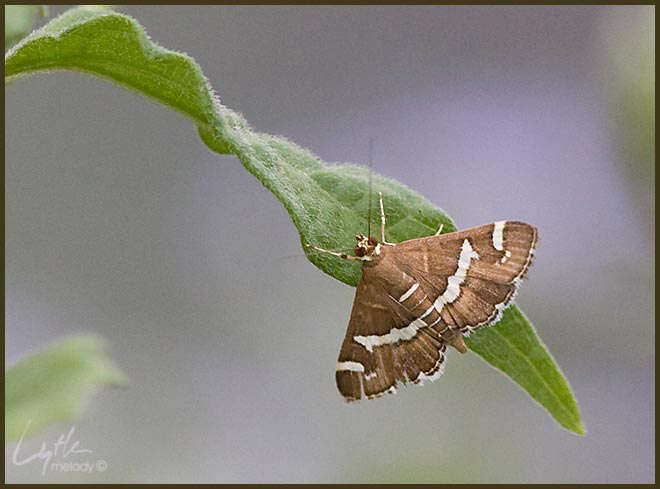
Crambidae
Crambidae comprises the grass moth family of lepidopterans. They are variable in appearance, with the nominal subfamily Crambinae (grass moths) taking up closely folded postures on grass stems where they are inconspicuous, while other subfamilies include brightly coloured and patterned insects that rest in wing-spread attitudes.
.jpg)
Erebidae
thumb|Eulepidotis affinis, Panama
thumb|Apantesis arge caterpillar (Arctiinae)
thumb|Halysidota tessellaris, cocoon
The Erebidae are a family of moths in the superfamily Noctuoidea. The family is among the largest families of moths by species count and contains a wide variety of well-known macromoth groups. The family includes the underwings (Catocala); litter moths (Herminiinae); tiger, lichen, footman and wasp moths (Arctiinae); tussock moths (Lymantriinae), including the arctic woolly bear moth (Gynaephora groenlandica); fruit-piercing moths (Calpinae and others); micronoctuoid moths (Micro

Sesiidae
thumb|Synanthedon tipuliformis, larva

Pterophoridae
The Pterophoridae or plume moths are a family of Lepidoptera with unusually modified wings, giving them the shape of a narrow winged airplane. Though they belong to the Apoditrysia like the larger moths and the butterflies, unlike these they are tiny and were formerly included among the assemblage called "microlepidoptera".

Notodontidae
Notodontidae is a family of moths with approximately 3,800 known species. The family was described by James Francis Stephens in 1829. Moths of this family are found in all parts of the world, but they are most concentrated in tropical areas, especially in the New World (Miller, 1992).

Hepialidae
The Hepialidae are a family of insects in the lepidopteran order. Moths of this family are often referred to as swift moths or ghost moths.
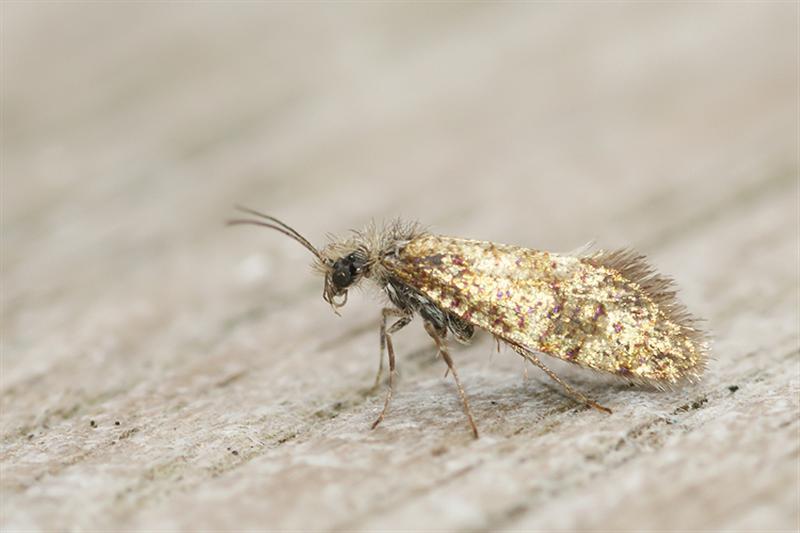
Eriocraniidae
Eriocraniidae is a family of moths restricted to the Holarctic region, with six extant genera. These small, metallic moths are usually day-flying, emerging fairly early in the northern temperate spring. They have a proboscis with which they drink water or sap. The larvae are leaf miners on Fagales, principally the trees birch (Betula) and oak (Quercus), but a few on Salicales and Rosales.

Gelechiidae
thumb|Larva of Chrysoesthia sexguttella in a mine in [[Chenopodium album]]
thumb|Dichomeris inserrata

Limacodidae
The Limacodidae or Eucleidae are a family of moths in the superfamily Zygaenoidea or the Cossoidea; the placement is in dispute. They are often called slug moths because their caterpillars bear a distinct resemblance to slugs. They are also called cup moths because of the shape of their cocoons.

Adelidae
thumb|Ceromitia iolampra
The Adelidae or fairy longhorn moths are a family of monotrysian moths in the lepidopteran infraorder Heteroneura. The family was first described by Charles Théophile Bruand d'Uzelle in 1851. Most species have at least partially metallic, patterned coloration and are diurnal, sometimes swarming around the tips of branches with an undulating flight. Others are crepuscular and have a drab coloration. Fairy longhorn moths have a wingspan of 4–28 millimeters, and males often have especially long antennae, 1–3 times as long as the forewing.
Drepanidae
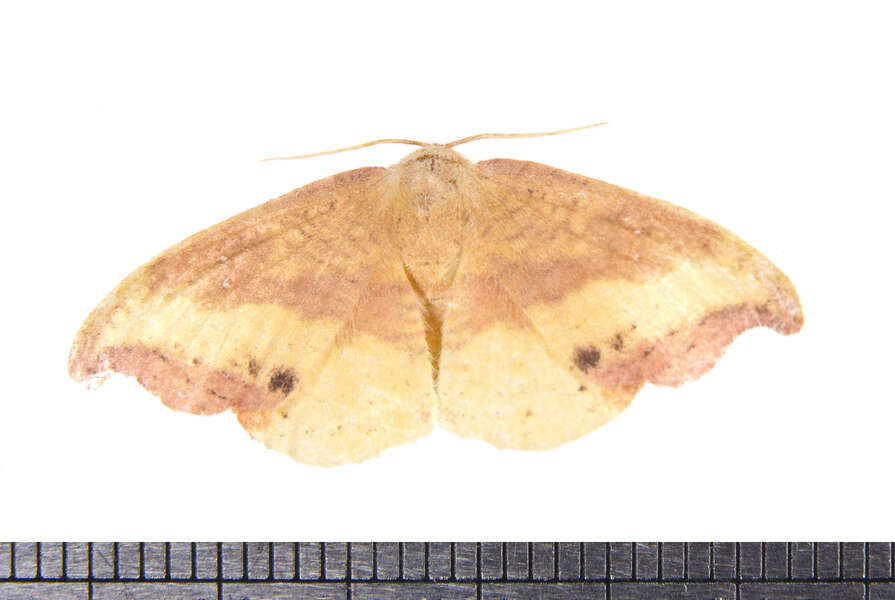
The Drepanidae are a family of moths with about 660 species described worldwide. They are generally divided in three subfamilies, which share the same type of hearing organ. Thyatirinae, previously often placed in their own family, bear a superficial resemblance to Noctuidae. Many species in the drepanid family have a distinctively hook-shaped apex to the fore wing, leading to their common name of hook-tips.

Gracillariidae
thumb|Phyllocnistis magnoliella in magnolia leaf.
Uraniidae
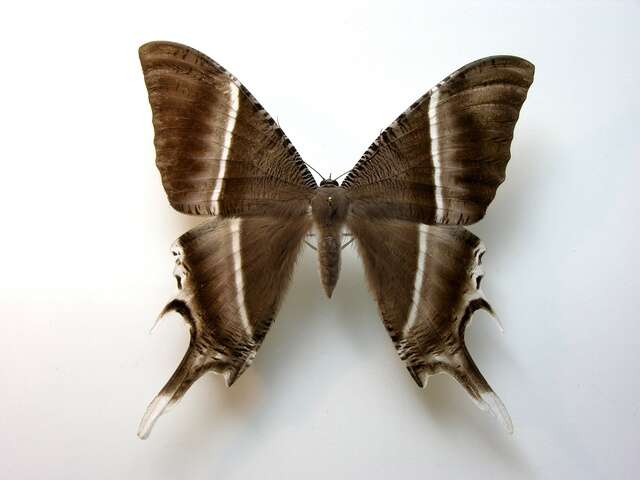
The Uraniidae are a family of moths containing four subfamilies, 90 genera, and roughly 700 species. The family is distributed throughout the tropics of the Americas, Africa and Indo-Australia. Some of the tropical species are known for their bright, butterfly-like colors and are called sunset moths (for example Chrysiridia rhipheus). Such moths are apparently toxic and the bright colors are a warning to predators.

Coleophoridae
The Coleophoridae are a family of small moths, belonging to the huge superfamily Gelechioidea. Collectively known as case-bearers, casebearing moths or case moths, this family is represented on all continents, but the majority are found in temperate areas of the Northern Hemisphere. They are most common in the Palearctic, and rare in sub-Saharan Africa, South America, and Australia; consequently, they probably originated (like most or all other Gelechioidea families) in northern Eurasia. They are relatively common in houses, they seek out moist areas to rest and procreate.
Nepticulidae
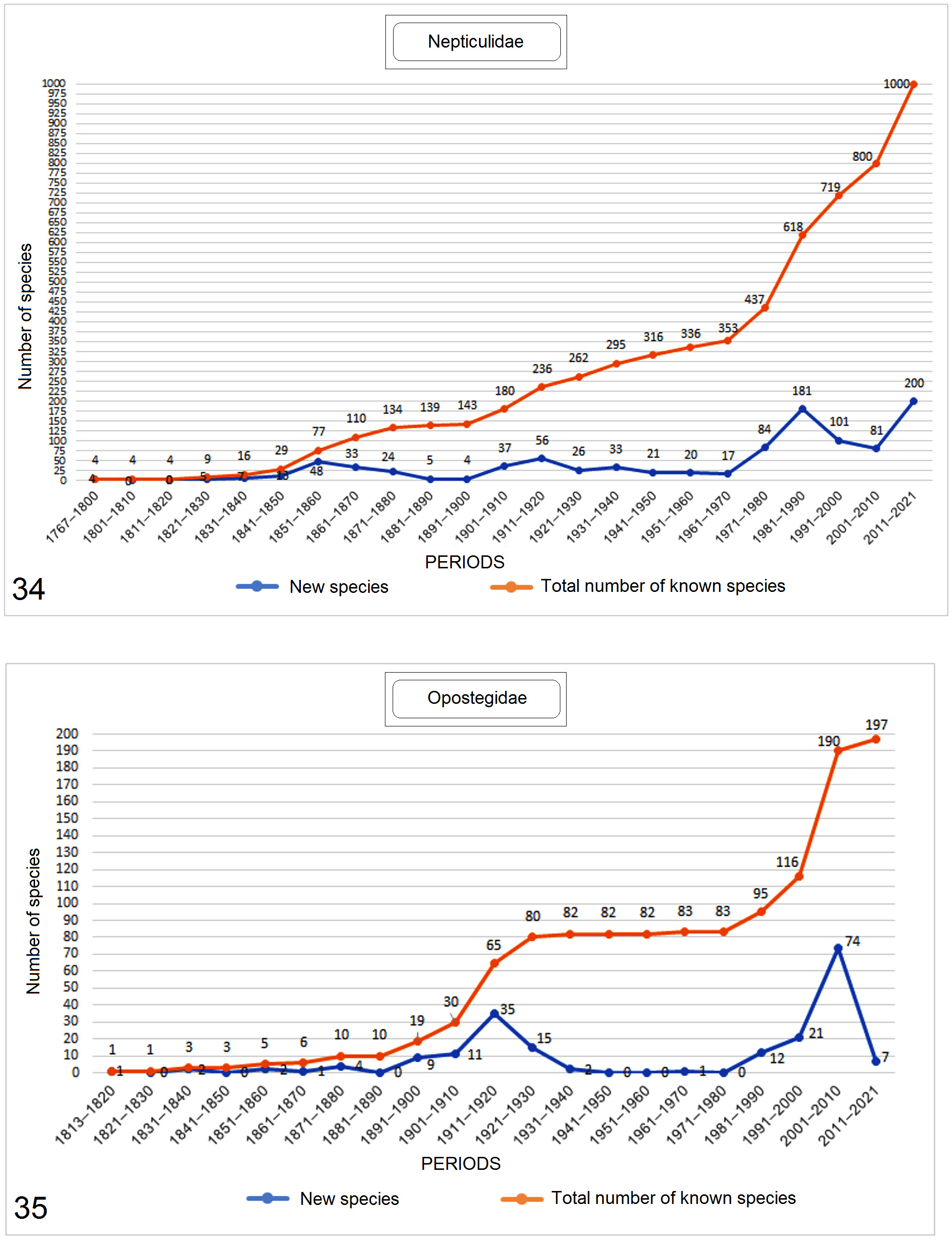
Nepticulidae is a family of very small moths with a worldwide distribution. They are characterised by eyecaps over the eyes (see also Opostegidae, Bucculatricidae, Lyonetiidae). These pigmy moths or midget moths, as they are commonly known, include the smallest of all living moths, with a wingspan that can be as little as 3 mm in the case of the European pigmy sorrel moth, but more usually 3.5–10 mm. The wings of adult moths are narrow and lanceolate, sometimes with metallic markings, and with the venation very simplified compared to most other moths.

Choreutidae
Choreutidae, or metalmark moths, are a family of insects in the lepidopteran order whose relationships have been long disputed. It was placed previously in the superfamily Yponomeutoidea in family Glyphipterigidae and in superfamily Sesioidea. It is now considered to represent its own superfamily (Minet, 1986). The relationship of the family to the other lineages in the group "Apoditrysia" need a new assessment, especially with new molecular data.
Nolidae
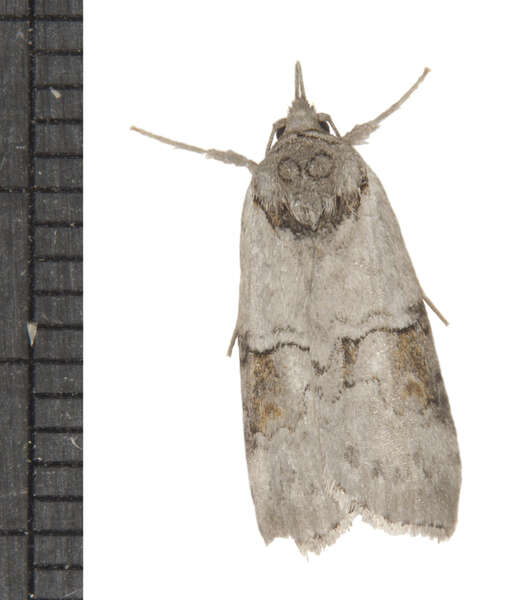
Nolidae is a family of moths with about 1,700 described species worldwide. They are mostly small with dull coloration, the main distinguishing feature being a silk cocoon with a vertical exit slit. The group is sometimes known as tuft moths, after the tufts of raised scales on the forewings of two subfamilies, Nolinae and Collomeninae. The larvae also tend to have muted colors and tufts of short hairs.

Prodoxidae
The Prodoxidae are a family of moths, generally small in size and undistinguished in appearance. They include species of moderate pest status, like the currant shoot borer, and others of considerable ecological and evolutionary interest, such as various species of "yucca moths".
Elachistidae
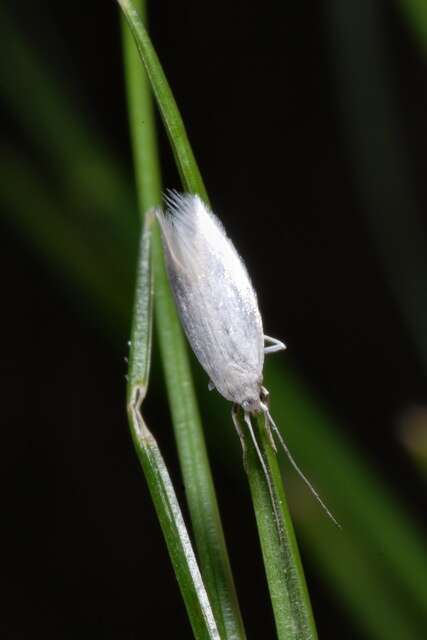
The Elachistidae (grass-miner moths) are a family of small moths in the superfamily Gelechioidea. Some authors lump about 3,300 species in eight subfamilies here, but this arrangement almost certainly results in a massively paraphyletic and completely unnatural assemblage, united merely by symplesiomorphies retained from the first gelechioid moths.

Glyphipterigidae
The Glyphipterigidae are a family of small moths commonly known as sedge moths, as the larvae of many species feed on sedges and rushes. More than 500 species have been described in the family.

Thyrididae
The Thyrididae comprise the family of picture-winged leaf moths. They are the only family in the superfamily Thyridoidea, which sometimes has been included in the Pyraloidea, but this is not supported by cladistic analysis.
Cosmopterigidae
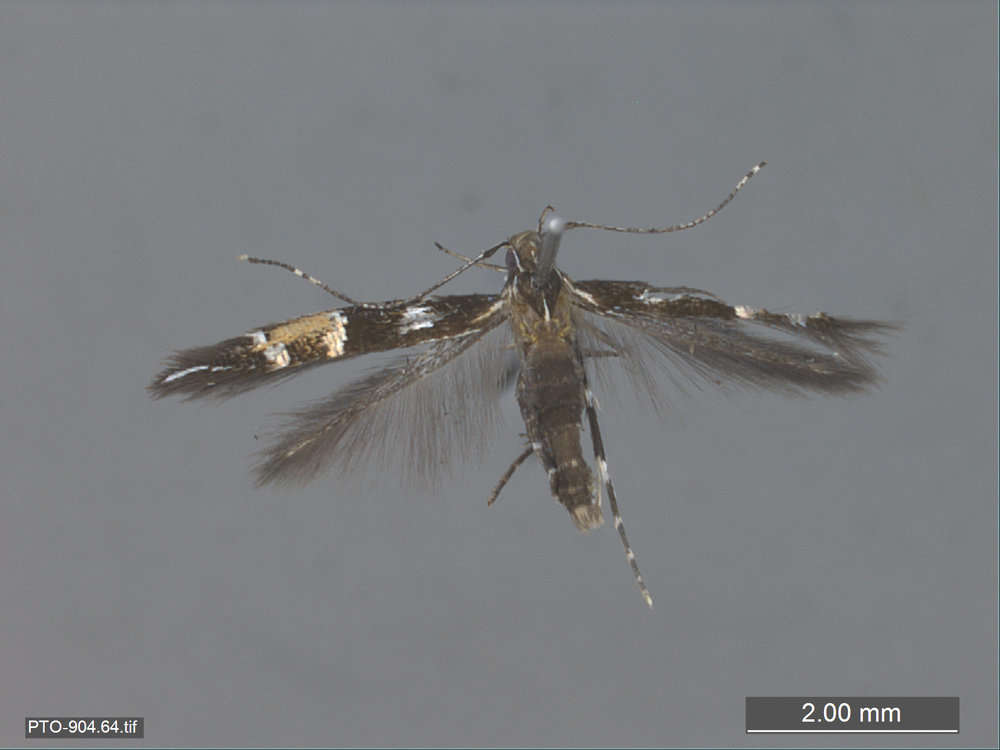
The Cosmopterigidae are a family of insects (cosmet moths) in the order Lepidoptera. These are small moths with narrow wings whose tiny larvae feed internally on the leaves, seeds and stems of their host plants. About 1500 species have been described. The taxonomic family is most diverse in the Australian and Pacific region with about 780 species.
Bucculatricidae
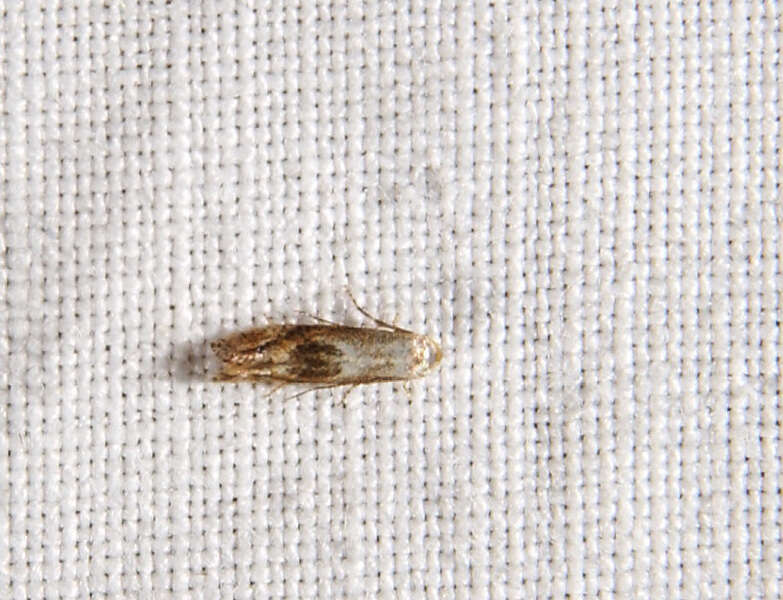
Bucculatricidae or (Bucculatrigidae) is a family of moths. This small family has representatives in all parts of the world. Some authors place the group as a subfamily of the family Lyonetiidae.

Brahmaeidae
Brahmaeidae is a family of insects in the order Lepidoptera, commonly known as Brahmin moths. It includes species formerly included in the family Lemoniidae.
Blastobasidae
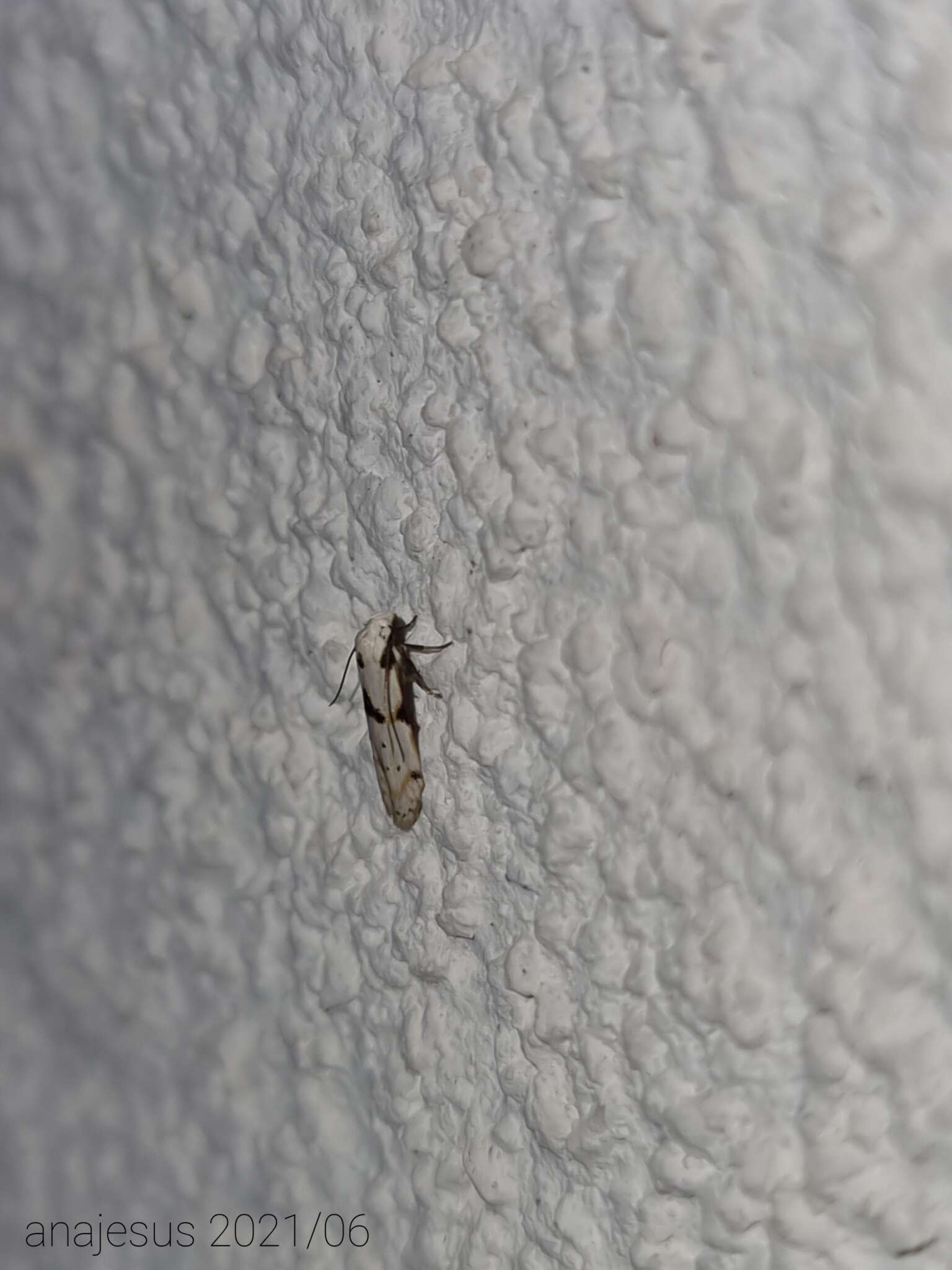
The Blastobasidae are a family of moths in the superfamily Gelechioidea. Its species can be found almost anywhere in the world, though in some places they are not native but introduced by humans. In some arrangements, these moths are included in the case-bearer family (Coleophoridae) as subfamily Blastobasinae. The Symmocidae are sometimes included in the Blastobasidae (particularly if both are included in Coleophoridae) as subfamily or tribe.

Oecophoridae
Oecophoridae (concealer moths) is a family of small moths in the superfamily Gelechioidea. The phylogeny and systematics of gelechoid moths are still not fully resolved, and the circumscription of the Oecophoridae is strongly affected by this.

Heliozelidae
The Heliozelidae, commonly known as shield-bearer moths, are a family of small, day flying monotrysian moths distributed worldwide. The larvae of most heliozelid species are leaf miners who cut distinctive shield-shaped cases from the surface of the host leaf, hence the common name. Some species are considered pests of commercial crops such as grapevines, cranberries, and walnuts. The taxonomy of this family is poorly understood.
Incurvariidae
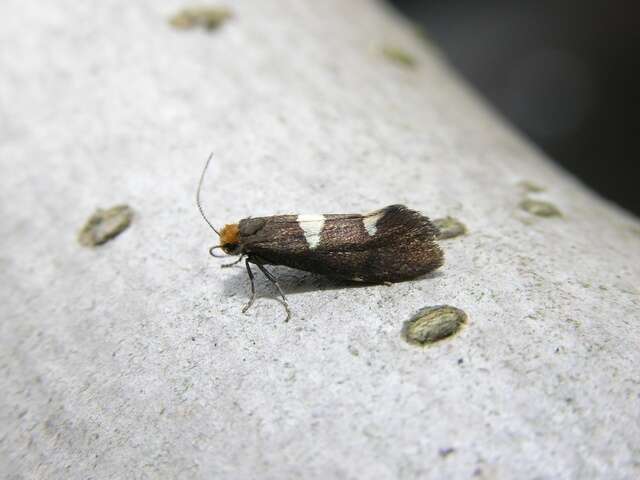
Incurvariidae is a family of small primitive monotrysian moths in the order Lepidoptera. There are twelve genera recognised (Davis, 1999). Many species are leaf miners and much is known of their host plants, excluding Paraclemensia acerifoliella. The most familiar species in Europe are perhaps Incurvaria masculella and Phylloporia bistrigella. The narrow wings are held tightly along the body at rest and some species have very long antennae.

Dalceridae
The Dalceridae are a small family of zygaenoid moths with some 80 known species encompassing about one dozen genera mostly found in the Neotropical region with a few reaching the far south of the Nearctic region.

Ypsolophidae
Ypsolophidae is a family of moths with some 160 species. They are included in the Plutellidae by many authors.

Castniidae
Castniidae, or castniid moths, is a small family of moths with fewer than 200 species: The majority are Neotropical with some in Australia and a few in south-east Asia. These are medium-sized to very large moths, usually with drab, cryptically marked forewings and brightly coloured hindwings. They have clubbed antennae and are day flying, and are often mistaken for butterflies. Indeed, some previous classification systems placed this family within the butterflies or skippers. The Neotropical species are commonly known as giant butterfly-moths, the Australian and Asian species as sun moths. The

Brachodidae
Brachodidae is a family of day-flying moths, commonly known as little bear moths, which contains about 135 species distributed around much of the world (Edwards et al. 1999). The relationships and status of the presently included genera are not well understood.

Neopseustidae
thumb|
Epermeniidae
Epermeniidae or the fringe-tufted moths is a family of insects in the lepidopteran order with about 14 genera. Previously they have been divided in two subfamilies Epermeniinae and Ochromolopinae (e.g. Common, 1990: 321) but this is no longer maintained since the last group is probably hierarchically nested within the first (Dugdale et al., 1999). They are presently placed in their own superfamily but have previously been placed among the Yponomeutoidea or Copromorphoidea with which they share some features. Their systematic placement among the apoditrysian group "Obtectomera" (having pupal se
Callidulidae
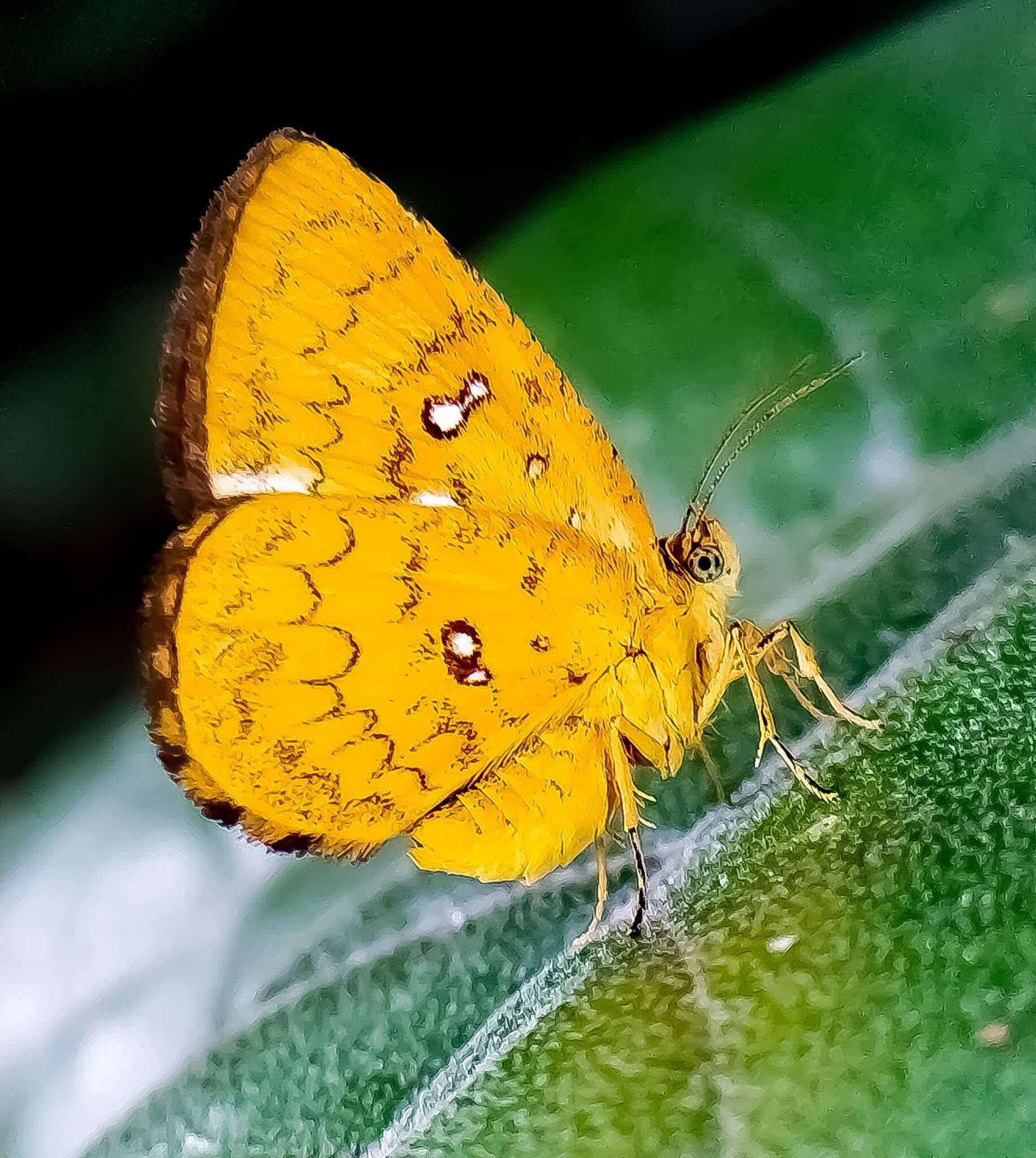
Callidulidae, the only known family of the superfamily Calliduloidea, is the family of Old World butterfly-moths, containing eight genera. They have a peculiar distribution, restricted to the Old World tropics of Southeast Asia to Australasia and Madagascar. The three subfamilies exhibit both day- and night-flying behaviour.
Endromidae
Endromidae is a family of moths consisting of 16 genera with 72 species. This relictual family is related to the families Carthaeidae, Anthelidae, and Phiditiidae as part of the bombycine group "CAPOPEM".
Douglasiidae
Douglasiidae is a small Lepidopteran family. It includes around 32 species of micromoth whose adults are collectively called Douglas moths, after British lepidopterist and hemipterist John William Douglas. The largest genus in the family is Tinagma. They are primarily found in the Palearctic realm, with some Nearctic species. The adults have a 6 to 15 mm wingspan, with a reduced hindwing venation and long fringes. The larvae are leaf miners or borers, primarily in stems and petioles, belonging to Boraginaceae, Labiatae, and Rosaceae.

Epipyropidae
thumb|Epipyrops exigua, female
The Epipyropidae comprise a small family of moths. This family and the closely related Cyclotornidae are unique among the Lepidoptera in that the larvae are ectoparasites, the hosts typically being fulgoroid planthoppers, thus the common name planthopper parasite moths. The family undergoes hypermetamorphosis, metamorphosing from triungular first instar larvae to highly modified second instars.

Eupterotidae
Eupterotidae is a family of insects in the order Lepidoptera with more than 300 described species.
thumb|Eupterotidae larva in Kerala
Oenosandridae
Oenosandridae is a family of Australian noctuoid moths. Genera include:
Momphidae
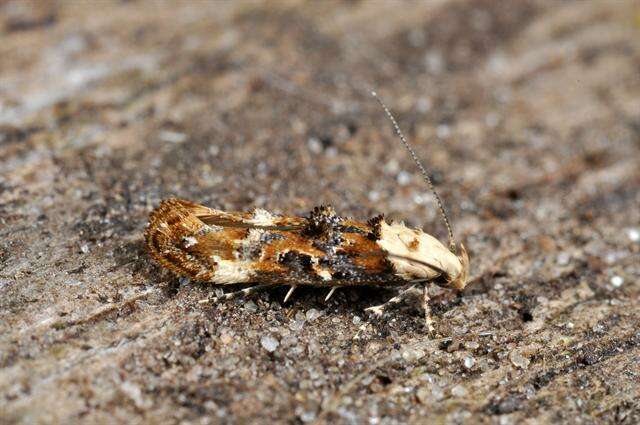
The Momphidae, or mompha moths, is a family of moths with some 115 described species. It was described by Gottlieb August Wilhelm Herrich-Schäffer in 1857. These moths tend to be rather small with a wingspan of up to 21 mm. The wings are held folded over the body at rest. The larvae are concealed feeders, either as leaf miners or within seeds or stems.
Opostegidae
Opostegidae or "white eyecap moths" is a family of insects in the order Lepidoptera that is characterised by particularly large eyecaps over the compound eyes (see also Nepticulidae, Bucculatricidae, Lyonetiidae). Opostegidae are most diverse in the New World tropics (83 described species, representing 42% of the world total).

Galacticidae
Galacticidae is a recently recognised and enigmatic family of insects in the lepidopteran order. These moderate sized moths are 8–17 mm in wingspan and have previously been embedded within several lepidopteran superfamilies (Tineoidea: Psychidae, Urodoidea, Sesioidea and in several families of Yponomeutoidea), but Galacticidae is currently placed in its own superfamily at the base of the natural group Apoditrysia (Dugdale et al., 1999 [1998]; May, 2004).
Cimeliidae
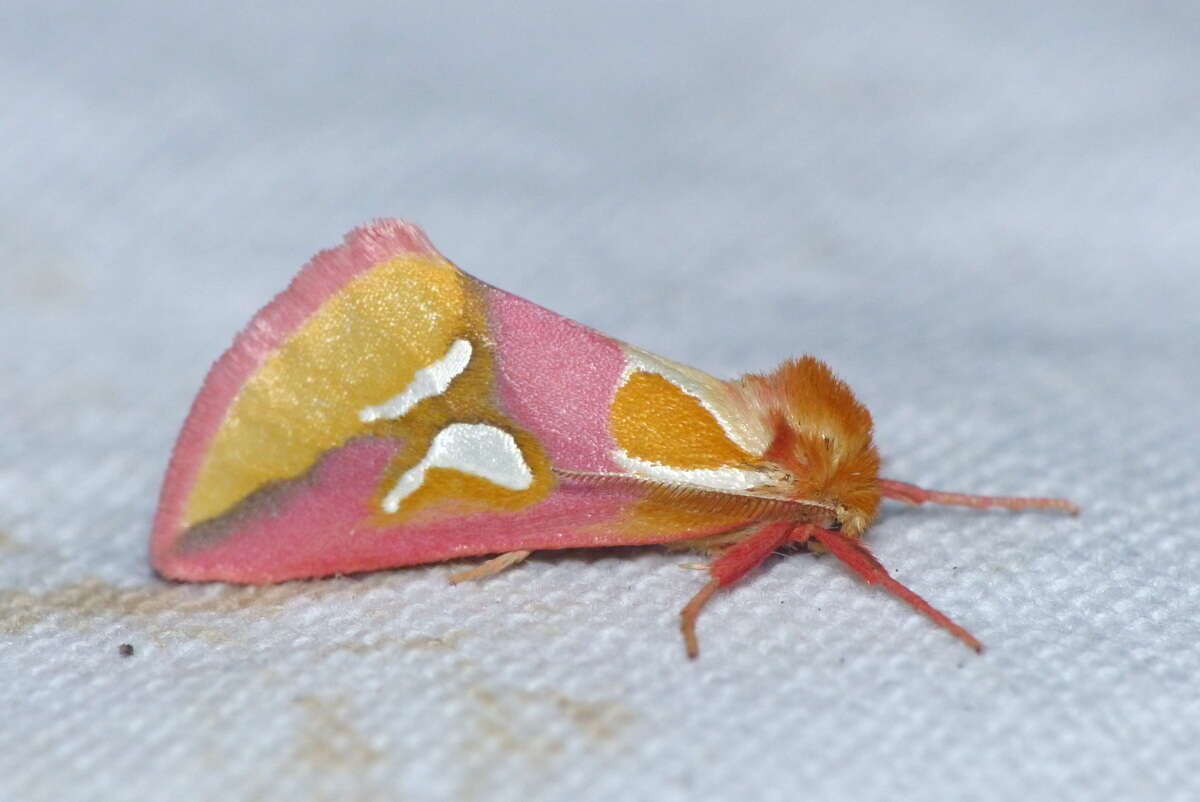
Cimeliidae, the gold moths (formerly known as Axiidae), is a family of moths that is now placed in the macroheteroceran superfamily Drepanoidea, although previously placed in its own superfamily. Uniquely, they have a pair of pocket-like organs on the seventh abdominal spiracle of the adult moth which are only possibly sound receptive organs. They are quite large and brightly coloured moths that occur in southern Europe and feed on species of Euphorbia. Sometimes they are attracted to light. The family was first described by Pierre Chrétien in 1916.
Acanthopteroctetidae
Acanthopteroctetidae is a small family of moths with two described genera, Acanthopteroctetes and Catapterix, a total of seven described species, and two undescribed species. They are known as the archaic sun moths.
Schreckensteiniidae
Schreckensteinioidea is a superfamily in the insect order Lepidoptera containing a single family, Schreckensteiniidae, or "bristle-legged moths", because of the stout spines on the hindlegs. The superfamily and family were both described by Thomas Bainbrigge Fletcher in 1929. The relationships of this family within the group apoditrysia are currently uncertain. One of the species, the blackberry skeletoniser (Schreckensteinia festaliella), is widespread and common across Europe and has been introduced as a biological control to Hawaii, whilst three species of Corsocasis occur in South East Asi

Batrachedridae
The Batrachedridae are a small family of tiny moths. These are small, slender moths which rest with their wings wrapped tightly around their bodies.

Anomoeotidae
thumb|
The Anomoeotidae are a family of moths in the order Lepidoptera of about 40 species, with Afrotropical and Oriental distribution.