Category
page 1Myrmecophagous mammals

aardvark
The aardvark (; Orycteropus afer) is a medium-sized, burrowing, nocturnal mammal native to Africa. The aardvark is the only living member of the genus Orycteropus, the family Orycteropodidae and the order Tubulidentata.

Pholidota
Pangolins, also called scaly anteaters, are mammals of the order Pholidota (). The one extant family, the Manidae, has three genera: Manis, Phataginus, and Smutsia. Manis comprises five species found in Asia, while Phataginus and Smutsia include two species each, all found in sub-Saharan Africa. These species range in size from . Several extinct pangolin species are also known. In September 2023, a ninth species was reported, although it is only known from confiscated scales and has never been observed in the wild.

Nuckles
Echidnas (), sometimes known as spiny anteaters, are quill-covered monotremes (egg-laying mammals) belonging to the family Tachyglossidae , living in Australia and New Guinea. The four extant species of echidnas and the platypus are the only living mammals that lay eggs and the only surviving members of the order Monotremata. The diet of some species consists of ants and termites, but they are not closely related to the American true anteaters or to hedgehogs. Their young are called puggles.

sloth bear
species of bear common to the Indian subcontinent
.jpg)
Aardwolf
The aardwolf (Proteles cristatus) is an insectivorous hyaenid species, native to East and Southern Africa. Its name means 'earth-wolf' in Afrikaans and Dutch. It is also called the maanhaar-jackal (Afrikaans for 'mane-jackal'), termite-eating hyena and civet hyena, based on its habit of secreting substances from its anal gland, a characteristic shared with the African civet.

Otocyon megalotis
species of fox native to the African savanna

numbat
The numbat (; binomen: Myrmecobius fasciatus), also known as the noombat or walpurti, is an insectivorous marsupial. It is diurnal and its diet consists almost exclusively of termites.

short-beaked echidna
species of mammal

Sunda pangolin
species of mammal

Indian pangolin
species of mammal

Chinese pangolin
species of mammal

nine-banded armadillo
species of mammal

Giant armadillo
species of mammal
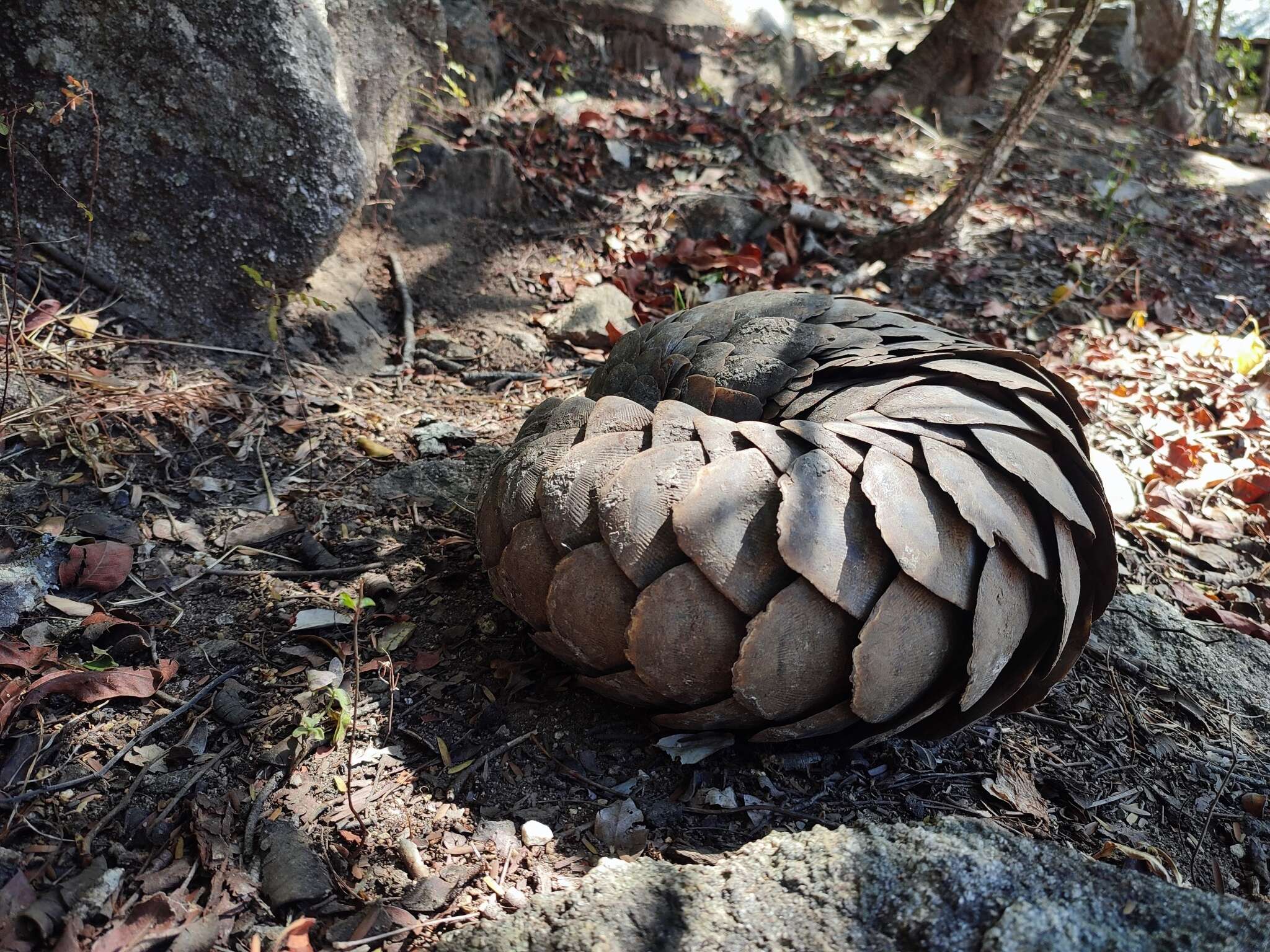
Smutsia temminckii
species of pangolin

Chlamyphorus truncatus
species of mammal

Smutsia gigantea
species of pangolins

Brazilian three-banded armadillo
species of mammal

southern three-banded armadillo
species of mammal

Philippine pangolin
species of mammal

Chacoan naked-tailed armadillo
species of mammal

Northern naked-tailed armadillo
species of mammal

southern naked-tailed armadillo
species of mammal

Tolypeutes
The genus Tolypeutes contains the two species of three-banded armadillos. They are restricted to open and semi-open habitats in South America.

Greater naked-tailed armadillo
species of mammal
southern long-nosed armadillo
species of mammal

Grant's golden mole
species of mammal

Llanos long-nosed armadillo
species of mammal
Eurotamandua
Eurotamandua ("european Tamandua") is an extinct genus of mammal from extinct family Eurotamanduidae that lived during the middle Eocene.

Dollman's tree mouse
species of mammal

Fruitafossor
Fruitafossor is a termite-eating mammal endemic to North America during the Late Jurassic epoch (around 150 mya).
Eomanis
Eomanis ("dawn pangolin") is the earliest known true (and scaled) pangolin from extinct family Eomanidae (and extinct superfamily Eomanoidea) within suborder Eupholidota. It lived during the Eocene in Europe. Eomanis fossils found in the Messel Pit in Germany are very similar in size and anatomy to living pangolins of the genus Manis, indicating that pangolins have remained largely unchanged in morphology and behavior for 50 million years. However, unlike modern pangolins, its tail and legs did not bear scales. According to the stomach contents of the excellently preserved Messel specimens, Eo
Necromanis
Necromanis ("extinct pangolin") is an extinct genus of pangolin from superfamily Manoidea. It lived from the middle Oligocene to middle Miocene in Europe. It was originally placed within family Manidae, but was eventually removed from it as more fossil pholidotids from outside that family were found and studied more extensively (i.e., with the discovery and study of Eomanis and Patriomanis). Currently, Necromanis is placed as incertae sedis within the pholidotid superfamily Manoidea, together with the families Manidae and Patriomanidae.
Patriomanis
Patriomanis ("father of pangolins") is an extinct genus of pangolin from extinct family Patriomanidae. It lived from the late Eocene to early Oligocene of North America and it currently represents the only pangolin known from the Western Hemisphere. The genus contains one species, P. americana, which is only known from six specimens, mostly from the Chadronian White River Formation of Wyoming. It had long digits and a prehensile tail, suggesting that it was arboreal, and its jaw was capable of opening wider than modern pangolins. Its ears and the hair between its scales were also longer than m
Epoicotheriidae
Epoicotheriidae ("strange beasts") is an extinct paraphyletic family of insectivorous placental mammals within extinct order Palaeanodonta, that lived in North America, Asia and Europe from the middle Paleocene to early Oligocene. Epoicotheriids were fossorial mammals. Late Eocene/early Oligocene genera were highly specialized animals that were convergent with the talpids, golden moles and marsupial mole in the structure of their skulls and forelimbs, and would have had a similar lifestyle as subterranean burrowers. They are considered among the most specialized animals that have ever evolved
Euromanis
Euromanis ("european pangolin") is one of the earliest known pangolin genera. It lived during the middle Eocene in Europe. Euromanis fossils found in the Messel Pit in Germany. Unlike modern pangolins, it did not bear scales on its body.
Cryptomanis
Cryptomanis ("hidden pangolin") is an extinct genus of pangolin from extinct family Patriomanidae. The genus is only known from the holotype specimen from middle Eocene deposits from Inner Mongolia, China. The holotype, AMNH 26140, was labeled as an unnamed pangolin in the fossil collection for decades. The remains consist of an incomplete postcranial specimen, with nearly complete hind limbs, an incomplete pelvis, a complete lumbar series from an incomplete vertebral column, numerous fragmentary remains of rib and sternal bones, a fragmentary scapula, and partially preserved forelimbs. Based
Ernanodontidae
Ernanodontidae ("sprouts of toothless animals") is an extinct family of myrmecophagous placental mammals within extinct order Palaeanodonta, that lived in Asia from the middle to late Paleocene.
Metacheiromyidae
Metacheiromyidae ("next to Cheiromys") is an extinct paraphyletic family of myrmecophagous placental mammals within extinct order Palaeanodonta, that lived in North America and Europe from the late Paleocene to middle Eocene.