Category
page 1Natural philosophers

Aristotle
Aristotle (; 384–322 BC) was an ancient Greek philosopher and polymath. His writings cover a broad range of subjects spanning the natural sciences, philosophy, linguistics, economics, politics, psychology, and the arts. As the founder of the Peripatetic school of philosophy in the Lyceum in Athens, he began the wider Aristotelian tradition that followed, which set the groundwork for the development of modern science.

Isaac Newton
Sir Isaac Newton was an English polymath who was a mathematician, physicist, astronomer, alchemist, theologian, author and inventor. He was a key figure in the Scientific Revolution and the Enlightenment that followed. His book Philosophiæ Naturalis Principia Mathematica, first published in 1687, achieved the first great unification in physics and established classical mechanics. Newton also made seminal contributions to optics, and shares credit with the German mathematician Gottfried Wilhelm Leibniz for formulating infinitesimal calculus, although he developed calculus years before Leibniz. Newton contributed to and refined the scientific method, and his work is considered the most influential in bringing forth modern science.

Johann Wolfgang von Goethe
German writer, artist, natural scientist and politician (1749–1832)

Galileo Galilei
Italian polymath (1564-1642)

Immanuel Kant
German philosopher (1724-1804)

René Descartes
French philosopher, mathematician, and scientist (1596–1650)

Francis Bacon
English philosopher and statesman (1561–1626)

Johannes Kepler
German mathematician and astronomer (1571–1630)

Thales
ancient Greek philosopher and mathematician

Ralph Waldo Emerson
American philosopher (1803–1882)

Giordano Bruno
Italian Dominican friar, philosopher and mathematician (1548–1600)

Heraclitus
Heraclitus (; ; ) was an ancient Greek pre-Socratic philosopher from the city of Ephesus, which was then part of the Persian Empire. He exerts a wide influence on Western philosophy, both ancient and modern, through the works of such authors as Plato, Aristotle, the Stoics, Georg Wilhelm Friedrich Hegel, Friedrich Nietzsche, and Martin Heidegger.

Lucretius
Titus Lucretius Carus ( ; ; – October 15, 55 BC) was a Roman poet and philosopher. His only known work is the philosophical poem De rerum natura, a didactic work about the tenets and philosophy of Epicureanism, which usually is translated into English as On the Nature of Things—and somewhat less often as On the Nature of the Universe.
Very little is known about Lucretius's life; the only certainty is that he was either a friend or client of Gaius Memmius, to whom the poem was addressed and dedicated. De rerum natura was a considerable influence on the Augustan poets, particularly Virgil

Novalis
Georg Philipp Friedrich Freiherr von Hardenberg (2 May 1772 – 25 March 1801), better known by his pen name Novalis (; ), was a German aristocrat and polymath, who was a poet, novelist, philosopher and mystic. He is regarded as an influential figure of Jena Romanticism.

Anaxagoras
Anaxagoras (; , Anaxagóras, 'lord of the assembly'; ) was a Pre-Socratic Greek philosopher. Born in Clazomenae at a time when Asia Minor was under the control of the Persian Empire, Anaxagoras came to Athens. In later life he was charged with impiety and went into exile in Lampsacus.

Anaximander
Anaximander ( ; Anaximandros; ) was a pre-Socratic Greek philosopher who lived in Miletus, a city of Ionia (in modern-day Turkey). He belonged to the Milesian school and learned the teachings of his master Thales. He succeeded Thales and became the second master of that school, where he counted Anaximenes and, arguably, Pythagoras amongst his pupils.
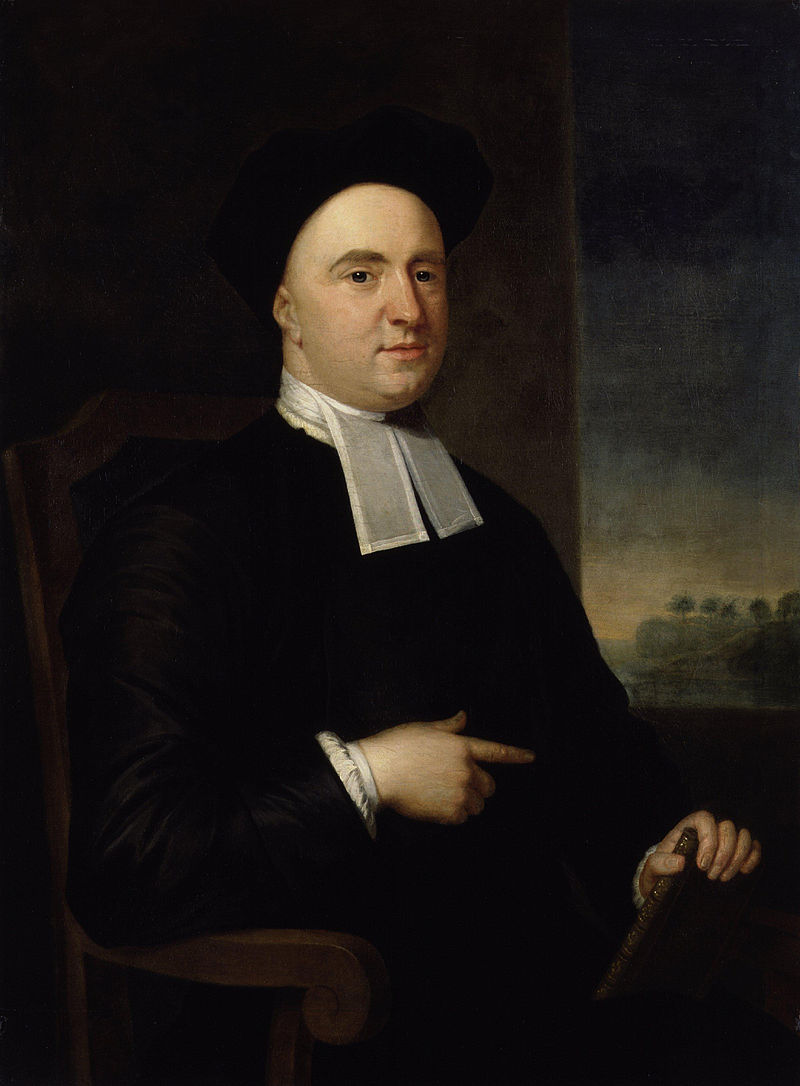
George Berkeley
Irish idealist philosopher and Anglican bishop (1685–1753)

Empedocles
Empedocles (; ; , 444–443 BC) was a Greek pre-Socratic philosopher and a native citizen of Akragas, a Greek city in Sicily. Empedocles' philosophy is known best for originating the cosmogonic theory of the four classical elements. He also proposed forces he called Love and Strife which would mix and separate the elements, respectively.

Ibn al-Haytham
Persian physicist, mathematician and astronomer (c. 965 – c. 1040)

Robert Hooke
English natural philosopher, architect and polymath (1635 — 1703)

Theophrastus
Theophrastus (; ; c. 371 – c. 287 BC) was an ancient Greek philosopher and naturalist. A native of Eresos in Lesbos, he was Aristotle's close colleague and successor as head of the Lyceum, the Peripatetic school of philosophy in Athens. Theophrastus wrote numerous treatises across all areas of philosophy, working to support, improve, expand, and develop the Aristotelian system. He made significant contributions to various fields, including ethics, metaphysics, botany, and natural history. Often considered the "father of botany" for his groundbreaking works "Enquiry into Plants" () and "On the

Albertus Magnus
German-Dominican friar and saint (c. 1200–1280)

Roger Bacon
English polymath, philosopher and friar (c.1219/20–c.1292)

Zeno of Citium
Greek philosopher, founder of Stoicism
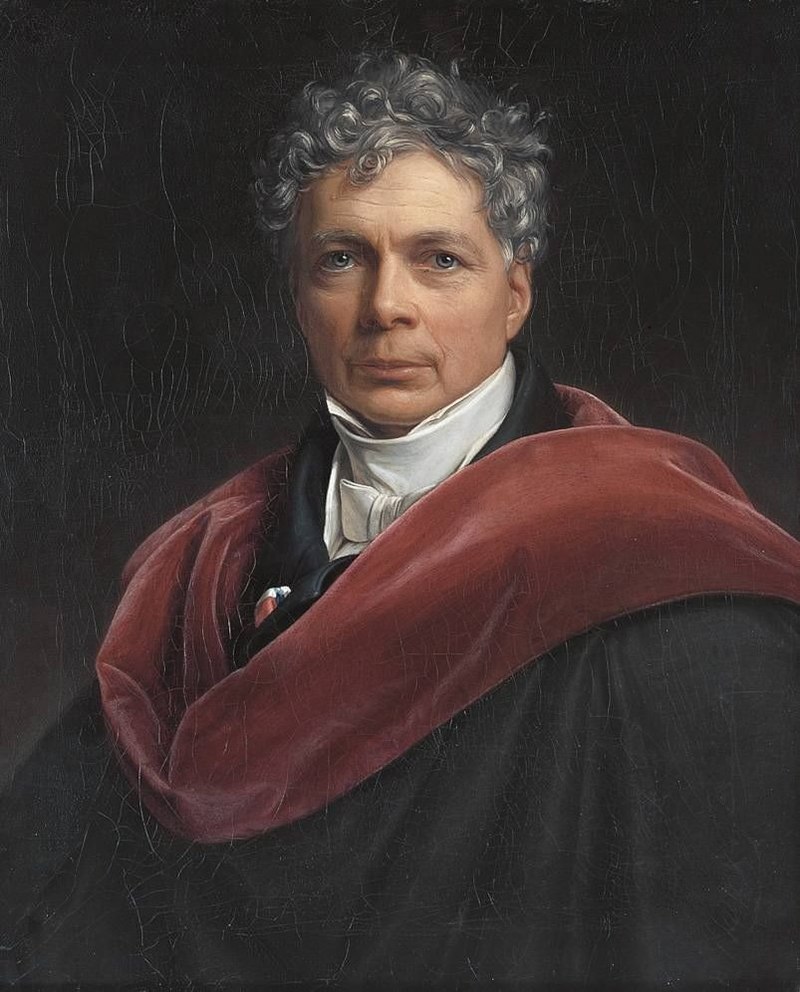
Friedrich Wilhelm Joseph Schelling
German philosopher (1775–1854)

Mozi
Mozi, personal name Mo Di,
Avempace
Abū Bakr Muḥammad ibn Yaḥya ibn aṣ-Ṣā’igh at-Tūjībī ibn Bājja (), known simply as Ibn Bajja () or his Latinized name Avempace (; – 1138), was an Arab polymath, whose writings include works regarding astronomy, physics, and music, as well as philosophy, medicine, botany, and poetry.

Jean Buridan
medieval philosopher (ca. 1300-1358)

Aristoxenus
thumb|200px|A modern imagining of the appearance of Aristoxenus.
Aristoxenus of Tarentum (; born 375, fl. 335 BC) was a Greek Peripatetic philosopher, and a pupil of Aristotle. Most of his writings, which dealt with philosophy, ethics and music, have been lost, but one musical treatise, Elements of Harmony (Greek: ; Latin: Elementa harmonica), survives incomplete, as well as some fragments concerning rhythm and meter. The Elements is the chief source of our knowledge of ancient Greek music.

Adam Ferguson
Scottish philosopher and historian; (1723-1816)

Mathurin Jacques Brisson
French zoologist and natural philosopher

Johann Wilhelm Ritter
German chemist, physicist and philosopher

John Wilkins
Secretary of the Royal Society and Bishop of Chester
John Aubrey
English writer and antiquarian (1626-1697)
Karl Christian Friedrich Krause
German philosopher

Albertus de Saxonia
German theologian and philosopher (c.1320-1390)

James Braid
Scottish surgeon, hypnotist, and hypnotherapist (1795–1860)

Vitello
thumb|Cover of Vitellonis Thuringopoloni opticae libri decem (Ten Books of Optics by the Thuringo-Pole Witelo)
Vitello (; ; – 1280/1314) was a Polish friar, scientist, theologian, natural philosopher and an important figure in the history of philosophy in Poland.
Franz Aepinus
German-Russian mathematician (1724-1802)
William Whiston
theologian, historian, mathematician, and translator (1667-1752)
Luigi Ferdinando Marsigli
Italian scholar and natural scientist (1658-1730)
Nicolas Fatio de Duillier
Member of the Royal Society
Henry Oldenburg
German theologian
Hippon
ancient Greek philosopher
Benjamin Wilson
British painter and scientist (1721-1788)
Abu'l-Barakāt al-Baghdādī
12th century Iraqi Islamic philosopher, physicist and physician
Isabelle Stengers
Belgian philosopher of science and scientist (born 1949)
Willem 's Gravesande
Dutch physicist
Jean-Baptiste Robinet
French scientist (1735-1820)
Jean Jacques Dortous de Mayran
French geophysicist, astronomer and most notably, chronobiologist
Tarquinia Molza
Italian singer and composer
Giuseppa Barbapiccola
Italian writer
Alessandro Piccolomini
Italian writer and philosopher, titular archbishop of Patrae
David of Dinant
Pantheistic philosopher
William Derham
English clergyman and natural philosopher
Walter Burley
14th century English scholastic philosopher and logician
Celia Grillo Borromeo
Italian mathematician and scientist

Cesare Cremonini
Italian academic and philosopher (1550–1631)
William Molyneux
Irish natural philosopher and writer on politics
Wilhelm Homberg
Dutch alchemist