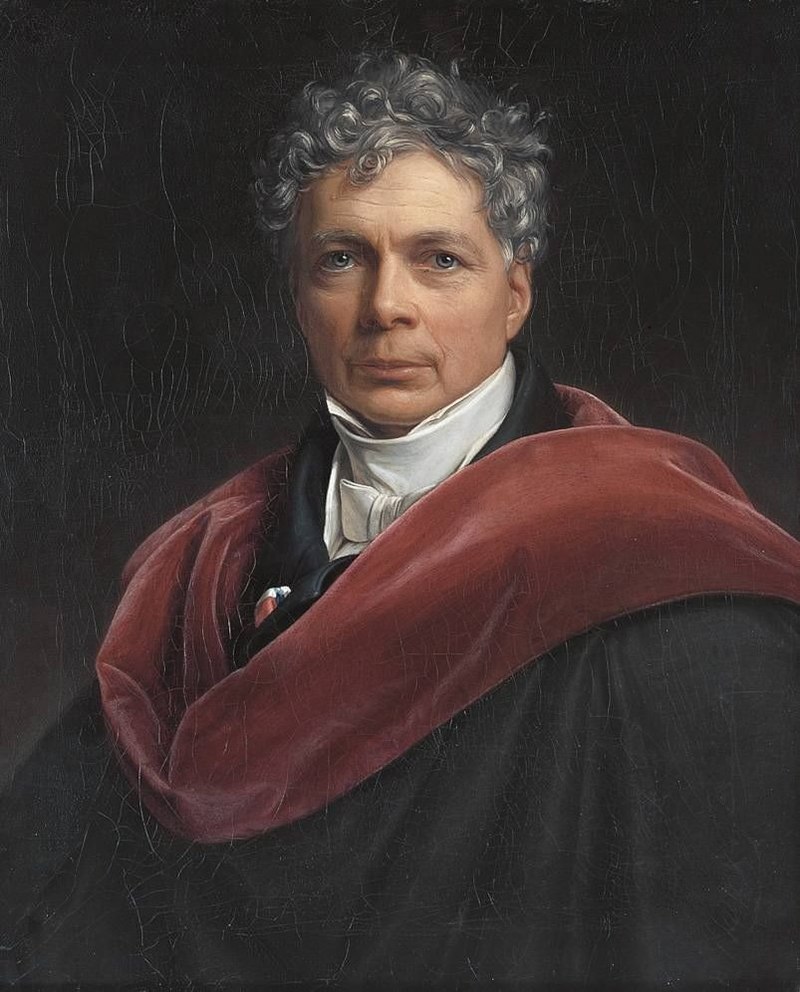
Friedrich Wilhelm Joseph Schelling
Also known as Friedrich Wilhelm Joseph von Schelling, Friedrich Schelling
German philosopher (1775–1854)
AI overview
Friedrich Wilhelm Joseph Schelling was a German philosopher from the late 1700s and 1800s who developed influential ideas about nature, art, and human consciousness that bridged Enlightenment thinking and Romantic philosophy. His work matters because it shaped how philosophers understood the relationship between mind and nature, and influenced both his contemporaries and later thinkers across Europe.
AI-generated from the Wikipedia summary — may contain errors.
Recent publications · Crossref
5 total works indexed
- You Only Look Once: Unified, Real-Time Object Detection
· 2016 · cited 38,829x
- SciPy 1.0: fundamental algorithms for scientific computing in Python
· 2020 · cited 34,742x
- Naturalistic inquiry
· 1985 · cited 33,267x
- When to use and how to report the results of PLS-SEM
· 2019 · cited 19,924x
- CONFIDENCE LIMITS ON PHYLOGENIES: AN APPROACH USING THE BOOTSTRAP
· 1985 · cited 19,542x
via Crossref · CC0
Quotes
- “What is Europe really but a sterile trunk which owes everything to oriental grafts?”
- “If there is to be any philosophy at all, this contradiction must be resolved – and the solution of this problem, or answer to the question: how can we think both of Presentations as conforming to objects, and objects as conforming to presentations? is, not the first, but the highest task of transcendental philosophy.”
Article
Friedrich Wilhelm Joseph Schelling ( German: [ˈfʁiːdʁɪç ˈvɪlhɛlm ˈjoːzɛf ˈʃɛlɪŋ]; 27 January 1775 – 20 August 1854) was a German philosopher. Standard histories of philosophy make him the midpoint in the development of German idealism, situating him between Johann Gottlieb Fichte, his mentor in his early years, and Georg Wilhelm Friedrich Hegel, his one-time university roommate, early friend, and later rival. Interpreting Schelling's philosophy is regarded as difficult because of its evolving nature.
Schelling's thought in the main has been neglected, especially in the English-speaking world. An important factor in this was the ascendancy of Hegel, whose mature works portray Schelling as a mere footnote in the development of idealism. Schelling's Naturphilosophie also has been attacked by scientists for its tendency to analogize and lack of empirical orientation. However, some later philosophers have shown interest in re-examining Schelling's body of work.
Gallery (3)
Connections
Categories
1775 births1854 deaths18th-century German philosophers19th-century German philosophersAcademic staff of LMU MunichAcademic staff of the Humboldt University of BerlinAcademic staff of the University of Erlangen-NurembergAcademic staff of the University of JenaAcademic staff of the University of WürzburgAcademy of Fine Arts, MunichChristian philosophers