Category
page 1Occupational diseases
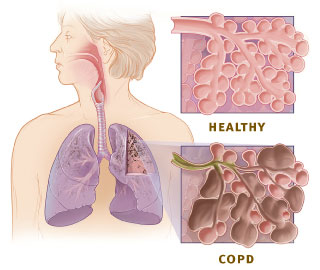
chronic obstructive pulmonary disease
lung disease involving long-term poor airflow

anthrax
Anthrax is an infection caused by the bacterium Bacillus anthracis or Bacillus cereus biovar anthracis. Infection typically occurs by contact with the skin, inhalation, or intestinal absorption. Symptom onset occurs between one day and two months after the infection is contracted. The skin form presents with a small blister with surrounding swelling that often turns into a painless ulcer with a black center. The inhalation form presents with fever, chest pain, and shortness of breath. The intestinal form presents with diarrhea (which may contain blood), abdominal pains, nausea, and vomiting.

brucellosis
Brucellosis is a zoonosis (zoonotic disease) spread primarily via ingestion of unpasteurized milk from infected animals. It is also known as undulant fever, Malta fever, and Mediterranean fever.
pulmonary emphysema
Emphysema is a condition of the lung marked by abnormal enlargement of the alveoli with loss of pulmonary elasticity. Most commonly, emphysema refers to the permanent enlargement of air spaces (alveoli) in the lungs, and is also known as pulmonary emphysema.

lead poisoning
poisoning by lead in the body, especially affects the brain

silicosis
Silicosis is an occupational lung disease caused by the inhalation of respirable crystalline silica dust. It is characterized by lung inflammation and fibrosis that most commonly affects the upper lobes and is classified as a form of pneumoconiosis. The disease occurs in chronic (simple and progressive massive fibrosis), accelerated, or acute forms, depending on the intensity and duration of exposure.

mesothelioma
Mesothelioma is a type of cancer that develops from the thin layer of tissue that covers many of the internal organs (known as the mesothelium). The area most commonly affected is the lining of the lungs and chest wall. Less commonly the lining of the abdomen and rarely the sac surrounding the heart, or the sac surrounding each testis may be affected. Signs and symptoms of mesothelioma may include shortness of breath due to fluid around the lung, a swollen abdomen, chest wall pain, cough, feeling tired, and weight loss. These symptoms typically come on slowly.

hospital-acquired infection
nosocomial infection
occupational disease
chronic ailment that occurs as a result of work or occupational activity; aspect of occupational safety and health
.jpg)
pneumoconiosis
Pneumoconiosis is the general term for a class of interstitial lung disease where inhalation of dust (for example, ash dust, lead particles, pollen grains etc) has caused interstitial fibrosis. The three most common types are asbestosis, silicosis, and black lung disease. Pneumoconiosis often causes restrictive impairment, although diagnosable pneumoconiosis can occur without measurable impairment of lung function. Depending on extent and severity, it may cause death within months or years, or it may never produce symptoms. It is usually an occupational lung disease, typically from years of du

asbestosis

paronychia
Paronychia is an inflammation of the skin around the nail, often due to bacteria or fungi.
occupational medicine
medical specialty focusing on the health of workers, including the ability to perform work; the physical, chemical, biological, and social environments of the workplace; and the health outcomes of environmental exposures
whitlow
A whitlow or felon is an infection of the tip of the finger. Herpetic whitlow and melanotic whitlow (subungual melanoma) are subtypes that are not synonymous with the term felon. A felon is an "extremely painful abscess on the palmar aspect of the fingertip". Whitlow usually refers to herpetic whitlow, though it can also refer to melanotic whitlow (subungual melanoma), which somewhat resembles acral lentiginous melanoma. The terms whitlow and felon are also sometimes misapplied to paronychia, which is an infection of the tissue at the side or base of the nail. Felon presents clinically with a
computer vision syndrome
condition resulting from focusing the eyes on a screen for protracted, uninterrupted periods of time
repetitive strain injury
injury to the musculoskeletal and nervous systems that may be caused by repetitive tasks, forceful exertions, vibrations, mechanical compression, or sustained or awkward positions
bronchiolitis obliterans
medical condition
.jpg)
berylliosis
Berylliosis, or chronic beryllium disease (CBD), is a chronic allergic-type lung response and chronic lung disease caused by exposure to beryllium and its compounds, a form of beryllium poisoning. It is distinct from acute beryllium poisoning, which became rare following occupational exposure limits established around 1950. Berylliosis is an occupational lung disease.
chemical burn
medical condition
anthracosis
human disease
extrinsic allergic alveolitis
human disease
occupational injury
bodily damage resulting from working, resulting from exposure to occupational hazards, such as temperature, noise, insect or animal bites, blood-borne pathogens, aerosols, hazardous chemicals, radiation, and occupational burnout
metal fume fever
illness caused by exposure to metal oxide fumes when heating e.g. zinc or aluminum.

byssinosis
Byssinosis is an occupational lung disease caused by inhalation of cotton or jute dust in inadequately ventilated working environments and can develop over time with repeated exposure. Byssinosis commonly occurs in textile workers who are employed in yarn and fabric manufacture industries. It is now thought that the cotton dust directly causes the disease and some believe that the causative agents are endotoxins that come from the cell walls of gram-negative bacteria that grow on the cotton. Although bacterial endotoxin is a likely cause, the absence of similar symptoms in workers in other ind
phossy jaw
necrotic damage to the jawbones caused by exposure to white phosphorus
medial epicondylitis
bone inflammation disease that results in inflammation located in epicondyle
coal dust
fine powdered form of coal, which is created by the crushing, grinding, or pulverizing of coal
Prepatellar bursitis
inflammation of the prepatellar bursa at the front of the knee
aluminosis
Aluminosis (also known as aluminium lung) is a restrictive lung disease caused by exposure to aluminum-bearing dust. Aluminosis is a form of pneumoconiosis that can lead to pulmonary fibrosis. First cases of lung damage from aluminium exposure were reported in the 1930s in Germany. It can be detected by using high-resolution computed tomography.
focal hand dystonia
focal dystonia that affects a single muscle or small group of muscles in the hand resulting from involuntary muscular contractions
farmer's lung
hypersensitivity pneumonitis
pneumoconiosis due to talc
human disease
Acrodynia
Acrodynia is a medical condition which occurs due to mercury poisoning. The condition of pain and dusky pink discoloration in the hands and feet is due to exposure or ingesting of mercury. It was known as pink disease (due to these symptoms) before it was accepted that it was just mercury poisoning.
The word acrodynia is derived from the , which means end or extremity, and , which means pain. As such, it might be (erroneously) used to indicate that a patient has pain in the hands or feet. The condition is known by various other names including hydrargyria, mercurialism, erythredema, erythredem
occupational asthma
respiratory medical condition caused or exacerbated by the workplace
STDs in the sex industry
occupational safety and health issue in the sex industry
baritosis
Baritosis is a benign type of pneumoconiosis, which is caused by long-term exposure to the dust of insoluble compounds of barium, such as ground baryte ore.
radial tunnel syndrome
medical condition
Mad hatter disease
Erethism, also known as erethismus mercurialis, mad hatter disease, or mad hatter syndrome, is a neurological disorder which affects the whole central nervous system, as well as a symptom complex, derived from mercury poisoning. Erethism is characterized by behavioral changes such as irritability, low self-confidence, depression, apathy, shyness and timidity, and in some extreme cases with prolonged exposure to mercury vapors, by delirium, personality changes and memory loss. People with erethism often have difficulty with social interactions. Associated physical problems may include a decreas
blood-borne disease
disease that can be spread through contamination by blood and other body fluids